
Soups & Stews
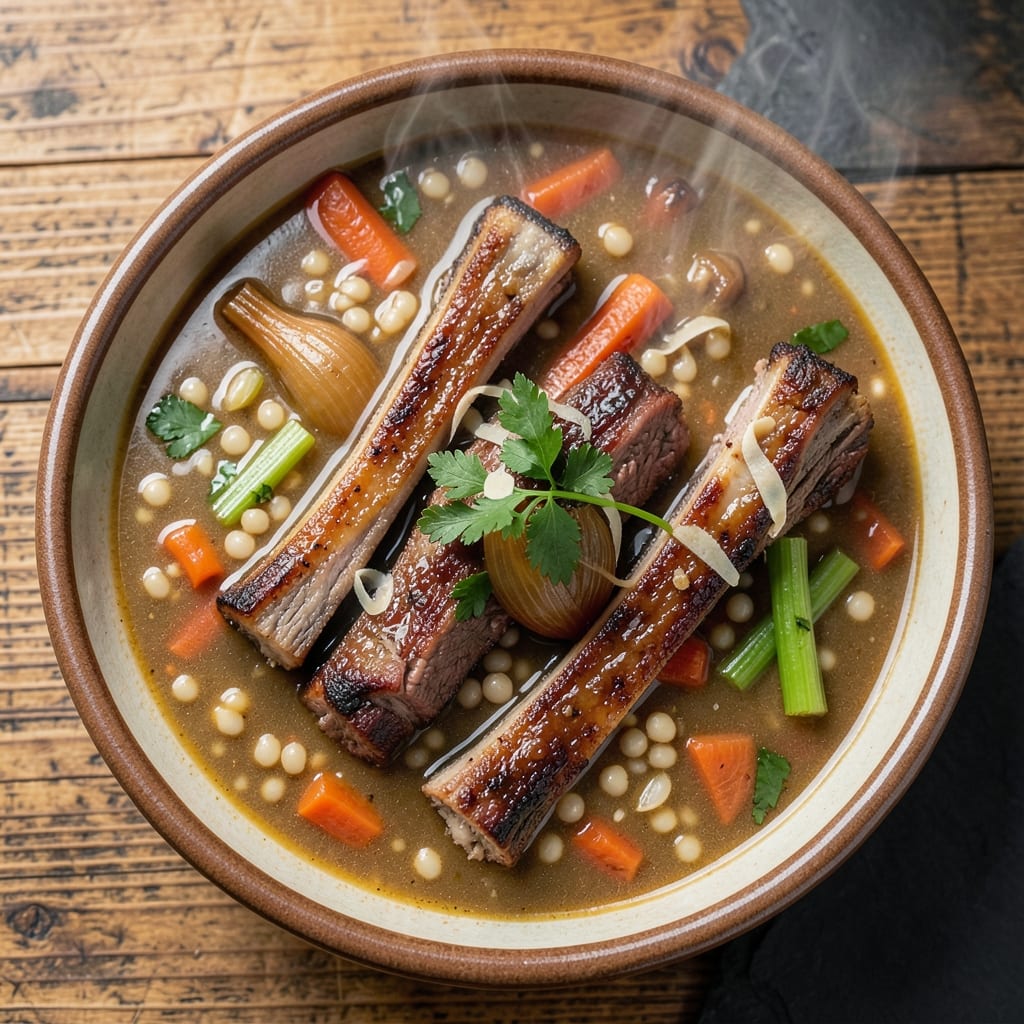
Prime rib bones unlock a depth of flavor no store-bought broth can match—this beef barley soup transforms tough cuts into a velvety, aromatic broth that simmers for hours. The key lies in slow-roasting the bones first to caramelize their surfaces, then simmering them until the marrow-rich bones release collagen that thickens the broth into luxurious richness. Every spoonful delivers that unmistakable beefy depth while hearty barley soaks up the flavor like a sponge.
What sets this recipe apart is the technique: roasting the bones at high heat develops a deep, toasty flavor before the slow simmer extracts every last bit of marrow and collagen. The barley cooks until plump and tender, absorbing the broth's rich umami while maintaining its satisfying bite. This isn't just soup—it's a flavor experience that transforms simple ingredients into something restaurant-worthy with minimal effort after the initial prep.
The result is a soup so deeply satisfying it feels like a hug in a bowl—warm, aromatic, and packed with substance. The broth clings to the barley, creating each bite into a perfect balance of tender meat, chewy barley, and velvety broth. Serve it with crusty bread to soak up every last drop, or garnish with fresh herbs for a pop of brightness that cuts through the richness. This is comfort food at its finest, built on the foundation of prime rib bones.
Perfect for chilly evenings or as a meal-prep staple that tastes even better the next day, this soup delivers hearty satisfaction without the heaviness. The technique may sound involved, but the process is straightforward once you understand the key steps—roast, simmer, season, and serve. Let's get started on creating this deeply flavorful masterpiece that will have everyone asking for seconds.
Ingredients for beef barley soup recipe with prime rib bones
Prime rib bones and pearl barley form the foundation of this deeply flavorful soup.
| Ingredient | Amount | Notes |
|---|---|---|
| Prime Rib Bones 🦴 | 3 lb | Split for surface area, marrow-rich preferred |
| Pearl Barley 🌾 | 1 ½ cups | Uncooked, rinsed thoroughly |
| Yellow Onion 🧅 | 2 whole | Chopped, medium dice |
| Carrots 🥕 | 3 whole | Medium, peeled, cut into chunks |
| Celery Stalks 🌿 | 3 whole | Cut into 1-inch pieces |
| Garlic Cloves 🧄 | 6 cloves | Smashed, skin on |
| Fresh Thyme 🌿 | ¼ cup | Stems removed, chopped |
| Fresh Parsley 🌿 | ⅛ cup | Chopped, for garnish |
| Tomato Paste 🍅 | ¼ cup | High-quality, no sugar added |
| Red Wine 🍷 | 1 cup | Bold, dry (Cabernet Sauvignon) |
| Beef Broth 💧 | 8 cups | Homemade or high-quality store-bought |
| Olive Oil 🫒 | ¼ cup | Extra-virgin, for roasting |
| Kosher Salt 🧂 | 2 tbsp | Diamond Crystal preferred |
| Black Peppercorns 🌶️ | 1 tbsp | Freshly cracked |
| Bay Leaves 🍃 | 2 whole | Dried, for simmering |
The prime rib bones are the heart of this soup—look for marrow-rich cuts with visible fat caps, which render down into luxurious richness. Butcher shops often have these cut specifically for broth, but if you're at a grocery store, ask for the beef short ribs with marrow. Roast them uncovered at high heat first to caramelize the surfaces—this develops deep, toasty flavors before the slow simmer extracts collagen. The pearl barley should be uncooked and rinsed to remove any dust or debris, as it absorbs flavor beautifully during the long simmer. For the best results, source your barley from a bulk section or specialty store like Whole Foods, where you can find high-quality grains.
No red wine? Dry white wine or extra beef broth works in a pinch, though the depth of flavor will differ slightly. Fresh thyme and parsley can be swapped for dried at one-third the amount, but fresh herbs add a brightness that dried simply can't match. If you're using store-bought beef broth, opt for brands like Kettle & Fire or Pacific Foods—they're specifically crafted for depth. The tomato paste should be no-sugar-added to avoid an overly sweet broth, and the celery, carrots, and onions form the classic mirepoix base that builds flavor. For extra richness, add a splash of balsamic vinegar during the simmer, though it's optional.
This soup tastes even better the next day as flavors meld, so plan ahead. Store in airtight containers in the fridge for up to 5 days, or freeze for 3 months by portioning into individual containers. The broth thickens as it cools, so add a splash of water or broth when reheating. For meal prep, double the recipe and freeze half—perfect for busy weeknights. Garnish with fresh parsley just before serving to brighten the dish and cut through the richness.
Why You'll Love This Recipe
- No Chopping Chaos: I swear by the "mirepoix shortcut"—just toss in pre-diced onion, carrots, and celery from the store. The prime rib bones do all the heavy lifting while you stir.
- Rich Without the Guilt: That first sip of broth? Pure umami gold from the marrow-rich bones, balanced by barley’s chewy bite. No heavy cream, no weird shortcuts—just deep, honest flavor.
- Leftovers That Shine: This soup tastes better the next day, especially when I reheat it with a splash of water and a crack of black pepper. Honestly, I make double batches just for this.
- Sunday Dinner Ready: Bring it to potlucks, holiday tables, or your own kitchen when you’re craving something hearty. The barley holds up for hours, and the bones make it feel fancy without the fuss.
Step-by-step instructions for beef barley soup with prime rib bones
Transform humble ingredients into restaurant-quality soup through precise technique and patience.
Roast the Prime Rib Bones for Deep Flavor
Preheat your oven to 425°F and position a rack in the middle position. Place the 3 lb prime rib bones on a baking sheet, marrow-side up, and rub them generously with 0.25 cup olive oil. This creates a protective barrier that prevents the bones from drying out while developing rich, caramelized flavors.
Roast the bones for 30 minutes, turning them halfway through, until they develop a deep golden-brown crust. The aroma should be intense—this is where the magic begins. You're not just cooking bones; you're building flavor that will infuse the entire soup. Once roasted, transfer the bones to a plate and set aside.
Sauté Aromatics and Build the Base
In a large Dutch oven, heat 0.25 cup olive oil over medium heat. Add the 2 whole chopped yellow onion, 3 whole carrots cut into chunks, and 3 whole celery stalks cut into 1-inch pieces. Cook for 8-10 minutes, stirring occasionally, until the vegetables soften and the onion becomes translucent.
Add the 6 smashed garlic cloves, 0.25 cup tomato paste, 2 tbsp kosher salt, and 1 tbsp freshly cracked black peppercorns. Stir for 2 minutes until the garlic releases its aroma and the tomato paste darkens slightly. This aromatic base forms the flavor foundation for your soup.
Deglaze and Simmer the Bones
Pour in the 1 cup bold red wine and scrape up all the browned bits from the bottom of the Dutch oven. These bits, called fond, contain concentrated flavor that would otherwise be lost. Let the wine simmer for 3-4 minutes until it reduces by half, intensifying its flavor profile.
Return the roasted prime rib bones to the Dutch oven, along with 8 cups beef broth and 2 whole bay leaves. Bring the mixture to a gentle boil, then reduce heat to low and let it simmer uncovered for 2 hours. The bones will release their marrow and collagen, creating a rich, velvety broth. Skim any foam that rises to the surface during this time for the clearest broth.
Add Barley and Herbs for Texture
After 2 hours of simmering, remove the prime rib bones and discard them, leaving behind the flavorful marrow. Add the 1.5 cups rinsed pearl barley and 0.25 cup chopped fresh thyme to the broth. Stir gently to distribute the barley evenly—it should be fully submerged in the liquid.
Return the soup to a simmer and cook for another 30-40 minutes, until the barley is tender but still holds its shape. The barley should be al dente, not mushy—this ensures a pleasant texture in every spoonful. Taste the broth and adjust seasoning with additional kosher salt or black peppercorns if needed.
Finish and Serve with Fresh Herbs
Remove the soup from heat and let it rest for 10 minutes to allow the flavors to meld. Stir in the 0.125 cup chopped fresh parsley just before serving. The parsley adds a bright, fresh contrast to the rich, hearty flavors of the soup.
Ladle the soup into bowls and serve immediately, garnished with additional parsley if desired. The result should be a deeply flavorful, comforting soup with tender barley and a velvety broth that coats your spoon. Each bite should deliver layers of umami from the bones, sweetness from the carrots, and earthy depth from the thyme and bay leaves.
Pro Tips For Making Beef Barley Soup Recipe With Prime Rib Bones
- BLANCH THE VEGETABLES FIRST: Toss your chopped onions, carrots, and celery into boiling water for 2 minutes before adding them to the pot. This softens them faster and keeps them from turning to mush—no more sad, overcooked veggies at the bottom of your soup.
- SIMMER LOW AND SLOW: After the bones are roasted and the broth starts, keep the heat at a bare simmer—gentle bubbles, not rolling. I used to rush this, and the barley would turn to paste. Low heat for 3+ hours makes the broth rich and the barley tender without falling apart.
- USE COLD BARLEY: Add the pearl barley straight from the fridge to the hot broth. The temperature shock keeps it firm and prevents it from breaking down too quickly. (Yes, even if you’re impatient like me—this actually works.)
- STRAIN THE BROTH TWICE: After simmering, strain the broth through a fine-mesh sieve, then a cheesecloth for an ultra-clear, flavor-packed liquid. The second straining removes the last of the grit, making the soup taste like it came from a restaurant. (Your future self will notice the difference.)
Pro cooking tips for this dish
Roast Bones Properly
Don’t skip the roasting step—this is where the magic happens. Roast your prime rib bones at 425°F for 30 minutes, turning them halfway, until deeply caramelized. The high heat creates a Maillard reaction that develops rich, toasty flavors before the slow simmer extracts collagen. I like to use a wire rack on a baking sheet to ensure even browning and prevent steam from making the bones soggy. 🔥
Deglaze with Wine
After sautéing your aromatics, pour in the 1 cup red wine and scrape up every last bit of the browned fond from the Dutch oven. This step is non-negotiable—those bits contain concentrated flavor that would otherwise go to waste. Let the wine reduce by half before adding the broth, which intensifies its depth. A bold Cabernet Sauvignon works best, but any dry red wine will do in a pinch.
Simmer Low and Slow
Simmering the bones at a gentle low heat for 2 hours is crucial for extracting collagen and creating a velvety broth. Avoid boiling, which can make the broth cloudy. Skim off any foam that rises to the surface with a spoon—this ensures a clear, clean broth. I use a large Dutch oven with a tight-fitting lid to retain moisture and heat efficiently.
Barley Timing Matters
Add the pearled barley only after the bones have released their collagen, typically after 2 hours of simmering. Cook it for 30-40 minutes until tender but still slightly firm—overcooking turns it mushy. Stir occasionally to prevent sticking, and taste the broth before adding the barley to ensure it’s well-seasoned. The barley should absorb the broth’s rich flavors without losing its texture.
Rest Before Serving
Let the soup rest for 10 minutes off the heat before serving. This allows the flavors to meld and the barley to finish absorbing the broth. Stir in the fresh parsley just before serving to brighten the dish and cut through the richness. The soup will taste even better the next day as the flavors continue to develop—this is when it truly shines. ✨
Garnish Like a Pro
A sprinkle of fresh parsley or a drizzle of crème fraîche elevates the soup from homemade to restaurant-quality. For extra flair, toast whole grain bread and serve it on the side for dipping. I also love adding a few crispy fried shallots on top for a touch of crunch and depth. These finishing touches make all the difference in presentation and flavor balance.
Nutrition facts
Frequently asked questions
Can I substitute beef short ribs for prime rib bones?
Yes, but with a few adjustments. Beef short ribs have more meat and less marrow, so they'll yield a slightly different texture. Roast them at 400°F for 20 minutes first to render fat, then simmer for 3 hours to fully break down the connective tissue. Remove the meat from the bones before adding barley to avoid large pieces in your soup.
How do I make this soup vegetarian?
Replace prime rib bones with mushroom stems and vegetable bones (like carrot tops and celery ends) for umami depth. Use 8 cups vegetable broth and add 1 tbsp soy sauce or 1 tsp miso paste during simmering. For protein, stir in 1 cup cooked lentils or 15 oz chickpeas with the barley.
Why does my barley turn mushy?
Overcooking is the most common cause. Pearl barley should cook for 30-40 minutes—test it at 25 minutes by tasting. If it's still firm, continue cooking; if mushy, drain excess broth. Always use 1.5 cups barley to 8 cups broth ratio. For extra insurance, rinse the barley before cooking to remove excess starch.
Can I make this soup in an Instant Pot?
Sauté aromatics as directed, then add wine and broth. Cook bones on high pressure for 60 minutes instead of simmering. After pressure release, add barley and cook on high pressure for 10 minutes. The Instant Pot speeds up collagen extraction, but the flavor will be slightly different from traditional stovetop methods.
What's the best way to reheat leftovers?
Gently reheat on the stovetop over low heat with a splash of water or broth to prevent drying. Never microwave—it creates a rubbery barley texture. For best results, reheat just until warm (5-7 minutes), then let sit covered for 5 minutes to redistribute flavors. Stir in fresh parsley before serving.