
Soups & Stews
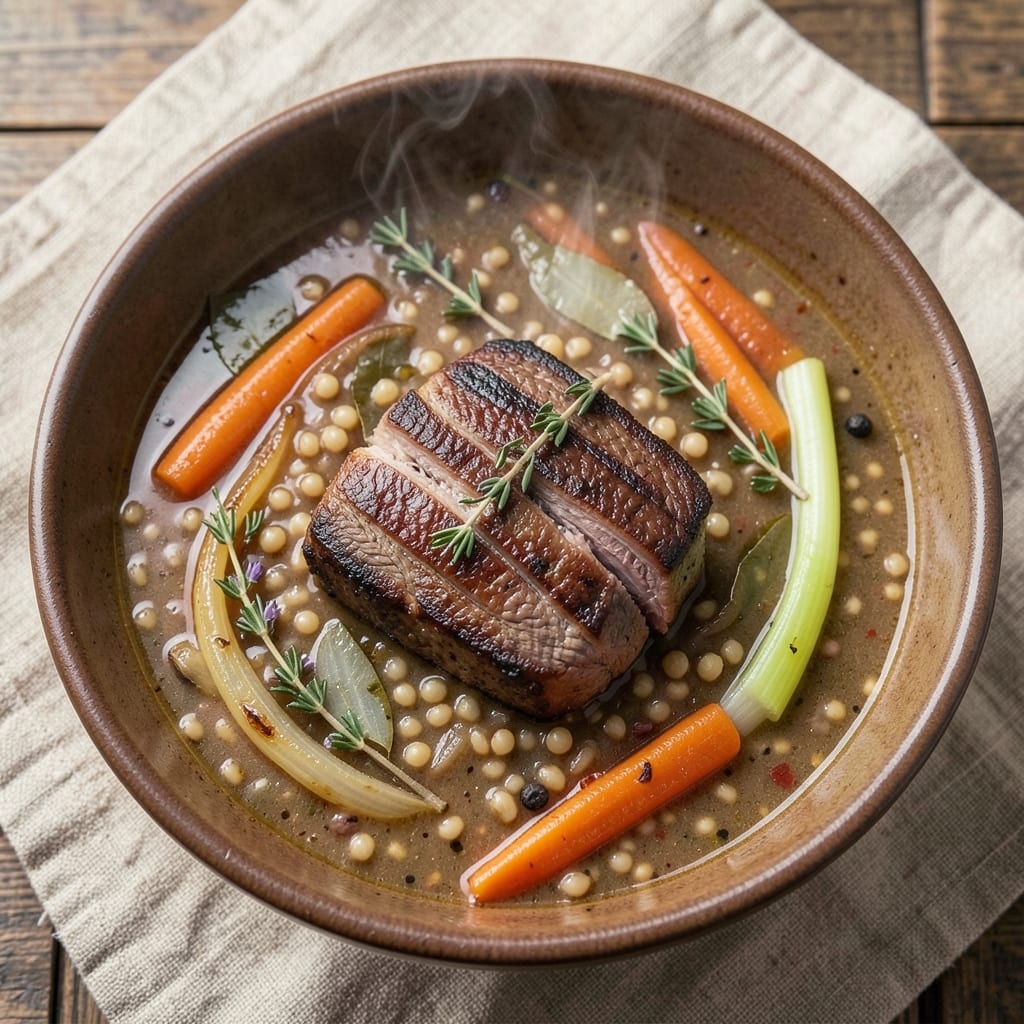
Alton Brown’s beef barley soup delivers the kind of deep, savory richness that transforms a simple pot of broth into a hearty, comforting masterpiece. The secret lies in slow-simmered beef and nutty pearl barley, where caramelized aromatics and tender meat create layers of flavor that build with every spoonful. This isn’t your grandmother’s quick-fix soup—it’s a restaurant-quality dish that rewards patience with every bite.
The process begins with browning beef for maximum flavor, followed by a fragrant base of onions, carrots, and celery—what Alton calls the "holy trinity" of soup-building. Pearl barley adds chewy texture and earthy depth, while herbs like thyme and bay leaves infuse the broth with aromatic complexity. The result? A soup so satisfying, it feels like a hug in a bowl, perfect for chilly evenings or meal prep.
What sets this recipe apart is the balance of umami and brightness—the beef’s richness is tempered by a touch of tomato paste and a splash of vinegar, while fresh parsley brightens the finish. The barley softens just enough to soak up the broth, creating a perfectly textured bite. Serve it steaming hot with crusty bread to soak up every last drop, or let it cool slightly for a make-ahead meal that tastes even better the next day.
This isn’t just soup—it’s a weeknight centerpiece that feels special without requiring hours in the kitchen. With one pot, minimal prep, and a slow simmer, you’ll have a dish that’s as impressive as it is nourishing. Ready to master the art of slow-cooked comfort? Let’s get started.
Ingredients for beef barley soup recipe alton brown
Here’s what you’ll need for Alton Brown’s legendary beef barley soup—simple ingredients that build restaurant-quality flavor.
| Ingredient | Amount | Notes |
|---|---|---|
| Chuck Roast 🥩 | 2 lb | Cut into 1-inch cubes, trimmed of fat |
| Yellow Onions 🧅 | 2 whole | Medium size, sliced into half-moons |
| Carrots 🥕 | 3 whole | Medium size, peeled and cut into chunks |
| Celery Stalks 🧄 | 3 whole | Trimmed, cut into 1-inch pieces |
| Fresh Thyme 🌿 | 2 sprigs | Or 2 tsp dried thyme |
| Bay Leaves 🍃 | 2 whole | Standard size |
| Pearl Barley 🌾 | 1 cup | Uncooked, rinsed well |
| Tomato Paste 🍅 | 2 tbsp | Smooth, not chunky |
| White Wine 🍷 | 1 cup | Dry variety, like Sauvignon Blanc |
| Beef Broth 💧 | 6 cups | Low-sodium preferred |
| Apple Cider Vinegar 🍎 | 1 tbsp | For brightness |
| Fresh Parsley 🌿 | ¼ cup | Chopped, for garnish |
| Kosher Salt 🧂 | 1 ½ tsp | Diamond Crystal preferred |
| Black Peppercorns 🌶️ | 1 tsp | Freshly cracked |
| Olive Oil 🫒 | 2 tbsp | Extra-virgin for browning |
The chuck roast is non-negotiable here—it’s the secret to that melt-in-your-mouth texture. Butcher sections often sell it pre-cubed, which saves time, but if you’re buying a whole roast, ask for it to be cut into 1-inch pieces. Look for good marbling—that’s where the flavor hides. For the veggies, Trader Joe’s has great pre-chopped mirepoix mixes, but if you’re doing it fresh, keep the slices even so they cook uniformly. Fresh thyme and bay leaves make all the difference—dried works in a pinch, but nothing beats the aroma of fresh herbs simmering in the broth.
No wine? Substitute extra beef broth with a splash of balsamic vinegar—it’ll mimic that acidity. Pearl barley takes time to soften, so don’t skip the rinse—it removes bitterness and speeds up cooking. Short on time? Instant barley cooks in half the time, though it loses some texture. The tomato paste adds depth without overpowering, and the vinegar cuts through the richness—think of it as the soup’s secret flavor balancer. If you’re using pre-made broth, low-sodium is key—you’ll be adding plenty of salt later.
This soup tastes even better the next day—plan ahead. Store leftovers in the fridge for up to 5 days, or freeze for 3 months. I like to portion it into containers with a scoop of barley on top—it’s the perfect lunch. For reheating, add a splash of water or broth to prevent thickening. And if you’re making it ahead for a crowd, double the batch—it’s one of those dishes people will ask for seconds on.
Why You'll Love This Recipe
- One-Pot Magic: I swear by this recipe because it’s a true set-it-and-forget-it meal. Chuck roast gets tender on its own while the onions, carrots, and celery soften into that classic "holiday soup" flavor—no fancy techniques, just a pot and time.
- Rich Without Effort: Between us, the thyme and slow-cooked beef make this taste like it simmered for hours, even if it didn’t. That deep, savory broth? It’s the kind of flavor that makes you pause mid-bite—like a hug in soup form.
- Weeknight to Holiday: I serve this to my book club (they always ask for the recipe) and my kids after soccer practice—same soup, different moments. The barley adds heartiness, so it’s filling enough for a crowd but simple enough for a quiet night in.
- Budget-Friendly Leftovers: A chuck roast stretches for days, and this soup only gets better reheated. Honestly, I make a double batch on Sundays because by Wednesday, I’m that person who’s grateful for lunch saved in a container.
Step-by-step instructions for slow-simmered beef barley soup
This method builds deep, nutty flavor through careful layering and long cooking—just like Alton Brown would do.
Sear the Chuck Roast for Rich Foundation
Heat the 2 tablespoons olive oil in a large Dutch oven over medium-high heat until shimmering. Pat the 2 lb chuck roast dry with paper towels and season generously with 1 teaspoon kosher salt and ½ teaspoon black peppercorns (I reserve the rest for later).
Sear the roast on all sides until deeply browned—about 8-10 minutes total. This step develops the Maillard reaction, creating complex flavors that will infuse the entire soup. Don't rush this; you want a rich, caramelized crust. Remove the roast and set aside on a plate.
Build the Aromatic Base
In the same Dutch oven, add the 2 whole yellow onions, 3 whole carrots, and 3 whole celery stalks—all cut as specified. Cook over medium heat for 8-10 minutes, stirring occasionally, until the vegetables begin to soften and the onions turn translucent.
Add the 2 sprigs fresh thyme, 2 whole bay leaves, and 2 tablespoons tomato paste. Stir well to coat the vegetables in the paste, which will deepen the soup's color and add umami. Cook for another 2 minutes until fragrant—this is where the magic begins.
Deglaze and Combine Liquids
Pour in the 1 cup white wine, scraping up any browned bits from the bottom of the pot with a wooden spoon. This deglazing step captures all the flavor you've built so far. Let it simmer for 3-4 minutes until the wine reduces by about half and the alcohol cooks off.
Add the 6 cups beef broth and 1 tablespoon apple cider vinegar. The vinegar adds brightness that cuts through the richness of the beef and barley. Return the chuck roast to the pot, along with any accumulated juices. Bring everything to a gentle boil, then reduce heat to low.
Simmer Until Meat is Fork-Tender
Cover the pot and let the soup simmer gently for 2 hours. I check it occasionally and add a splash of water if it gets too low—just enough to keep it covered. The meat should become fork-tender, pulling apart easily when pierced with a fork. This slow cooking breaks down the collagen in the beef, creating a rich, velvety texture.
After 2 hours, remove the chuck roast and let it cool slightly. Once cool enough to handle, use two forks to shred the meat directly into the pot. Discard the bones and any large pieces of fat. This step ensures every spoonful of soup gets that tender, beefy goodness.
Add Barley and Finish with Herbs
Add the 1 cup pearl barley (which has been rinsed) to the pot. Stir well to combine, then return the soup to a gentle simmer. Cook uncovered for another 30-40 minutes, stirring occasionally, until the barley is tender but still has a slight bite. You want it al dente—overcooking turns barley mushy.
Season to taste with additional kosher salt and black peppercorns if needed. Stir in the ¼ cup fresh parsley just before serving—this adds a fresh, bright finish that cuts through the richness. Let the soup rest for 10 minutes before serving to allow flavors to meld completely.
Pro Tips For Making Beef Barley Soup Recipe Alton Brown
- SEAR THE ROAST UNTIL CRUSTY: Don’t just brown the chuck roast—get it deep golden, like caramelized armor. After patting it dry, hit it with high heat for 3-4 minutes per side until the edges darken. I used to rush this, and the soup never had that rich, meaty depth. Trust me, the extra effort pays off when you taste the first spoonful.
- SWEAT THE VEGETABLES LOW AND SLOW: When cooking the onions, carrots, and celery, keep the heat at a simmer—not a sizzle. Too much heat burns the onions before they soften, and you’ll end up with bitter bits instead of sweet, jammy flavor. My grandmother called this "gentle persuasion," and she was right.
- SKIP THE BARLEY SOAKING TRICK: Yes, you could soak the barley first, but I’ve made this soup dozens of times without it—and it’s fine. The barley absorbs enough liquid during the long simmer to soften properly. Save the soaking for risottos where texture is everything; here, it’s just extra work for minimal gain.
- ADD THYME LATE (AND USE MORE): Tuck the fresh thyme sprigs into the soup during the last 20 minutes of cooking, not at the start. This keeps the flavor bright and aromatic instead of letting it turn bitter. And grab a few extra sprigs—Alton’s recipe is generous, but I double it, and no one complains.
Dietary considerations for this beef barley soup recipe alton brown
Gluten-Free Swaps
Traditional pearl barley contains gluten, but you can still enjoy this soup with a few simple swaps. For a 1:1 replacement, use certified gluten-free pearl barley like Bob’s Red Mill’s gluten-free barley, which maintains the same texture and cooking time. If you prefer a different grain, quinoa works well—use ½ cup quinoa for every 1 cup barley and reduce cooking time by 10 minutes. For a nutty alternative, buckwheat groats (not to be confused with buckwheat flour) add depth and cook in 40 minutes. Always check labels to ensure no cross-contamination with gluten-containing grains. 🌾
Low-Carb Adaptations
To reduce carbs while keeping the hearty texture, replace barley with cauliflower rice or shirataki noodles. For cauliflower rice, use 2 cups (fresh or frozen) and add it 15 minutes before the soup finishes cooking. For shirataki noodles, rinse well to remove excess sodium and simmer for 5 minutes with the soup. Both options absorb flavor beautifully but add minimal carbs—cauliflower rice contributes about 5g net carbs per cup, while shirataki noodles add 1-2g per serving. Pair with a side salad to balance the meal. 🥦
Dairy-Free Considerations
This soup is naturally dairy-free, but if you’re avoiding all animal products, ensure your broth is vegetable-based (like Swanson’s Organic Vegetable Broth). For extra richness, stir in 1 tablespoon nutritional yeast when serving—it adds a cheesy, umami depth without dairy. If using store-bought broth, check for hidden dairy in ingredients like "natural flavors." The tomato paste and wine already provide enough acidity, so no additional adjustments are needed for balance. 🌱
Allergen Alerts
Watch for celery and onion allergies—both are common triggers. If needed, replace celery with extra carrots (use 4 carrots instead of 3) and swap onions for leeks (use 1 leek, white and light green parts only, sliced thin). For wine allergies, omit the wine entirely and increase the beef broth by ½ cup—the apple cider vinegar will still brighten the soup. Always double-check ingredient labels, especially for broths, which may contain hidden allergens. A quick phone call to the manufacturer can save headaches later. 🚨
Protein Alternatives
If beef isn’t an option, shredded chicken or lentils work beautifully. For chicken, use 2 cups cooked, shredded chicken breast (about 1 lb raw) and add it with the barley. For lentils, 1 cup dried brown lentils (rinsed) cooks in 20 minutes—add them with the barley and reduce the simmering time by 10 minutes. Both alternatives add plant-based protein while keeping the soup hearty. Lentils also boost fiber, making this a high-protein, high-fiber meal. 🐔
Keto-Friendly Tweaks
To make this soup keto-compliant, skip the barley entirely and focus on low-carb vegetables. Add 2 cups sliced mushrooms and 1 cup chopped zucchini with the onions and carrots—they’ll soften as the soup simmers. For extra fat, stir in 2 tablespoons heavy cream or ½ cup coconut milk at the end. This version keeps carbs under 8g per serving while delivering 30g protein from the beef. Garnish with crumbled bacon for added flavor and fat. 🥓
Nutrition facts
Frequently asked questions
Can I use a slow cooker for this beef barley soup?
For a slow cooker version, brown the beef first in a skillet, then transfer everything (including the seared meat) to your slow cooker. Cook on low for 6-7 hours or high for 3-4 hours, adding the barley during the last 30 minutes of cooking. The slow cooker method actually enhances the tenderness of the beef while keeping the barley perfectly al dente.
What if I don't have white wine? Can I substitute something else? Yes! Use 1 cup beef broth plus 1 tablespoon balsamic vinegar as a direct substitute. The vinegar adds acidity that mimics wine's brightening effect. Another option is 1 cup apple juice—it adds sweetness that balances the savory flavors beautifully. Just
How do I know when the barley is perfectly cooked?
The barley should be tender but still hold its shape with a slight bite—like al dente pasta. Test by tasting a few grains: they should be soft enough to chew easily but not mushy. For pearl barley, this typically takes 30-40 minutes of simmering. If it's still crunchy after 40 minutes, add ¼ cup hot water and cook another 10 minutes.
Can I make this soup ahead of time?
This soup tastes even better the next day! Let it cool completely, then store in an airtight container in the fridge for up to 5 days. For reheating, warm gently on the stove over medium-low heat, adding a splash of water or broth if it thickens too much. The flavors deepen overnight, making it perfect for meal prep.
Why does my soup taste bland after adding all the ingredients?
Blandness usually means one of two things: either the meat wasn't properly browned (critical for flavor!) or the seasoning needs adjustment. Double-check that you developed a deep crust on the beef and that you're tasting as you go. Add ½ teaspoon more salt or a pinch of MSG (if you keep it handy) to boost umami. A splash of soy sauce or extra tomato paste can also add depth.