
Soups & Stews
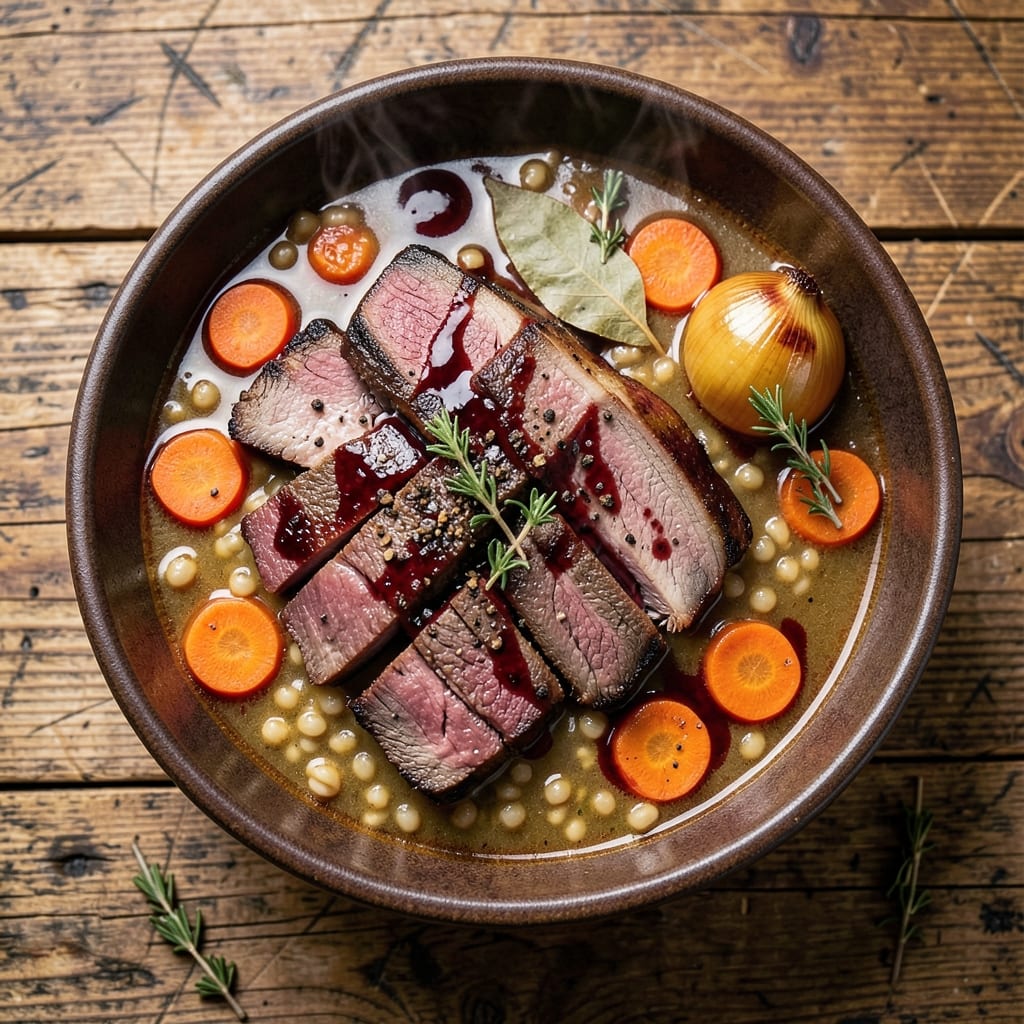
This beef barley soup recipe with leftover prime rib transforms dinner leftovers into a restaurant-worthy meal—rich, hearty, and packed with umami depth that turns simple ingredients into something extraordinary. The secret starts with that prime rib roast pan, where every caramelized bit clings to the meat, creating a broth so flavorful it tastes like it simmered all day. I learned this technique after years of struggling to repurpose holiday roasts without sacrificing taste, and trust me, this method works every time.
The beauty of this soup lies in its balance—tender beef, chewy barley, and vegetables that soak up the savory broth while maintaining their texture. Deglazing the prime rib pan with red wine and beef stock captures all those precious browned bits, turning them into the foundation of a deeply flavorful broth. It's the kind of soup that warms you from the inside out, perfect for chilly evenings or when you want to stretch a special roast into multiple meals.
What you'll end up with is a bowl of soup where each spoonful delivers layers of flavor—the deep richness of the beef, the nutty bite of barley, and the subtle sweetness of carrots and onions. The barley softens just enough to be comforting but still holds its shape, while the beef stays tender and juicy. This isn't just soup; it's a way to honor your leftovers and turn them into something even more memorable.
Best of all, this recipe is foolproof and flexible—use whatever vegetables you have on hand, adjust the spices to your taste, and let the prime rib's natural richness do the heavy lifting. Once you try this method, you'll never waste a prime rib roast again. Let's get started!
Ingredients for beef barley soup recipe with leftover prime rib
Rich prime rib leftovers meet comforting barley and aromatic vegetables for a soup that tastes like a hug in a bowl.
| Ingredient | Amount | Notes |
|---|---|---|
| Leftover Prime Rib 🥩 | 1 ½ lb | Cut into bite-sized pieces |
| Pearl Barley 🌾 | 1 cup | Uncooked, rinsed thoroughly |
| Red Wine 🍷 | 1 cup | Bold dry variety like Cabernet |
| Beef Stock 💧 | 4 cups | Homemade or high-quality store-bought |
| Carrots 🥕 | 3 medium | Peeled and sliced into rounds |
| Yellow Onion 🧅 | 1 whole | Diced, medium size |
| Garlic Cloves 🧄 | 4 cloves | Minced, fresh preferred |
| Celery Stalks 🌿 | 3 whole | Diced, with leaves included |
| Fresh Thyme 🌿 | 2 sprigs | Or 1 tsp dried thyme |
| Tomato Paste 🍅 | 2 tbsp | Squeeze tube preferred |
| Bay Leaves 🍃 | 2 whole | Dried, removed before serving |
| Salt 🧂 | 1 ½ tsp | Kosher or sea salt |
| Black Pepper 🌶️ | ½ tsp | Freshly ground preferred |
| Olive Oil 🫒 | 2 tbsp | Extra-virgin for richness |
The prime rib is the star here, so don't skimp on quality. Costco or your local butcher often have excellent cuts—look for good marbling. If you're using leftovers, make sure it's at least 1.5 lbs for proper flavor impact. The pearl barley should be rinsed well before cooking to remove any dirt or debris. For the wine, any bold, dry red works—Cab Sauv, Merlot, whatever's open. Fresh thyme is ideal but dried works at one-third the amount if that's what you've got.
No red wine? Beef broth with a splash of balsamic gets you close. Fresh thyme is ideal but dried works at one-third the amount. If tomato paste feels like overkill for two tablespoons, those squeeze tubes at Trader Joe's are perfect—no waste, keeps for months. The carrots can be baby carrots if that's what's in the fridge. For the celery, include the leaves—they add great flavor. If you're missing any vegetables, swap in whatever you've got—potatoes, mushrooms, or even spinach work well.
This soup tastes even better the next day—honestly, it's worth making a big batch. Keeps 4-5 days in the fridge, freezes for 3 months. I portion mine into containers so lunches are sorted for the week. Store the barley separately if you want to reheat it quickly—just toss it in when you're ready to serve. The broth can be frozen separately too, so you can customize your soup later with fresh veggies.
Why You'll Love This Recipe
- No-Waste Luxury: I swear by this trick—prime rib leftovers don’t have to go to waste. The rich, tender meat transforms into something even better when slow-simmered with barley and wine, turning scraps into a meal that feels like a splurge.
- Deep, Rich Layers: That red wine and beef stock combo? It’s where the magic happens. The wine mellows into a velvety depth while the stock builds a hearty base—every spoonful tastes like a slow-cooked secret, not just soup.
- Weeknight Crowd-Pleaser: Between us, this is my go-to when friends drop by unannounced. It’s hearty enough for a dinner party but unfussy enough for a Tuesday—just toss in the pre-cooked barley and let it work its magic.
- Budget-Friendly Upgrade: Pearl barley stretches the prime rib into a full meal without breaking the bank. I’ve made this for under $10 per serving, and it still feels like a restaurant-worthy dish. (Yes, even on a Tuesday.)
Step-by-step instructions for beef barley soup with leftover prime rib
Transform your leftover prime rib into a hearty, umami-rich soup that's perfect for chilly days.
Sauté the Aromatic Vegetables
Heat the 2 tablespoons olive oil in a large Dutch oven over medium heat. Add the diced yellow onion, diced celery stalks, and sliced carrots, stirring occasionally for 5-6 minutes until the vegetables soften and begin to release their natural juices. You'll notice the mixture smells sweet and earthy—that's when you know they're ready for the next step.
Add the minced garlic cloves and cook for another 30 seconds until fragrant. Be careful not to let the garlic burn—it should smell wonderful but not bitter. This aromatic base forms the flavor foundation for your entire soup, so take your time here. Stir in the 2 tablespoons tomato paste and cook for 1 minute until it darkens slightly and blends smoothly with the vegetables.
Deglaze and Build the Flavor Base
Pour in the 1 cup red wine and scrape up any browned bits from the bottom of the pot with a wooden spoon. These bits are packed with flavor—don't miss them! Let the wine simmer for 3-4 minutes until it reduces by about half and the alcohol cooks off. You'll smell the wine's depth intensifying as it concentrates.
Add the 1.5 teaspoons salt, 0.5 teaspoon black pepper, 2 sprigs fresh thyme, and 2 whole bay leaves. Stir everything together and let it cook for another 1 minute to allow the spices to bloom and infuse the mixture. This step ensures your soup has balanced seasoning from the start.
Add the Prime Rib and Liquid
Increase the heat to medium-high and add the 1.5 pounds leftover prime rib cut into bite-sized pieces. Let the meat sear for 2-3 minutes until it develops a nice brown crust. This quick sear adds another layer of flavor that will carry through the entire soup.
Pour in the 4 cups beef stock and bring the mixture to a gentle boil. Once boiling, reduce the heat to low and let it simmer uncovered for 10 minutes. This initial simmer helps extract all the remaining flavors from the prime rib and vegetables. You'll see the meat begin to soften and the liquid take on a rich, deep color.
Cook the Barley Until Tender
Add the 1 cup pearl barley that has been rinsed thoroughly. Stir gently to distribute it evenly throughout the soup. Increase the heat to medium and bring the soup back to a gentle boil. Once boiling, reduce the heat again to low and let it simmer uncovered for 45-50 minutes.
During this time, check the soup occasionally and add water or more beef stock if it gets too thick. You want the barley to be tender but still have a slight bite—it should be fork-tender with a pleasant texture. The soup should have a rich, meaty aroma that fills your kitchen. When the barley is cooked, remove the bay leaves and thyme sprigs so they don't make the soup bitter.
Adjust Seasoning and Serve
Taste the soup and adjust the seasoning if needed. You might need a bit more salt or pepper depending on the quality of your beef stock. The soup should be rich and flavorful with a perfect balance of savory, umami, and herbal notes. If it's too thick, add a bit more beef stock or water to reach your desired consistency.
Ladle the soup into bowls and serve immediately. The aroma alone will make everyone's mouth water. This beef barley soup is comforting, hearty, and packed with deep umami flavors from the prime rib. Pair it with crusty bread to soak up every last drop of that delicious broth.
Pro Tips For Making Beef Barley Soup Recipe With Leftover Prime Rib
- SIMMER LOW AND SLOW: That prime rib’s rich flavor needs time to marry with the barley and wine—don’t rush it. Once everything’s in the pot, keep the heat at a steady simmer (small bubbles, occasional skims) for at least 45 minutes. I learned this the hard way when I cranked it up for speed, and the wine turned to vinegar faster than you can say “second helping.”
- TRIM THE BARLEY FIRST: Pearl barley’s got a tough outer shell—rinse it in cold water before adding it to the pot, then give it a quick soak in hot broth for 10 minutes. This cuts cooking time by 20 minutes and keeps it from turning mushy. (Yes, even if you’re impatient like me.)
- CHOP CARROTS UNIFORM: Big chunks of carrot stay tough; tiny dice disappear into mush. Aim for ½-inch pieces—small enough to cook through but big enough to hold their shape. I used to eyeball it, but now I measure with a knife against the cutting board. (Your future self will thank you.)
- DEGLAZE WITH WINE FIRST: That leftover prime rib’s got flavor locked in the browned bits—don’t skip the deglaze. Add the red wine immediately after removing the meat, let it bubble for 2 minutes, then pour in the stock. The wine’s acidity pulls more depth out of the crust than if you just toss it in later. (Sounds weird, but it works.)
Make-ahead tips for beef barley soup recipe with leftover prime rib
Broth Prep Ahead
Start your broth foundation the night before by deglazing the prime rib pan with 1 cup red wine and 4 cups beef stock. Let it cool, then refrigerate in an airtight container. The flavors meld overnight, creating a deeper base. I always make extra—it freezes beautifully for future soups or braises. 💫
Barley Pre-Soaking
Rinse your 1 cup pearl barley thoroughly, then soak it in cold water for 1 hour before using. This cuts cooking time by 10-15 minutes and prevents a mushy texture. Drain well before adding to your soup. Trust me, this small step makes a big difference in texture and flavor.
Vegetable Prep Shortcut
Chop all your vegetables—carrots, onion, celery—the night before and store them in a sealed container in the fridge. This saves 20 minutes of prep time when you're ready to cook. I keep a cutting board just for veggie prep to stay organized during busy weeks.
Freezer-Friendly Portions
Divide your finished soup into quart-sized freezer bags or airtight containers, leaving 1-inch headspace for expansion. Label with the date—this soup keeps for 3 months without losing quality. I portion mine into individual servings for easy lunches, and the barley reheats perfectly when frozen.
Prime Rib Prep
Cut your 1.5 lb leftover prime rib into bite-sized pieces while it's still warm from the fridge. This makes it easier to handle and ensures even cooking. Store the raw meat in a sealed container for up to 2 days before using. The warm meat also helps jumpstart the cooking process when you're ready to make the soup.
Spice Pre-Mix
Combine your salt, pepper, thyme, and bay leaves in a small bowl before adding to the pot. This creates a convenient spice blend you can store in your pantry for future use. I keep a jar of this mix labeled "soup seasoning" for quick access during weeknight cooking. 🌟
Nutrition facts
Frequently asked questions
Can I use regular barley instead of pearl barley?
Pearl barley is ideal here because it holds its shape better than regular barley, giving your soup that satisfying chewy texture. However, if that's all you have, you can use it—but expect the barley to soften more quickly. For best results, reduce the cooking time by 10-15 minutes and check for doneness earlier. The flavor will still be delicious!
What if I don't have red wine for deglazing?
No problem! Use 1 cup beef broth plus 1 tablespoon balsamic vinegar for a similar depth of flavor. The balsamic adds a touch of sweetness that mimics wine's complexity. If you're feeling adventurous, a splash of soy sauce or Worcestershire sauce also works—just ½ teaspoon each to avoid overpowering the dish.
How do I prevent the barley from getting mushy?
Rinse the barley thoroughly before cooking to remove excess starch, then soak it in cold water for 1 hour before adding to the soup. This pre-soaking trick reduces cooking time by 10-15 minutes and keeps the texture firm. Also, stir the soup occasionally during cooking to prevent sticking at the bottom of the pot.
Can I make this soup ahead of time?
This soup tastes even better the next day. Let it cool completely, then store it in an airtight container in the fridge for up to 4-5 days. For freezing, portion into quart-sized bags with 1-inch headspace—it keeps for 3 months. Reheat gently on the stove, stirring occasionally, and add a splash of water or stock if needed.
What if my prime rib leftovers are fatty?
Trim any visible fat from the meat before adding it to the soup to keep the broth clear. For extra flavor without excess fat, try skimming the surface as the soup simmers. If you prefer a richer broth, leave some fat—it adds richness, but you may want to strain it before serving. The key is balancing texture and flavor!