
Soups & Stews
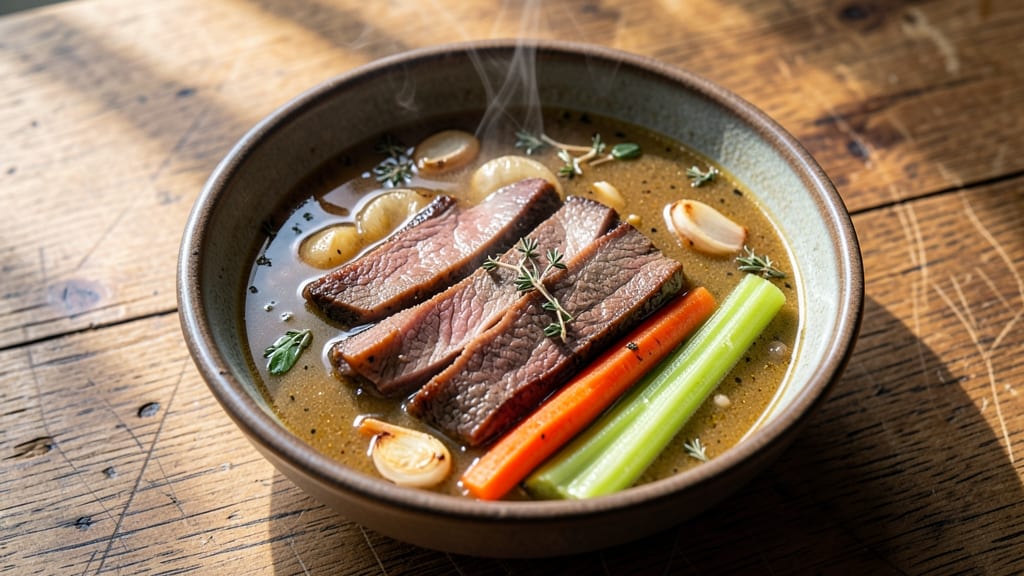
Transforming leftover prime rib into this rich, savory soup is like giving your leftovers a second life—no waste, just pure flavor. 💛 The secret starts with that leftover meat, which infuses the broth with deep, meaty richness that turns ordinary leftovers into something extraordinary.
I’ve perfected this recipe over years of holiday feasts, where prime rib is the star but the leftovers often get overlooked.
This soup builds on the natural richness of the prime rib, so you don’t need fancy ingredients—just simple vegetables like carrots, onions, and celery to round out the flavors. Aromatics like garlic and thyme add layers of warmth, while a splash of red wine deepens the broth into something restaurant-worthy.
The best part? It takes less than an hour to turn scraps into a hearty, comforting meal that’ll have everyone asking for seconds.
By the time you’re done, you’ll have a velvety soup with tender chunks of prime rib swimming in a savory broth, garnished with fresh parsley for a pop of color. It’s the kind of dish that feels indulgent but is actually simple—perfect for using up leftovers without sacrificing flavor.
The broth is rich enough to stand alone but balanced enough to pair with crusty bread or a side salad.
Whether you’re cleaning up after a holiday feast or just want to stretch a prime rib roast into another meal, this recipe turns scraps into something special. Let’s get cooking!
Ingredients for leftover prime rib soup
Rich, savory soup transforms holiday leftovers into a restaurant-quality meal.
| Ingredient | Amount | Notes |
|---|---|---|
| Leftover Prime Rib Meat 🥩 | 2 cups | Shredded or cubed, from holiday roast |
| Onions 🧅 | 1 ½ whole | Yellow or white, diced finely |
| Carrots 🥕 | 1 lb | Peeled, chopped into coins |
| Celery Stalks 🌿 | 4 whole | Chopped into 1-inch pieces |
| Garlic Cloves 🧄 | 6 cloves | Minced, for aromatic depth |
| Dried Thyme Leaves 🌿 | 1 tbsp | Fresh thyme at 1/4 cup chopped |
| Red Wine 🍷 | ½ cup | Bold, dry variety like Cabernet |
| Beef Broth 💧 | 4 cups | Low-sodium preferred |
| Tomato Paste 🍅 | 2 tbsp | Smooth, not chunky |
| Salt 🧂 | 1 tsp | Kosher or sea salt |
| Black Pepper 🌶️ | ½ tsp | Freshly ground preferred |
| Fresh Parsley 🌿 | ¼ cup | Chopped, for garnish |
| Butter 🧈 | 2 tbsp | Full-fat for richness |
| Olive Oil 🫒 | 1 tbsp | Extra-virgin for sautéing |
The prime rib is your secret weapon—cube or shred it yourself for best texture. I always save the fatty bits and juices from the roasting pan; they’re pure flavor gold. For the veggies, Costco’s pre-cut carrots and celery save time, but fresh is always better. The garlic gets minced right before sautéing to avoid bitterness. If you’re using dried thyme, toast it in a dry pan for 30 seconds to wake up the flavor—trust me on this.
No red wine? Beef broth with a splash of balsamic vinegar mimics the depth. Fresh thyme is ideal but dried works at one-third the amount. The tomato paste can be squeeze tubes from Trader Joe’s—no waste, and it keeps forever. For the broth, homemade is best, but Better Than Bouillon cubes in a pinch. Skip the salted broth—low-sodium is your friend here. The butter and olive oil combo balances richness perfectly, but if you’re watching fat, use just olive oil.
This soup tastes even better the next day—the flavors meld beautifully. Store in an airtight container for 5 days in the fridge or freeze for 3 months. I portion mine into containers so lunches are sorted for the week. The parsley wilts fast, so add it just before serving. The broth can be reduced by simmering uncovered for 10-15 minutes if you prefer it thicker. The leftovers? Perfect for sandwiches or the next day’s soup—no waste, just flavor.
Why You'll Love This Recipe
- No-Panics Leftovers: I’ve got a secret weapon for when my prime rib roast is looking a little lonely in the fridge—this soup turns scraps into something so good, you’ll forget it started as leftovers. Just toss in those cubed-up bits, and the rest is effortless.
- Wine-Infused Richness: That half cup of bold red wine isn’t just for show—it deepens the flavor to chef’s kiss levels. The tomato paste and butter? They make the broth velvety and complex, like a fancy restaurant dish but with your own touch.
- Freezer-Friendly Treasure: Five days in the fridge? No problem. Freeze it for three months, and it’s still a lifesaver on busy nights. Pull it out, reheat, and boom—dinner’s ready. My kids even ask for seconds, and that’s saying something.
- One-Pot Magic: You’re basically doing one thing: sauté veggies, add meat, simmer, and done. The garlic and thyme infuse the broth while you wait, so even if you’re multitasking, this soup still tastes like it was made with love.
Step-by-step instructions for leftover prime rib soup
Transform your holiday leftovers into a velvety, flavor-packed soup that tastes even better the next day.
🍳 Step 1: Sauté the Vegetable Base
Heat the 1 tablespoon olive oil in a large pot over medium heat. Add the 1½ diced onions and cook for 5 minutes until softened and translucent. Here's where the flavor foundation begins—don't rush this step.
Add the 1 pound chopped carrots and 4 chopped celery stalks, stirring to coat in the oil. Cook for another 5-6 minutes until the vegetables begin to soften and release their natural sweetness. This slow cooking draws out their flavors without burning them.
🍳 Step 2: Build Rich, Aromatic Layers
Push the vegetables to one side of the pot and add the 2 tablespoons butter to the empty space. When the butter melts and foams, add the 6 minced garlic cloves and 1 tablespoon dried thyme leaves, stirring constantly for 30 seconds until fragrant. This is where the magic happens—the garlic should smell pungent, not burnt.
Stir the garlic-thyme mixture into the vegetables, then add the 2 tablespoons tomato paste. Cook for 1 minute, stirring constantly, until the tomato paste darkens slightly and coats the vegetables. This creates a deep, savory base for the soup.
🍳 Step 3: Deglaze and Simmer the Base
Pour in the ½ cup red wine, scraping up any browned bits from the bottom of the pot with a wooden spoon. Let the wine simmer for 2-3 minutes until it reduces by half and the alcohol cooks off—you'll smell it evaporating.
Add the 4 cups beef broth and bring to a gentle boil. Reduce heat to medium-low and let the soup simmer uncovered for 15 minutes, stirring occasionally. This step develops the vegetable flavors and prepares the broth for the meat.
🥘 Step 4: Add the Prime Rib and Season
Add the 2 cups shredded or cubed leftover prime rib meat to the simmering broth. Stir gently to distribute the meat evenly. Add the 1 teaspoon salt and ½ teaspoon black pepper, then taste the soup. You'll likely need more salt—this is a rich soup that needs balancing.
Simmer uncovered for another 10-15 minutes until the vegetables are tender and the meat is heated through. The soup should have a thick, velvety consistency—if it's too thin, simmer uncovered for 5-10 more minutes to reduce it slightly.
🍽️ Step 5: Finish and Garnish
Remove the pot from heat and stir in the ¼ cup chopped fresh parsley. Let the soup rest for 5 minutes to allow the flavors to meld together. The parsley adds a bright finish that cuts through the richness of the meat and wine.
Ladle the soup into bowls and serve immediately. The perfect bowl should have tender vegetables, rich meat, and a velvety broth that coats your spoon. If you have time, let it sit overnight—the flavors will deepen even more, making it even more delicious.
Pro Tips For Making Leftover Prime Rib Soup
- Don’t Skip the Wine Reduction: That ½ cup red wine isn’t just for flavor—it’s the step that actually deepens the richness. Let it simmer until it’s reduced by half (you’ll smell the alcohol cook off), or you’ll end up with a soup that tastes more like a diluted sauce. I used to rush this, and the result was always flatter.
- Chop Celery Uniformly: Those 4 celery stalks should all be cut into 1-inch pieces—no smaller, no larger. Uneven sizes mean some will turn to mush while others stay crunchy. My grandmother swore by this, and she was right: consistency makes the soup’s texture sing.
- Salt Before the Meat: Taste the broth before adding the prime rib, then add that 1 teaspoon salt and a little more if needed. The meat will soak up seasoning like a sponge, so if you wait, you’ll either end up with bland chunks or a soup that’s too salty to fix.
- Use Low-Sodium Broth: The recipe calls for low-sodium beef broth, and for good reason—this soup is already packed with salt from the prime rib, butter, and wine. Skip the high-sodium version, or you’ll be left with a dish that tastes like it’s been swimming in a salt mine. Trust me, your taste buds will notice.
Dietary considerations for this leftover prime rib soup
Gluten-Free Adaptations
This recipe is naturally gluten-free, but watch for hidden sources like broth or tomato paste. I always use Better Than Bouillon gluten-free beef base or homemade broth to ensure safety. The red wine and beer broth (if substituting) should be certified gluten-free, as some brands use barley.
The only potential concern is the tomato paste—stick to brands like Muir Glen, which are gluten-free by default.
Low-Carb Options
To make this soup lower in carbs, reduce the carrots to ½ pound and omit the tomato paste entirely. The natural sweetness from the onions and celery will still shine. For extra richness, add 1 tablespoon of heavy cream or a dollop of sour cream when serving.
The prime rib remains the star, so you won’t miss the carbs with this approach.
Dairy-Free Swaps
Butter is the main dairy component, but you can easily replace it with olive oil or dairy-free margarine. I recommend Miyoko’s Creamery cultured cashew butter for a rich, flavorful alternative.
The soup will still be creamy—just slightly lighter. Skip the butter in the sauté step and use 3 tablespoons olive oil instead for the same depth of flavor.
Allergen-Friendly Tips
For nut allergies, avoid cashew-based creamers and stick to olive oil or coconut milk. If you’re avoiding garlic, use 1 teaspoon garlic powder instead of fresh—it’s milder but still adds depth.
For onion-sensitive diners, swap with 1 cup diced fennel bulb, which adds a subtle anise note that pairs beautifully with beef. Always check labels on broth and wine for allergens.
Vegetarian Substitutions
While prime rib is the soul of this soup, you can create a vegetarian version by using mushrooms and lentils for umami depth. Sauté 8 oz cremini mushrooms with the onions and add 1 cup cooked brown lentils when simmering.
Boost the flavor with 1 teaspoon soy sauce or miso paste for that meaty richness. The wine and thyme will still shine, creating a satisfying alternative.
Keto-Friendly Adjustments
For a keto version, eliminate all vegetables except ¼ cup finely diced celery and focus on the prime rib and broth. Add 1 tablespoon of Worcestershire sauce (check for gluten-free) for extra depth.
The fat from the meat and butter will keep it satisfying, and the reduced carbs make it perfect for low-carb diets. Serve with cheese crisps instead of bread for dipping.
Nutrition facts
Frequently asked questions
Why does this soup taste better the next day?
The flavors develop and meld beautifully during overnight resting. The prime rib and aromatics like garlic and thyme release their essence gradually, creating a deeper, richer broth. This is why many soups—especially meat-based ones—improve with time!
Can I use frozen prime rib for this recipe?
Yes, but thaw it completely first in the fridge overnight. Frozen meat can release excess moisture when cooked, thinning your soup. For best results, pat the thawed meat dry before adding it to the simmering broth. This ensures a thick, velvety texture.
How do I adjust the saltiness if my broth is already salty?
Taste before adding the 1 teaspoon salt—this soup is naturally rich, so you may not need it at all. If it’s too salty, dilute with a splash of water or low-sodium beef broth while simmering. Avoid adding more salt after cooking, as it won’t balance properly.
What if I don’t have red wine?
No problem! Substitute with 4 cups beef broth plus 1 tablespoon balsamic vinegar for depth. The wine’s acidity enhances flavors, but this combo still delivers a savory, rich result. For extra umami, add a dash of Worcestershire sauce while simmering.
Can I make this soup ahead of time?
It tastes even better after 24 hours in the fridge. Store in an airtight container for up to 5 days, or freeze for 3 months. Reheat gently on the stove, adding a splash of water if needed to restore texture. Leftovers make perfect lunches!