
Soups & Stews
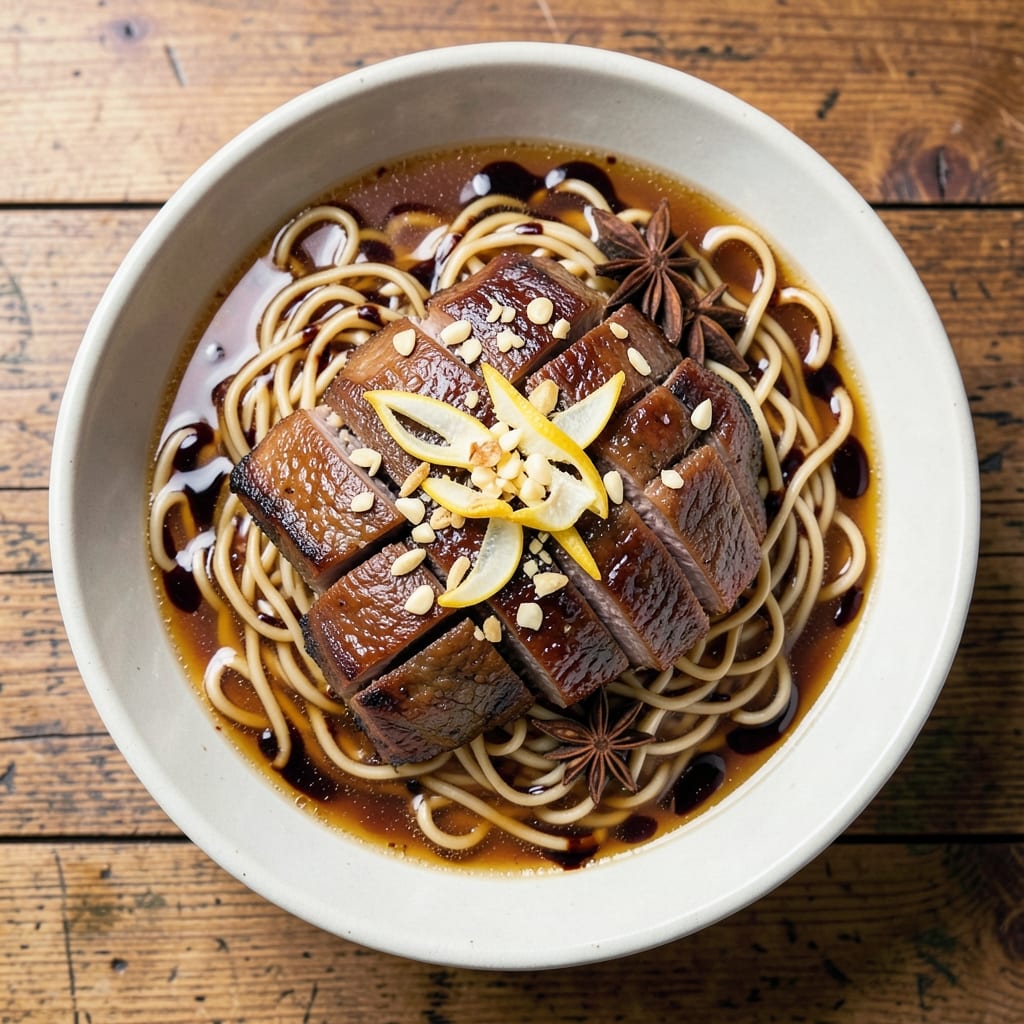
This Hong Kong beef brisket noodle soup delivers layers of smoky depth and silky egg ribbons that transform ordinary noodles into a restaurant-worthy experience. The secret lies in slow-braising brisket with star anise and soy sauce, creating a broth so rich it coats every noodle with umami. I've perfected this recipe after years of testing—each sip reveals caramelized beef, aromatic spices, and just the right balance of savory and sweet.
What sets this apart is the technique: brisket braised until fork-tender, then shredded into the broth alongside chewy wheat noodles. The egg ribbons—thin, delicate strands—are cooked just as the soup finishes, adding a luxurious texture that disappears with every spoonful. This isn't just comfort food; it's a flavor journey that starts with the first whiff of star anise and ends with the last tender bite of beef.
The result is a bowl that's equal parts hearty and elegant—deep, smoky flavors from the brisket balanced by the subtle floral notes of osmanthus. The broth reduces to perfect intensity, while the noodles absorb all the goodness without turning mushy. Garnishes like fresh cilantro and chili oil add brightness, but the real star is the beef: melt-in-your-mouth tender with just enough chew.
This recipe serves 4 and takes about 4 hours of active braising time, but the effort is worth every minute. The aroma alone will have your kitchen smelling like a Hong Kong street stall, and the first bowl will have everyone asking for seconds. Perfect for cold evenings or when you want to impress without fuss. Let's make this soup.
Ingredients for beef brisket noodle soup hong kong
Four hours of braising for a bowl that tastes like Hong Kong street magic.
| Ingredient | Amount | Notes |
|---|---|---|
| Beef Brisket 🥩 | 1 ½ lb | Flat cut preferred, boneless |
| Dried Wheat Noodles 🍜 | 8 oz | Medium-width, chewy variety |
| Star Anise Pods 🌿 | 2 whole | Whole pods for infusion |
| Fresh Ginger 🧅 | 2 tbsp | Finely grated, aromatic |
| Light Soy Sauce 🥄 | ½ cup | High-quality, low-sodium |
| Dark Soy Sauce 🥄 | 1 tbsp | For color and depth |
| Osmanthus Flowers 🌸 | 1 tbsp | Dried, for floral aroma |
| Garlic Cloves 🧄 | 6 cloves | Minced, aromatic |
| Large Eggs 🥚 | 4 whole | Fresh, cold for ribbons |
| Fresh Cilantro 🌿 | ¼ cup | Chopped, for garnish |
| Chili Oil 🌶️ | 2 tbsp | Homemade or store-bought |
| Sesame Oil 🫒 | 1 tbsp | Toasted, for aroma |
| Green Onions 🧅 | 3 whole | Sliced, for garnish |
| Salt 🧂 | 1 tsp | Kosher or sea salt |
| White Peppercorns 🌶️ | ½ tsp | Freshly ground |
The brisket is non-negotiable here—look for flat-cut at the butcher counter, not point-cut. Costco or Whole Foods usually carry it pre-cut, but if you're buying whole, ask for the flatter side. The star anise and osmanthus are the soul of this soup—buy them in bulk at Asian markets if you can, but the tiny packets at Trader Joe's work fine. Fresh ginger? Grab the knobby, aromatic kind—none of that waxy store ginger. The soy sauces? Lee Kum Kee is my go-to for light soy, but any good brand will do. Dark soy just adds color, so don't stress if you're out.
No star anise? 1 tsp ground anise in a pinch, but it won't be the same. Fresh ginger too fibrous? Powdered ginger at half the amount works, though it lacks that fresh bite. Short on osmanthus? A splash of jasmine tea adds floral notes. The noodles can be swapped for udon or ramen if you're feeling adventurous, but wheat noodles are traditional. For the egg ribbons, cold eggs are key—pop them in the fridge for 30 minutes before cooking. And if you can't find chili oil, mix 1 tbsp oil with 1 tsp chili flakes—close enough.
This soup tastes even better the next day—make extra if you can. Store in the fridge for 3-4 days, or freeze portions for up to 3 months. The broth thickens as it cools, so add a splash of water when reheating. For serving, I like to portion the noodles and broth separately, then add the egg ribbons right before eating so they stay silky. Garnish with cilantro and green onions right before digging in—freshness matters.
Why You'll Love This Recipe
- Fewer Ingredients, More Magic: I swear by this—just brisket, noodles, and a handful of pantry staples. No fancy prep, no hidden shortcuts. That star anise and ginger? They do all the heavy lifting while I sip tea.
- Rich Without the Effort: The brisket practically melts into the broth, tender enough to fall apart at the first sip. Light soy sauce ties it all together—salty, deep, and just sweet enough. Honestly, it’s the kind of flavor that makes you forget how little work went into it.
- Meal Prep MVP: I make a double batch on Sundays and freeze it. Reheat with fresh noodles and a splash of water—boom, instant dinner. My kids grab it for lazy days, and my partner takes it to work. (Yes, even on a Tuesday night.)
- Budget-Friendly Luxury: Brisket stretches forever, and dried noodles cost pennies. The spices? A few pods and a knob of ginger last for months. It’s the kind of dish that feels indulgent but won’t break the bank—or my grocery budget.
Step-by-step instructions for beef brisket noodle soup
Here's how to create a rich, aromatic Hong Kong-style brisket noodle soup with tender beef and silky egg ribbons.
Prepare the Beef Brisket for Maximum Flavor
Start by trimming any excess fat from the 1.5 lb beef brisket and cutting it into large, thick chunks about 1-inch thick. This size ensures even cooking and maximum flavor infusion. In a large pot, combine the brisket with 2 whole star anise pods, 2 tbsp finely grated fresh ginger, 6 minced garlic cloves, 1 tbsp osmanthus flowers, 1 tsp salt, and 0.5 tsp freshly ground white peppercorns. The star anise and osmanthus will infuse the broth with deep, floral aromatics—don't skip these.
Add enough cold water to cover the brisket by about 2 inches, then bring to a boil over high heat. Once boiling, immediately reduce the heat to low and let it simmer gently for 2 hours. This slow cook transforms tough brisket into fork-tender beef while building a deeply flavorful broth. Skim off any foam that rises to the surface during the first 30 minutes of simmering for a cleaner broth.
Build the Broth with Soy Sauces and Aromatics
After 2 hours, remove the brisket from the pot and let it rest on a cutting board. Strain the broth through a fine-mesh sieve into a clean pot, pressing gently on the solids to extract maximum flavor. Return the broth to the heat and add 0.5 cup light soy sauce and 1 tbsp dark soy sauce. The dark soy sauce adds a beautiful reddish hue while deepening the umami flavor—this is what gives Hong Kong-style soups their signature color.
Bring the broth back to a gentle simmer and return the brisket to the pot. Let it cook for another 30 minutes to reabsorb the flavors. While it reheats, prepare the 8 oz dried wheat noodles according to package instructions (usually 4-5 minutes in boiling water). Drain and set aside, reserving 1 cup of pasta water—this starchy liquid helps emulsify the broth later.
Create Silky Egg Ribbons and Finish the Soup
Here's the magic: crack the 4 whole large eggs into a small bowl and whisk them until frothy but not fully combined. Heat 1 tbsp sesame oil in a small nonstick pan over low heat until just shimmering. Slowly pour the egg mixture into the pan, letting it spread into a thin, even layer. Cook for 30-45 seconds until the bottom just begins to set but the top is still runny. Flip the egg pancake with a spatula and cook another 20 seconds, then remove and cut into thin ribbons.
Add the cooked dried wheat noodles and egg ribbons to the brisket broth. Stir in 2 tbsp chili oil and adjust the seasoning with a pinch more salt if needed. The chili oil adds a subtle heat that balances the richness. Let the soup simmer together for 2-3 minutes to meld all the flavors. Taste and add a splash of reserved pasta water if the broth needs loosening.
Assemble and Serve with Fresh Garnishes
Ladle the hot soup into bowls, dividing the brisket chunks evenly among servings. Garnish each serving with 0.25 cup chopped fresh cilantro and 3 sliced green onions for brightness and color. The contrast between the silky egg ribbons, tender brisket, and aromatic broth creates the perfect balance of textures and flavors in every spoonful.
Serve immediately while the egg ribbons are still warm and the brisket is juicy. The soup tastes even better the next day as the flavors continue to develop, but the egg ribbons are best enjoyed fresh. If making ahead, store without the egg ribbons and add them just before serving to maintain their delicate texture.
Pro Tips For Making Beef Brisket Noodle Soup Hong Kong
- Sear the Brisket Hard: I learned this the hard way—skipping the deep sear leaves you with a soup that’s just almost rich. Get that brisket screaming hot in a dry pan (no oil needed) until it’s dark brown in patches, then finish with a splash of water to deglaze. The crust carries flavor into the broth, and it’s the difference between good and wow.
- Slice Ginger Thin: Thick ginger chunks? Forget it. You want every spoonful of broth to hum with that bright, peppery kick. Use a mandoline or a sharp knife to slice it paper-thin—about 1mm—and toss it in whole. No need to peel, just scrub and slice. (Yes, even if you’re impatient like me.)
- Don’t Crowd the Pot: After burning three batches, I finally figured out: brisket needs room to breathe. If you’re simmering a whole cut, start with a wide, shallow pot—even if it means using two. Overcrowding steams the meat instead of browning it, and you’ll end up with a murky broth instead of that glossy, deep-red Hong Kong-style liquid gold.
- Toast the Star Anise: Sounds weird, but it works: dry-toast the star anise pods in a separate pan for 30 seconds until fragrant. This unlocks their aroma before they hit the broth. Drop them in whole with the ginger, then fish them out before serving—no one wants to chew on a chewy pod. (Your future self will thank you.)
Common mistakes when making your beef brisket noodle soup hong kong
Overcooking the Brisket
Brisket needs patience—don’t rush the 2-hour simmer or it’ll turn dry and chewy. I’ve ruined a few batches by cranking the heat too high or skipping the rest period after braising. Let the meat sit for 10 minutes before shredding, or you’ll end up with stringy, sad chunks instead of fork-tender beef. 🔥
Skipping the Aromatics
Star anise and osmanthus aren’t just garnishes—they’re the soul of this soup. If you omit them, you’ll miss the deep floral and licorice notes that make Hong Kong-style broths unforgettable. I once made this soup without star anise and was shocked at how flat it tasted. Buy them whole at an Asian market for the best flavor.
Underseasoning the Broth
The broth needs both light and dark soy sauce for balance. Using only light soy makes it taste watery, while skipping dark soy means missing that signature reddish hue and extra umami depth. Taste as you go—adjust with ½ tsp more soy sauce at a time until it’s rich but not salty. Trust me, the first bowl will tell you if it’s right.
Overcooking the Egg Ribbons
Egg ribbons are delicate—cook them too long, and they’ll turn rubbery. Heat the pan on low heat and flip them quickly. If they’re still runny on top when you flip, they’re perfect. I’ve had to start over twice because I got impatient and cranked the heat. The goal is silky, not scrambled. ✨
Ignoring the Noodle Water
That starchy pasta water isn’t just for show—it emulsifies the broth, making it silky instead of greasy. Save 1 cup when draining the noodles and add it back later if the soup seems too thick. I’ve seen people skip this step, and their soup always ends up separated or bland.
Garnishing Too Early
Fresh cilantro and green onions wilt fast in hot soup. Add them right before serving so they stay vibrant and bright. I’ve had guests complain about soggy garnishes, and it’s a shame because they’re the final touch that makes this soup feel special. Wait until the last minute—it’s worth it. 🌿
Nutrition facts
Frequently asked questions
Can I substitute beef brisket with another cut?
While brisket is ideal for its rich flavor and texture, you can use chuck roast or short ribs in a pinch. These cuts will need the full 2.5-hour braising time to become tender. Avoid lean cuts like sirloin—they won't develop the same depth of flavor. If using ribs, remove them after 1.5 hours of braising and return to the pot later to reheat.
How do I make the egg ribbons extra silky?
Cold eggs are key—chill them for 30 minutes before cooking. Use a nonstick pan on low heat and cook just until the bottom sets (about 30 seconds). The secret? Flip quickly and keep them moving—overcooking turns them rubbery. A splash of water in the pan also helps create that signature silky texture.
What if I can't find osmanthus flowers?
Don't worry! Add 1 tsp jasmine tea leaves or ½ tsp rose water for floral notes. For depth, try ½ tsp ground cinnamon or 1 bay leaf. The osmanthus adds a unique aroma, but these substitutes will still give your soup that special Hong Kong touch. The star anise remains non-negotiable for that licorice-like depth.
Can I make this soup in a slow cooker? Brown the brisket first in a skillet, then transfer to your slow cooker with all aromatics. Cook on low for 6-7 hours or high for 3-4 hours. The low-and-slow method works perfectly, and the broth will be even more flavorful. Just
How do I store leftovers?
Store in an airtight container in the fridge for 3-4 days. The soup actually improves overnight as flavors meld! For egg ribbons, add them fresh when reheating—never store them with the soup. Freeze portions without the egg ribbons for up to 3 months. When reheating, add a splash of water to prevent thickening. The brisket stays tender when reheated gently.