
Soups & Stews
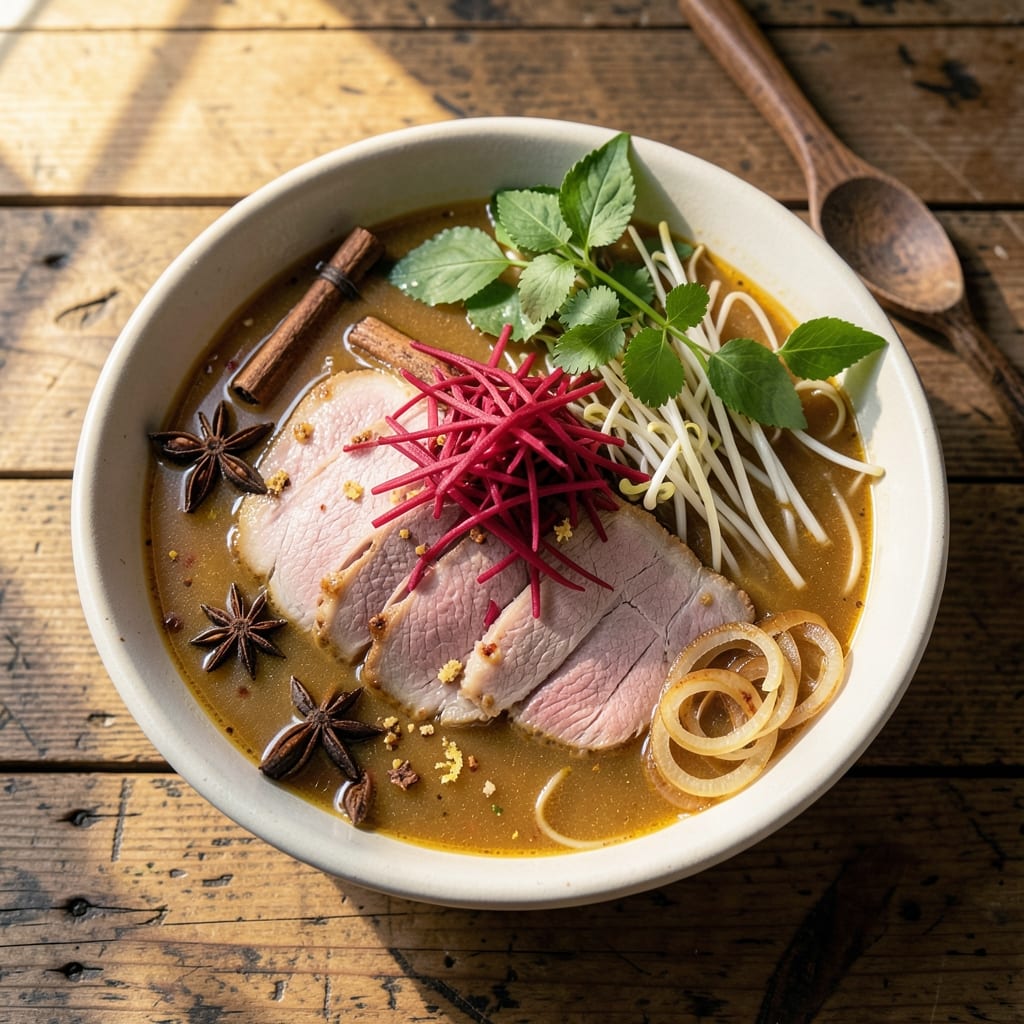
This basic pho soup recipe delivers the aromatic, comforting flavors of Vietnam's most beloved dish—fragrant broth infused with star anise, cinnamon, and cloves, tender protein, and delicate rice noodles. The secret lies in slow-simmering the broth for hours to develop deep, complex flavors while keeping the technique approachable for home cooks.
The foundation of great pho is the broth, where spices like star anise, cinnamon, and cardamom create layers of warmth and brightness. We'll build this slowly, balancing sweetness from onions and ginger with the savory depth of beef or chicken bones. The result? A rich, golden broth that's the soul of the soup.
Once the broth is perfected, we'll add protein—whether beef or chicken—that cooks just until tender, then finish with rice noodles that soak up the flavors without becoming mushy. Garnishes like Thai basil, lime, and bean sprouts add freshness and brightness, completing each bowl with vibrant contrast.
This recipe stays true to tradition while making it achievable at home—no shortcuts, just the essential steps to create pho that tastes like a visit to a bustling Hanoi street stall. Let's begin with the broth, where every spice and simmer matters.
Ingredients for basic pho soup
Fragrant spices and slow-simmered broth form the heart of this authentic pho.
| Ingredient | Amount | Notes |
|---|---|---|
| Beef Bones (or Chicken Bones) 🦴 | 2 lb | Marrow-rich for depth of flavor |
| Yellow Onions 🧅 | 2 whole | Sliced into 1-inch pieces |
| Fresh Ginger 🌿 | ½ cup | Peeled and roughly chopped |
| Star Anise 🌟 | 2 whole | Whole pods for infusion |
| Cinnamon Sticks 🌳 | 2 whole | 2-inch lengths preferred |
| Cardamom Pods 🌿 | 4 whole | Lightly crushed for aroma |
| Cloves 🌶️ | 4 whole | Whole, not ground |
| Garlic Cloves 🧄 | 6 cloves | Smashed for deeper flavor |
| Fish Sauce 🐟 | 2 tbsp | Red Boat preferred |
| Sugar 🍚 | 1 tbsp | White granulated |
| Rice Noodles 🍜 | 8 oz | Flat rice noodles, medium width |
| Thinly Sliced Beef (or Chicken) 🥩 | 1 lb | Sirloin or flank preferred |
| Thai Basil Leaves 🌿 | ½ cup | For garnish |
| Lime Wedges 🍋 | 2 whole | For serving |
| Bean Sprouts 🌱 | 1 cup | Fresh for crunch |
The spices are non-negotiable for authentic flavor. Star anise and cinnamon from Penzeys or bulk bins deliver the most complex aroma, while Red Boat fish sauce (available at most Asian markets) ensures umami depth. Fresh ginger should be vibrant yellow inside—no green or mold. For the bones, beef marrow bones create the richest broth, but chicken bones work in a pinch. Smash the garlic cloves with the side of your knife for maximum flavor extraction.
No star anise? Anise seeds or fennel seeds at double the amount mimic the flavor, though not perfectly. Running short on fish sauce? Soy sauce or coconut aminos add saltiness, but lack the funk. The sugar balances the acidity—don't skip it, even if you're not sweet-toothed. For the noodles, banh pho (flat rice noodles) are essential; the round egg noodles you might grab at the store won't cut it. If you can't find them, rice vermicelli is the next best option, but soak them longer.
Broth keeps for 5 days refrigerated or 3 months frozen in airtight containers. The noodles? Store them in a cool, dry place and they'll last 6 months. Prep the garnishes last minute—Thai basil wilts fast, and bean sprouts lose their crunch. Lime wedges should be cut just before serving to prevent browning. Double the broth recipe if you're feeding a crowd—it reheats beautifully and tastes even better the next day.
Why You'll Love This Recipe
- No-Chop Start: The bones do the work—just toss them in cold water, bring to a boil, and let the simmer do its magic. I swear, the hardest part is waiting for that rich, amber broth to develop.
- Spice & Depth Magic: That star anise and cinnamon? They’re not just garnish—they infuse the broth with a warm, earthy backbone that lingers. Honestly, the first sip makes me forget it’s "basic."
- Leftovers That Shine: The broth actually improves overnight, so I make a big batch on Sundays. Freeze portions for lazy nights, or reheat it for a quick lunch—no one ever complains.
- Budget Bone Truth: Cheap cuts of meat (or chicken thighs) turn into something luxurious. Between us, this is the only time I’ll spend $5 on bones and call it a steal—trust the flavor payoff.
Step-by-step instructions for fragrant pho broth and perfect noodles
Mastering pho means balancing deep aromatic layers with precise timing—here's how to build a rich broth and assemble every component.
Build the Spice Packet and Char the Aromatics
In a dry skillet over medium heat, toast the 2 whole star anise, 2 cinnamon sticks, 4 cardamom pods (lightly crushed), and 4 whole cloves for 2 minutes until fragrant. The spices should smell warm and piney—this releases their essential oils. Transfer to a bowl and set aside.
In the same skillet, add the 2 whole yellow onions and 0.5 cup fresh ginger (peeled and roughly chopped). Cook for 8-10 minutes until deeply caramelized and blackened in spots. This charring creates the pho's signature depth—don't rush it. The onions should be sticky and dark brown, with a smoky aroma that fills your kitchen.
Simmer the Broth with Beef Bones
Transfer the charred aromatics to a large stockpot with 2 lb beef bones (or chicken bones). Add 8 cups cold water and bring to a boil over high heat. Once boiling, reduce to a gentle simmer and skim off any foam that rises to the surface for the first 15 minutes. This removes impurities for a clear broth.
Add the toasted spice packet, 6 smashed garlic cloves, 2 tbsp fish sauce, and 1 tbsp sugar. Partially cover and simmer for 2-3 hours (or 1.5 hours for chicken). The broth should reduce slightly and develop a deep amber color. Taste occasionally—it should be rich, slightly sweet, and aromatic, with a hint of umami from the fish sauce.
Strain and Prepare the Noodles
Strain the broth through a fine-mesh sieve into a clean pot. Discard the solids. While the broth simmers, soak the 8 oz rice noodles in hot water for 10-12 minutes until pliable but still firm. Drain and set aside—over-soaking turns them mushy.
Return the broth to a simmer and keep it hot. The noodles should be served immediately after assembly, so work efficiently here. The broth should be clear with a deep golden hue and smell like a spice market—star anise, cinnamon, and ginger should dominate, with a clean meaty sweetness underneath.
Assemble the Pho Bowls
Divide the 1 lb thinly sliced beef (or chicken) evenly among 4 bowls. Ladle 1.5 cups hot broth over each serving. Add 1 cup bean sprouts and 0.5 cup Thai basil leaves to each bowl. The basil should be fresh and bright—add it last so it doesn't wilt in the hot broth.
Serve with 2 lime wedges on the side. The assembly should look vibrant: deep broth, tender protein, bright green herbs, and crisp bean sprouts. Each bowl should be balanced—savory broth, chewy noodles, and fresh garnishes. The lime adds a bright contrast to cut through the richness.
Finish with Noodles and Garnishes
Just before serving, add the drained 8 oz rice noodles to each bowl. The noodles should soften slightly in the hot broth—30-60 seconds is all they need. Stir gently to distribute the noodles evenly without breaking them.
Taste and adjust seasoning: add a splash of fish sauce if needed for more umami, or a pinch of sugar if the broth tastes too sharp. The final bowl should have three distinct layers—rich broth, tender noodles, and fresh garnishes. Serve immediately with lime wedges for squeezing over each bite.
Pro Tips For Making Basic Pho Soup
- Char the Bones Properly: Don’t just simmer—sear those bones black in spots first. High heat for 10-15 minutes until they crackle and darken; this unlocks deep umami. I used to skip this, and my broth always tasted watery no matter how long I simmered.
- Slice Ginger Paper-Thin: Skip the big chunks—shave ginger into translucent sheets with a mandoline or sharp knife. Fresh ginger should dissolve into the broth, not sit like a chewy afterthought. (Yes, even if you’re impatient like me.)
- Watch the Star Anise: Toss the whole pod in early, but remove it before serving—it turns bitter if left too long. I learned this the hard way after serving a bowl where someone groaned through every sip. Strain it out at the 30-minute mark.
- Upgrade with Onion Layers: Peel and slice one onion into thick rings, another into thin slices—char the thick ones for color, then add the thin ones later for sweetness. Sounds weird, but it works: depth without overpowering. (Your future self will notice.)
Make-ahead tips for leftovers
Broth Prep Ahead
Simmer the pho broth for 2-3 hours and store it in airtight containers in the fridge for up to 5 days. The flavors actually intensify overnight, making it perfect for quick lunches. I like to double the recipe and freeze half in quart-sized freezer bags—just thaw overnight in the fridge before reheating. 🌡️
Protein Prep
Slice your 1 lb beef or chicken into thin strips and marinate in 1 tbsp fish sauce and 1 tsp sugar for 30 minutes before cooking. Store the raw protein in an airtight container in the fridge for up to 2 days. When ready to serve, quickly sear the slices in a hot pan for 30-45 seconds per side—they'll finish cooking in the hot broth. 🍳
Noodle Prep
Rice noodles are best prepped fresh, but you can soak them in cold water for 30 minutes ahead of time to soften slightly. Store them in a sealed container in the fridge for up to 2 days. When ready to serve, drain and rinse them under cold water to remove excess starch, then add directly to the hot broth. 🍜
Garnish Prep
Fresh Thai basil and bean sprouts should be prepped last minute to maintain texture. Store the basil in a damp paper towel in a sealed container in the fridge for up to 2 days. Keep the bean sprouts in a dry container and rinse them just before serving. Lime wedges should be cut just before serving to prevent browning. 🍋
Reheating Broth
To reheat broth, gently warm it on the stove over medium-low heat until steaming—never boil it or the spices will become bitter. If the broth looks too thick, add 2-3 tbsp hot water to restore consistency. I always taste and adjust seasoning after reheating, adding a pinch of salt or fish sauce as needed. ✨
Make-Ahead Assembly
For a quick assembly, keep the broth, protein, and noodles separate until serving. Store the protein in the fridge for up to 2 days and cook it fresh when ready. Assemble bowls by adding hot broth to the protein, then topping with noodles and garnishes. This keeps everything hot and fresh-tasting. 💫
Nutrition facts
Frequently asked questions about making basic pho soup
Can I use chicken instead of beef for this pho recipe?
Chicken bones create a lighter, brighter broth that's perfect for a summer version of pho. Use the same technique—simmer for 1.5 hours instead of 2-3 hours—and adjust the fish sauce to taste. For extra richness, add a chicken thigh or two to the bones. The flavor will be more delicate but still deeply aromatic.
What if I don't have star anise or some of the spices?
No worries! For star anise, use 2 tsp anise seeds or 1 tsp fennel seeds instead. Skip cardamom pods and add 1 tsp ground cardamom (if available), but the dish will still taste amazing. The cinnamon and cloves are more critical—if missing, use 1 tsp cinnamon powder and 1 tsp ground cloves (though whole spices work best).
How do I know when the broth is ready?
The broth should smell like a spice market—warm, sweet, and aromatic with notes of star anise, ginger, and caramelized onions. Visually, it should be deep amber with a slight sheen. Taste it: it should be rich, slightly sweet, and savory with a hint of umami. If it's too bland, add more fish sauce; if too sharp, a pinch of sugar helps.
Can I make pho without rice noodles?
While traditional, you can substitute with rice vermicelli or even egg noodles in a pinch. For vermicelli, soak for 8-10 minutes until pliable. Egg noodles will cook faster (2-3 minutes in boiling water), but they won't have the same chewy texture. The broth and toppings will still shine—just adjust the noodle cooking time to your preference.
Why does my pho taste bitter?
Bitterness usually comes from over-simmering the broth or using too much ginger. Reduce the simmer time to 1.5-2 hours and taste frequently. If it's already bitter, balance it with a splash of fish sauce or a pinch of sugar. Avoid boiling the broth—keep it at a gentle simmer to preserve delicate flavors. Fresh ginger should be used sparingly (stick to 0.5 cup max).