
Soups & Stews
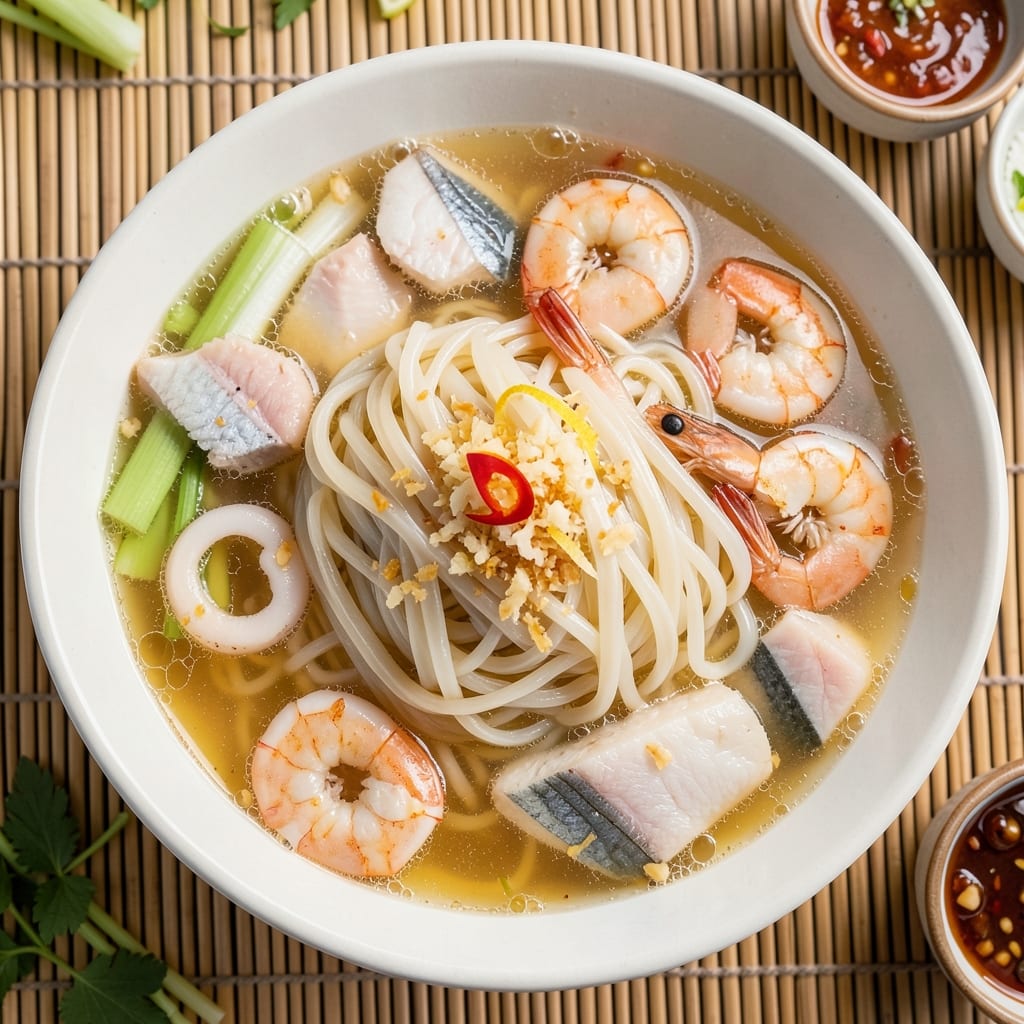
This Asian seafood noodle soup recipe delivers the perfect balance of silky rice noodles, tender seafood, and an aromatic lemongrass broth that transports you to a bustling street-side stall. The secret lies in building layers of flavor—starting with a fragrant base of ginger, garlic, and chili, then infusing it with lemongrass and fish sauce for depth. I’ve perfected this recipe to ensure the broth stays rich and clear, while the seafood cooks just enough to stay tender yet flavorful.
The beauty of this dish is in its simplicity and versatility. You’ll use fresh ingredients like shrimp, squid, or fish, paired with rice noodles that soften perfectly in the hot broth. Traditional techniques like wok searing for the aromatics and slow simmering for the broth create a restaurant-quality result at home. The final touch? Garnishing with fresh herbs and a squeeze of lime to brighten every spoonful.
What you’ll end up with is a bowl of soup that’s comforting yet vibrant—each bite packed with tender seafood, chewy noodles, and a broth so fragrant it’ll have everyone asking for seconds. The lemongrass and chili add a subtle kick, while the fish sauce ties everything together with umami richness. This is the kind of dish that feels like a hug in a bowl, perfect for a cozy night in or a gathering with friends.
Ready in under 45 minutes, this recipe is designed to impress without the fuss. Whether you’re serving it as a light lunch or a hearty dinner, the combination of textures and flavors makes it unforgettable. Let’s get cooking—your taste buds won’t know what hit them.
Ingredients for asian seafood noodle soup
Fresh seafood, fragrant herbs, and silky noodles—this soup comes together faster than you'd think.
| Ingredient | Amount | Notes |
|---|---|---|
| Fresh Shrimp (Peeled & Deveined) 🦐 | 1 lb | Medium-sized, tails on for presentation |
| Squid (Cleaned & Sliced) 🐙 | ½ lb | Tubing cut into rings, tentacles sliced |
| White Fish Fillets (Cod or Snapper) 🐟 | ½ lb | Skinless, cut into bite-sized pieces |
| Rice Noodles (Sticky or Vermicelli) 🍜 | 8 oz | Uncooked, dried variety |
| Lemongrass Stalks 🌿 | 3 whole | Bruised, bottom 3 inches only |
| Fresh Ginger 🧅 | 2 tbsp | Finely minced, peeled |
| Garlic Cloves 🧄 | 6 cloves | Minced, not pressed |
| Red Chili Peppers 🌶️ | 2 whole | Bird's eye or Thai, seeds removed |
| Fish Sauce 🍶 | 2 tbsp | Red Boat preferred |
| Coconut Milk (Light) 🥥 | 1 cup | Full-fat for creaminess |
| Vegetable or Seafood Stock 💧 | 4 cups | Homemade or quality store-bought |
| Lime Juice 🍋 | 1 tbsp | Freshly squeezed |
| Fresh Thai Basil Leaves 🌿 | ¼ cup | Packed, stems removed |
| Green Onions 🧅 | 3 whole | Thinly sliced, white and green parts |
| Vegetable Oil 🫒 | 2 tbsp | Neutral high smoke point |
| Salt 🧂 | 1 ½ tsp | Kosher or sea salt |
| White Pepper 🌶️ | ½ tsp | Freshly ground preferred |
The seafood makes or breaks this dish, so buy the freshest you can find. Whole Foods or your local fish market are your best bets for shrimp and squid—look for clear, glossy skin and a seafood smell (not fishy). If you're using fish, cod or snapper hold up best in the broth. For the lemongrass, grab 3 stalks with tight, pale green leaves—they're sweeter and more aromatic. Fresh ginger and garlic are non-negotiable here; pre-minced jars lack the punch. Pro tip: bruise the lemongrass with the flat side of your knife before using to release more flavor.
No fresh Thai basil? Regular basil or cilantro will work in a pinch, though the flavor won't be identical. Short on squid? Double the shrimp or fish—just reduce cooking time by a minute or two. The fish sauce is crucial for that umami depth, but if you're avoiding it, soy sauce plus a dash of sugar gets you close. For the stock, homemade is ideal, but even the good store-bought stuff (like Pacific Foods) works. The coconut milk adds richness, but if you're watching calories, light coconut milk or a splash of cream keeps it lighter without sacrificing flavor.
This soup tastes even better the next day—make a double batch and save half for lunch. Store leftovers in the fridge for 3 days or freeze for 2 months. For freezing, cool the broth completely first to prevent ice crystals. The noodles soften as they sit, so add a splash of water when reheating. Garnish with fresh herbs and lime right before serving—that's when everything pops. Keep the lime wedges on the table too; everyone will want to squeeze their own.
Why You'll Love This Recipe
- No-Fuss Prep: I swear by this recipe because the hardest part is peeling shrimp—and even that’s optional if you grab pre-peeled. The squid and fish just need a quick rinse, then they’re ready to hit the pot with the lemongrass and noodles. Twenty minutes later, dinner’s on the table.
- Umami Bomb: That first sip? Chef’s kiss. The shrimp and squid caramelize in the broth while the lemongrass infuses a bright, citrusy depth, and the fish stays tender but flaky. It’s the kind of soup where every bite feels like a little vacation—no heavy cream or weird aftertaste.
- Weeknight to Party: Serve it steaming in bowls for a lazy Tuesday or platter it with lime wedges and fresh herbs for a dinner party. The noodles soak up the broth perfectly, so you can adjust the thickness—thin for sipping, thick for slurping. (Yes, even my picky in-laws ask for seconds.)
- Budget-Friendly Luxury: Seafood can be pricey, but this recipe stretches ingredients further than takeout. A single batch feeds four heartily, and leftovers reheat beautifully—just add a splash of water to loosen the broth. Honestly, it’s the kind of meal that makes grocery day feel like a win.
Step-by-step instructions for Asian seafood noodle soup
This fragrant broth comes together in layers—start with the aromatic base, then build to silky perfection.
Build the Lemongrass-Ginger Base
Heat the 2 tablespoons vegetable oil in a large pot over medium heat. Add the 3 whole lemongrass stalks (bruised bottoms only) and 2 tablespoons fresh ginger (finely minced). Let them sizzle for 2 minutes until fragrant—this releases their essential oils and forms the soul of your soup. You'll know it's right when the kitchen smells like a bustling Thai street market.
Next, add the 6 cloves garlic (minced) and 2 whole red chili peppers (seeds removed, sliced). Cook for 30 seconds until the garlic turns golden—don't let it brown or it'll turn bitter. Here's the thing—if you rush this step, your broth will lack depth. Take your time and let those aromatics develop properly.
Develop the Broth
Pour in the 4 cups vegetable or seafood stock and bring to a gentle boil. Once boiling, reduce heat to medium-low and let it simmer for 10 minutes. This slow simmer extracts maximum flavor from your aromatics. Skim off any foam that rises to the surface—it's just impurities from the stock.
After 10 minutes, stir in the 2 tablespoons fish sauce and 1 cup coconut milk (light). The coconut milk will create a beautiful, velvety sheen on the broth. Taste and adjust seasoning with the 1.5 teaspoons salt and 0.5 teaspoon white pepper—this is where you balance the flavors. The soup should be savory but not salty, with a subtle heat from the chili.
Cook the Seafood
Add the 0.5 lb squid (cleaned & sliced) and 0.5 lb white fish fillets (cod or snapper, bite-sized) to the simmering broth. Cook for 3-4 minutes—just enough time for the fish to turn opaque and the squid to turn slightly translucent. Don't overcook or they'll turn rubbery. Here's a pro tip: if you're using frozen seafood, thaw it first in cold water and pat it completely dry before adding.
Remove the seafood with a slotted spoon and set aside. Now add the 1 lb fresh shrimp (peeled & deveined) to the broth. Cook for 2 minutes until they turn pink and curl slightly. The shrimp should be just cooked through—if they're still translucent in the center, they need another minute. Remove them and set aside with the other seafood.
Prepare the Noodles
Bring a separate pot of water to a boil. Add the 8 ounces rice noodles and cook according to package instructions—usually 3-5 minutes until they're tender but still slightly chewy. Drain and rinse briefly under cold water to stop the cooking process. This prevents them from turning mushy when added to the hot broth.
Divide the cooked noodles among 4 bowls. Ladle the hot broth over the noodles, then arrange the seafood on top. The heat from the broth will finish cooking the seafood slightly, infusing it with the aromatic flavors.
Finish and Serve
Drizzle each bowl with 1 tablespoon lime juice and top with 0.25 cup fresh Thai basil leaves and 3 whole green onions (thinly sliced). The lime juice brightens the dish while the basil adds freshness. Stir gently to combine—this ensures every bite gets that perfect balance of flavors.
Serve immediately while the noodles are still hot and the broth is steaming. The contrast between the silky noodles, tender seafood, and fragrant broth makes this soup truly unforgettable. And here's the best part—each bowl is packed with authentic Thai flavors that transport you straight to a bustling Bangkok street market.
Pro Tips For Making Asian Seafood Noodle Soup
- Parboil the Squid First: I learned this the hard way—tossing whole squid into the simmering broth means it’ll turn rubbery before the ink infuses. Instead, blanch the squid rings in boiling water for 30 seconds, then shock them in ice water. This keeps them tender while the broth absorbs their flavor.
- Dry Your Shrimp Thoroughly: Wet shrimp steams instead of sears, and that’s a missed opportunity for crispy edges. Pat them completely dry with paper towels, then let them sit uncovered for 10 minutes. The extra effort guarantees they’ll caramelize fast and stay juicy.
- Split the Lemongrass Properly: Slice the stalks lengthwise into 3-inch pieces—no need to bruise the pith. This exposes more surface area for flavor without releasing bitter sap. Toss them in last 5 minutes of cooking so they perfume the broth instead of turning to mush.
- Cook Noodles Separately: I used to toss noodles in raw, and they’d turn to glue. Instead, parboil them for 1 minute less than package instructions, then drain and rinse with cold water. Add them to the broth just before serving—they’ll finish cooking in the heat while staying al dente.
Troubleshooting this recipe
Broth Too Thin?
If your broth lacks richness, try reducing it first. Simmer the base (before adding seafood) uncovered for an extra 5-10 minutes to evaporate excess liquid. For instant depth, stir in 1 tablespoon cornstarch mixed with 2 tablespoons cold water and simmer for 2 minutes. I’ve also had success adding ½ cup coconut milk at the end for creaminess without thinning the broth. 💫
Seafood Overcooked?
Shrimp and squid cook faster than you think! Use a timer for precise cooking—shrimp should reach 145°F internal temperature (about 2 minutes in hot broth). For squid, look for opaque rings with no pink center (3-4 minutes). If you overcook, save the broth and poach fresh seafood separately. I keep a small pot of water at a rolling boil nearby for quick rescues. ⏱️
Noodles Mushy?
Rice noodles turn mushy when overcooked or reheated improperly. Cook them 1 minute less than package instructions, then rinse in cold water to stop cooking. For reheating, add 1-2 tablespoons broth to the noodles before microwaving—this keeps them tender without sogginess. Pro tip: Soak dry noodles in warm broth for 5 minutes before serving if you prefer them softer. 🍜
Broth Too Salty?
Fish sauce is potent—start with 1 tablespoon and taste as you go. If it’s too salty, balance it with 1 teaspoon sugar or a splash of lime juice (about 1 tablespoon). For a milder broth, dilute with ½ cup warm water or extra coconut milk. I’ve also used a pinch of white miso paste to add umami without extra salt. 🧂
Lemongrass Not Aromatic?
Old or tough lemongrass stalks lose flavor. Always use fresh stalks with tight, pale green leaves. Bruise them with the flat side of your knife before adding to release oils. If your lemongrass tastes bland, try 1 extra stalk or simmer it longer (up to 15 minutes in the broth). For a shortcut, use 1 tablespoon lemongrass paste (found in Asian markets). 🌿
Nutrition facts
Frequently asked questions
Can I substitute fresh seafood with frozen?
Yes, but thaw it properly first! Place frozen seafood in a bowl of cold water for 15-20 minutes until fully thawed, then pat completely dry. This prevents the broth from getting watered down. For shrimp, look for tails that curl when cooked—frozen shrimp should be firm and smell fresh (not fishy).
What if I don't have Thai basil?
No problem! Use regular basil or cilantro as a substitute—they'll add freshness, though the flavor won't be identical. For a deeper Thai profile, try mint leaves or Chinese cilantro (coriander). If you're avoiding herbs, a sprinkle of toasted sesame seeds adds texture instead.
How can I make this soup spicier?
Add more chili! For heat, include 1 extra chili pepper (seeds in for extra spice) or ½ teaspoon chili flakes at the end. For smoky depth, stir in ½ teaspoon smoked paprika when building the broth. If you love heat, a dash of Sriracha or chili garlic sauce on each bowl works too.
Can I make this soup in a slow cooker?
Sauté the aromatics (ginger, garlic, chili) in a pan first, then transfer everything to the slow cooker. Cook on Low for 3-4 hours or High for 1.5-2 hours. Add the seafood only in the last 10 minutes to prevent overcooking. Noodles should be cooked separately and added just before serving.
What's the best way to store leftovers?
Store in an airtight container in the fridge for up to 3 days or freeze for 2 months. To reheat, warm the broth gently on the stove, then add noodles and seafood separately to avoid sogginess. For frozen leftovers, thaw overnight in the fridge and reheat with a splash of water to restore moisture.