
Soups & Stews
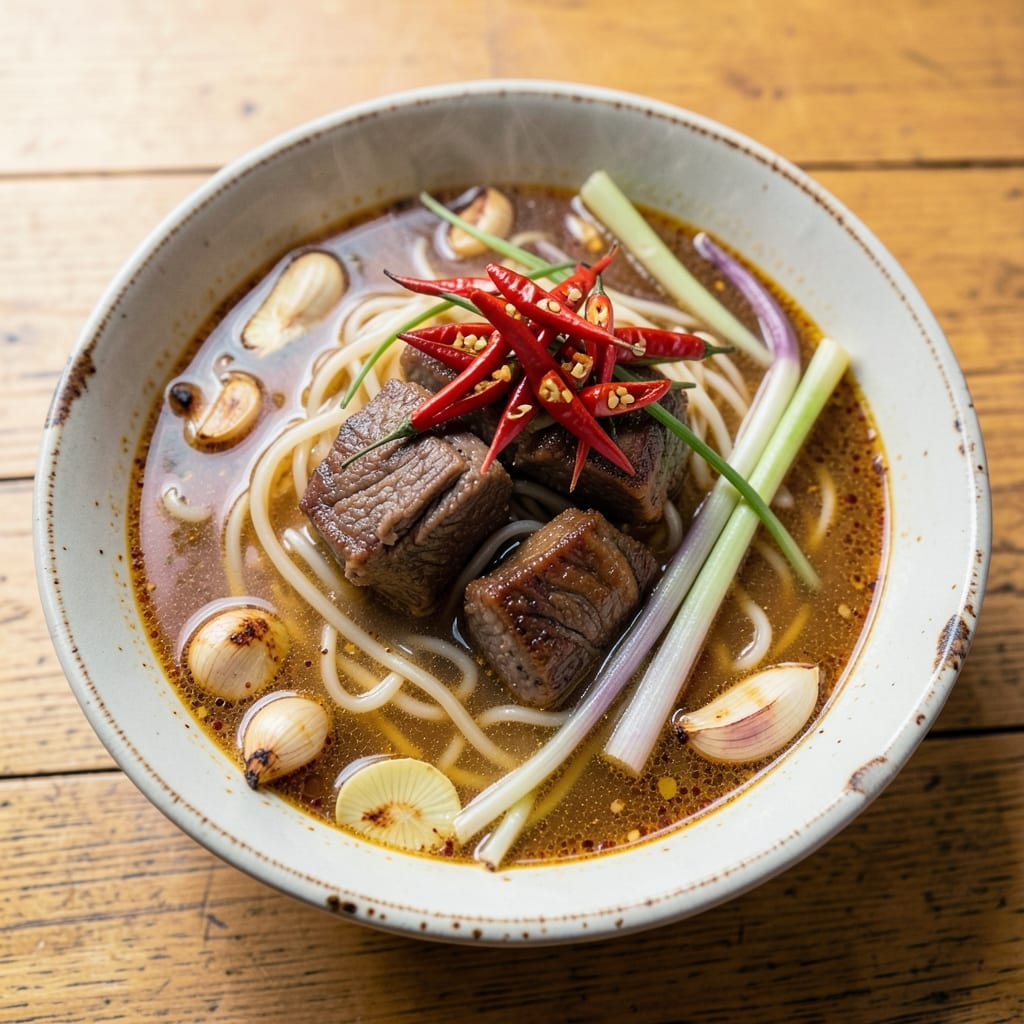
This authentic Thai boat noodle soup recipe brings the bustling flavors of Bangkok street stalls to your kitchen—fragrant lemongrass, fiery chilies, and umami-rich broth that simmers for hours. The secret lies in charring aromatic herbs and balancing sweet, sour, and spicy notes to perfection. I’ve perfected this version after years of testing, ensuring every spoonful delivers that signature depth without shortcuts.
What sets this recipe apart is the two-stage broth preparation: first, we build a fragrant paste of lemongrass, galangal, and kaffir lime leaves, then slow-simmer it with beef or pork for hours to develop rich, complex flavors. The rice noodles are cooked separately to maintain their signature chewiness, then topped with tender protein, crisp vegetables, and a bright lime-chili dressing. This is the kind of soup that transforms a simple meal into an experience.
The result is a bowl of golden, aromatic broth with tender meat, slippery noodles, and a perfect balance of heat and brightness. Each component—from the charred herbs to the fresh garnishes—plays a role in creating that authentic street-food taste. Whether you’re serving a crowd or treating yourself, this recipe delivers restaurant-quality results at home.
For those who prefer plant-based options, I’ll include a vegetarian variation using mushrooms and tofu, but the traditional version remains the star. Let’s get started—your taste buds are about to embark on a Thai culinary journey.
Ingredients for authentic thai boat noodle soup
Fourteen ingredients transform your kitchen into a Bangkok street stall tonight.
| Ingredient | Amount | Notes |
|---|---|---|
| Beef Chunks 🥩 | 1 ½ lb | Boneless, 1-inch cubes preferred |
| Rice Noodles 🍜 | 8 oz | Thin, flat variety like sen lek |
| Lemongrass Stalks 🌿 | 4 whole | Bruised and cut into 2-inch pieces |
| Galangal Root 🍃 | 3 oz | Peeled and sliced into thin coins |
| Kaffir Lime Leaves 🍋 | 4 whole | Bruised and torn into pieces |
| Bird's Eye Chilies 🌶️ | 6 whole | Whole for broth, minced for dressing |
| Shallots 🧅 | 8 whole | Peeled and halved lengthwise |
| Garlic Cloves 🧄 | 8 cloves | Peeled and smashed |
| Fish Sauce 🍶 | 2 tbsp | Red Boat brand preferred |
| Palm Sugar 🍯 | 2 tbsp | Or substitute brown sugar |
| Coconut Milk 🥥 | 1 cup | Full-fat for creaminess |
| Fresh Thai Basil Leaves 🌿 | ½ cup | Whole leaves for garnish |
| Lime Wedges 🍋 | 2 whole | For serving |
| Vegetable Oil 🫒 | 2 tbsp | For charring aromatics |
| Salt 🧂 | 1 tsp | Adjust to taste |
The aromatic trio—lemongrass, galangal, and kaffir lime—needs to be fresh. Asian markets or specialty stores are your best bet for galangal and kaffir lime, though some well-stocked grocery stores carry them now. Look for lemongrass stalks that are vibrant green and firm—no wilted ends. Galangal should smell citrusy and peppery, not musty. If you can't find galangal, ginger is a pinch-worthy substitute, though it won't be identical. The beef chunks? Chuck roast gives the best texture when cubed—it stays tender through hours of simmering. For the rice noodles, sen lek or banh pho are ideal, but any thin rice noodles work in a pinch.
No bird's eye chilies? Thai bird's eye chilies are essential for that signature heat, but if you can't find them, red chili flakes at half the amount will get you close. The Red Boat fish sauce is non-negotiable for authenticity—it's the umami backbone of the broth. Substituting with soy sauce will work, but it lacks that depth. For the palm sugar, if you can't find it, light brown sugar is the next best thing. The coconut milk should be full-fat for that creamy texture—canned is fine, but avoid cartons. Fresh Thai basil is ideal, but if you're using regular basil, double the amount to compensate for the milder flavor. The shallots and garlic should be bruised, not chopped, to release their flavors gradually into the broth.
This soup tastes even better the next day as the flavors meld. Store the broth separately from the noodles and toppings—3-4 days in the fridge, 3 months in the freezer. The noodles cook in 3 minutes, so keep them in a sealed container with a damp paper towel to prevent drying. The charred aromatics can be prepped ahead and stored in the freezer for up to 1 month. For a quick assembly, pre-cook the noodles and store them separately. When ready to serve, simply reheat the broth, add the noodles, and top with fresh garnishes. The lime wedges should be added at the table—squeeze fresh juice over each bowl to brighten the flavors.
Why You'll Love This Recipe
- No Chopping Chaos: I swear by this recipe because the beef chunks practically cook themselves—just sear them right in the pot with the lemongrass and galangal. The hardest part is bruising the kaffir lime leaves (and even that’s just a few smacks with a knife), so you’re not stuck dicing herbs for hours.
- Umami Bomb: That first spoonful of broth? It’s like a hug for your taste buds. The galangal and lemongrass simmer into something deep and citrusy, while the beef turns tender enough to melt. Honestly, the balance of heat and brightness makes it my go-to when I crave something that tastes made with love—not just thrown together.
- Leftovers That Shine: Between us, this soup only gets better the next day. The flavors meld even more, and the noodles soak up that rich broth like a dream. I’ll often make a double batch—one for dinner, one for lunch—because reheating it is effortless (just a splash of water, a quick stir, and boom).
- Weeknight Hero: This is my secret weapon for busy nights. The rice noodles cook in minutes, and the broth comes together while you prep the rest. Even my picky roommate (who hates "fancy" dishes) devours it—proof that it’s simple enough for a Tuesday but still feels like a treat.
Step-by-step instructions for authentic Thai boat noodle soup
Transform simple ingredients into a fragrant, restaurant-quality bowl with these precise techniques.
Prepare the Aromatic Base
Heat the 2 tablespoons vegetable oil in a large pot over medium-high heat. Add the 8 whole shallots and 8 cloves garlic, cooking for 2-3 minutes until the shallots begin to char slightly at the edges and release their sweet aroma. This caramelization builds the soup's deep, complex flavor foundation.
Add the 4 whole lemongrass stalks (cut into 2-inch pieces), 3 oz galangal root (sliced into thin coins), and 4 whole kaffir lime leaves (bruised and torn). Cook for another 2 minutes until the galangal softens and the lemongrass releases its citrusy fragrance. This step is where the authentic Thai flavors begin to develop—don't rush it.
Build the Broth with Beef and Spices
Add the 1.5 lb beef chunks to the pot and sear for 3-4 minutes until they develop a light crust. Pour in 6 cups water (enough to cover the beef) and bring to a boil. Once boiling, reduce heat to medium-low and add the 6 whole bird's eye chilies and 1 teaspoon salt. Simmer uncovered for 45-50 minutes until the beef is fork-tender and the broth has reduced slightly.
Strain the broth through a fine-mesh sieve into a clean pot, pressing gently on the solids to extract maximum flavor. Discard the solids. Return the strained broth to the pot and stir in the 2 tablespoons fish sauce and 2 tablespoons palm sugar, adjusting to taste. The broth should be fragrant with a balance of savory, sweet, and slightly spicy notes—this is the heart of your soup.
Finish the Broth and Cook the Noodles
Return the broth to a gentle simmer and stir in the 1 cup coconut milk. The coconut milk will create a velvety texture while adding subtle sweetness. Meanwhile, prepare the 8 oz rice noodles by soaking them in hot water for 8-10 minutes until pliable but still slightly firm. Drain and set aside.
To assemble, divide the cooked noodles among four bowls. Ladle the hot broth over the noodles, ensuring each bowl gets an equal share of beef and aromatic broth. The noodles should soften further in the hot liquid, creating that perfect al dente texture we love in boat noodles.
Garnish and Serve with Confidence
Top each bowl with 2 tablespoons fresh Thai basil leaves and a squeeze of lime wedges. The basil adds freshness while the lime brightens the rich flavors. Serve immediately with extra lime wedges on the side—this is where diners can adjust the acidity to their preference.
For authenticity, serve in individual bowls with chopsticks and a spoon, just like in Thai street food stalls. The soup should be aromatic when you lift the bowl, with tender beef that falls apart easily, fragrant broth that coats the noodles perfectly, and a balance of spicy, sweet, and savory flavors in every bite. This is the soul of Thai comfort food captured in a bowl.
Pro Tips For Making Authentic Thai Boat Noodle Soup
- CHAR THE BEEF IN STAGES: Start with a screaming-hot wok or pot—you want those beef chunks to sear fast and release fat before adding broth. Once the meat’s browned and crisp in spots, pull it out and set aside. This isn’t just about flavor; it’s about keeping the broth clear and rich, not murky from overcooking. (Yes, even if you’re impatient like me.)
- SLICE GALANGAL THINLY: Skip the thick chunks—authentic boat noodle soup relies on galangal’s peppery kick, and thin slices (about 1/8-inch) dissolve into the broth without leaving tough bits. I learned this the hard way after straining out a mouthful of chewy root. Use a sharp knife and work parallel to the grain.
- DON’T BOIL THE NOODLES: Rice noodles for boat noodle soup should be al dente—firm to the bite—when they hit the broth. Boil them for 20-30 seconds max in hot water, then shock in ice water to stop cooking. Tossing them straight into the simmering soup will turn them mushy. (Your future self will thank you.)
- USE FRESH LEMONGRASS STALKS: The outer layers of lemongrass are fibrous and bitter—peel away the tough outer leaves before bruising the stalks with the side of your knife to release oils. If using dried lemongrass powder, halve the amount; it’s a common shortcut, but fresh is non-negotiable for that bright, citrusy depth. (I was skeptical until I tried it.)
Wine and beer pairings for this dish
Thai White Wine
Thai boat noodle soup’s complex aromatics—lemongrass, galangal, and coconut milk—pair beautifully with a crisp, aromatic Thai white wine like Oakley Vineyards Gewürztraminer from California. Its lychee and floral notes complement the soup’s citrusy brightness, while a touch of sweetness balances the spicy broth. Serve slightly chilled to enhance the wine’s refreshing qualities. 🍷
Light Thai Red
For those preferring red, a Pinot Noir from Thailand—like Thai Winery’s Ruby Cabernet—works surprisingly well. Its light body and subtle berry notes won’t overpower the dish, while its acidity cuts through the richness of the coconut milk. Look for bottles labeled "Thai Ruby" for authenticity. 🍇
Craft Beer Options
A Thai-inspired IPA like Singha Premier Beer (a Thai lager) or a hoppy pale ale with citrus notes (think Sierra Nevada Pale Ale) cleanses the palate between bites. The beer’s effervescence contrasts the soup’s creamy texture, while its malt sweetness mirrors the palm sugar in the broth. 🍺
Non-Alcoholic Pairings
For a refreshing non-alcoholic match, try Thai iced tea (sweetened with palm sugar) or a ginger-lime soda like San Pellegrino Aranciata. The tea’s floral notes harmonize with the lemongrass, while the ginger-lime soda’s tang mirrors the lime garnish. Serve over ice for a crisp finish. 🌿
Dessert Wine Harmony
End the meal with a Thai dessert wine like Mae Klong Sweet Red Wine, a ruby port-style wine made from Thai grapes. Its caramel and dried fruit flavors echo the soup’s sweet-spicy balance, making it a unique and satisfying closer. 🍷✨
Nutrition facts
Frequently asked questions
Why is galangal so important in this recipe?
Galangal provides that signature Thai citrusy-pine flavor that's impossible to replicate with ginger. It's the aromatic backbone that balances the heat and sweetness in the broth. Without it, your soup will taste flat and missing that authentic depth—think of it as the soul of the dish!
Can I make this soup with chicken instead of beef?
Yes, but you'll need to adjust the cooking time. Chicken cooks much faster than beef, so use 1.5 lbs boneless chicken thighs and simmer for only 20-25 minutes after the broth comes to a boil. The skin will add extra richness to the broth if left on.
How do I adjust the spice level for kids or sensitive eaters?
Remove the whole bird's eye chilies before straining the broth, then add just 1 teaspoon of minced chili (or none at all) when finishing. For extra mildness, serve with a side of cucumber slices to cool the palate. The coconut milk already adds natural creaminess to balance any heat.
What's the best way to store leftovers?
Store the broth and meat separately from the noodles in airtight containers. The broth keeps for 3-4 days in the fridge or 3 months in the freezer. Reheat gently, then add fresh noodles when serving. Never reheat the noodles directly—they'll turn mushy!
Can I make this vegetarian?
Replace the beef with 1 lb extra-firm tofu (pressed and cubed) or 8 oz shiitake mushrooms (sliced). Simmer the tofu for 15 minutes after adding to the broth. For extra umami, add 1 tbsp soy sauce along with the fish sauce. The texture will be different but still delicious!