
Soups & Stews
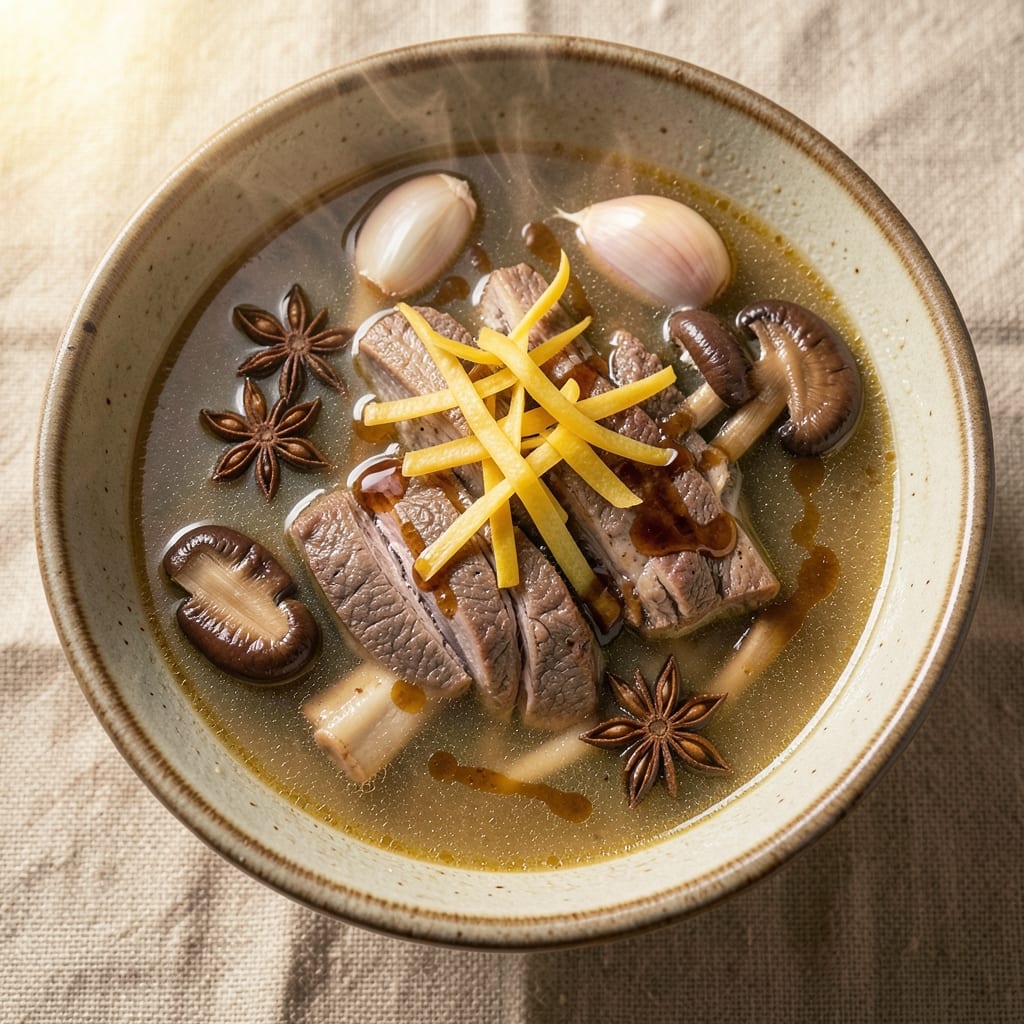
This Asian beef bone soup recipe delivers the kind of deeply satisfying, umami-rich broth that transforms ordinary meals into comforting experiences. 💛 The secret lies in slow-simmering beef bones with aromatic spices and fresh herbs, creating a silky, flavor-packed foundation that's impossible to resist. What sets this version apart is the balance between traditional techniques and modern convenience—rich enough for special occasions but simple enough for weeknights.
The magic happens in the broth, where beef bones release their natural gelatin and marrow over hours of gentle simmering. We'll build layers of flavor with ginger, garlic, star anise, and soy sauce, then finish with fresh herbs for brightness. The result is a velvety, deeply savory liquid that clings to every noodle or bite of protein you add—whether that's silky rice noodles, tender beef slices, or crisp vegetables.
What makes this recipe truly special is how it adapts to your needs while maintaining authenticity. You can prepare the broth ahead of time and store it for up to three days, making it perfect for meal prep. The noodles cook in minutes, and optional garnishes like cilantro, lime, and chili oil let you customize each bowl to your taste. Every spoonful delivers that perfect harmony of textures—silky broth, tender noodles, and hearty beef—all working together in perfect balance.
This is the kind of soup that warms you from the inside out, perfect for chilly evenings or when you need a nourishing meal that feels like a hug. The technique is straightforward, but the results are anything but ordinary. Let's create something that tastes like home, no matter the season.
Ingredients for asian beef bone soup
Six ingredients create this deeply comforting, umami-packed broth that's perfect for chilly evenings.
| Ingredient | Amount | Notes |
|---|---|---|
| Beef Bones 🦴 | 3 lb | Marrow and knuckle bones preferred |
| Fresh Ginger 🧅 | ½ cup | Unpeeled, sliced into thick rounds |
| Garlic Cloves 🧄 | 8 cloves | Smashed lightly with side of knife |
| Star Anise 🌟 | 4 whole | Lightly crushed for deeper flavor |
| Dried Shiitake Mushrooms 🍄 | 4 whole | Rehydrated in hot water first |
| Light Soy Sauce 🥄 | ½ cup | Kikkoman preferred for authentic taste |
| Sesame Oil 🫒 | 1 tbsp | Toasted for nutty aroma |
| Rice Vinegar 🍶 | 2 tbsp | For brightness at the end |
| Fresh Cilantro 🌿 | ¼ cup | Chopped for garnish |
| Lime Wedges 🍋 | 2 whole | For serving |
| Rice Noodles 🍜 | 12 oz | Thin or medium width preferred |
| Green Onions 🧅 | 4 whole | Thinly sliced for garnish |
| Chili Oil 🌶️ | 2 tbsp | Optional for heat |
| Salt 🧂 | 2 tsp | Diamond Crystal preferred |
| Black Peppercorns 🌶️ | 1 tsp | Freshly cracked |
The beef bones are the heart of this soup—marrow and knuckle bones give you that luxurious, gelatin-rich broth. Costco or your local butcher shop are the best places to find them fresh. If you can't get marrow bones, beef shank bones work too, but you'll need about 4 lbs instead. Look for bones that are bright red and still have some meat clinging to them—they'll give you more flavor. The ginger should be fresh, not powdered—Asian markets usually have the best selection of big, knobby roots. Star anise is a game-changer here; grab a small bag from the spice aisle at Whole Foods or Trader Joe's—it keeps for months in a dark cupboard.
No fresh ginger? Powdered works at half the amount, but it won't have the same depth. Out of star anise? Anise seeds or even a bay leaf can stand in, though the flavor will be different. The shiitake mushrooms add that earthy umami—if you can't find dried, fresh shiitake at double the amount works too. For the noodles, rice vermicelli is ideal, but any thin noodle will do. The soy sauce matters—Kikkoman light soy is what I always use, but any good-quality light soy will work. And if you're feeling fancy, toast your sesame oil in a dry pan for 30 seconds before adding it to the broth—that nutty aroma is worth the extra minute.
This broth tastes even better the next day—make a big batch and store it in the fridge for up to 5 days. The noodles cook in just 2-3 minutes, so keep them in a separate container until serving. For meal prep, portion the broth into jars and freeze for up to 3 months. When you're ready to serve, just reheat the broth and toss in fresh noodles. The lime wedges and cilantro should go on last—their bright flavors will wake up the whole bowl. If you make this ahead, save the garnishes for serving so everything stays fresh.
Why You'll Love This Recipe
- Pantry-Friendly Start: I swear by this—no last-minute grocery runs. Dried shiitake mushrooms and star anise sit in my cupboard for months, waiting for this very moment. Toss in some fresh ginger and garlic (both take 30 seconds to mince), and you’ve got your base.
- Umami Bomb: That first sip? Chef’s kiss. The beef bones melt into the broth, while the mushrooms and star anise build layers of deep, savory warmth. Honestly, the aroma alone makes me forget about microwaved leftovers.
- Weeknight to Weekend: Make a big pot on Sunday, and you’ve got lunch covered for days. Cold broth? Perfect for noodles. Warm? Slurp it straight from the bowl. Even my picky teen asks for seconds—(yes, even on a Tuesday night).
- Budget Bone Magic: Beef bones are cheaper than steaks, and they turn into a meal that feeds four for under $15. The broth thickens over time, so the more you simmer, the richer it gets—no waste, just flavor. My wallet and taste buds thank me.
Step-by-step instructions for Asian beef bone soup
Here's how to create a deeply flavorful broth that'll make your noodles shine.
🔥 Step 1: Char the Beef Bones for Maximum Flavor
Preheat your oven to 450°F and arrange the 3 lb beef bones on a baking sheet. Roast for 20-25 minutes until they develop deep brown spots and smell amazing. This charring builds caramelized flavors that'll infuse your broth.
Here's the thing—don't wash the bones after roasting. Those browned bits are pure umami gold. Just transfer them to a large stockpot right away. I like to use marrow and knuckle bones for extra richness in the broth.
👨🍳 Step 2: Build the Aromatic Base
Add 4 whole dried shiitake mushrooms (rehydrated in hot water first) and 0.5 cup fresh ginger (unpeeled, sliced into thick rounds) to the stockpot. Pour in 8 cups cold water—enough to cover the bones by about 2 inches. Bring to a boil over high heat.
Once boiling, reduce to a simmer and skim off any foam that rises to the surface for 10 minutes. This gives you a clean broth foundation. Then add the 8 smashed garlic cloves, 4 lightly crushed star anise, and 2 tsp salt. The star anise will infuse a subtle licorice note that pairs perfectly with the beef.
🔥 Step 3: Simmer the Broth for Deep Flavor
Cover the pot and simmer gently for 3-4 hours—this is where the magic happens. You want the broth to reduce slightly and develop that rich, golden color. I check it every hour, adding hot water if needed to keep the bones covered.
About 30 minutes before finishing, add the 0.5 cup light soy sauce and 1 tsp black peppercorns. The soy sauce adds that essential umami punch while the peppercorns bring subtle heat. Strain the broth through a fine-mesh sieve into a clean pot, pressing gently on the solids to extract every last bit of flavor.
🍳 Step 4: Prepare the Noodles and Final Touches
While the broth simmers, prepare the 12 oz rice noodles according to package instructions—usually 5-7 minutes in boiling water until just tender. Drain and rinse briefly with cold water to stop the cooking process.
In a small bowl, whisk together 1 tbsp toasted sesame oil and 2 tbsp rice vinegar for the finishing touch. This bright, nutty combination cuts through the richness of the broth beautifully. Divide the noodles among bowls and ladle the hot broth over them.
🥘 Step 5: Assemble and Serve with Fresh Garnishes
Drizzle each bowl with the sesame oil-vinegar mixture and add 2 tbsp chili oil if you like heat. Garnish with 0.25 cup chopped fresh cilantro and 4 thinly sliced green onions for freshness. Serve immediately with the 2 lime wedges on the side.
This soup delivers that perfect balance of rich, savory broth and silky noodles. The aroma alone will have everyone gathering around your table—trust me, it's that good.
Pro Tips For Making Asian Beef Bone Soup
- BLANCH BONES FIRST: Skip the direct sear—give those beef bones a quick 5-minute boil in salted water to loosen dirt and impurities. I learned this the hard way after my first batch tasted like a muddy pond. Rinse them well afterward, or the broth will cloud up no matter how long you simmer.
- SMASH THE GINGER: Don’t just slice it—pound the fresh ginger with the flat side of your knife (or a mortar) until it releases its juices and turns slightly purple. Sounds weird, but it works: the broth will taste deeper and less one-dimensional. Save the scraps for stir-fries—they’re not wasted.
- SIMMER LOW AND LONG: After the initial 30-minute boil to extract collagen, drop the heat to a bare simmer where you can’t see bubbles breaking the surface. I was skeptical until I tried it—my broth went from murky to golden and rich in half the time. Cover loosely and resist the urge to peek.
- SOAK MUSHROOMS IN HOT WATER: Rehydrate dried shiitakes in boiling water for 10 minutes instead of cold. The hot water extracts more flavor and softens them faster—no need to wait hours. Strain and use the soaking liquid in the broth; it’s liquid umami. (Yes, even if you’re impatient like me.)
Wine and beer pairings for this dish
Light Asian Beers
For this soup's delicate yet rich flavors, I recommend crisp Japanese lagers like Asahi Super Dry or Sapporo. Their clean, slightly sweet profiles complement the umami without overpowering. The subtle maltiness enhances the broth's depth while maintaining a refreshing finish. Serve chilled to balance the soup's warmth. 🍺
Dry Riesling
A dry German Riesling from the Mosel region brings bright acidity that cuts through the soup's richness. Look for wines labeled "Kabinett" or "Spätlese"—their citrus and mineral notes mirror the ginger and lime in the dish. The slight sweetness in quality Kabinett wines actually enhances the umami. I prefer Dr. Loosen Blue Slate for its perfect balance.
Sake Pairings
For a truly authentic experience, serve with dry junmai sake at room temperature. The nutty, clean profile (like Dassai 23) elevates the soup's umami without competing. For a festive touch, try nimble sake (sparkling) which adds a celebratory fizz. The alcohol content is low enough to complement rather than dominate the meal.
White Wine Alternatives
If you prefer white wine, opt for Pinot Grigio from Alto Adige—its crisp acidity and almond notes pair beautifully. Avoid oaky Chardonnays which would clash with the soup's delicate flavors. I've found Santa Margherita Pinot Grigio consistently delivers the right balance. For a budget option, Barefoot Pinot Grigio works surprisingly well.
Non-Alcoholic Options
Don't miss out if you're avoiding alcohol! A ginger beer like Feather Ginger Beer mirrors the soup's aromatic profile. For something more substantial, try San Pellegrino Aranciata—its bitter orange notes complement the star anise. Both options provide refreshing contrast to the rich broth while enhancing its flavors. 💛
Nutrition facts
Frequently asked questions
Can I substitute beef bones with chicken or pork bones?
While you can use chicken or pork bones, the flavor and texture will differ significantly. Beef bones provide the richest gelatin and deep umami that's hard to replicate. Chicken bones give a lighter broth, and pork bones can make the soup too fatty. For the authentic experience, stick with beef—it's worth the effort for that velvety, satisfying result.
How long can I store the broth before serving?
The broth actually tastes better after resting! Store it in an airtight container in the fridge for up to 5 days—the flavors deepen as they meld. For longer storage, freeze the broth in portions for up to 3 months. When reheating, warm gently on the stove and add fresh noodles just before serving to maintain their texture.
What if I don't have fresh ginger or star anise?
No problem! Use ½ teaspoon ground ginger (though it won't be as potent) or 1 teaspoon anise seeds instead of star anise. For ginger, the unpeeled slices in the recipe release more flavor—powdered is a backup. Star anise can also be replaced with 1 bay leaf, though the flavor profile will be slightly different but still delicious.
Can I make this soup without noodles?
The broth is the star here, so you can serve it as a clear broth soup with toppings like sliced beef, mushrooms, or fresh herbs. For texture, try adding soft tofu cubes, shredded cabbage, or steamed bok choy. The broth works beautifully as a base for dumplings or pho-style bowls too!
Why does my broth look cloudy or have foam?
Cloudiness often means proteins and fats haven't fully settled. Skim off foam during the first 10 minutes of simmering, then strain carefully. If the broth is still cloudy, simmer uncovered for 10 more minutes to let impurities rise to the surface. For ultra-clear broth, chill it overnight—the fat will solidify on top, making it easy to remove before reheating.