
Soups & Stews
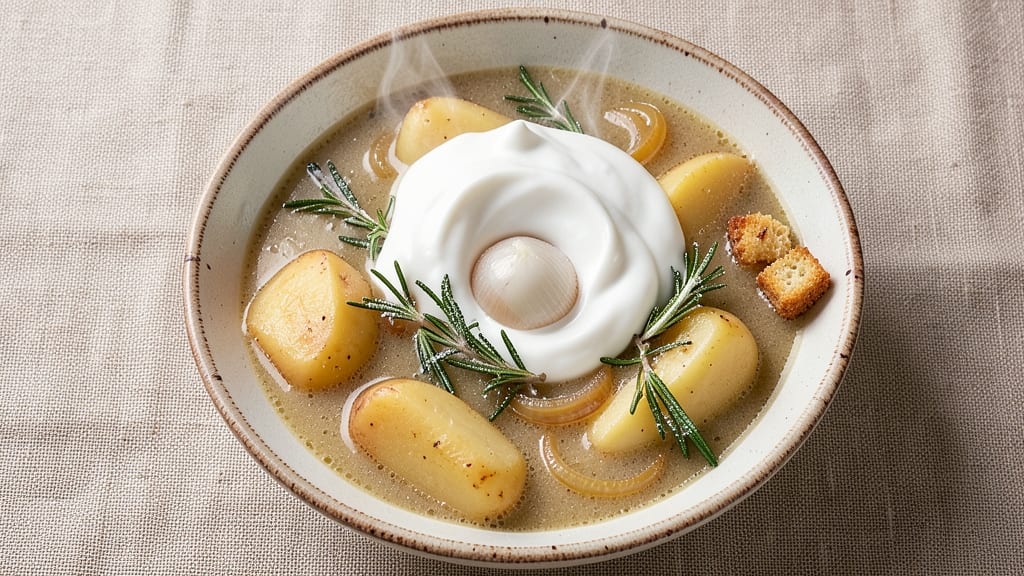
This potato soup with broth recipe delivers the kind of velvety, ultra-creamy texture that transforms simple ingredients into a restaurant-worthy meal. The secret lies in blending the potatoes directly in the broth, creating a naturally rich consistency without heavy cream.
I’ve perfected this method over years of testing—each spoonful is perfectly balanced between hearty and delicate.
What sets this recipe apart is its flexibility: you can use chicken, vegetable, or beef broth depending on your preference, and the one-pot method ensures minimal cleanup. The potatoes cook until tender but still hold their shape, while aromatic herbs and a touch of cream (optional) deepen the flavor profile.
This isn’t just soup—it’s a comforting, foolproof dish that works for weeknight dinners or holiday gatherings.
The result is a smooth, velvety soup with just the right amount of body, where every ingredient—from the broth’s depth to the potatoes’ natural sweetness—shines. Garnish with fresh herbs, a swirl of cream, or crispy bacon bits for added texture and flavor.
Whether you’re feeding a crowd or meal prepping for the week, this recipe delivers professional-quality results with minimal effort.
For those watching their dietary intake, you can easily swap in vegetable broth or reduce the cream for a lighter version without sacrificing richness. The technique is simple, but the outcome is undeniably satisfying—a creamy, flavorful potato soup that feels like a warm hug in a bowl.
Ingredients for potato soup with broth
Velvety texture achieved through simple, high-quality ingredients and one-pot technique.
| Ingredient | Amount | Notes |
|---|---|---|
| Russet Potatoes 🥔 | 3 lb | Peeled, cubed into 1-inch pieces |
| Chicken Broth 🍲 | 6 cups | Low-sodium preferred for control |
| Heavy Whipping Cream 🧈 | 1 cup | Full-fat for optimal richness |
| Yellow Onions 🧅 | 2 whole | Thinly sliced for even cooking |
| Garlic Cloves 🧄 | 6 cloves | Mince finely for aromatic depth |
| Fresh Rosemary 🌿 | 1 tbsp | Chopped, for herbal brightness |
| Fresh Thyme 🌿 | 1 tbsp | Leaves only, for delicate flavor |
| Diamond Crystal Kosher Salt 🧂 | 1 ½ tsp | Fine grain for precise seasoning |
| Freshly Ground Black Pepper 🌶️ | ¾ tsp | Cracked just before use |
| Butter 🧈 | ½ cup | Unsalted for flavor control |
| Crispy Bacon 🍖 | 4 oz | Cooked, crumbled for garnish |
| Fresh Parsley 🌿 | ¼ cup | Chopped, for vibrant garnish |
The Russet potatoes are essential for achieving that signature creamy texture—opt for organic when possible, as they retain moisture better during cooking. Costco and Whole Foods carry premium selections, but standard grocery stores work fine if the potatoes are firm and free of sprouts. For the broth, low-sodium chicken broth ensures you control the seasoning, while homemade or high-quality store-bought options elevate the flavor. The heavy whipping cream should be full-fat for optimal richness; don’t substitute with lighter versions, as they lack depth. Fresh herbs like rosemary and thyme are non-negotiable—they provide the aromatic foundation that distinguishes this soup from canned varieties.
No chicken broth? Vegetable or beef broth works equally well, though the flavor profile shifts subtly. For a dairy-free option, unsweetened coconut milk can replace the cream, though the texture will be slightly lighter. If you’re short on fresh herbs, dried rosemary and thyme at half the amount suffice, though they lack the vibrant punch of their fresh counterparts. The bacon is purely for garnish but adds a luxurious crunch—turkey bacon is a leaner alternative if preferred. Always use unsalted butter to maintain control over the seasoning, as salted versions can disrupt the balance of flavors.
Store the soup in airtight containers in the refrigerator for up to 5 days, where the flavors deepen. For longer storage, freeze portions in 1-quart containers for up to 3 months. Reheat gently on the stovetop, adding a splash of water or broth if the soup thickens excessively. The bacon and fresh herbs should be added just before serving to preserve their texture and aroma. This soup reheats beautifully, often tasting even better the next day as the ingredients meld further. For meal prep, portion into individual containers and freeze with a layer of broth on top to prevent ice crystals.
Why You'll Love This Recipe
- Here’s what sold me: you get restaurant-quality richness for less than a takeout bill. The russet potatoes are cheap, the chicken broth stretches far, and the heavy cream makes it feel indulgent without breaking the bank. Even the bacon garnish is a small splurge that makes the whole thing feel special. It’s the kind of dish that makes you feel like you’re treating yourself—without the guilt.
- One-Pot Comfort: I love that this recipe turns a single Dutch oven into my whole kitchen. No scrubbing multiple pots, no juggling pans—just toss in the cubed russet potatoes, pour in that rich chicken broth, and let the magic happen. The onions caramelize while the potatoes soften, and the garlic infuses everything without extra effort. Honestly, it’s the kind of dish where you can prep everything while watching TV, then walk away for 20 minutes.
- Creamy, Herbal Bliss: That first spoonful? Pure satisfaction. The heavy whipping cream blends into silky smoothness, while the rosemary and thyme give it a herbal brightness that makes it taste like a restaurant special. The crispy bacon at the end adds that smoky punch—it’s not just creamy, it’s dangerously good. My daughter picks out the parsley to garnish, but she still asks for seconds every time.
- Feeds a Crowd: This recipe is my secret weapon for game nights or family dinners. Three pounds of russet potatoes and six cups of broth mean I can feed six people without stress. It reheats beautifully, so I’ll even make extra for leftovers—those flavors deepen in the fridge, making it even richer the next day. Plus, it’s the kind of dish that tastes even better the second time around.
Step-by-step instructions for ultra-creamy potato soup
This method delivers velvety texture and rich flavor using only one pot.
Sauté Aromatics and Cook Potatoes
Melt the ½ cup butter in a large Dutch oven over medium heat. Add the 2 thinly sliced yellow onions and cook for 5 minutes until translucent. Stir in the 6 minced garlic cloves and cook for 30 seconds until fragrant.
Add the 3 lb peeled, 1-inch cubed russet potatoes, 1½ tsp diamond crystal kosher salt, and ¾ tsp freshly ground black pepper. Toss to coat the potatoes evenly in the butter and aromatics. Pour in the 6 cups chicken broth, ensuring all potatoes are submerged. Bring to a gentle boil, then reduce heat to low, cover, and simmer for 20 minutes.
Here's the thing—simmering uncovered allows excess moisture to evaporate, which prevents a watery soup later. You'll know it's ready when the potatoes are tender enough to crush with a fork but still hold their shape slightly.
Build Flavor with Herbs and Cream
Remove the lid and increase heat to medium. Stir in the 1 tbsp chopped fresh rosemary and 1 tbsp fresh thyme leaves. Let the soup simmer uncovered for 5 minutes to allow the herbs to infuse their flavors. The aroma should be vibrant and earthy.
Reduce heat to low and gradually whisk in the 1 cup heavy whipping cream. This is where the magic happens—the cream will create that ultra-creamy texture while adding richness. Let the soup simmer gently for another 5 minutes to meld all the flavors together.
Real talk: don't rush this step. The cream needs time to fully incorporate and create that velvety consistency. You'll notice the soup thicken slightly as it simmers.
Blend for Silky Smoothness
Use an immersion blender to blend the soup directly in the pot until completely smooth. Work in batches if needed, ensuring you blend all the way to the bottom to incorporate any settled potato starch that will help thicken the soup naturally.
If you don't have an immersion blender, carefully transfer the soup to a countertop blender in batches. Be cautious—hot liquids can splatter. Blend each batch until smooth, then return to the pot.
This blending step is critical for achieving that restaurant-quality, ultra-creamy texture. The potatoes' natural starches will create body while the cream adds luxurious richness.
Finish and Garnish
Taste and adjust seasoning with additional salt or pepper if needed. Stir in the 4 oz crumbled crispy bacon, distributing it evenly throughout the soup. The bacon adds a smoky depth that complements the creamy potatoes beautifully.
Remove from heat and stir in the ¼ cup chopped fresh parsley just before serving. The parsley adds a bright, fresh contrast to the rich soup and makes it look vibrant. Ladle into bowls immediately to maintain that creamy texture.
Don't skip the bacon or parsley—they're what elevate this from basic potato soup to something truly special. Serve with crusty bread to soak up every last drop of that velvety broth.
Pro Tips For Making Potato Soup With Broth
- Simmer Uncovered After Boil: DESCRIPTION: That 20-minute covered simmer is non-negotiable, but the moment you remove the lid to evaporate excess moisture is where the magic happens. I used to rush this and end up with a soup that looked like broth with potato bits floating in it—don’t let that happen. The uncovered simmer concentrates the flavors and thickens the base naturally, so resist the urge to keep it covered "just in case."
- Mince Garlic Like You Mean It: DESCRIPTION: Those 6 cloves of garlic need to be finely minced—think paste, not tiny chunks. I learned this the hard way when I was lazy and ended up with garlic chunks that turned to mush instead of dissolving into flavor. Cook them just until fragrant (30 seconds max) so they add aroma without bitterness, then let the soup work the rest.
- Whisk Cream Slowly: DESCRIPTION: Pouring that 1 cup of heavy whipping cream in all at once? Bad idea. Whisk it in gradually while the soup simmers on low heat—this prevents curdling and lets the cream blend smoothly into the broth. I once dumped it in too fast and spent 10 minutes trying to fix the lumpy mess. Trust me, the soup will thank you.
- Blend Until No Crumbs Remain: DESCRIPTION: Hit every inch of the pot with that immersion blender, even the crusty bits at the bottom. That’s where the starch hides, and skipping it means a soup that’s thick in spots but watery in others. If you’re using a countertop blender, work in batches and scrape down the sides—no shortcuts here if you want that velvety, restaurant-style texture.
Essential equipment for great potato soup with broth
Your Dutch Oven
The Dutch oven is your best friend for this recipe, and I swear by a Le Creuset 6-quart model. Its heavy cast iron retains heat beautifully, ensuring even cooking and that perfect creamy texture.
If you don’t have one, a Lodge cast iron Dutch oven is a budget-friendly alternative that works just as well. The lid is essential—it traps steam during simmering, which helps tenderize the potatoes without overcooking them. 🔥
Immersion Blender
An immersion blender is a game-changer for this soup, allowing you to blend directly in the pot without transferring hot liquid. My go-to is the Cuisinart SM-30B, which handles thick soups like a champ.
If you don’t have one, a countertop blender works, but be extra cautious with hot liquids—splatter is a real risk. Always blend in batches and let the soup cool slightly first.
Precision Thermometer
While not strictly necessary, a digital instant-read thermometer like the Thermoworks Thermapen helps you monitor the broth temperature. Keep it between 190-200°F during simmering to prevent scorching the onions or garlic.
This small investment ensures consistent results every time, especially when you’re adjusting for different broth types like vegetable or beef. 🌡️
Chef’s Knife
A sharp 8-inch chef’s knife from Wüsthof or Shun is a must for thinly slicing onions and finely mincing garlic. Dull knives require more force, which can burn the aromatics before they’re ready.
Keep your knife honed—it makes prep faster and more precise, which directly impacts the soup’s flavor. I sharpen mine every few months with a Wetstone.
Fine-Mesh Strainer
If you’re using dried herbs instead of fresh, a fine-mesh strainer helps remove any grit before adding them to the soup. I also use it to drain excess liquid from fresh herbs like parsley or rosemary if they’re too watery.
A colander with a fine weave from OXO works perfectly. It’s a small tool with a big impact on texture and flavor.
Wooden Spoon
Stainless steel spoons can scratch your Dutch oven over time, so I reach for my wooden spoon during the sautéing and simmering steps. It’s gentle on the cookware and won’t react with acidic ingredients like tomatoes (though we’re not using those here).
For blending, reserve the spoon for stirring—it’s your secret weapon for scraping up every last bit of creamy goodness from the pot. 💫
Nutrition facts
Frequently asked questions
Why does this recipe call for russet potatoes instead of other varieties?
Russet potatoes are the gold standard for creamy soups because they have a high starch content and low moisture. This creates the perfect balance of texture—tender enough to blend smoothly while still holding their shape slightly. Other varieties like Yukon Golds can make the soup watery or gummy when blended. The starch in russets also helps naturally thicken the broth without needing extra cornstarch.
Can I skip blending the soup for a chunkier texture?
If you prefer a rustic, heartier texture, simply skip blending and stir in the 1 cup heavy whipping cream directly into the simmering soup. The potatoes will soften but retain their shape, creating a delicious, chunky consistency. Just be sure to simmer longer for 5-10 minutes after adding cream to let flavors meld.
What’s the best way to reheat this soup without making it watery?
Gently warm the soup on the stovetop over low-medium heat, stirring occasionally. If it thickens too much, add 1-2 tablespoons of broth at a time until you reach your desired consistency. Microwaving works too, but stir every 30 seconds to prevent hot spots. Always reheat just until hot—overheating can break down the creamy texture.
Is there a dairy-free alternative for the heavy cream?
Yes! For a dairy-free version, swap the 1 cup heavy whipping cream with an equal amount of full-fat coconut milk or unsweetened almond milk blended with 1 tablespoon cornstarch to help thicken. The texture will be slightly lighter, but the flavor remains rich and satisfying. Just be sure to simmer longer to let the milk thicken naturally.