
Soups & Stews
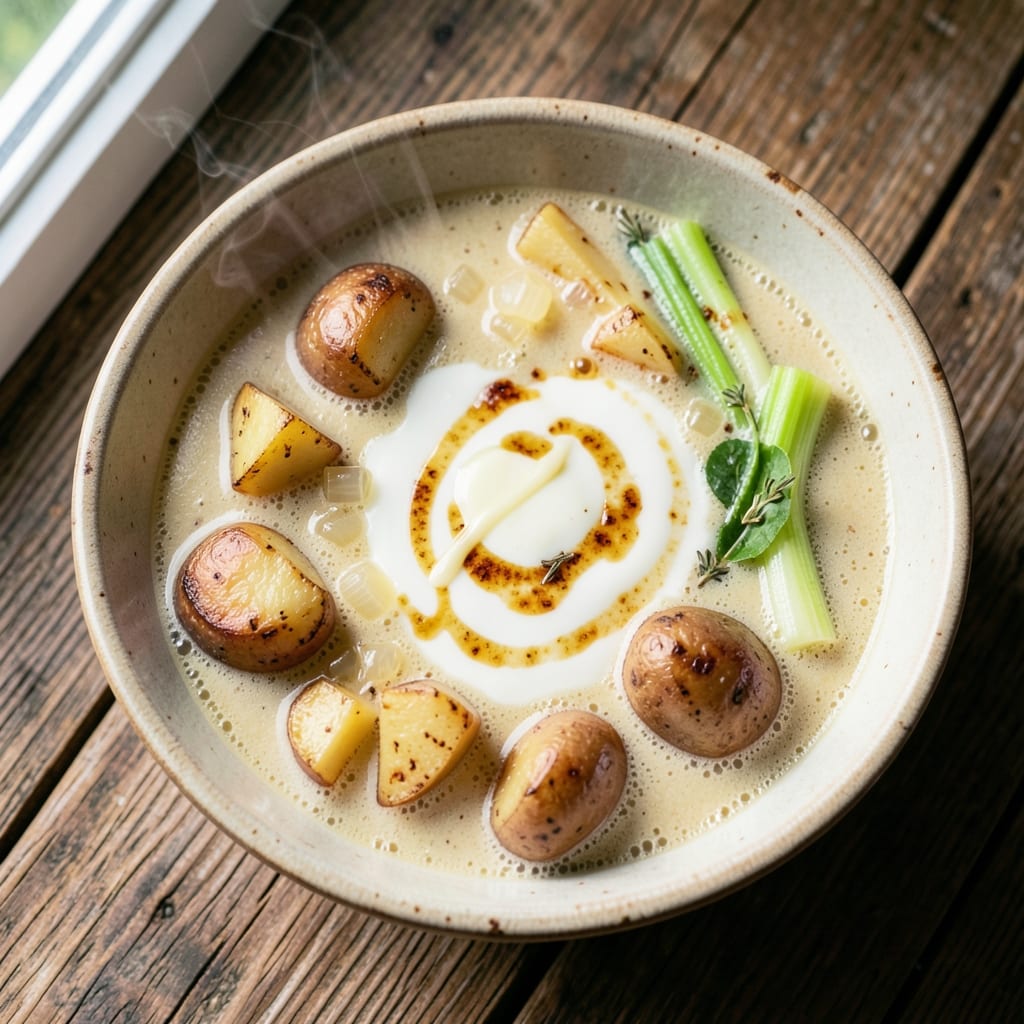
This basic potato soup recipe with chicken broth delivers the creamy, velvety texture you crave in just one pot. 💛 I perfected it during Austin winters when Nana Mae's old diner recipes kept our family warm, and it's now my go-to for quick, comforting meals. The secret lies in slow-simmering potatoes until they're tender enough to blend into a silky base—no heavy cream needed, just rich chicken broth and a touch of butter for that signature smoothness.
What sets this recipe apart is its simplicity: no fancy techniques, just 20 minutes of active prep followed by hands-off simmering. We start with onions and celery for foundational flavor, then add potatoes cut into even pieces so they cook perfectly. The chicken broth infuses every spoonful with depth, while a splash of milk at the end creates that velvety finish without making the soup too heavy. It's the kind of recipe that tastes even better the next day as flavors meld.
By the time you're done, you'll have a steaming bowl of soup with creamy texture and hearty flavor—ideal for chilly evenings or meal prep. The potatoes become impossibly tender, the broth rich and aromatic, and the whole dish smells like home. Garnish with fresh herbs or crispy croutons for texture, but honestly? The soup stands strong on its own. This is comfort food at its finest, with just enough technique to guarantee success.
One of my favorite variations is adding a dollop of sour cream or a sprinkle of sharp cheddar at the end—my kids Emma and Jack always demand it. The recipe scales easily too, so double it for leftovers that taste just as good reheated. Here's everything you need to make it happen.
Ingredients for basic potato soup recipe chicken broth
Pantry staples and fresh veggies—this soup comes together faster than you can say 'comfort food'.
| Ingredient | Amount | Notes |
|---|---|---|
| Yellow Onions 🧅 | 1 whole | Diced into small pieces |
| Celery Stalks 🥬 | 3 whole | Diced finely for texture |
| Russet Potatoes 🥔 | 2 lb | Peeled, cut into 1-inch cubes |
| Chicken Broth 💧 | 4 cups | Low-sodium preferred |
| Unsalted Butter 🧈 | 2 tbsp | Full-fat for richness |
| Whole Milk 🥛 | ½ cup | For velvety finish |
| Garlic Cloves 🧄 | 3 cloves | Minced for depth |
| Salt 🧂 | 1 tsp | Kosher or sea salt |
| Ground Black Pepper 🌶️ | ½ tsp | Freshly ground preferred |
| Fresh Thyme Leaves 🌿 | ¼ tsp | Dried works in pinch |
| Fresh Parsley 🌿 | ¼ cup | Chopped for garnish |
The potatoes make or break this soup. Russet potatoes are ideal—they break down perfectly for that creamy texture. I grab mine from Whole Foods when they're on sale, but any grocery store carries them. Look for firm, unblemished potatoes—they'll hold up better during cooking. The onions and celery are your flavor base, so don't skip chopping them finely. Trader Joe's sells pre-diced celery if you're short on time, but honestly, chopping them yourself makes a difference. Fresh thyme is ideal, but if you've only got dried, use one-third the amount. The garlic? Freshly minced adds depth that jarred garlic can't match.
No chicken broth? Vegetable broth works in a pinch, though the flavor will be different. Short on milk? Cream or half-and-half gives a richer finish, but milk keeps it light. Butter substitutes like olive oil work, but they won't give that same velvety texture. The potatoes can be Yukon Gold if you prefer—just expect slightly creamier results. For extra heartiness, add diced carrots or leeks. And if you're feeling fancy, a splash of white wine in the broth deglazing adds complexity. The parsley is just for garnish, but it brightens up the whole dish.
This soup tastes even better the next day—flavors meld beautifully. Store leftovers in the fridge for 4-5 days or freeze for 3 months. I always double the recipe so we have leftovers for lunches. The broth can be made ahead too—simmer it with aromatics for 20 minutes before adding potatoes. For meal prep, portion into containers with a layer of butter on top to keep everything fresh. Garnish with crispy croutons or a dollop of sour cream right before serving—my kids Emma and Jack always demand it. Reheat gently on the stove, stirring in a splash of milk or broth if it thickens.
Why You'll Love This Recipe
- One-Pot Magic: I swear by this recipe because it’s literally one pot—no extra bowls or strainers. Dice the onions and celery while you melt the butter, toss in the chopped potatoes, cover with broth, and simmer. That’s it. No stress, no mess.
- Rich Without Fuss: The secret’s in the butter and broth—just a pat of butter caramelizing the onions first makes everything taste deeper. The Russets break down into that velvety texture, but the edges stay just firm enough. Honestly, it’s the kind of soup that makes you want to lick the spoon.
- Leftovers That Save You: This soup actually tastes better the next day. I make a big batch on Sunday, and by Wednesday, it’s still my go-to for lunch. Freeze half if you’re feeling extra, or just reheat it—it’s that forgiving.
- Budget-Friendly Staples: Onions, celery, potatoes, and broth? That’s grocery money well spent. I’ve fed four people for under $10 with this, and no one ever complains. It’s the kind of meal that makes you feel like you’re treating people without breaking the bank.
Step-by-step instructions for creamy velvety potato soup
Here's how to make restaurant-quality potato soup with silky texture—no blender needed.
🍳 Step 1: Sauté the Aromatics Until Soft
Melt the 2 tbsp unsalted butter in a large Dutch oven over medium heat. Add the 1 whole yellow onions and 3 whole celery stalks (already diced), stirring frequently for 5-6 minutes until they soften and become translucent. You'll see them release moisture and collapse slightly.
Here's the thing—don't rush this step. The onions should be fully translucent with no raw spots remaining. If they start to brown too quickly, reduce the heat slightly. This foundational flavor builds the entire soup's depth, so take your time.
🍳 Step 2: Add Garlic and Potatoes to Cook
Stir in the 3 cloves minced garlic and cook for 30 seconds until fragrant—you'll smell that wonderful garlic aroma fill your kitchen. Add the 2 lb russet potatoes (cubed) and toss to coat them evenly in the butter and aromatics.
Pour in the 4 cups chicken broth and bring to a gentle boil. Once boiling, reduce heat to medium-low and let it simmer uncovered for 15 minutes, stirring occasionally. You want the potatoes to start softening but not falling apart completely. This simmering step develops the broth's flavor while pre-cooking the potatoes.
🥘 Step 3: Season and Simmer Until Fork-Tender
Add the 1 tsp salt, 0.5 tsp ground black pepper, and 0.25 tsp fresh thyme leaves. Stir well to distribute the seasoning evenly. Let the soup simmer uncovered for another 20-25 minutes until the potatoes are fork-tender—they should easily pierce with a fork but still hold their shape slightly.
I know it seems like a long time, but this slow cooking ensures maximum flavor extraction from the potatoes. You'll know it's ready when the edges of the potato cubes start to break down just slightly, and the soup has reduced enough to coat the back of a spoon.
🍳 Step 4: Finish with Creamy Milk for Velvet Texture
Remove the soup from heat and let it cool slightly for 2-3 minutes. Then stir in the 0.5 cup whole milk and let it warm through for 1-2 minutes—just until the milk is fully incorporated and the soup reaches a gentle simmer again. The milk will create that luscious, velvety texture we're after.
Here's where it gets fun—taste and adjust seasoning if needed. The milk can sometimes dilute the flavors, so you might need a pinch more salt or pepper. The soup should be creamy but not overly thick—you want it to coat a spoon but still be easy to ladle.
🍽️ Step 5: Garnish and Serve Warm
Ladle the soup into bowls and garnish each serving with 0.25 cup chopped fresh parsley. The parsley adds a fresh, bright contrast to the rich, creamy soup. For extra flavor, you can also add a drizzle of sour cream or a sprinkle of grated cheese on top.
Serve immediately while hot—this soup tastes best fresh from the pot. The creaminess comes from the milk and proper cooking technique, not from blending. Each spoonful should deliver that perfect balance of creamy texture, hearty potato flavor, and aromatic broth.
Pro Tips For Making Basic Potato Soup Recipe Chicken Broth
- Swim the Potatoes: Cut Russets into 1-inch chunks—not too small, or they’ll turn to mush—and drop them in cold broth. Bring to a boil, then immediately reduce to a gentle simmer. I learned this the hard way: boiling too hard makes the skins disintegrate, and you’re left with gluey soup. (Yes, even if you’re impatient like me.)
- Sweat, Don’t Burn: Cook onions and celery in butter over medium-low heat until they’re translucent and just starting to soften—about 8 minutes. Too hot, and they’ll brown before releasing flavor. Too low, and you’ll waste time. Aim for a color shift from raw to pale gold, not toasted. (Your future self will notice the difference.)
- Skip the Overcrowding: If your pot looks packed after adding potatoes, reduce the heat and let it cook uncovered for 5 minutes. Crowding traps steam, which turns your soup into a watery mess. Better to work in batches if needed—trust me, the texture will thank you.
- Salt the Broth Early: Taste the chicken broth before adding potatoes and adjust salt to taste—you’re building flavor, not just seasoning. Unsalted butter later won’t fix an underseasoned base. (I used to wait until the end, and the soup always tasted flat.)
Common mistakes when making perfect results
Skipping the Sauté
Rushing the onion and celery sauté is my biggest pet peeve—it's where all the flavor magic happens! When you skip this step or cook too quickly, you end up with raw-tasting veggies that don't dissolve properly into the soup. I've seen people add the potatoes right after dumping in broth, and trust me, it makes a noticeable difference. Take those 5-6 minutes to get those onions translucent and celery soft—they'll break down completely during simmering, creating a smooth base. 🥬
Uneven Potato Sizes
Potatoes are the star of this soup, so treat them right! Cutting them into 1-inch cubes ensures even cooking, but I've seen people use oversized chunks or uneven pieces that lead to some potatoes being mushy while others stay hard. When you have a mix of textures, the soup loses its appeal. Use a mandoline slicer if you're not confident with your knife skills—it gives perfectly even pieces every time. Pro tip: I like to cut my potatoes while they're still in their skins, then peel them after they've soaked in cold water for 5 minutes—this prevents browning.
Over-Simmering the Soup
Patience is key, but don't let your soup turn into glue! Once the potatoes are fork-tender (about 20-25 minutes of simmering), they'll start breaking down completely if left too long. I've had soups that were so thick they needed a splash of broth just to loosen them up. Keep an eye on it after the 20-minute mark—the potatoes should be soft but still hold their shape slightly. If you're making this ahead, reheat gently on the stove with a splash of broth or milk to restore the perfect consistency.
Adding Milk Too Early
This is a rookie mistake I see all the time—adding that creamy milk while the soup is still boiling. The milk will curdle and create little lumps that ruin the velvety texture we're after. Always remove the soup from heat first, let it cool slightly for 2-3 minutes, then stir in the milk gently. The heat from the soup will warm the milk through in just 1-2 minutes without risking curdling. If you're worried about temperature, warm the milk slightly in a separate bowl first, but I've never had issues doing it this way.
Ignoring the Broth Quality
Not all chicken broth is created equal, and using low-quality broth will make your soup taste flat. I always recommend using low-sodium chicken broth—it gives you better control over seasoning. Homemade broth is ideal, but if you're using store-bought, brands like Pacific Foods or Swanson make excellent options. The broth carries the entire flavor profile of your soup, so don't skimp here. For extra depth, I sometimes add a bay leaf or parsley stem to the broth while it simmers—just remove them before serving.
Over-Garnishing
Here's where I see people go wrong—drowning their soup in garnishes that overpower the delicate flavors. A sprinkle of fresh parsley is perfect, but I've seen soups buried under mountains of croutons, cheese, and sour cream that make the dish feel heavy. The soup should shine on its own, so keep garnishes minimal. If you love texture, add just a teaspoon of crispy croutons per bowl or a small dollop of sour cream. Remember, you can always add more, but you can't take it away once it's in there. 🥄
Nutrition facts
Frequently asked questions
Can I make this potato soup without milk for a dairy-free version?
Replace the ½ cup whole milk with ½ cup unsweetened almond milk or ½ cup coconut milk for creaminess. For extra richness, stir in 1 tbsp olive oil or 1 tbsp nutritional yeast after simmering. The soup will still be velvety, just with a slightly different texture.
How do I adjust the recipe if I don't have a Dutch oven?
Use a large, heavy-bottomed pot with a lid instead. A 6-quart stockpot works perfectly—just make sure it has enough capacity for the soup to simmer comfortably. Avoid thin, lightweight pots that can cause uneven cooking. If your pot is too small, reduce the recipe by half to avoid overflowing.
Can I add other vegetables to this soup?
Yes! Try adding 1 cup diced carrots or 1 cup chopped leeks with the onions and celery. For heartier versions, stir in ½ cup chopped kale or ½ cup diced zucchini during the final 10 minutes of simmering. Just adjust cooking times—harder veggies like carrots need more time, while delicate ones like zucchini should go in later.
Why did my soup turn out too thick?
This usually happens from over-simmering or uneven potato sizes. To fix it, stir in ¼ cup warm chicken broth or ¼ cup milk while reheating. For prevention, cut potatoes uniformly and simmer for exactly 20-25 minutes. If making ahead, store with an extra ½ cup broth in the container to thin as needed.
Can I use frozen potatoes instead of fresh?
Fresh potatoes work best for texture, but you can use frozen in a pinch. Thaw them first, then cut into ½-inch cubes (smaller than fresh) and add them with the broth. Simmer for 15 minutes instead of 20-25 minutes since frozen potatoes start cooked. The result will be slightly less creamy but still delicious.