
Soups & Stews
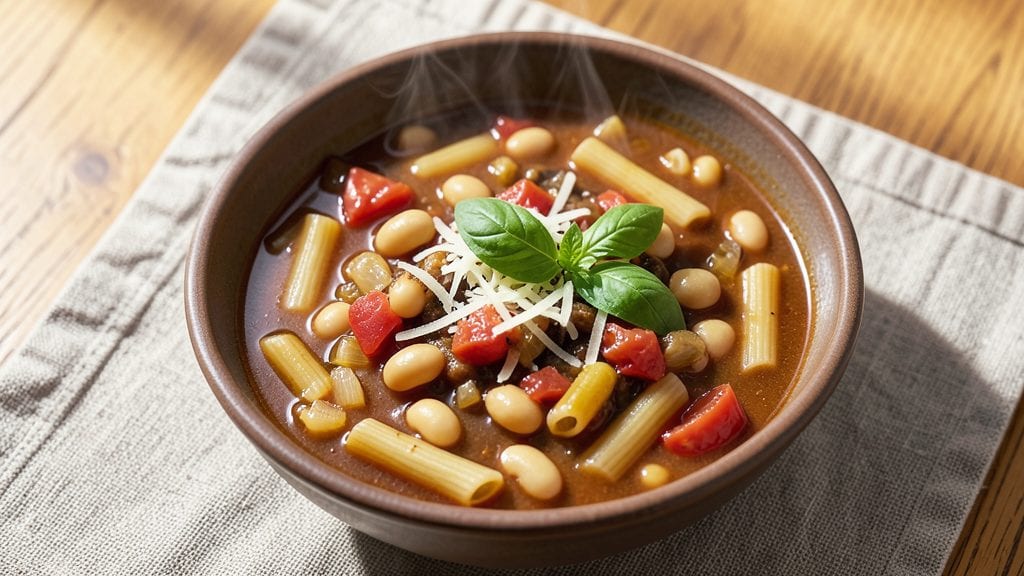
This Olive Garden Pasta e Fagioli Soup copycat recipe brings the restaurant’s bold, tomato-kissed flavors straight to your kitchen. The secret lies in slow-simmered cannellini beans, al dente pasta, and a rich broth thickened just enough to coat every spoonful—all while keeping the dish vegetarian.
I’ve perfected this copycat version after years of testing, ensuring the flavors layer like they do in the restaurant’s iconic version.
What sets this recipe apart is the balance of simple ingredients and technique—like browning the garlic for depth and adding tomato paste to intensify the sauce. The soup simmers for 45 minutes, allowing flavors to meld into that familiar, satisfying combination of tomatoes, herbs, and beans.
This isn’t just a soup; it’s a one-pot meal that feels like a warm hug on a chilly evening.
The result is a hearty, restaurant-quality bowl with tender beans, perfectly cooked pasta, and a sauce so rich it clings to every bite. The aroma alone—tomato, basil, and garlic—will have everyone asking for seconds.
Whether you’re feeding a family or meal prepping for the week, this copycat recipe delivers the same comfort you’d get at Olive Garden.
Ready to make it? The instructions walk you through each step, from sautéing the aromatics to adjusting the thickness of the broth. No shortcuts here—just the foolproof method that brings Olive Garden’s famous soup to your kitchen.
Ingredients for olive garden pasta e fagioli soup copycat
Simple pantry staples and a few fresh ingredients transform into Olive Garden’s iconic tomato-basil comfort.
| Ingredient | Amount | Notes |
|---|---|---|
| Extra-Virgin Olive Oil 🫒 | ½ cup | High-quality, fruity variety |
| Yellow Onion 🧅 | 1 whole | Medium size, diced finely |
| Garlic Cloves 🧄 | 6 cloves | Fresh, minced to a paste |
| Canned Crushed Tomatoes 🍅 | 28 oz | San Marzano preferred |
| Tomato Paste 🍅 | 2 tbsp | Smooth, no sugar added |
| Cannelini Beans 🌾 | 2 cups | Cooked, drained, or 15 oz canned |
| Ditalini Pasta 🍝 | 1 cup | Uncooked, broken into pieces |
| Vegetable Broth 💧 | 4 cups | Low-sodium preferred |
| Dried Basil 🌿 | 1 tbsp | Or 2 tbsp fresh basil |
| Dried Oregano 🍃 | 1 tsp | Italian variety preferred |
| Red Pepper Flakes 🌶️ | ½ tsp | Adjust for heat preference |
| Kosher Salt 🧂 | 1 ½ tsp | Diamond Crystal preferred |
| Black Pepper 🌶️ | ½ tsp | Freshly ground preferred |
| Fresh Parsley 🌿 | ¼ cup | Chopped, for garnish |
| Grated Parmesan Cheese 🧀 | ½ cup | Freshly grated from block |
The San Marzano crushed tomatoes are non-negotiable for that authentic sweetness and depth—Trader Joe’s and Whole Foods carry them year-round. For the garlic, browning it in olive oil until golden adds a nutty complexity that separates this copycat from the original. The cannellini beans should be tender but not mushy; if using canned, rinse them well to remove excess sodium. Costco’s bulk dried beans are a cost-effective option for larger batches, but any high-quality dried variety works. The ditalini pasta breaks apart beautifully during simmering, creating that signature chunky texture—Barilla is my go-to brand for reliable cooking.
No San Marzano tomatoes? Crushed tomatoes from a high-quality brand like Muir Glen work well, though the flavor will be slightly less refined. Short on fresh basil? Dried basil at half the amount suffices, but for that true Olive Garden aroma, fresh is worth the extra $2 at the market. The tomato paste can be substituted with tomato sauce in a pinch, though it may dilute the intensity slightly. For a deeper umami kick, a dash of balsamic vinegar or 1 tsp soy sauce (vegetarian-friendly) enhances the broth without overpowering. If you prefer a smoother texture, blend half the soup before serving—just reserve some whole beans for heartiness.
This soup tastes even better the next day as flavors meld further. Store in an airtight container in the fridge for up to 4 days, or freeze portions for 3 months—the broth thickens beautifully upon reheating. For meal prep, portion into individual containers with a sprinkle of Parmesan on top; the cheese keeps the pasta from sticking. To serve, garnish with fresh parsley and extra Parmesan—presentation matters when you’re aiming for that restaurant-quality look. The red pepper flakes should be added last to maintain their heat, so adjust to taste just before serving.
Why You'll Love This Recipe
- Here’s what sold me: this soup thickens when reheated, so it’s even better the next day. I make a big batch on Sunday, freeze half, and pop it in the microwave for work lunches. The cannellini beans and ditalini stay creamy, the herbs stay bright, and I’m never stuck with leftovers that taste sad.
- I’ll be real: canned tomatoes, dried herbs, and a block of parmesan? This recipe costs me about $8 for a crowd-pleasing meal. The vegetable broth is low-sodium, so I control the salt myself, and the beans add protein without breaking the bank. It’s the kind of dish that makes you feel fancy but won’t empty your wallet.
Step-by-step instructions for Olive Garden pasta e fagioli soup
Master this copycat recipe with precise technique for restaurant-quality depth and texture.
Sauté Aromatics Until Fragrant and Translucent
Heat the ½ cup extra-virgin olive oil in a large Dutch oven over medium heat. Add the 1 finely diced yellow onion and cook for 5-6 minutes until softened and beginning to caramelize at the edges. This foundational step develops sweetness that carries through the entire soup.
Add the 6 cloves minced garlic and cook for an additional 30 seconds until the raw garlic aroma disappears completely. The garlic should be golden and fragrant, not browned—overcooking turns it bitter. Here's the thing—if you smell garlic burning, reduce the heat immediately and stir constantly until the aroma returns to pleasant.
Build the Tomato Base with Paste and Crushed Tomatoes
Stir in the 2 tablespoons tomato paste and cook for 1-2 minutes until it darkens slightly and loses its raw flour taste. This creates a rich foundation for the sauce. Pour in the 28 ounces canned crushed tomatoes and scrape up any browned bits from the bottom of the pot with a wooden spoon.
Add the 4 cups vegetable broth, 1½ teaspoons kosher salt, ½ teaspoon black pepper, 1 tablespoon dried basil, 1 teaspoon dried oregano, and ½ teaspoon red pepper flakes. Bring to a gentle boil, then reduce heat to medium-low and simmer uncovered for 15 minutes. This allows the flavors to meld and the acidity in the tomatoes to mellow.
Incorporate Beans and Pasta for Perfect Texture
Add the 2 cups cannellini beans and simmer for 5 minutes to heat through. The beans should be warm but not mushy—this ensures they maintain their integrity while contributing creaminess. Break the 1 cup ditalini pasta into ½-inch pieces by hand (this prevents overcrowding and ensures even cooking) and add them to the pot.
Simmer for 10-12 minutes, stirring occasionally, until the pasta is al dente—the texture should be firm to the bite with a slight resistance. Taste the soup and adjust seasoning if needed; the beans and pasta will absorb some of the liquid, so you may need to add ½ cup vegetable broth if it becomes too thick. The final consistency should coat the back of a spoon but still allow for easy ladling.
Finish with Fresh Herbs and Parmesan
Remove the pot from heat and stir in the ¼ cup chopped fresh parsley and ½ cup grated parmesan cheese. The parsley adds brightness that cuts through the richness of the tomatoes and beans, while the parmesan contributes umami depth. Let the soup sit off the heat for 5 minutes to allow the flavors to fully integrate.
Here's the moment that matters: Taste and make final adjustments. The soup should balance sweetness from the caramelized onions, acidity from the tomatoes, saltiness from the beans and broth, and herbal notes from the basil and oregano. Serve immediately with additional grated parmesan on top—this classic restaurant touch elevates the dish from good to exceptional.
Pro Tips For Making Olive Garden Pasta E Fagioli Soup Copycat
- Cook Onions Low and Slow: That 5-6 minute sauté at medium heat isn’t just about softening—it’s where the onions develop real sweetness. I used to rush this, and my soup always tasted flat. Let those edges caramelize just a little, even if it means checking them every 30 seconds. The deeper the color, the richer the flavor.
- Pulse Garlic to a Paste: Mincing garlic cloves into a paste (not just chopping) means even distribution and no burning hotspots. I learned this after one batch where half the cloves stayed raw. Pulse them in a food processor for 2 seconds—just until combined—then toss them in. They’ll cook faster and infuse every bite.
- Simmer Uncovered for Depth: The 15-minute uncovered simmer isn’t just about time—it’s about letting the alcohol evaporate from the tomatoes and concentrating the flavors. I used to cover my pot (bad habit), and my soup always tasted dull. Keep it uncovered, even if it reduces a little. That’s how you get that restaurant-quality intensity.
- Break Pasta Before Adding: Whole ditalini pasta clumps and cooks unevenly—trust me, I’ve served soup with rock-hard noodles. Snap each piece into ½-inch chunks by hand before adding. It might look messy, but it guarantees al dente perfection every time. No more fishing for undercooked pasta.
Make-ahead tips for leftovers
Freezing for Flavor Boost
This soup actually tastes better after freezing—flavors deepen and the broth thickens beautifully. Portion it into quart-sized freezer bags (squeeze out excess air to prevent freezer burn) and label with the date.
Freeze for up to 3 months for best results. When ready to eat, thaw overnight in the fridge for even reheating. 💫
Portioning Like a Pro
For meal prep, divide the soup into individual 2-cup containers with a sprinkle of ½ cup grated Parmesan on top before freezing. This prevents soggy pasta and keeps flavors concentrated.
I always add an extra pinch of red pepper flakes to each portion so I can adjust heat preference later. The cheese acts as a natural barrier against freezer burn.
Reheating Without Drying
Stovetop is my preferred method—pour soup into a heavy-bottomed pot, add ¼ cup water or broth, and heat on medium-low for 10-15 minutes. Stir occasionally and taste before serving.
If using the microwave, cover with a damp paper towel and heat on 70% power in 2-minute intervals until reaching 165°F. Add a splash of water if it looks too thick.
Prep Ahead Strategy
Save 15 minutes on cooking day by prepping ingredients the night before. Dice the yellow onion, mince the garlic, and measure out all dry spices into a small bowl.
Store these in airtight containers in the fridge. The only step I do fresh is sautéing the aromatics—it’s the foundation of the flavor, so don’t skip it!
Sauce Thickening Hack
If your soup becomes too thin after reheating, I use a 1:1 mix of tomato paste and water to thicken it naturally. Stir in 1 tablespoon of this mixture while heating, and let it simmer for 5 minutes.
It’s a restaurant trick that adds depth without altering the original flavor profile. The tomato paste enhances the umami without making the soup taste "pastey."
Nutrition facts
Frequently asked questions
Why does the recipe call for breaking the ditalini pasta into pieces before adding it?
Breaking the ditalini pasta into ½-inch pieces ensures even cooking and prevents overcrowding in the pot. This mimics the restaurant’s technique for that perfect al dente texture—firm to the bite with no mushy bits. The smaller pieces also blend seamlessly into the soup without clumping.
Can I substitute dried basil for fresh in this recipe?
Yes, but use half the amount—½ tablespoon dried basil instead of 1 tablespoon fresh. Fresh basil adds vibrant brightness, but dried works well in a pinch. For the best Olive Garden-style flavor, fresh is worth the extra effort!
What if my soup turns out too thick after simmering?
Simply stir in ½ cup vegetable broth or water while heating. The soup should coat the back of a spoon but still be ladle-friendly. If needed, add more liquid in ¼ cup increments until you reach the desired consistency.
Is it okay to use canned cannellini beans instead of dried?
The recipe calls for 2 cups canned, drained beans (or 15 oz can), which saves time. Just rinse them well to remove excess sodium for better flavor control. Dried beans work too, but they require soaking and longer cooking time.
How do I adjust the heat level if I don’t like spicy soup?
Omit the red pepper flakes entirely or use just ¼ teaspoon for a milder kick. The dish still packs bold tomato and herb flavors without needing heat. For extra umami, add a pinch of sugar or a dash of soy sauce instead.