
Soups & Stews
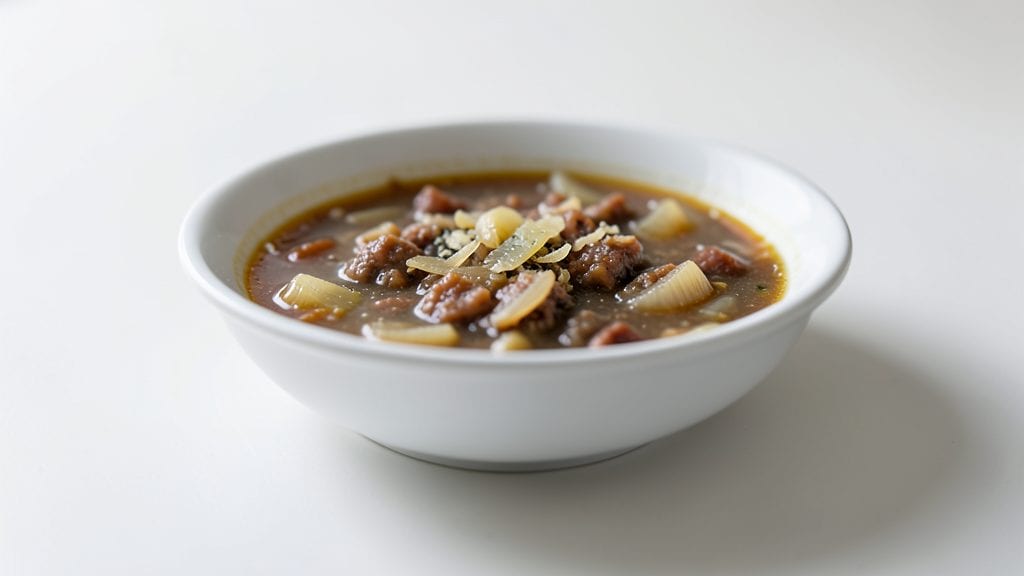
Mastering Gordon Ramsay's onion soup recipe transforms a simple onion into a deeply caramelized fond that forms the soul of this dish. The secret lies in slow-cooking onions until they're golden brown and sweet, creating layers of flavor that elevate the broth to restaurant-quality.
This isn't just soup—it's a symphony of textures and tastes where every ingredient plays its part.
The process begins with clarified butter, which prevents burning while developing that signature caramelized depth. As the onions break down into a rich paste, they release natural sugars that caramelize beautifully, forming the foundation for the broth.
The addition of wine reduces into a glossy sauce, adding complexity that turns this into something truly special.
When it's time to serve, the toasted baguette becomes the star—slathered in garlic butter and topped with melted Gruyère, it creates a crispy, cheesy crust that contrasts perfectly with the velvety soup.
The final broil adds that signature golden-brown finish, ensuring every bite delivers the perfect balance of flavors and textures.
This recipe delivers a restaurant-quality onion soup that's rich, aromatic, and deeply satisfying. Whether you're serving it at a dinner party or enjoying it as a comforting weeknight meal, it's sure to impress. Let's get started on creating this classic dish with professional results.
Ingredients for gordon ramsay onion soup
Professional techniques and simple ingredients create restaurant-quality onion soup.
| Ingredient | Amount | Notes |
|---|---|---|
| Yellow Onions 🧅 | 4 whole | Large, thinly sliced |
| Unsalted Butter 🧈 | 1 lb | Clarified for fond development |
| Dry White Wine 🍷 | 1 cup | Bold, dry variety preferred |
| Chicken Stock 🍲 | 4 cups | Homemade or high-quality canned |
| Fresh Thyme 🌿 | 1 tbsp | Leaves only, finely chopped |
| Fresh Rosemary 🌿 | 1 tbsp | Needle tips only, finely chopped |
| Gruyère Cheese 🧀 | 2 cups | Freshly grated, aged variety |
| Baguette 🍞 | 1 whole | Freshly baked, sliced |
| Garlic Cloves 🧄 | 4 cloves | Mince for garlic butter |
| Diamond Crystal Kosher Salt 🧂 | 1 tsp | For precise seasoning |
| Freshly Ground Black Pepper 🌶️ | 1 tsp | For finishing touch |
| Extra-Virgin Olive Oil 🫒 | 2 tbsp | For searing onions |
| All-Purpose Flour 🌾 | 2 tbsp | For roux consistency |
The yellow onions are the foundation—opt for large, firm varieties like Vidalia for their sweetness. Thin, even slices ensure consistent caramelization. For the clarified butter, melt 1 lb unsalted butter gently over low heat, then skim off foam and fat. Professional kitchens use this method to prevent burning while developing the fond, which is essential for depth. The dry white wine should be bold—Chardonnay or Sauvignon Blanc works best. Avoid sweet or off-dry varieties, as they disrupt the caramelized balance.
Substitutions require precision. Dry white wine substitute: Use 1 cup beef broth + 1 tbsp balsamic vinegar for depth. Fresh herbs can be swapped for dried at half the quantity (1 tsp dried thyme/rosemary per tbsp fresh). Gruyère cheese is non-negotiable—Emmental or Comté lack the nutty complexity. For the baguette, sourdough or ciabatta works but lacks the crisp texture. Always use freshly grated cheese—pre-shredded contains anti-caking agents that prevent proper melting. The garlic butter can be made ahead and stored in the fridge for up to 5 days.
The fond must be developed slowly—this is where the magic happens. After caramelizing the onions, reduce heat to lowest setting and let the butter render fat for at least 30 minutes, stirring occasionally. The chicken stock should be homemade or high-quality canned (like Knorr or Better Than Bouillon) for optimal flavor. Store the garlic butter in an airtight container—it keeps for 1 week in the fridge. The Gruyère can be grated ahead and stored in a sealed bag for 2 weeks. Always toast the baguette slices just before serving to maintain crispness.
Why You'll Love This Recipe
- No Dutch Oven? No Problem: That deep caramelization of onions in clarified butter? It’s the magic, but honestly, I’ve done it in a heavy pot with no issues. The key’s in the patience—low and slow turns those onions into liquid gold, and that’s what makes this soup unforgettable.
- Cheesy, Creamy, Addictive: The gruyère melts into this velvety, almost custard-like richness, while the crispy baguette topping gives you that perfect crunch. Between the sweetness of the onions, the depth from the wine, and the herby kick of thyme and rosemary, it’s the kind of soup that makes you want seconds without even thinking about it.
- Feeds a Crowd (or Just You): This recipe is built for sharing—whether it’s a cozy night in with leftovers or a dinner party where everyone fights over the last bowl. And here’s the best part: the garlic butter can be prepped ahead and stored for a week, so you’re not stuck scrambling on busy nights.
- Budget-Friendly Luxury: A pound of butter and a baguette might sound fancy, but honestly, this soup stretches further than you’d expect. The onions and stock are cheap, the cheese melts beautifully, and the wine? Well, you can use whatever you have—even a slightly off-dry one works. It’s the kind of dish that makes you feel like you’re dining at a bistro without breaking the bank.
Step-by-step instructions for deep-caramelized onion soup
Mastering this technique transforms simple onions into a velvety, rich base worthy of any fine-dining table.
Develop the Fond with Yellow Onions and Unsalted Butter
In a large, heavy-bottomed Dutch oven, melt the 1 lb unsalted butter over medium-low heat. Add the 4 yellow onions, thinly sliced, ensuring they're spread evenly in the pan. Cook undisturbed for 15 minutes, stirring occasionally, until they release their moisture and begin to soften.
Here's where patience pays off: reduce heat to low and continue cooking for 45-60 minutes, stirring every 10-15 minutes. The onions will gradually caramelize, turning deep golden brown and developing complex, sweet flavors. You're creating a fond—the flavorful browned bits that form the soul of this soup. If the fond darkens too quickly, reduce heat further to prevent burning.
When properly caramelized, the onions should have a rich, jam-like consistency with a deep amber color. This process requires attention—don't walk away. The fond should coat the back of a spoon with a velvety texture, not appear dry or overly crispy. This foundational step builds the soup's depth of flavor.
Deglaze with Dry White Wine and Build the Roux
Once the onions are perfectly caramelized, remove the Dutch oven from heat and carefully pour in the 1 cup dry white wine. Use a wooden spoon to scrape up all the fond from the bottom—this is where all the concentrated flavor resides. Return the pan to medium heat and simmer for 5 minutes until the wine reduces by half.
Add the 2 tbsp all-purpose flour and stir vigorously to form a smooth roux. Cook for 2-3 minutes, stirring constantly, until the mixture thickens slightly and loses its raw flour taste. This step creates the structural framework for your soup, preventing it from being too thin when combined with the stock later. The roux should be a rich, golden color with no floury aftertaste.
Incorporate Aromatics and Chicken Stock
Add the 4 minced garlic cloves, 1 tbsp fresh thyme, and 1 tbsp fresh rosemary to the Dutch oven. Stir for 1 minute until fragrant—this releases their essential oils and infuses the fond with additional depth. Pour in the 4 cups chicken stock and bring to a gentle simmer over medium heat. Stir occasionally to prevent sticking.
Simmer uncovered for 20-25 minutes until the soup reduces slightly and the flavors meld together. Taste and adjust seasoning with 1 tsp diamond crystal kosher salt and 1 tsp freshly ground black pepper. The soup should be rich, sweet, and properly seasoned—this is your flavor checkpoint. If it needs more depth, a splash of additional wine or a pinch more salt can help balance the flavors.
Finish with Gruyère Cheese and Prepare Baguette Topping
Remove the soup from heat and stir in the 2 cups freshly grated gruyère cheese until fully melted and smooth. The cheese should create a luxurious, creamy texture that coats the back of a spoon. If the soup is too thick, thin it slightly with a little warm chicken stock or water.
While the soup finishes, preheat your broiler. Slice the 1 baguette into ½-inch thick pieces and brush both sides generously with a mixture of 2 tbsp extra-virgin olive oil and a pinch of salt. Arrange the baguette slices on a baking sheet and toast under the broiler for 2-3 minutes until golden and crisp. Watch closely to prevent burning—they should be just crisp enough to hold their shape when topped with soup.
Assemble and Broil to Perfection
Ladle the hot onion soup into oven-safe bowls, filling each about ¾ full. Top each serving with 2-3 baguette slices, arranging them slightly overlapping to create a sturdy base. Place the bowls on a baking sheet and broil for 2-3 minutes until the cheese on top is bubbly and golden brown.
Serve immediately with a sprinkle of freshly ground black pepper and an additional dusting of gruyère cheese if desired. The contrast between the crispy baguette, creamy cheese, and rich onion broth creates the perfect balance of textures and temperatures in every bite. This is where the dish truly shines—hot, aromatic, and ready to be enjoyed straight from the table.
Pro Tips For Making Gordon Ramsay Onion Soup
- Stir Less, Often: After burning my first batch of onions, I learned to stir just enough to redistribute—every 10-15 minutes, not constantly. The fond needs time to develop those deep, sweet flavors, and too much movement turns it into a sad, dry mess. Let those onions work their magic undisturbed, even if it means setting a timer.
- Use Aged Gruyère: Freshly grated Gruyère melts like a dream, but aged (6-12 months) adds nutty depth that cuts through the sweetness of the caramelized onions. Skip the pre-shredded cheese—it’s coated with anti-caking agents that make the soup grainy. Grate it yourself right before mixing, or the cheese loses its edge.
- Don’t Rush the Wine: That 5-minute simmer after deglazing isn’t just for show—it’s where the wine’s acidity brightens the fond and cuts through the richness. If you’re impatient and reduce it faster, you’ll end up with a flat, buttery sludge. Let it bubble gently, and you’ll taste the difference in every spoonful.
- Toast Baguette in Batches: Broiling baguette slices is a gamble—one minute too long, and they turn into charcoal. Toast them in batches on a wire rack (not crowded) so they crisp evenly. A few seconds under the broiler is better than overdone, burnt edges that scream "rushed." Keep them warm in a 200°F oven while you assemble the rest.
Perfect pairings for these flavors
Wine Pairings
For this rich, caramelized onion soup, a crisp Chardonnay from Burgundy complements the deep fond perfectly. Look for one with oaked notes to match the dish's buttery richness—try a Meursault or Puligny-Montrachet for that elegant balance. The acidity cuts through the soup's creaminess while enhancing the caramelized onion flavors. 🍷
Beer Companions
A Belgian witbier like Leffe Blond brings citrusy brightness that contrasts beautifully with the soup's depth. Alternatively, a German hefeweizen with its banana-clove notes adds a refreshing twist. Avoid heavy stouts—they'll overwhelm the delicate onion flavors. These lighter beers cleanse the palate between bites.
Cheese Board Additions
Serve alongside aged Gouda for its nutty complexity or brie for creamy decadence. The Gouda's caramel notes harmonize with the onions, while the brie's buttery texture mirrors the soup's richness. A small blue cheese crumble like Roquefort adds a tangy surprise for adventurous eaters. 🧀
Herbal Garnishes
Finish each bowl with fresh chives or parsley for a bright pop of color. The subtle onion family flavor enhances the dish's aroma without overpowering. For an extra touch, sprinkle toasted pumpkin seeds for crunch—just 1 tbsp per bowl adds texture that contrasts the creamy soup beautifully.
Bread Alternatives
While baguette is classic, try crusty sourdough for extra tang or ciabatta for airy texture. Both toast beautifully under the broiler. For a gluten-free option, use almond flour bread brushed with garlic butter—it crisps up just like the traditional version.
The key is maintaining that crispy base for the cheese topping.
Nutrition facts
Frequently asked questions
Why does Gordon Ramsay's recipe emphasize slow caramelization?
The slow caramelization of onions over 45-60 minutes transforms their natural sugars into deep, complex flavors. This process creates the fond, a rich, jam-like base that forms the soul of the soup. Skipping this step results in a bland, underdeveloped flavor—patience is key for that signature restaurant-quality taste.
Can I use a different type of cheese besides Gruyère?
Gruyère is non-negotiable for that nutty, melty perfection. While Emmental or Comté work in a pinch, they lack the depth. For a cheesy alternative, try aged Gouda—it adds caramel-like notes that complement the onions beautifully. Always use freshly grated, not pre-shredded.
What if my fond burns before the onions caramelize?
Lower the heat immediately and cover the pan with a lid to slow cooking. Stir occasionally to redistribute heat. If it darkens too quickly, add a splash of cold water or reduce the butter slightly. The goal is a deep amber fond, not burnt bits.
How do I ensure the baguette stays crispy after broiling?
Toast the slices just before serving—no more than 2-3 minutes under the broiler. Arrange them overlapping on a baking sheet to create a sturdy base. If they soften, reheat briefly in the oven at 350°F for 5 minutes. Crispiness is critical for that perfect contrast with the creamy soup.
Can I make this soup ahead of time?
The soup base can be made up to 2 days ahead and reheated gently. Store the garlic butter separately for up to 5 days in an airtight container. Assemble and broil just before serving to maintain the crispy baguette and melted cheese. Prep the cheese and baguette toppings the night before for convenience.