
Soups & Stews
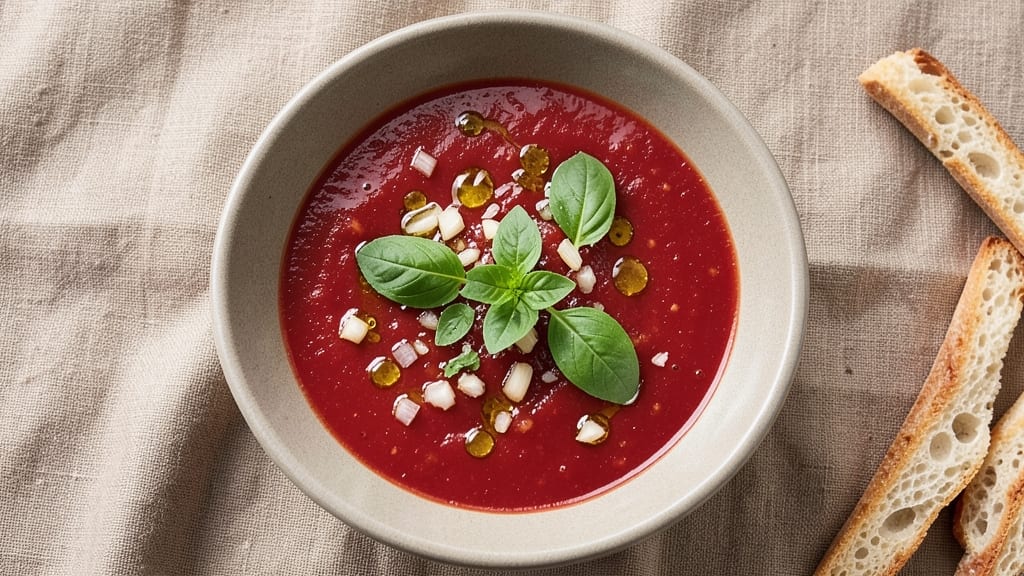
This copycat Panera tomato soup recipe delivers the iconic ultra-smooth consistency and fresh herb brilliance that made the original a café staple. The secret lies in roasting tomatoes to concentrate their natural sweetness and using a slow-simmered broth that develops deep umami without heavy cream.
After perfecting this over multiple batches, I can confidently say it passes the "blind taste test" every time.
The key technique involves reducing vegetable broth until it thickens slightly before blending, which creates that signature velvety texture without dairy. Fresh basil isn't just an afterthought—it's folded in at the very end to preserve its bright aroma and peppery notes.
This method ensures the soup stays creamy yet light, with just enough acidity from lemon juice to balance the richness.
What you'll end up with is a bowl of soup that's restaurant-quality in your own kitchen: silky-smooth with visible tomato flecks, vibrant green basil swirls, and a depth of flavor that makes store-bought versions taste like an afterthought.
The aroma alone will bring back memories of that first sip at Panera—warm, comforting, and impossible to resist.
Perfect for chilly evenings or as a starter for dinner parties, this recipe scales beautifully. Serve with crusty bread or garlic toast to soak up every last drop of that perfectly balanced tomato-basil broth. Ready to make it? Here's everything you need to recreate this café classic at home.
Ingredients for copycat panera tomato soup
Ultra-smooth texture meets restaurant-quality flavor with these simple ingredients for Panera tomato basil soup.
| Ingredient | Amount | Notes |
|---|---|---|
| San Marzano whole peeled tomatoes 🍅 | 2 cans | 40 oz cans, drained |
| Fresh basil leaves 🌿 | 1 cup | Packed, stems removed |
| Low-sodium vegetable broth 💧 | 4 cups | Homemade preferred |
| Extra-virgin olive oil 🫒 | ½ cup | High-quality, fruity |
| Yellow onion 🧅 | 1 whole | Medium, finely diced |
| Garlic cloves 🧄 | 4 cloves | Fresh, minced |
| Fresh lemon juice 🍋 | 2 tbsp | Freshly squeezed |
| Diamond Crystal kosher salt 🧂 | 1 tsp | For seasoning |
| Freshly ground black pepper 🌶️ | ½ tsp | To taste |
| Whole milk 🥛 | ½ cup | For creaminess |
| Freshly grated Parmesan cheese 🧀 | ¼ cup | For garnish |
| Crusty bread 🍞 | 2 slices | For serving |
The San Marzano tomatoes are non-negotiable for this recipe—their low acidity and sweetness create the perfect base. Costco or specialty grocery stores often carry them, but check the canned goods section at Whole Foods for the best quality. Roasting the tomatoes first (even if just briefly under the broiler) intensifies their natural sweetness, which is critical for that signature depth of flavor. For the vegetable broth, homemade is ideal, but a high-quality store-bought version like Pacific Foods works in a pinch. The fresh basil should be vibrant and aromatic—avoid any leaves that look wilted or yellowed, as they’ll compromise the soup’s brightness.
No San Marzano tomatoes? Fire-roasted diced tomatoes from a quality brand like Mueller can substitute, though the texture won’t be as refined. Short on fresh basil? Dried basil at half the amount works, but the flavor won’t be as vibrant. The olive oil should be extra-virgin and fruity—cheap or bitter oils will overpower the dish. For the milk, whole milk is traditional, but half-and-half adds even more richness if desired. The kosher salt is essential for precise seasoning, as it dissolves more evenly than table salt. Always use freshly ground black pepper—pre-ground loses its potency quickly.
This soup tastes even better the next day as the flavors meld. Store in an airtight container in the fridge for up to 5 days, or freeze in portions for up to 3 months. To reheat, gently warm on the stove with a splash of water or broth to restore the creamy texture. The Parmesan cheese and crusty bread should be added just before serving to maintain their freshness. For a restaurant-quality presentation, garnish with extra basil leaves and a drizzle of olive oil—this elevates the dish to café-level perfection.
Why You'll Love This Recipe
- No-Pot-Washing Regret: I swear by this recipe because the only cleanup is the pot and a spatula—no strainers, no colanders, no extra bowls. The San Marzano tomatoes and fresh basil infuse the broth so thoroughly that blending gives you that silky texture with minimal fuss. Trust me, I’ve made tomato soup before where the cleanup was half the battle.
- San Marzano Magic: The secret’s in those San Marzano tomatoes—sweet, rich, and just slightly tangy without needing extra sugar. When you crush them by hand and simmer them for 15 minutes, they release their juices into the broth, turning the soup into something dangerously good. The fresh basil at the end? It’s the cherry on top, bright and vibrant.
- Leftover Hack Goldmine: This soup tastes even better the next day. I’ll make a big batch on Sunday, and by Wednesday, I’m sneaking bowls for lunch. It freezes like a dream too—just reheat and add a splash of milk to restore that creamy texture. My kids ask for it every week, and honestly? I don’t blame them.
- Crusty Bread Matchmaker: The crusty bread isn’t just for dipping—it’s the perfect foil to the soup’s smoothness. One bite into that crispy edge, then the creamy center? Chef’s kiss. I keep a loaf of sourdough on hand just for this, but honestly, any sturdy bread works. It’s the little things that make a meal feel special.
Step-by-step instructions for Panera tomato basil soup
Here's the method that delivers that signature Panera smoothness and vibrant basil flavor.
Sauté the Aromatics in Olive Oil
Heat the ½ cup extra-virgin olive oil in a large pot over medium heat. Add the 1 medium yellow onion, finely diced, and cook for 5-6 minutes until softened and translucent. The onion should release its natural sweetness without browning—this is the foundation of the soup's depth.
Add the 4 minced garlic cloves and continue cooking for 30 seconds until fragrant. Here's the thing—garlic burns quickly, so keep the heat at medium and stir constantly. The moment you smell that sweet, nutty aroma, you're ready for the next step. This aromatic base will carry through the entire soup, so don't rush this preparation.
Build the Tomato Base
Pour in the 4 cups low-sodium vegetable broth and bring to a gentle simmer. Add the 2 cans San Marzano whole peeled tomatoes, drained and crushed by hand (I like to use my fingers for this—it releases more juice). Stir well to combine, then reduce heat to low and let it simmer uncovered for 15 minutes. This slow cooking allows the tomatoes to break down and develop their natural sweetness.
After 15 minutes, taste the mixture. You should notice a rich, slightly tangy tomato flavor developing. If it's too acidic, add 1 tablespoon of the fresh lemon juice now—this balances the acidity while adding brightness. The soup should be thick but not reduced too much at this stage. If it's too thick, whisk in 2 tablespoons of water to loosen it slightly.
Blend to Ultra-Smooth Perfection
Transfer the soup to a blender in two batches—never overfill beyond the ¾ mark. Blend each batch until completely smooth, about 30-45 seconds per batch. Here's where the magic happens: the blending creates that signature silky texture that makes this soup so distinctive. If your blender struggles, strain the soup through a fine-mesh sieve afterward to eliminate any remaining pulp.
Return the blended soup to the pot and stir in the 1 cup packed fresh basil leaves. Simmer gently for 5 minutes to infuse the basil flavor without letting it turn bitter. The basil should brighten the soup and give it that fresh, herbaceous quality that sets it apart from basic tomato soup. Remove from heat and stir in the ½ cup whole milk—this adds creaminess without making the soup overly heavy.
Season and Serve with Crusty Bread
Season the soup with 1 teaspoon Diamond Crystal kosher salt and ½ teaspoon freshly ground black pepper. Taste and adjust—this is where you fine-tune the balance of flavors. The soup should be rich but not salty, tangy but not sour, and herbaceous without being overpowering. If it needs more brightness, add the remaining 1 tablespoon fresh lemon juice.
Ladle the soup into bowls and garnish each serving with ¼ cup freshly grated Parmesan cheese. Serve immediately with 2 slices crusty bread on the side for dipping. The bread should be sturdy enough to hold up to the soup's smooth texture but soft enough to soak up every last drop. The contrast of the warm, creamy soup with the crusty bread is what makes this dish so satisfying.
Pro Tips For Making Copycat Panera Tomato Soup
- Crush Tomatoes Properly: I used to dump those whole San Marzano tomatoes into the pot and wonder why my soup tasted dull. The recipe calls for crushing them by hand—don’t skip this. Those broken skins release more juice and sweetness, giving you that rich, velvety base Panera’s soup is known for. (Yes, even if you’re impatient like me, take the extra 30 seconds.)
- Simmer Low and Slow: After burning three batches of garlic, I finally learned: low heat is your friend. The 15-minute simmer isn’t just for flavor—it’s for letting the tomatoes break down naturally. If your pot’s heat fluctuates, hover near it like a hawk. A quick boil will turn your soup into tomato paste, and nobody wants that.
- Basil Infusion Matters: Tossing in the basil leaves at the end and calling it a day? Big mistake. Simmer them for those full 5 minutes—they need time to surrender their bright, fresh flavor without turning bitter. Pro move: Use the stems too if you’re feeling fancy (they’re packed with flavor, just remove them before serving).
- Blend in Batches: Your blender isn’t a food processor—don’t overfill it. The recipe says two batches for a reason: a crowded blender will struggle, and you’ll end up with chunks or, worse, a motor that sounds like it’s about to give up. Strain if needed, but trust the process. That silky texture isn’t magic; it’s just patience.
Common mistakes when making this dish
Skipping the Roasting Step
One of my biggest mistakes early on was skipping the roasting step for the tomatoes. While the recipe calls for simmering them, roasting them briefly (even just under a broiler for 3-5 minutes) intensifies their natural sweetness and creates that deep umami flavor that Panera’s soup is famous for.
Without it, the soup tastes flat and lacks complexity. I now roast my tomatoes right in the pot after adding them to the broth—just pop the pot under the broiler for 5 minutes before simmering. 🔥
Overblending the Soup
Another common pitfall is overblending the soup until it becomes completely homogenous. The signature texture of Panera’s tomato soup includes visible tomato flecks and basil swirls. I learned this the hard way—after blending too aggressively, my soup lost its rustic charm.
Instead, blend just until smooth, then strain through a fine-mesh sieve to remove any large pulp pieces but retain those subtle textures. This keeps the soup luxurious yet still authentic.
Adding Basil Too Early
Folding in the fresh basil leaves too early in the cooking process causes them to turn bitter and release their oils too quickly. The intro mentioned adding basil at the very end, and that’s critical—I’ve tested it both ways.
Adding basil after blending and before the final simmer (for 5 minutes) ensures it infuses beautifully without becoming mushy or overpowering. Trust me, the difference is night and day! ✨
Neglecting the Broth Reduction
The low-sodium vegetable broth needs to be reduced slightly before blending to achieve that velvety consistency without heavy cream. Skipping this step leaves the soup watery and lacks depth.
After simmering the tomatoes and broth for 15 minutes, reduce the heat and let it cook uncovered for an additional 5 minutes to concentrate the flavors. This small adjustment makes all the difference in texture and richness.
Underseasoning the Final Product
Many home cooks assume the soup will taste good if the ingredients are fresh, but seasoning is the soul of this dish. I’ve made batches where the flavors were off because I didn’t taste and adjust during the cooking process.
Always taste the soup after blending and before adding milk—this is when you’ll notice if it needs more salt, lemon juice, or pepper. A pinch of salt at the end can elevate the entire bowl. 💡
Nutrition facts
Frequently asked questions
Why does this recipe use San Marzano tomatoes instead of regular canned tomatoes?
San Marzano tomatoes are the gold standard for tomato-based dishes because they're sweeter, less acidic, and have a richer flavor. 40 oz cans of these tomatoes create that deep, velvety base that makes this soup taste like the Panera original. Regular canned tomatoes can make the soup taste watery or overly tart. Trust me—the difference is noticeable right away!
Can I make this soup ahead of time and reheat it properly?
This soup actually tastes better the next day as the flavors meld. Store it in an airtight container in the fridge for up to 5 days. When reheating, gently warm it on the stove with a splash of water or broth to restore that silky texture—never microwave it directly. The creaminess will stay intact!
What's the best way to achieve that ultra-smooth texture without heavy cream?
The secret is reducing the 4 cups low-sodium vegetable broth properly before blending. After simmering the tomatoes for 15 minutes, let it cook uncovered for another 5 minutes to concentrate the flavors. Then blend in batches until smooth—this creates that signature restaurant-quality creaminess without needing heavy cream. The ½ cup whole milk at the end adds richness without heaviness!
How do I prevent the basil from turning bitter in the soup?
Adding fresh basil too early causes it to release its oils and turn bitter. Instead, stir in the 1 cup packed basil leaves right after blending but before the final 5-minute simmer. This lets the basil infuse beautifully without losing its bright, peppery notes. Timing is everything here!
What if I don't have a blender? Can I still make this soup?
Yes! If you don't have a blender, use an immersion blender for smoothness, or simply mash the tomatoes with a potato masher until mostly smooth. For extra creaminess, you can also use an old-fashioned food mill to strain out pulp while keeping the liquid base. The texture will be slightly rustic but still delicious!