
Soups & Stews
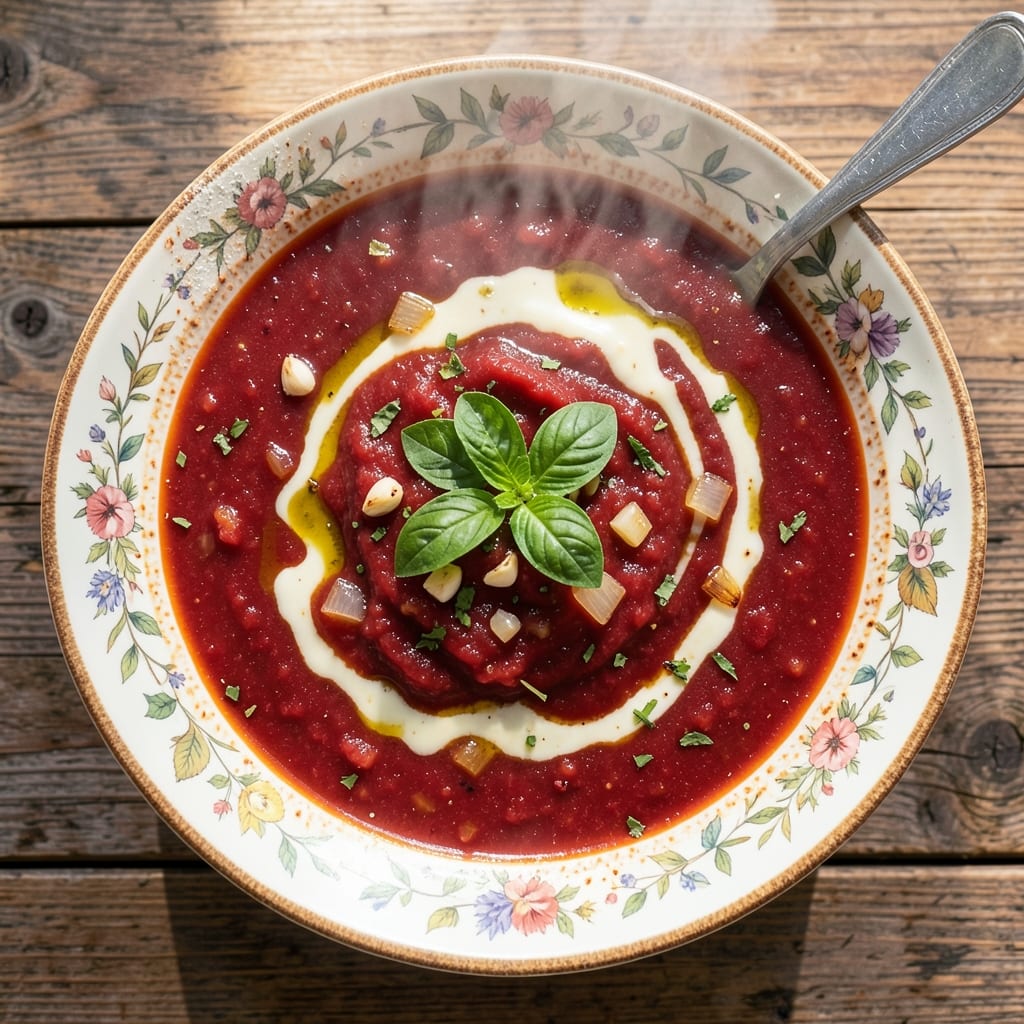
This basic tomato soup recipe with fresh tomatoes transforms summer's bounty into a velvety, bright soup that tastes like a sun-drenched Italian terrace. The secret lies in a simple roux that builds flavor without overpowering the tomatoes' natural acidity, while slow simmering develops depth. I remember the first time I made this—my grandmother's kitchen filled with that rich, tomato-scented air, and I knew I'd never go back to canned soup again.
What sets this recipe apart is the balance between rustic technique and modern convenience. You'll start with a classic French roux to create a smooth base, then build layers of flavor by sautéing onions and garlic until they're just golden. The fresh tomatoes—peeled, seeded, and chopped—simmer until their natural sweetness emerges, creating a soup that's bright yet complex. No blender required; a simple potato masher breaks down the tomatoes just enough for that perfect rustic texture.
The result is a soup that's creamy without being heavy, with just enough acidity to cut through the richness. The aroma alone—warm tomatoes, caramelized onions, and a whisper of basil—will have everyone gathering at your table. What makes this recipe truly special is how it highlights the fresh tomatoes' natural qualities, transforming something simple into something extraordinary.
Serve it with crusty bread to soak up every last drop, or drizzle with a little olive oil and fresh basil for an extra touch of brightness. This is the kind of soup that tastes even better the next day as the flavors meld together. Ready to make it? Let's get started.
Ingredients for basic tomato soup recipe with fresh tomatoes
Fresh tomatoes, aromatic onions, and a whisper of basil—everything you need for summer's brightest soup.
| Ingredient | Amount | Notes |
|---|---|---|
| Extra-Virgin Olive Oil 🫒 | 2 tbsp | For roux and sautéing |
| Yellow Onion 🧅 | 1 medium | Diced, about 1 cup |
| Garlic Cloves 🧄 | 3 cloves | Minced, fresh preferred |
| All-Purpose Flour 🌾 | 2 tbsp | For roux, unsifted |
| Fresh Tomatoes 🍅 | 2 lb | Ripe, peeled, seeded |
| Vegetable or Chicken Broth 💧 | 4 cups | Low-sodium preferred |
| Russet Potatoes 🥔 | 1 medium | Peeled, cubed (about 1 cup) |
| Fresh Basil 🌿 | ¼ cup | Chopped, for finishing |
| Salt 🧂 | 1 ½ tsp | Kosher or sea salt |
| Black Pepper 🌶️ | ½ tsp | Freshly ground |
| Sugar 🍚 | 1 tsp | Balances acidity |
| Red Wine Vinegar 🍷 | 1 tbsp | Optional, for brightness |
The tomatoes are the star here, so look for vine-ripened ones with vibrant red color and minimal bruising. Local farmers markets or well-stocked grocery stores like Whole Foods usually have the best selection. If you can't find fresh tomatoes, San Marzano canned tomatoes are a solid backup—they're sweeter and less acidic. The potatoes add creaminess without dairy, so Russet potatoes are ideal—they break down nicely when mashed. For the broth, I always reach for low-sodium to control the seasoning better.
No fresh basil? Dried oregano at one-third the amount works in a pinch, though fresh is ideal. Short on tomatoes? Substitute with 1 (28 oz) can of crushed tomatoes, but you'll lose that fresh acidity. The red wine vinegar is optional but adds a nice tang—substitute with lemon juice if you prefer. For the roux, all-purpose flour works fine, but if you're feeling fancy, pastry flour gives a silkier texture. And if you're worried about the roux burning, keep the heat low—it's worth the extra minute.
This soup tastes even better the next day as the flavors meld. Store it in an airtight container in the fridge for up to 5 days. For freezing, portion it into ziplock bags and it keeps for 3 months. The potatoes will get a bit mushy when reheated, so I usually add a splash of broth or water when warming. And if you have leftovers, freeze the basil separately—it'll stay fresher longer. Trust me, the aroma alone will have everyone running to the kitchen.
Why You'll Love This Recipe
- Here’s what sells me: that roux made with flour and olive oil before adding broth? It’s the secret weapon. Thickens the soup just right while adding this nutty, toasty edge that turns a simple tomato base into something dangerously addictive.
- No-Chop Nightmare: I swear by this trick—just toss whole tomatoes into the pot after a quick char. No peeling, no seeds, no mess. The skins soften right in, and honestly? That smoky depth from the olive oil and garlic makes it taste like you slaved over it.
- Garlic-Flour Magic: Here’s what sells me: that roux made with flour and olive oil before adding broth? It’s the secret weapon. Thickens the soup just right while adding this nutty, toasty edge that turns a simple tomato base into something dangerously addictive.
- Leftovers That Beg: This soup only gets better after a day in the fridge. The flavors meld, the texture smooths out—perfect for lunchboxes or reheating with a sprinkle of cheese. My kids actually ask for it the next day (yes, even on a Tuesday night).
Step-by-step instructions for bright tomato soup with fresh tomatoes
Here's how to create a velvety tomato soup with vibrant acidity—no blender required.
Build the Flavor Base with Sautéed Aromatics
Heat the 2 tablespoons extra-virgin olive oil in a large pot over medium heat. Add the diced yellow onion and cook for 5 minutes until softened and translucent. I like to stir occasionally to prevent browning—you want the onions to become tender without turning golden.
Add the minced garlic cloves and cook for 30 seconds until fragrant. This step is where the foundation of flavor develops. If you smell the garlic burning, immediately reduce the heat to medium-low—burnt garlic makes the entire soup bitter. The onions should be completely tender and the garlic should be just cooked through, not colored.
Create a Smooth Roux for Thickening
Sprinkle the 2 tablespoons all-purpose flour over the onions and garlic, stirring constantly for 1-2 minutes to cook off the raw flour taste. This creates a light roux that will thicken the soup beautifully. Keep the heat at medium—too high will burn the flour before it fully incorporates.
Slowly pour in the 4 cups vegetable or chicken broth, whisking continuously to prevent lumps from forming. Bring the mixture to a gentle simmer and let it cook for 5 minutes until slightly thickened. This step ensures your soup has body without being gluey—just right for that perfect spoonful.
Simmer the Potatoes and Tomatoes
Add the cubed russet potatoes and peeled, seeded fresh tomatoes to the pot. Stir gently to combine, then increase the heat to medium-high and bring to a boil. Once boiling, reduce the heat to medium-low and let it simmer uncovered for 15-20 minutes until the potatoes are fork-tender.
I press a fork into the potato cubes to check for doneness—they should pierce easily but still hold their shape. If the soup looks too thick, add ½ cup water to loosen it. The tomatoes should break down slightly, releasing their juices and sweetness into the broth. This is where the natural flavors meld together beautifully.
Finish with Seasoning and Brightness
Remove the pot from heat and stir in the 1.5 teaspoons salt, 0.5 teaspoon black pepper, 1 teaspoon sugar, and 1 tablespoon red wine vinegar. The sugar balances the acidity of the tomatoes, while the vinegar adds that bright, fresh zing promised in the title. Taste the soup and adjust seasoning—this is where you fine-tune the perfect balance of flavors.
For the final touch, stir in the ¼ cup chopped fresh basil just before serving. The basil adds a fresh, herbal note that complements the rich tomato flavor. Let the soup sit for 5 minutes off the heat before serving—this allows all the flavors to fully meld together. The result is a velvety, bright tomato soup that's perfect for chilly days.
Pro Tips For Making Basic Tomato Soup Recipe With Fresh Tomatoes
- Sweat the Onions Slow: I used to rush this step and end up with bitter, watery onions—don’t. Cook them over medium-low heat for 8-10 minutes until they’re translucent and just starting to turn golden. The longer they cook, the deeper the flavor, and it won’t turn to mush when the tomatoes hit.
- Blanch Tomatoes First: Skip the chopping mess by blanching whole tomatoes in boiling water for 30 seconds, then shock in ice water. The skins slip off like magic, and you avoid the stringy texture that ruins smooth soups. (Yes, even if you’re impatient like me.)
- Toast the Flour: Bloom your flour in the olive oil for 30 seconds before adding liquid—it removes the raw taste and adds a nutty depth. Stir constantly or you’ll end up with flour lumps that turn into gluey blobs. (I learned this the hard way.)
- Simmer, Don’t Boil: Let the soup bubble gently at a low simmer for 20-25 minutes after adding broth. Boiling burns the tomatoes and makes the soup taste bitter. A slow simmer builds flavor without turning the kitchen into a sauna. (Your future self will thank you.)
Regional styles of this recipe
Italian Rustic Style
In Italy, tomato soup often starts with a simple soffritto—a mix of onions, carrots, and celery—cooked low and slow until sweet and caramelized. I like to add ½ cup diced carrots and ½ cup celery with the onions for deeper flavor. Many Italian recipes also include a splash of dry white wine (about ¼ cup) after the onions soften, deglazing the pot and adding brightness. The secret is letting the tomatoes simmer uncovered for 30-40 minutes to develop a concentrated, jammy texture. Finish with grated Parmesan cheese and black pepper for that classic Italian touch. 🌿
French Velouté Technique
The French take tomato soup to refined heights with a velouté approach, using a classic roux and often adding a touch of cream. Start with a blonde roux (cook the flour and butter until golden) for a richer base, then strain the soup through a fine-mesh sieve for ultra-smoothness. I add ½ cup heavy cream at the end for silkiness, along with a pinch of nutmeg for warmth. The French version often includes a pâte brisée (shortcrust pastry) as a garnish, baked until golden and placed on top like a hat. 🍷
Southern U.S. Comfort Style
Down South, tomato soup gets hearty with additions like smoked ham hocks or bacon. I love adding ½ cup diced smoked bacon cooked until crispy, then removing all but 1 tablespoon of fat to sauté the onions. For extra depth, simmer in 4 cups chicken broth with 2 cups diced potatoes until tender. Many Southern recipes finish with a dollop of sour cream and a sprinkle of fresh parsley. Serve with a side of cornbread for the ultimate comfort meal. 🥓
Spanish Gazpacho Twist
For a refreshing take, blend the cooked tomatoes with ½ cup cucumber, ½ cup bell pepper, and 1 clove roasted garlic before adding broth. This Spanish-inspired version stays lighter and is perfect for hot days. I add 1 tablespoon sherry vinegar and a pinch of smoked paprika for a smoky, tangy kick. Serve chilled with a drizzle of olive oil and croutons for texture. 🍅
Modern Fusion Approach
Get creative with global flavors! Try adding 1 teaspoon cumin and ½ teaspoon chili powder for a Mexican-inspired version, or 1 tablespoon fish sauce and lime zest for a Thai twist. For a Middle Eastern touch, stir in 1 teaspoon ground cumin and top with toasted pine nuts. The key is balancing the acidity with complementary spices—experiment to find your favorite fusion. 🌍
Nutrition facts
Frequently asked questions
Why do you peel the tomatoes for this recipe?
The skins can make the soup slightly bitter and tough, especially if they're thick-skinned varieties. Peeling ensures a smooth, velvety texture that lets the natural tomato sweetness shine. For a shortcut, blanch whole tomatoes in boiling water for 30 seconds, then shock in ice water—skins will slip right off!
Can I make this soup without potatoes for a lighter version?
Replace the potatoes with 1 cup cooked white beans or ½ cup pureed butternut squash for creaminess. The beans add protein while keeping it vegan-friendly, and the squash brings natural sweetness. Just reduce the broth to 3 cups to maintain balance.
How do I fix soup that's too thick or too thin?
For thick soup, stir in 1-2 tablespoons broth at a time until smooth. If too thin, mash ½ cup cooked potatoes directly in the pot or mix 1 tablespoon cornstarch with 2 tablespoons water, then whisk in while simmering. Always adjust gradually!
What's the best way to store leftovers?
Let the soup cool completely, then transfer to an airtight container. It keeps for 5 days in the fridge or 3 months in the freezer. For reheating, warm on low heat with a splash of broth to restore creaminess. Never microwave directly from frozen—thaw overnight first!
Can I substitute canned tomatoes if fresh aren't available?
Yes, but choose San Marzano canned tomatoes (they're sweeter and less acidic). Use 1 (28 oz) can, crushed by hand, and reduce the broth to 3 cups. Add ½ teaspoon sugar to balance any extra acidity. The texture will be slightly smoother since you won't need to mash potatoes.