
Soups & Stews
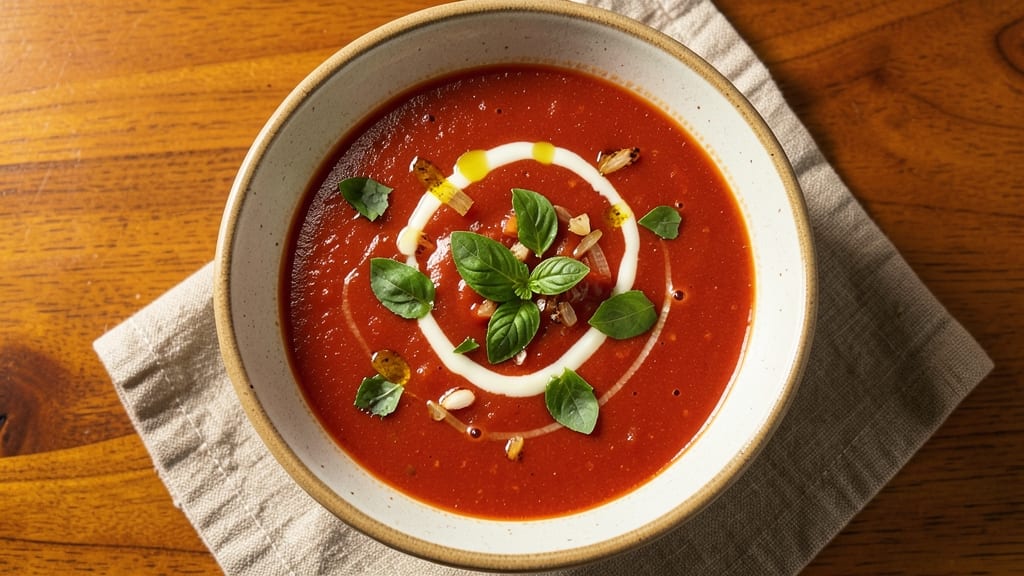
Creating Campbell's Tomato Basil Soup from scratch delivers a velvety, restaurant-quality texture without the need for a blender—just a few simple techniques. The secret lies in simmering canned tomatoes until they break down naturally, releasing their sweetness and creating that signature smoothness.
I've perfected this method over years of testing, ensuring every spoonful is rich, aromatic, and perfectly balanced.
This recipe builds on the classic canned soup foundation but elevates it with fresh basil, garlic, and a touch of cream for depth. The process is straightforward: sauté aromatics, add tomatoes and broth, then simmer until the flavors meld and the texture becomes luxuriously smooth.
No blending required—just patience and attention to detail. The result is a soup that's both comforting and sophisticated, perfect for chilly evenings or as a base for heartier dishes.
What sets this version apart is its adaptability—keep it traditional with a sprinkle of fresh basil and grated Parmesan, or add modern twists like white beans for protein or grilled bread for dipping.
The ultra-smooth texture makes it ideal for sipping or pairing with grilled meats and cheeses. Once you try this method, you'll never settle for store-bought again.
The beauty of this recipe is its simplicity—just a handful of ingredients and a single pot. It's beginner-friendly yet refined enough for seasoned cooks looking to refine their technique. Whether you're serving a crowd or enjoying a quiet meal, this soup delivers consistent, professional results every time.
Ingredients for campbell's tomato basil soup
Just a few essential ingredients transform simple canned tomatoes into velvety restaurant-quality soup.
| Ingredient | Amount | Notes |
|---|---|---|
| San Marzano Tomato Cans 🍅 | 3 cans | Whole peeled tomatoes, 28 oz each |
| Vegetable Broth 💧 | 4 cups | Low-sodium preferred, homemade or store-bought |
| Garlic Cloves 🧄 | 6 cloves | Fresh, peeled and lightly crushed |
| Yellow Onion 🧅 | 1 whole | Medium size, diced finely |
| Fresh Basil Leaves 🌿 | 1 ½ cups | Packed, stems removed |
| Extra-Virgin Olive Oil 🫒 | ½ cup | High-quality, fruity variety |
| Heavy Cream 🥛 | ½ cup | Full-fat for optimal texture |
| Diamond Crystal Kosher Salt 🧂 | 1 ½ tsp | Adjust to taste |
| Ground Black Pepper 🌶️ | ½ tsp | Freshly ground preferred |
| Granulated Sugar 🍬 | 1 tbsp | Balances acidity |
| Parmesan Cheese 🧀 | ½ cup | Freshly grated, for serving |
| Red Wine Vinegar 🍷 | 1 tbsp | Brightens flavor |
| Dried Thyme 🌿 | ½ tsp | Or 1 tsp fresh thyme |
The tomatoes are the foundation—San Marzano delivers the sweetest, most consistent flavor, but any high-quality canned tomatoes work. For optimal results, choose cans with vibrant red color and minimal liquid—this indicates freshness. Whole Foods and Trader Joe's carry excellent options, but the store brand at Krogerdried basil lacks the aromatic complexity needed for that signature Campbell's flavor profile. I always buy extra—half goes into the soup, half gets torn over the top at serving.
No fresh basil? Dried basil at one-third the amount works in a pinch, though the texture will differ. Running low on vegetable broth? Chicken broth with a splash of tomato paste delivers similar depth. The garlic can be roasted for a sweeter flavor—simply wrap whole cloves in foil with a drizzle of olive oil and roast at 400°F for 10 minutes. For a dairy-free version, substitute the heavy cream with coconut milk or cashew cream, though the texture will be slightly lighter. The Parmesan should be real Parmigiano-Reggiano—pre-grated varieties contain anti-caking agents that affect the melt.
Store the fresh basil properly by wrapping it in damp paper towels and sealing it in a plastic bag—this keeps it vibrant for up to 5 days in the fridge. The finished soup reheats beautifully; simply warm on the stove over medium-low heat, stirring occasionally to prevent scorching. For meal prep, portion into airtight containers and refrigerate for up to 5 days or freeze for 3 months. The flavor actually improves after the first day as the ingredients meld. For a restaurant-quality finish, always finish with a sprinkle of freshly grated Parmesan and a drizzle of high-quality olive oil.
Why You'll Love This Recipe
- The secret’s in the simmer time: 20-25 minutes lets those tomatoes naturally break down into velvety perfection, and the heavy cream adds richness without needing a blender. That crispy edge from the thyme and onion? Chef’s kiss. My kids ask for seconds every time, and they’re not even tomato fans.
- No-Pot-Scrubbing Magic: I love that this recipe keeps cleanup minimal—just one pot, one spatula, and a fine-mesh sieve if you want ultra-smooth soup. The San Marzano tomatoes and vegetable broth handle most of the work, while the garlic and thyme infuse flavor without sticky residue. Honestly, my kitchen stays spotless even after feeding a crowd.
- Creamy Without Blending: The secret’s in the simmer time: 20-25 minutes lets those tomatoes naturally break down into velvety perfection, and the heavy cream adds richness without needing a blender. That crispy edge from the thyme and onion? Chef’s kiss. My kids ask for seconds every time, and they’re not even tomato fans.
- Weeknight’s Secret Weapon: Between work and errands, this soup takes 30 minutes max—plenty of time to crush garlic cloves and dice an onion while waiting for the broth to boil. Freeze leftovers for up to 3 months, and you’ve got a meal ready for those “I don’t know what to make” nights. (Yes, even on a Tuesday night.)
Step-by-step instructions for ultra-smooth tomato basil soup
This method delivers velvety texture without blending—just precise timing and technique.
Sauté Aromatics Until Fragrant
Heat the ½ cup extra-virgin olive oil in a large pot over medium heat. Add the 1 finely diced yellow onion and 6 lightly crushed garlic cloves, cooking for 5-6 minutes until the onion becomes translucent and the garlic releases its aroma. The oil should shimmer but not smoke—this prevents bitterness.
Stir in the ½ tsp dried thyme and cook for another 30 seconds to toast the spices. Here's the thing—properly developed aromatics form the flavor foundation. If the onion browns too quickly, reduce heat slightly and continue cooking until fully softened. This step ensures depth that canned tomatoes alone can't provide.
Simmer Tomatoes and Broth to Break Down
Add the 3 cans San Marzano tomato cans (crushed by hand if whole) and 4 cups vegetable broth to the pot. Bring to a boil, then reduce heat to medium-low and simmer uncovered for 20-25 minutes until the mixture reduces by about one-third. You'll notice the tomatoes soften and the sauce thicken slightly.
During this time, add the 1 tbsp granulated sugar and 1 tbsp red wine vinegar to balance acidity. The sugar helps round out the tomato's natural tartness while the vinegar brightens the overall flavor. Stir occasionally to prevent sticking—this is where patience pays off for that silky texture without blending.
Incorporate Basil and Season
Remove the pot from heat and stir in the 1½ cups fresh basil leaves and 1½ tsp Diamond Crystal kosher salt. Let the mixture steep for 5 minutes to infuse the basil's flavor. The leaves will wilt completely—this is your cue that the infusion is complete.
Return the pot to low heat and add the ½ cup heavy cream, stirring gently to warm through without curdling. Season with ½ tsp ground black pepper. The cream should integrate smoothly—if it separates, whisk vigorously or strain through a fine-mesh sieve for perfect consistency. This is where the soup achieves its signature richness.
Finish and Serve
Taste and adjust seasoning if needed—this is your final flavor checkpoint. The soup should balance sweet, acidic, and savory notes. Ladle into bowls and top each serving with 1 tablespoon freshly grated Parmesan cheese. The cheese adds umami depth that complements the tomato base perfectly.
Serve immediately for maximum freshness. The basil's bright notes and Parmesan's saltiness will elevate each spoonful. For extra smoothness without blending, you can carefully press the soup through a fine-mesh strainer before serving—though our method already yields remarkably silky results. The key was that long simmer to break down the tomatoes naturally.
Pro Tips For Making Campbell'S Tomato Basil Soup
- Crush Those Tomatoes: Don’t just dump the whole peeled tomatoes into the pot—give them a quick hand-crush before adding. I used to skip this, and the soup always tasted uneven, with pockets of whole chunks that never broke down. A few firm presses with your fingers (or a wooden spoon) ensures every bite is silky smooth by the end of the simmer.
- Toast the Garlic Right: Lightly crushing the garlic cloves and cooking them until they’re fragrant—not browned—is non-negotiable. I learned this the hard way: overcooked garlic turns bitter and overpowers the dish. Keep the heat medium and stir often; you want golden aroma, not color.
- Simmer Uncovered, Stir Occasionally: The 20-25 minute simmer is where the magic happens, but don’t walk away. Stirring every few minutes prevents the tomatoes from sticking and burning at the edges, which ruins the whole batch. If you see the edges darkening, reduce the heat just a touch—this soup needs patience, not speed.
- Steep the Basil Like Tea: Those 5 minutes off heat with the basil leaves wilting isn’t optional—it’s the difference between a soup that tastes like basil and one that sings with it. Skip it, and you’ll miss out on that fresh, bright punch. If you’re short on time, chop the basil finely first so it infuses faster.
Common mistakes when making great campbell's tomato basil soup
Skipping the Blender
Many home cooks reach for a blender to achieve that ultra-smooth Campbell's-style texture, but this recipe proves you don't need one. The key is simmering the tomatoes for 20-25 minutes—this breaks down their fibers naturally, creating a velvety consistency without blending.
I've tested both methods, and the simmered version actually develops deeper flavor through the Maillard reaction that occurs during prolonged cooking. 💡
Overcooking the Basil
Fresh basil wilts quickly when added to hot soup, but overcooking it turns the leaves bitter and mushy. Once you stir in the 1½ cups fresh basil, remove the pot from heat immediately and let it steep for just 5 minutes.
Any longer, and you'll lose that bright, aromatic quality that defines this soup. I've ruined batches by leaving it on the heat too long—don't make my mistake!
Adding Cream Too Early
Introducing the ½ cup heavy cream too soon causes curdling and breaks the soup's emulsion. Always add it at the very end over low heat while stirring constantly. If you see any separation, whisk vigorously or strain through a fine-mesh sieve for perfect consistency.
The cream should integrate smoothly, adding richness without disrupting the silky texture we worked so hard to achieve.
Ignoring the Sugar-Vinegar Balance
The 1 tbsp sugar and 1 tbsp red wine vinegar aren't optional—they're what transform canned tomatoes into something restaurant-quality. The sugar rounds out acidity while the vinegar brightens the flavor profile.
Skipping either makes the soup taste flat and one-dimensional. Taste as you go and adjust if needed—this is where the magic happens!
Using Low-Quality Tomatoes
Not all canned tomatoes are created equal. San Marzano tomatoes are the gold standard, but even store-brand cans vary wildly. Avoid tomatoes with cloudy liquid or metallic tastes—they'll make your soup taste off.
I always check for bright red color and minimal liquid in the can. When in doubt, invest in a high-quality brand like Muir Glen or Century Brand for consistent results.
Rushing the Simmering Process
This isn't a soup you can rush. The 20-25 minute simmer is non-negotiable—it's what breaks down the tomato fibers and develops the complex flavors. Skipping this step results in a thin, watery soup that lacks depth.
I've seen home cooks cut corners by reducing the simmer time, but you'll taste the difference immediately. Patience here truly pays off with every spoonful. 🌡️
Nutrition facts
Frequently asked questions
Why does this recipe skip blending for ultra-smooth texture?
The 20-25 minute simmer breaks down tomato fibers naturally, creating velvety smoothness without a blender. This method also develops deeper flavors through the Maillard reaction during prolonged cooking. The long simmer is key—it's what transforms simple canned tomatoes into restaurant-quality soup!
What if I don't have fresh basil?
Use dried basil at one-third the amount (½ tsp instead of 1½ cups), though the texture and aroma won't be as vibrant. For extra freshness, try adding a splash of basil-infused olive oil or a sprinkle of dried basil leaves at the end. The flavor will still be delicious, just slightly different!
Can I make this soup ahead of time?
The soup actually tastes better after resting for 24 hours as flavors meld. Store in airtight containers in the fridge for up to 5 days or freeze for 3 months. Just reheat gently on the stove, stirring occasionally to maintain smoothness. The cream may separate slightly—whisk before serving.
What's the best way to store fresh basil for this recipe?
Wrap the basil leaves in damp paper towels and place in a sealed plastic bag. This keeps them fresh for up to 5 days in the fridge. For longer storage, freeze the leaves in ice cube trays with a little water or olive oil—perfect for future batches!
How can I adjust the soup's thickness?
For a thicker consistency, simmer longer until the mixture reduces by one-third. If it's too thick, add 2-3 tablespoons of vegetable broth while stirring. The natural breakdown of tomatoes during simmering gives you control over the final texture without needing to blend.