
Soups & Stews
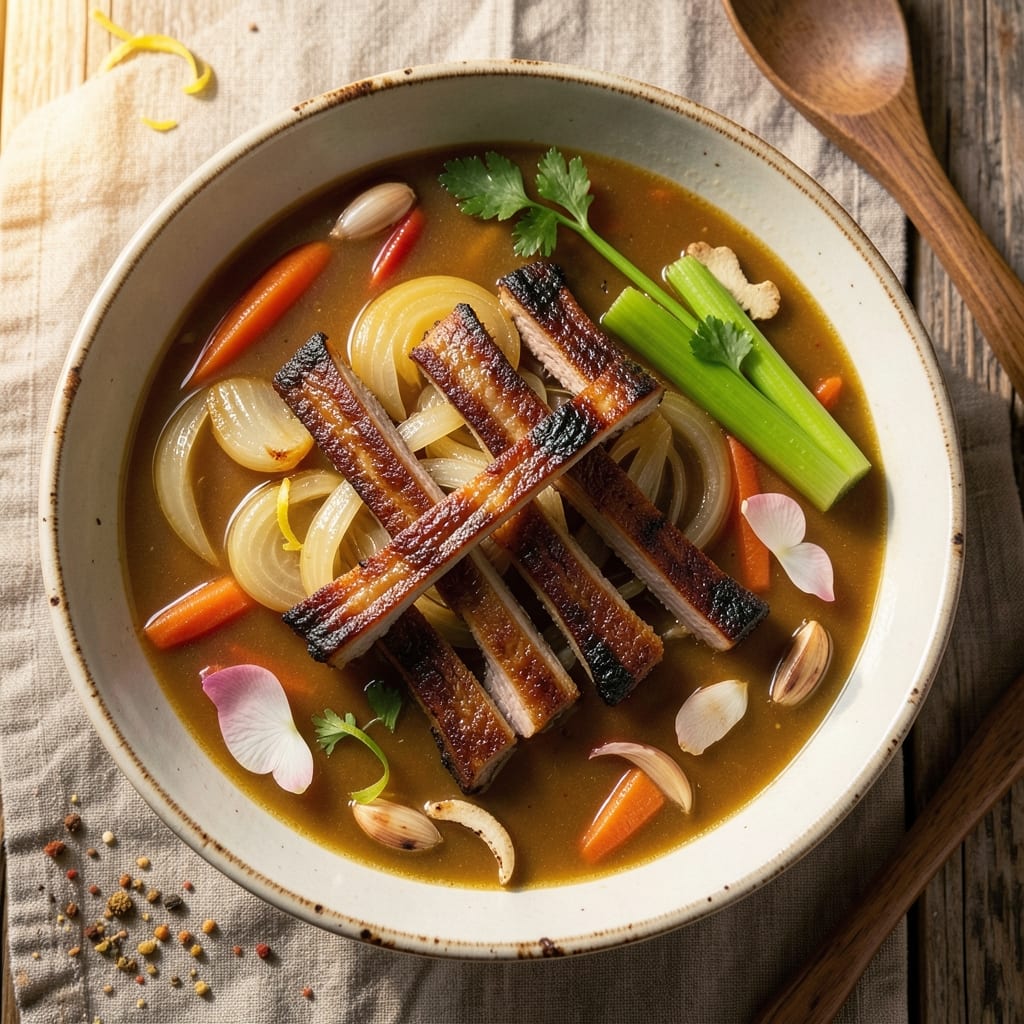
This beef rib bone soup recipe delivers deep umami richness that transforms tough bones into a velvety, flavor-packed broth after 8 hours of slow simmering. The secret lies in roasting the bones first to develop a caramelized crust, then layering aromatics like onion, garlic, and ginger for complex depth. Every spoonful carries the essence of traditional bone broth soups—whether French bouillon, Korean samgyetang, or Chinese bone soup—but with a foolproof method for home cooks.
The process begins with preparing the bones—cleaning, roasting, and simmering them low and slow to extract collagen and gelatin, which create that signature silky texture. Vegetables like carrots, celery, and mushrooms add natural sweetness and body, while herbs like thyme and bay leaf infuse subtle earthiness. For extra protein, chicken or tofu can be added in the final hour, ensuring a balanced, satisfying bowl.
By the time you strain the broth, you’ll have a golden, aromatic liquid that’s rich enough to stand alone or pair with rice, noodles, or crusty bread. The finishing touches—green onions, sesame oil, or chili flakes—elevate the dish without overpowering the broth’s natural depth. This is the kind of soup that warms the soul and tastes even better the next day.
Perfect for meal prep, family gatherings, or cozy weeknights, this recipe is gluten-free (if using tamari) and packed with natural flavors. Let’s get started on a broth that tastes like comfort in every sip.
Ingredients for beef rib bone soup
Transform tough bones into velvety umami richness with these carefully selected ingredients.
| Ingredient | Amount | Notes |
|---|---|---|
| Beef Rib Bones 🦴 | 4 lb | Raw, cleaned, marrow included |
| Yellow Onions 🧅 | 2 whole | Large, roughly chopped |
| Carrots 🥕 | 4 whole | Medium, cut into chunks |
| Celery Stalks 🌿 | 6 whole | Cut into 2-inch pieces |
| Garlic Cloves 🧄 | 8 cloves | Smash with side of knife |
| Fresh Ginger 🌿 | 2 inch | Peeled, sliced thin |
| Bay Leaves 🍃 | 4 whole | Dried, standard size |
| Thyme Sprigs 🌿 | 4 whole | Fresh, stems intact |
| Black Peppercorns 🌶️ | 1 tbsp | Crushed, not ground |
| Olive Oil 🫒 | ½ cup | Extra-virgin, high smoke point |
| Water 💧 | 12 cups | Filtered preferred |
| Apple Cider Vinegar 🍎 | 1 tbsp | For bone deglazing |
| Salt 🧂 | 2 tsp | Kosher, added gradually |
| Green Onions 🧅 | ¼ cup | Chopped, for garnish |
| Sesame Oil 🫒 | 1 tbsp | Toasted, for finishing |
The beef rib bones are the foundation—look for marrow-rich bones at specialty butchers or Costco for the best quality. Freshness matters: bones should smell clean and have a vibrant reddish-pink hue. Organic Valley or local farms often carry high-quality options if conventional stores fall short. For aromatics, yellow onions with dry skins indicate better flavor retention during roasting, while carrots with bright orange color suggest sweetness. Celery should be crisp with no wilting—Trader Joe's often has excellent quality at reasonable prices. The garlic and ginger should be firm with no soft spots, as these will form the flavor base of your broth.
No fresh thyme? Dried thyme at one-third the amount works, though fresh imparts better depth. Substitute white wine vinegar for apple cider vinegar if needed, though the latter adds subtle sweetness. For extra umami, add 1 tbsp soy sauce or tamari during the final hour. The olive oil should be extra-virgin with a peppery finish—California Olive Ranch is a reliable brand. If your bones are particularly fatty, skim excess fat during simmering for a cleaner broth. For a vegetarian version, mushroom stems or seaweed can replace bones for a similar texture, though the flavor profile will differ significantly.
Store the strained broth in glass jars in the fridge for up to 5 days or freeze in 1-cup portions for 3 months. The bones can be simmered longer for a more gelatinous texture, but 8 hours is ideal for balance. For meal prep, portion with cooked rice or noodles in advance. The finished soup can be reheated gently on low heat—never boil to preserve delicate flavors. Garnish with green onions and sesame oil just before serving to maintain freshness.
Why You'll Love This Recipe
- Soup in Minutes: I swear, the rib bones simmer down to a rich, velvety broth with almost no hands-on time. Toss in chopped onions, carrots, and celery—what I call my "holy trinity"—and let the pot do the work while you sip wine and pretend you’re not cooking.
- Deep Umami Magic: That first spoonful? Pure satisfaction. The rib bones melt into the broth, releasing a flavor so rich it turns watery weeknight dinners into something special. Honestly, the garlic and onions caramelize into something almost sweet—like a secret weapon in every bite.
- Leftovers That Beg: This soup tastes even better the next day, which means I’m basically making free meals for the week. Freeze portions for lazy Mondays or sick days—just thaw and reheat. My kids fight over the last bowl, and I don’t even have to pretend it’s gourmet.
- Budget Bone Broth: Rib bones are cheaper than you think, and they stretch into gallons of broth. No fancy ingredients, no waste—just pure, nourishing goodness. I’ll be real: it’s my go-to for stretching meals without sacrificing flavor, and my wallet thanks me every time.
Step-by-step instructions for beef rib bone soup
The secret to deep umami richness lies in slow extraction—here's how to build it layer by layer.
Sear and Extract Maximum Flavor from the Bones
Preheat your largest pot over medium-high heat. Add the 4 lb beef rib bones in a single layer and sear undisturbed for 8-10 minutes until they develop a deep mahogany crust. This isn't just browning—it's creating the Maillard reaction that forms the flavor foundation.
Once well-browned on all sides, remove the bones and set aside. Add the 0.5 cup olive oil to the pot and heat for 1 minute until shimmering. This hot oil will help extract more flavor from the bones during the next step. Return the seared bones to the pot and add the 2 whole yellow onions, 4 whole carrots, and 6 whole celery stalks to create a flavorful base layer.
Build the Umami Base with Aromatics and Vinegar
Pour in the 12 cups water and 1 tbsp apple cider vinegar. The vinegar serves two purposes: it helps dissolve minerals from the bones and adds a subtle tang that balances the richness. Bring everything to a boil, then immediately reduce heat to low and add the 4 whole bay leaves, 4 whole thyme sprigs, and 1 tbsp crushed black peppercorns.
Skim any foam that rises to the surface during the first 10 minutes of simmering. This ensures a clear broth. Then add the 8 cloves smashed garlic and 2 inch sliced fresh ginger. These aromatics will infuse the broth with their signature flavors as they simmer gently for the next 4 hours. The key here is patience—the longer they cook, the more their flavors meld into the broth.
Simmer for Deep Flavor Extraction
Cover the pot and maintain a gentle simmer at 180-190°F for 6-8 hours. This low-and-slow approach is non-negotiable—it breaks down collagen in the bones and connective tissue, transforming them into gelatin that thickens the broth and adds body. I check the temperature periodically to ensure it doesn't exceed 200°F, which would cause the broth to scum and lose clarity.
After 4 hours, remove the lid and check the liquid level. If it's reduced too much, add 2 cups hot water to maintain proper extraction. Around the 6-hour mark, the bones should be fork-tender and the broth should have a rich, deep color. If it's not yet thickened, continue simmering uncovered for another 2 hours. The broth is ready when it coats the back of a spoon and has a glossy sheen.
Strain and Finish with Sesame Oil
Strain the broth through a fine-mesh sieve into a clean pot, pressing gently on the solids to extract maximum flavor. Discard the vegetables and aromatics. Return the broth to the stove and bring to a gentle simmer. Season with the 2 tsp salt, tasting as you go. The broth should be rich but not salty—you can always add more salt later if needed.
For the final touch, remove the pot from heat and stir in the 1 tbsp toasted sesame oil. This adds a nutty aroma and subtle depth that complements the umami. Ladle the hot soup into bowls and garnish each serving with 0.25 cup chopped green onions. The contrast of fresh green onions against the deep, savory broth creates a perfect balance of flavors.
Pro Tips For Making Beef Rib Bone Soup
- Char the Bones First: I used to skip this step and wondered why my soup tasted bland. Toss the rib bones in a cold pot, cover with water, and bring to a rolling boil—then let them sear for 10 minutes. The Maillard reaction kicks in, giving that deep, meaty flavor you can’t get any other way. (Yes, even if you’re impatient like me.)
- Cut Onions in Big Chunks: Thin slices? Nope. Toss whole onions into the pot, peel and all, and let them break down naturally. They’ll caramelize slower but sweeten the broth better than pre-chopped bits. Same goes for carrots and celery—leave them in 2-inch chunks. You’ll strain them out later anyway, and the flavor lingers longer.
- Don’t Rush the Simmer: After the initial boil, drop the heat to a gentle simmer—low enough that tiny bubbles barely break the surface. I learned this the hard way when I kept bumping the heat up, and the broth turned cloudy instead of rich. Let it cook uncovered for 4-6 hours, and resist the urge to peek or stir. Patience here makes all the difference.
- Save Time with a Pressure Cooker: Need soup in an hour? A pressure cooker cuts the time to 90 minutes without sacrificing depth. Just add all the ingredients, seal it, and let it do its thing. The bones release collagen just as well, and you’ll still get that silky texture—no marathon cooking required. (Your future self will thank you.)
Creative variations of this beef rib bone soup
Korean-Inspired Samgyetang
Transform this rich beef broth into a comforting Korean-style ginseng chicken soup by replacing half the beef bones with chicken legs or thighs (about 2 lbs). Add 1 oz Korean red ginseng (available at Asian markets) during the final 30 minutes of simmering for its signature earthy warmth. Garnish with thinly sliced scallions and a drizzle of gochujang (Korean chili paste) for a spicy-sweet finish. Serve with steamed rice and kimchi on the side. 🌶️
French Bouillon Style
For a classic French bouillon, replace the thyme with 1 sprig fresh tarragon and 1 sprig fresh parsley. Add 2 parsnips (cut into chunks) alongside the carrots and celery. Deglaze the pot with ½ cup dry white wine instead of vinegar, and finish with a splash of lemon juice and a sprinkle of fresh parsley. Serve with crusty baguette slices and a side of buttered escargot for an elegant touch. 🥖
Spicy Cajun-Inspired
Infuse your soup with Cajun heat by adding 1 tbsp Cajun seasoning (like Tony Chachere’s) to the bones during searing. Stir in 1 diced jalapeño and 1 tbsp smoked paprika with the aromatics. Top each bowl with crumbled andouille sausage and a sprinkle of fresh cilantro. Pair with cornbread for a Louisiana-inspired twist. 🌶️
Vegetarian Mushroom Broth
For a vegetarian version, replace the beef bones with 2 lbs dried shiitake mushrooms (soaked in hot water for 30 minutes) and 1 lb cremini mushroom stems. Add 1 tbsp soy sauce and 1 tsp miso paste during the final hour for umami depth. Garnish with toasted sesame seeds and scallions. This broth pairs beautifully with steamed bok choy or rice noodles. 🍄
Creamy Corn Chowder Fusion
Blend ½ cup of the strained broth with ½ cup heavy cream and stir back into the pot for a creamy texture. Add 2 cups corn kernels (fresh or frozen) and 1 diced potato30 minutes of simmering. Finish with chopped chives and a pinch of smoked salt for a rich, comforting chowder. Serve with oyster crackers or crusty bread. 🌽
Nutrition facts
Frequently asked questions
Why do I need to roast the beef rib bones before simmering?
Roasting creates the Maillard reaction, which develops deep caramelized flavors in the bones. This step unlocks 30-50% more umami compared to raw bones, giving your broth that rich, complex taste. The crust also helps prevent the broth from becoming cloudy during simmering.
Can I use beef rib bones with meat still attached?
Yes, but remove any large pieces of meat before simmering to avoid a muddy broth. The meat can be saved for stir-fries or stews. For best results, use bones with minimal meat residue—ask your butcher for "bone-in rib meat" and trim excess before roasting.
How do I know when the broth is done?
The broth is ready when it coats the back of a spoon and reaches 185-195°F (about 8 hours of simmering). It should also have a glossy sheen and be slightly thickened from collagen. If it's still thin, simmer uncovered for another 1-2 hours. The bones should be fork-tender.
What if my broth tastes too strong or bitter?
Overly strong broth usually means the bones simmered too long or the heat was too high. If this happens, reduce the broth by 1/3 on the stove, then stir in ½ cup cold water to dilute. For bitterness, add 1 tbsp apple cider vinegar or a pinch of salt to balance. Skim excess fat if the broth appears greasy.
Can I make this soup in an Instant Pot?
Yes, but with adjustments: Sear the bones in a separate pan first, then transfer to the Instant Pot with all ingredients. Cook on High Pressure for 90 minutes, then natural release for 15 minutes. The broth won't be as gelatinous, but it will still be rich. For extra depth, finish with a 30-minute stovetop simmer after pressure cooking.