
Soups & Stews
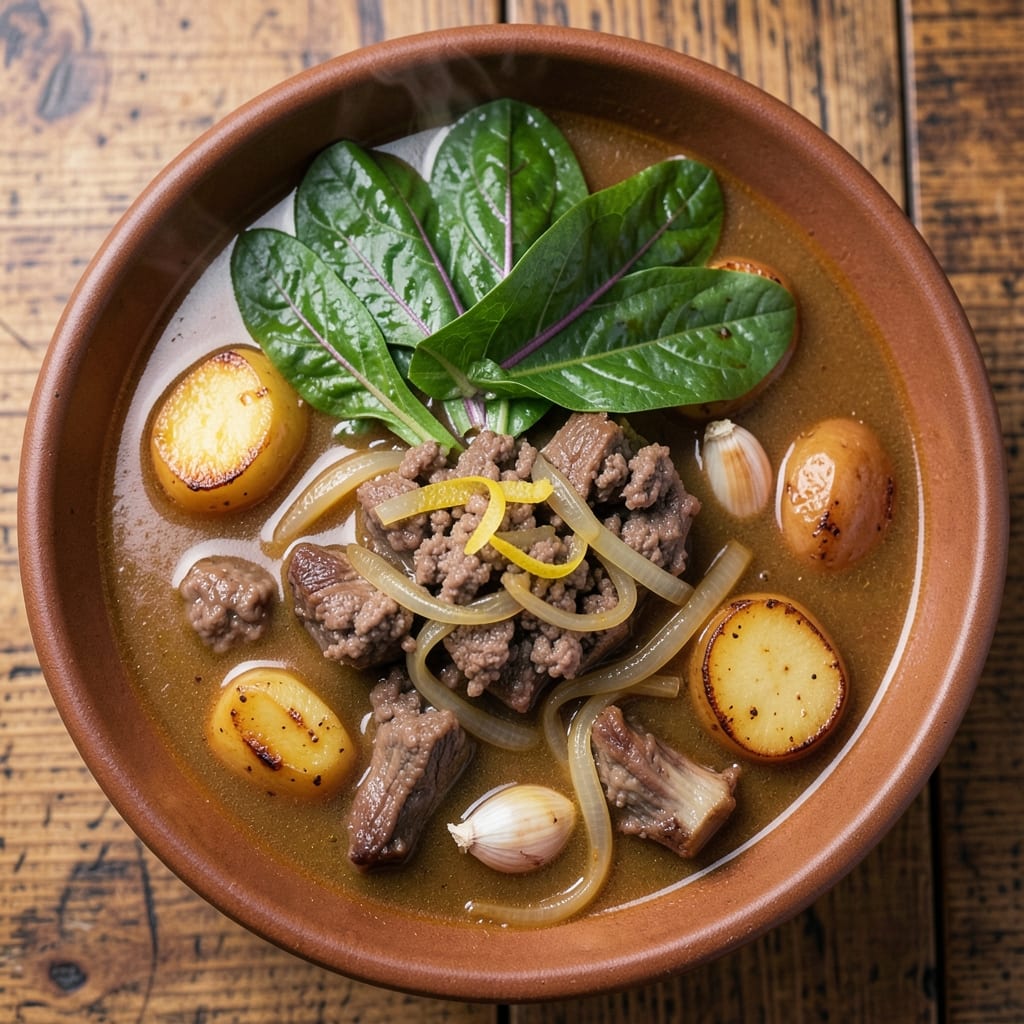
This beef lauya soup recipe brings the soul-warming flavors of Filipino comfort food to your kitchen, where tender beef and smoky dumplings float in a rich, aromatic broth. The secret lies in slow-cooked beef that melts in your mouth, paired with the earthy taste of taro leaves (lauya) and the delicate crunch of homemade lauya wrappers. I first discovered this dish during a visit to the Philippines, where it’s a staple for family gatherings and special occasions—now you can recreate that same homestyle magic at home.
The beauty of this recipe is in its layers: a deeply flavorful broth built from beef bones and aromatics, tender beef that falls apart with a fork, and those signature dumplings that puff up beautifully as they cook. What makes it truly special is the balance of textures—creamy broth, tender beef, and the satisfying bite of the dumplings—all coming together in one bowl. It’s the kind of dish that feels indulgent yet wholesome, perfect for a cozy night in or a gathering with loved ones.
By the end, you’ll have a steaming bowl of beef lauya soup that’s rich in flavor and tradition, with every spoonful delivering a harmonious blend of smoky, savory, and slightly sweet notes. The dumplings, filled with seasoned ground beef and wrapped in taro leaves, add a rustic touch that elevates the dish beyond ordinary soups. Serve it with steamed rice to soak up every last drop of that silky broth—this is comfort food at its finest.
Whether you’re making it for a family dinner or a special occasion, this recipe is designed to impress. The slow-cooked broth ensures deep, complex flavors, while the dumplings add a playful, interactive element that kids and adults alike will love. Ready to bring a taste of the Philippines to your table? Let’s get started.
Ingredients for beef lauya soup
Sixteen ingredients for a bowl that tastes like Filipino home cooking. Nothing exotic—just good stuff.
| Ingredient | Amount | Notes |
|---|---|---|
| Beef Bones 🥩 | 2 lb | Marrow-rich for flavor |
| Ground Beef 🥩 | 1 ½ lb | 80/20 fat ratio preferred |
| Taro Leaves 🌿 | 1 lb | Fresh or frozen, chopped |
| Yellow Onions 🧅 | 3 whole | Medium size, sliced |
| Garlic Cloves 🧄 | 6 cloves | Minced for aromatics |
| Russet Potatoes 🥔 | 3 medium | Peeled and cubed (1.5 inches) |
| Carrots 🥕 | 3 whole | Medium, sliced into rounds |
| Tomatoes 🍅 | 2 whole | Medium, quartered |
| Coconut Milk 🥥 | 1 can (13.5 oz) | Full-fat for creaminess |
| Beef Broth 💧 | 6 cups | Homemade or high-quality |
| Soy Sauce 🍶 | 3 tbsp | Dark soy for color |
| Black Peppercorns 🌶️ | 1 tsp | Crushed for depth |
| Salt 🧂 | 1 ½ tsp | Adjust to taste |
| Vegetable Oil 🫒 | 2 tbsp | For dumpling filling |
| Green Onions 🧅 | 4 whole | Sliced for garnish |
The beef bones are non-negotiable for that deep, smoky flavor—ask your butcher for marrow-rich cuts. If you can't find them, substitute beef chuck roast and simmer longer. Taro leaves? Asian markets have them fresh, but frozen works too (thaw first). The 80/20 ground beef for the dumplings is key—skip the lean stuff. I always grab mine from Costco when I'm making a big batch, but any grocery store carries it. For the potatoes, Russets are ideal—they hold up better to long cooking.
No taro leaves? Spinach or collard greens in a pinch, but the flavor won't be identical. Short on coconut milk? Heavy cream plus a splash of milk gets you close. The soy sauce can be swapped for fish sauce if you're not vegetarian—just reduce the amount by half. For the dumpling filling, Trader Joe's has pre-minced garlic that saves time, but fresh is always better. The carrots can be baby carrots if that's what's in the fridge—no need to peel them unless they're waxy.
Broth keeps for 5 days in the fridge, but the dumplings are best made fresh. Wrap the taro leaves in damp paper towels to keep them fresh for 3 days. The cooked dumplings freeze beautifully—just reheat in the soup. For a shortcut, make the dumplings ahead and freeze them raw before wrapping. The soup actually tastes better the next day as flavors meld—double the batch if you can
Why You'll Love This Recipe
- One-Pot Magic: The beef bones simmer down to a rich, gelatinous broth with almost no extra effort—just toss everything in one pot and let it work its magic. Honestly, I’ve made soups that take twice the time with half the flavor, and this beats them every time.
- Umami Bomb: That combo of beef bones and ground beef? It’s like flavor overload in the best way—deep, savory, and somehow balanced by the taro leaves’ earthy bite. Between us, the garlic cloves roasted in the broth until they’re soft and sweet? Pure satisfaction.
- Crowd-Pleaser Every Time: Whether it’s a lazy Sunday or a last-minute dinner for guests, this soup delivers. My picky-eating cousin actually finished her bowl—(yes, even on a Tuesday night)—and the leftovers? Even better the next day.
- Budget-Friendly Powerhouse: Beef bones and ground beef stretch this recipe into multiple meals without breaking the bank. I’ll be real: it’s the kind of dish where you end up with three containers of leftovers, but none of them feel like a repeat. Plus, taro leaves add that restaurant-quality touch for pennies.
Step-by-step instructions for beef lauya soup
Here's how to create a rich, aromatic broth with smoky dumplings that float like magic.
Prepare the Broth Base
Start by placing the 2 lb beef bones in a large stockpot and covering them with 6 cups beef broth. Bring to a boil over medium-high heat, then reduce to a simmer. Skim off any foam that rises to the surface for the first 10 minutes—this ensures a clear, clean broth.
Add the 3 whole yellow onions (sliced), 3 whole carrots (sliced into rounds), and 3 medium russet potatoes (peeled and cubed) to the pot. Simmer for 45 minutes until the vegetables are tender and the broth has deepened in color. You'll know it's ready when the vegetables are fork-tender and the broth smells rich and savory.
Build Flavor with Aromatics and Protein
While the broth simmers, heat 2 tbsp vegetable oil in a separate skillet over medium heat. Add the 1.5 lb ground beef and cook until browned, breaking it into small pieces. Once fully cooked, transfer the ground beef to the stockpot and stir to combine.
Add the 6 cloves garlic cloves (minced) and 2 whole tomatoes (quartered) to the broth. Let everything simmer together for another 20 minutes. This step infuses the broth with layers of flavor—garlic's sharpness, tomatoes' acidity, and beef's richness all melding into one delicious base.
Incorporate Taro Leaves and Seasonings
Add the 1 lb taro leaves (chopped) to the broth and simmer for 10 minutes. The leaves will wilt and soften, releasing their earthy, slightly bitter flavor into the broth. Stir in the 3 tbsp soy sauce and 1.5 tsp salt to balance the flavors. Finally, crush the 1 tsp black peppercorns and add them to the pot.
Taste the broth and adjust the seasoning if needed. It should be savory, slightly sweet, and well-seasoned. If it needs more depth, simmer for another 5-10 minutes to let the flavors meld even further. This is the foundation of your soup—rich, aromatic, and ready for the dumplings.
Prepare and Cook the Dumplings
In a separate bowl, mix the 1 can (13.5 oz) coconut milk with 2 tbsp vegetable oil and 1 tbsp soy sauce. This mixture will be used to bind the dumpling filling. Add the 4 whole green onions (sliced) and mix well. Drop spoonfuls of this mixture into the simmering broth, allowing them to float and cook.
Simmer the dumplings for 10-15 minutes, or until they are golden brown and cooked through. The dumplings should float to the surface and develop a slightly crispy exterior while remaining tender inside. This is the moment you've been waiting for—the smoky, silky broth with dumplings that taste like little pockets of flavor.
Serve and Enjoy
Ladle the hot soup into bowls, ensuring each serving has a few dumplings floating on top. Garnish with additional slices of green onions for a pop of freshness and color. Serve immediately while the dumplings are still warm and the broth is steaming.
Each bite should deliver a perfect balance of rich, smoky broth and tender, flavorful dumplings. The taro leaves add a unique earthiness, while the coconut milk brings a creamy contrast. This soup is hearty, comforting, and perfect for sharing with loved ones.
Pro Tips For Making Beef Lauya Soup
- BLANCH THE TARO LEAVES: Blanch the taro leaves in boiling water for 30 seconds first—this softens them just enough to handle without tearing, while keeping their vibrant color and texture. I learned this the hard way after struggling with brittle leaves that fell apart when I tried to roll them.
- SIMMER BONES LOW AND LONG: Start beef bones in cold water and bring to a bare simmer (not a boil) to avoid cloudy broth—this takes 45 minutes to an hour, but trust me, it’s worth it for that rich, clear foundation. After burning three batches of murky soup, I finally cracked the code: patience pays off.
- SEAR GROUND BEFEF IN BATCHES: Cook the ground beef in small batches over medium-high heat until deeply browned—this builds flavor that no amount of simmering can replicate. Crowding the pan steams the meat instead of searing it, and that’s a missed opportunity for depth.
- RESERVE THE FIRST BROTH: After skimming impurities from the beef bone broth, reserve the first 2 cups of clear broth separately—it’s the most flavorful and will elevate the final soup’s richness. I was skeptical until I tried it, and now I always do this, even if it means an extra strainer.
Serving suggestions for leftovers
Rice Pairing Essentials
Steamed jasmine rice is the classic companion to beef lauya soup—its delicate floral aroma complements the soup's earthy depth. Cook 1 cup uncooked rice with 1.5 cups water for fluffy grains that soak up every drop of broth. For extra flair, stir in 1 tbsp toasted sesame oil and ½ tsp salt while steaming. 🍚
Crispy Garnishes
Add texture contrast with fried shallots or crispy garlic chips. Toss ½ cup thinly sliced shallots in 2 tbsp vegetable oil and fry at 350°F until golden (3-4 minutes). Sprinkle these over the soup just before serving—they add a satisfying crunch that balances the creamy broth. I keep a jar of Trader Joe's fried shallots on hand for quick garnishes.
Dipping Sauce Options
Serve with a side of sweet chili sauce or soy-vinegar dip for extra flavor. Mix 2 tbsp soy sauce, 1 tbsp rice vinegar, 1 tsp honey, and ½ tsp grated ginger for a tangy contrast. The sauce cuts through the richness while enhancing the soup's umami notes. Store-bought Lee Kum Kee chili sauce works perfectly too.
Vegetable Accompaniments
Lighten the meal with steamed bok choy or sautéed string beans. Toss 1 lb string beans with 1 tbsp sesame oil, 1 minced garlic clove, and ½ tsp white pepper, then sauté for 5 minutes until tender-crisp. The fresh vegetables add brightness and balance the soup's heartiness.
Warm Bread Pairings
Serve with garlic bread or Filipino pandesal for a complete meal. Toast slices of Italian bread with 2 tbsp butter, 1 minced garlic clove, and ½ tsp parsley. The buttery warmth pairs beautifully with the soup's savory depth. For authenticity, find pandesal at Asian markets—their sweet, soft texture is perfect.
Drink Pairings
Cool down with iced tea or coconut water. Brew a strong hibiscus tea (sweetened with 1 tbsp sugar) for a tart contrast. For something lighter, serve coconut water straight from the can—its natural sweetness complements the soup's richness. A cold San Pellegrino with lemon also works wonderfully. 💧
Nutrition facts
Frequently asked questions
What makes taro leaves special in this soup?
Taro leaves (lauya) bring a unique earthy flavor with a slight bitterness that balances the soup's richness. Unlike regular greens, they soften beautifully when simmered and add a textural contrast that's essential to authentic beef lauya soup. If you can't find them, spinach or collard greens work in a pinch, though the flavor won't be identical.
Can I make the dumplings ahead of time?
Make the dumpling filling up to 2 days ahead and store it in the fridge. For the wrappers, wrap taro leaves in damp paper towels and refrigerate for up to 3 days. Assemble the dumplings just before cooking—they're best when fresh, but you can freeze uncooked dumplings for up to 1 month before cooking.
Why does the broth need to simmer so long?
The long simmer (45-60 minutes) is key to extracting maximum flavor from the beef bones and vegetables. This creates a deep, aromatic base that carries the soup's character. Skimping on time results in a weaker broth—patience pays off with layers of rich, savory flavor that develop only through slow cooking.
What's the best way to store leftovers?
Store the soup (without dumplings) in an airtight container for up to 5 days in the fridge. Reheat gently on the stove, adding a splash of water if it thickens. For the dumplings, cook them fresh or freeze uncooked in a single layer before adding to the soup. The flavors actually improve after the first night as ingredients meld!
Can I use regular flour wrappers instead of taro leaves?
While possible, taro leaves give the dumplings their signature texture and flavor. For a closer approximation, use wonton wrappers and brush them with coconut milk before cooking. The result won't be identical, but it'll still be delicious—just expect a different mouthfeel and flavor profile.