
Soups & Stews
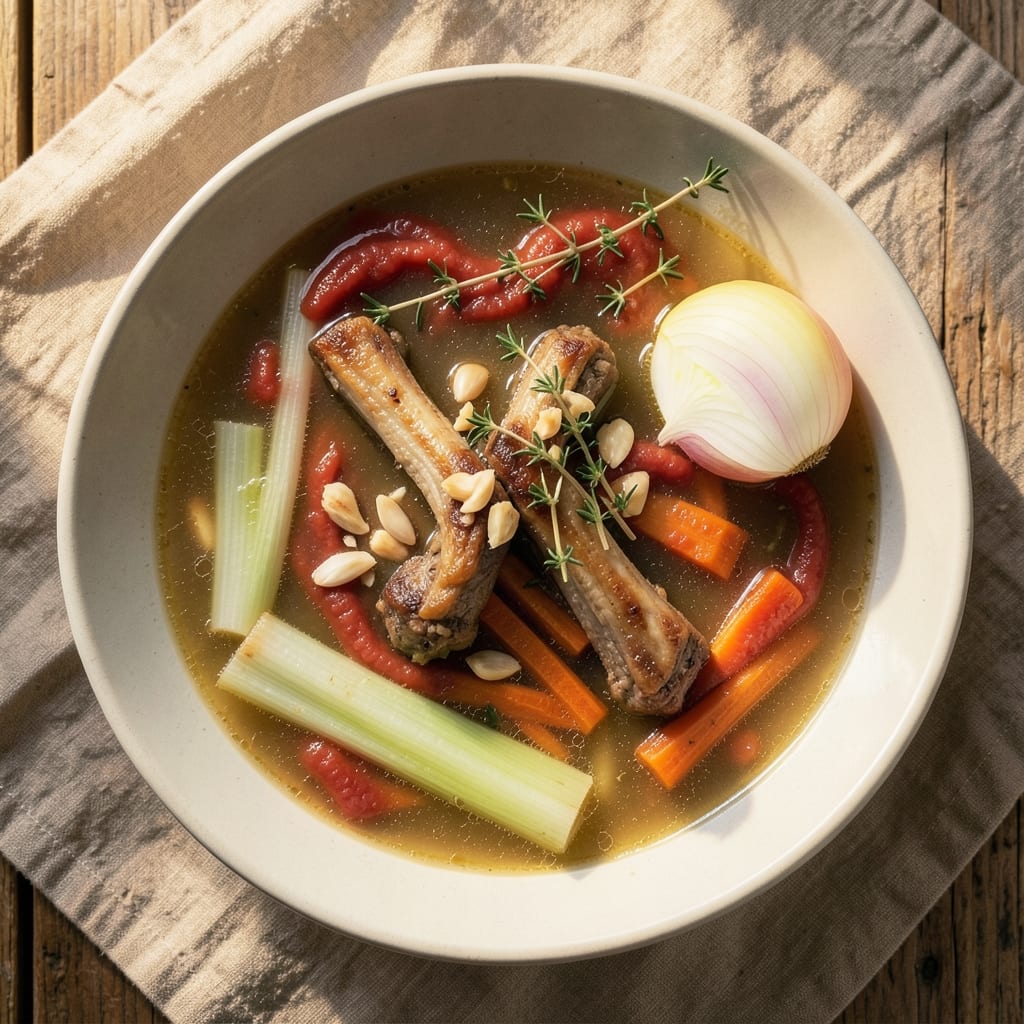
This beef bouillon soup recipe delivers restaurant-quality depth with just one pot and simple ingredients. The secret lies in slow-simmered beef bones and aromatic vegetables, creating a broth so rich it transforms humble ingredients into something extraordinary. What starts as a humble pot of water and bones becomes a velvety, umami-packed masterpiece that warms both body and soul.
The beauty of this recipe is its versatility—build it with whatever vegetables you have on hand, from carrots and celery to mushrooms and potatoes. The long simmering process (about 2 hours) extracts maximum flavor from the beef, while the addition of tomato paste and herbs adds layers of complexity that elevate it beyond basic soup territory. It’s the kind of dish that tastes even better the next day as flavors meld and deepen.
By the time you’re done, you’ll have a steaming bowl of soup with tender beef chunks, perfectly cooked vegetables, and a broth so flavorful it could stand alone. The aroma alone will have everyone gathering around the table, while the first spoonful delivers that satisfying combination of savory, rich, and comforting. This is the kind of soup that turns a simple weeknight into a cozy, memorable meal.
Serve with crusty bread for dipping or a simple green salad to balance the richness. A glass of red wine or even a cold beer complements the deep flavors beautifully. Let’s get cooking—this soup is simpler than it tastes, and the results are worth every minute of simmering.
Ingredients for beef bouillon soup
Restaurant-quality depth starts with these 14 ingredients—simple yet transformative when slow-simmered.
| Ingredient | Amount | Notes |
|---|---|---|
| Beef Bones (Knees or Knuckles) 🦴 | 3 lb | Raw, uncooked for maximum flavor |
| Yellow Onions 🧅 | 2 whole | Medium, peeled and halved |
| Carrots 🥕 | 4 whole | Medium, peeled and cut into chunks |
| Celery Stalks 🧄 | 6 whole | Trimmed and cut into 1-inch pieces |
| Garlic Cloves 🧄 | 6 cloves | Peeled and lightly smashed |
| Tomato Paste 🍅 | ½ cup | High-quality, no sugar added |
| Dried Thyme 🌿 | 1 tbsp | Or 1 tbsp fresh thyme leaves |
| Bay Leaves 🌿 | 3 whole | Dried, standard size |
| Black Peppercorns 🌶️ | 1 tsp | Freshly cracked preferred |
| Salt 🧂 | 2 tsp | Diamond Crystal kosher preferred |
| Dried Parsley 🌿 | 1 tbsp | For garnish, finely chopped |
| Water 💧 | 12 cups | Filtered or spring water preferred |
| Beef Bouillon Cube 🧂 | 2 whole | High-quality, no MSG |
| Potatoes 🥔 | 2 lb | Russet, peeled and cubed |
The beef bones are non-negotiable for authentic depth—knees or knuckles from a butcher's counter deliver the richest marrow. Whole Foods or local specialty grocers often carry them fresh, but frozen bones work too if stored properly. Look for bones with good marrow content; they should be bright red inside when cut. The tomato paste is your umami anchor—San Marzano brand delivers superior consistency and flavor. Fresh thyme is ideal, but dried works at one-third the amount if you're in a pinch. For the bouillon cubes, Kitchen Bouillon or Knorr Atkins are reliable choices, though homemade stock cubes elevate this further.
No beef bones? Beef marrow bones or even beef shank cut into chunks will work in a bind, though flavor intensity will differ. Substituting vegetable broth for water reduces richness, but if necessary, add an extra bouillon cube. The potatoes can be swapped for turnips or parsnips for variation. For extra depth, add 1 tsp fish sauce (vegan-friendly) or 1 tbsp soy sauce to the tomato paste. The carrots and celery form your aromatic base—don't skip browning them first in the pot, as this develops their natural sugars into flavor. If you're short on time, pre-chopped mirepoix from Trader Joe's saves 10 minutes.
This soup improves dramatically with time—24 hours in the fridge allows flavors to meld perfectly. Store in airtight containers with a thin layer of broth on top to preserve freshness. Freezes beautifully for up to 3 months; portion into individual containers for quick lunches. The broth alone makes an excellent base for risotto or pasta—simply reheat and reduce slightly. For maximum flavor extraction, simmer the bones uncovered for the first 30 minutes to render fat, then skim carefully before adding water.
Why You'll Love This Recipe
- Soup in a Skillet: I swear by this—just toss the bones and veggies into one pot, cover with water, and let it simmer. No peeling, no dicing, no fuss. The onions caramelize right there, and the celery adds that earthy crunch without extra work.
- Deep Umami Magic: That beef bone broth? It’s the star. The knuckles and knees melt into the water, turning it into a rich, savory base that tastes like a hug. Add a few smashed garlic cloves at the end, and it’s ridiculously good—simple, but unforgettable.
- Leftover Goldmine: Make a big batch on Sunday, and you’ve got soup for days. The flavor actually improves after the first day—yes, really. Freeze half if you’re feeling extra, and you’ve got a weeknight dinner covered in minutes.
- Budget-Friendly Powerhouse: Beef bones are cheap, and they stretch into gallons of broth. No need for fancy cuts or expensive ingredients—just onions, carrots, and celery for color, and you’re set. Honestly, it’s my go-to when money’s tight but I still want something hearty.
Step-by-step instructions for beef bouillon soup
Master this rich, umami-packed soup using precise techniques for maximum flavor extraction.
Prepare and Sear the Beef Bones
Pat the 3 lb beef bones (knees or knuckles) dry with paper towels to remove any surface moisture. This step is crucial—wet bones won't brown properly and will steam instead of develop that deep, caramelized crust. Place the bones in a large, heavy-bottomed pot and set over medium-high heat.
Allow the bones to sear undisturbed for 10-12 minutes, turning occasionally, until they develop a deep golden-brown crust. This crust, known as the fond, is packed with concentrated flavor that will dissolve into your broth. Once well-browned, reduce heat to medium-low and carefully add 2 whole yellow onions (peeled and halved), 4 whole carrots (peeled and cut into chunks), and 6 whole celery stalks (trimmed and cut into 1-inch pieces). Stir gently to coat the bones with the vegetables.
Build the Flavor Base
Pour in 12 cups water and bring the mixture to a gentle simmer. Skim off any foam or impurities that rise to the surface with a fine-mesh skimmer or ladle. This ensures a clear, clean broth. Add the 2 whole beef bouillon cubes, 2 tsp salt, 1 tsp black peppercorns, 1 tbsp dried thyme, 3 whole bay leaves, and 6 cloves garlic (peeled and lightly smashed). Stir gently to combine.
Simmer uncovered for 2 hours, maintaining a gentle bubble. The liquid should reduce slightly, concentrating the flavors. Here's the thing—don't rush this step. The slow simmering breaks down collagen in the bones and vegetables, transforming them into gelatin that thickens the broth naturally. Check occasionally to ensure the liquid doesn't boil vigorously, which can cause the bones to cook too quickly and become tough.
Add Tomato Paste and Potatoes
After 2 hours, stir in the 0.5 cup tomato paste and cook for an additional 30 minutes. The tomato paste adds depth and a subtle sweetness that balances the richness of the beef. While the soup simmers, add the 2 lb potatoes (peeled and cubed). The potatoes should be medium-sized cubes to ensure even cooking and proper texture.
Continue simmering for another 20-25 minutes, or until the potatoes are fork-tender with a slight resistance. You'll know they're done when a knife slides in easily but still offers a bit of pushback. The potatoes should absorb some of the broth but remain distinct and not fall apart. Taste the broth at this stage and adjust seasoning if needed—you might need a touch more salt or pepper to balance the flavors.
Finish and Garnish
Remove the pot from heat and let the soup rest for 10 minutes. This resting period allows the flavors to meld and the broth to thicken slightly as it cools. Strain the soup through a fine-mesh sieve if you prefer a smoother texture, or leave it whole for a heartier presentation with visible vegetables and bones. Discard the bones and vegetables, or save them for another use like making bone broth.
Return the strained soup to the pot and stir in 1 tbsp dried parsley for a fresh finish. Ladle the soup into bowls, ensuring each serving gets a generous portion of the flavorful broth and tender potatoes. The soup should be rich, deeply umami, and perfectly balanced with a touch of sweetness from the tomato paste and earthy notes from the vegetables. Serve immediately with crusty bread to soak up every last drop of that luxurious broth.
Pro Tips For Making Beef Bouillon Soup
- BLISTER THE BONES FIRST: Before adding anything else, sear the beef bones in a dry pot over high heat until they turn deep brown—almost black in spots. This isn’t about burning; it’s about caramelizing the collagen and bone marrow so it dissolves into rich, velvety broth later. I used to skip this, and my soup always tasted thin and one-dimensional.
- CHOP VEGETABLES UNIFORMLY: Cut onions into ½-inch chunks, carrots into ½-inch rounds, and celery into 1-inch pieces—same size, every time. Why? Even cooking means no bitter, overdone edges or undercooked centers. My grandmother called it "the lazy chef’s shortcut," but it actually saves cleanup time when you’re skimming later.
- DON’T BOIL THE SOUP: Keep the heat low enough that the broth simmers gently—tiny bubbles breaking the surface, no rolling action. Boiling scatters sediment and makes the broth cloudy. After burning three batches of bones, I finally realized: patience here means depth of flavor later.
- ADD GARLIC LATE: Toss the garlic cloves in whole, unpeeled, right at the end of cooking—about 10 minutes before serving. This keeps them fragrant and mellow instead of bitter. I was skeptical until I tried it: the soup tastes like it was simmered with fresh garlic, not cooked with it.
Best sauces and condiments for this beef bouillon soup
Classic Umami Boosters
Start with a 1 tbsp soy sauce or 1 tsp fish sauce stirred into the tomato paste before adding to the pot. These add deep savory notes that complement the beef beautifully. For extra richness, whisk in 1 tbsp Worcestershire sauce during the final 10 minutes of simmering—it brings a tangy depth that rounds out the flavors. 🌟
Herb and Spice Elevations
Swap the dried thyme for 1 sprig fresh thyme tied with kitchen twine for easier removal. Add ½ tsp smoked paprika with the bouillon cubes for a subtle smokiness, or a pinch of ground coriander for warmth. For a Middle Eastern twist, include ½ tsp ground cumin and 1 cinnamon stick during the initial simmer.
Creamy Texture Options
Stir in ½ cup heavy cream or ¼ cup crème fraîche during the final 5 minutes of cooking for a velvety finish. For a dairy-free version, blend ½ cup cooked white beans into the soup until smooth. Both methods add body without overpowering the beef’s natural richness.
Acidic Brighteners
Finish with a splash of 1 tbsp red wine vinegar or 1 tsp lemon juice to cut through the richness. Alternatively, add 1 tbsp capers during the last 10 minutes of simmering—they add briny complexity. A pinch of sugar (just ½ tsp) can also balance the acidity if needed.
Topping Ideas
Garnish with crispy fried shallots for crunch, or toast 1 tbsp breadcrumbs with 1 tsp butter and sprinkle on top. Fresh parsley or chives add a pop of color, while a drizzle of truffle oil (just ½ tsp) elevates the dish to gourmet status. 💫
Bread Pairings
Serve with garlic bread made from a baguette brushed with olive oil and garlic. For a heartier option, offer crusty sourdough or cheesy pull-apart bread. The bread’s texture contrasts perfectly with the soup’s silky broth, making every bite satisfying.
Nutrition facts
Frequently asked questions
Can I use beef broth instead of bouillon cubes?
Replace the 2 bouillon cubes with 8 cups high-quality beef broth (homemade or store-bought) for even deeper flavor. For best results, use a combination of 6 cups broth + 2 cubes to concentrate the umami. The cubes add concentrated beef essence that's hard to replicate with broth alone.
How do I make this soup vegetarian?
Swap the beef bones for 2 lb extra-firm tofu (pressed and cubed) or mushrooms (8 oz cremini, sliced). Replace the bouillon cubes with 2 veggie bouillon cubes and add 1 tbsp soy sauce to the tomato paste. Use 1 cup vegetable broth instead of water for extra depth. The result will be hearty and flavorful, though the texture will differ.
Why does my soup taste bland after simmering?
Blandness usually means insufficient umami or seasoning. First, check if you skimmed off too much fat (retain some for flavor). Add 1 tbsp soy sauce or ½ tsp fish sauce to deepen the savory notes. For extra richness, stir in 1 tbsp tomato paste + 1 tsp sugar and simmer 10 more minutes. Finally, adjust salt to taste—sometimes bones need more time to release their minerals.
Can I make this soup in a slow cooker?
Yes! Brown the bones first in a skillet, then transfer everything to your slow cooker. Cook on low for 8-10 hours or high for 4-5 hours. The long cook time actually enhances the broth's depth. Add potatoes during the last 1 hour of cooking to prevent mushiness. The slow cooker's gentle heat helps extract maximum collagen for a naturally thickened soup.
What vegetables can I substitute for carrots and celery?
Try these flavorful swaps: Fennel (1 bulb, sliced) adds anise notes, turnips (2 cups, cubed) for earthiness, or leeks (2 stalks, sliced) for mild onion flavor. For color, add red bell pepper (1 cup, diced) or zucchini (1 medium, sliced). Just ensure your veggie mix maintains a 2:1 ratio (2 parts onion to 1 part other veggies) to keep the flavor base balanced.