
Soups & Stews
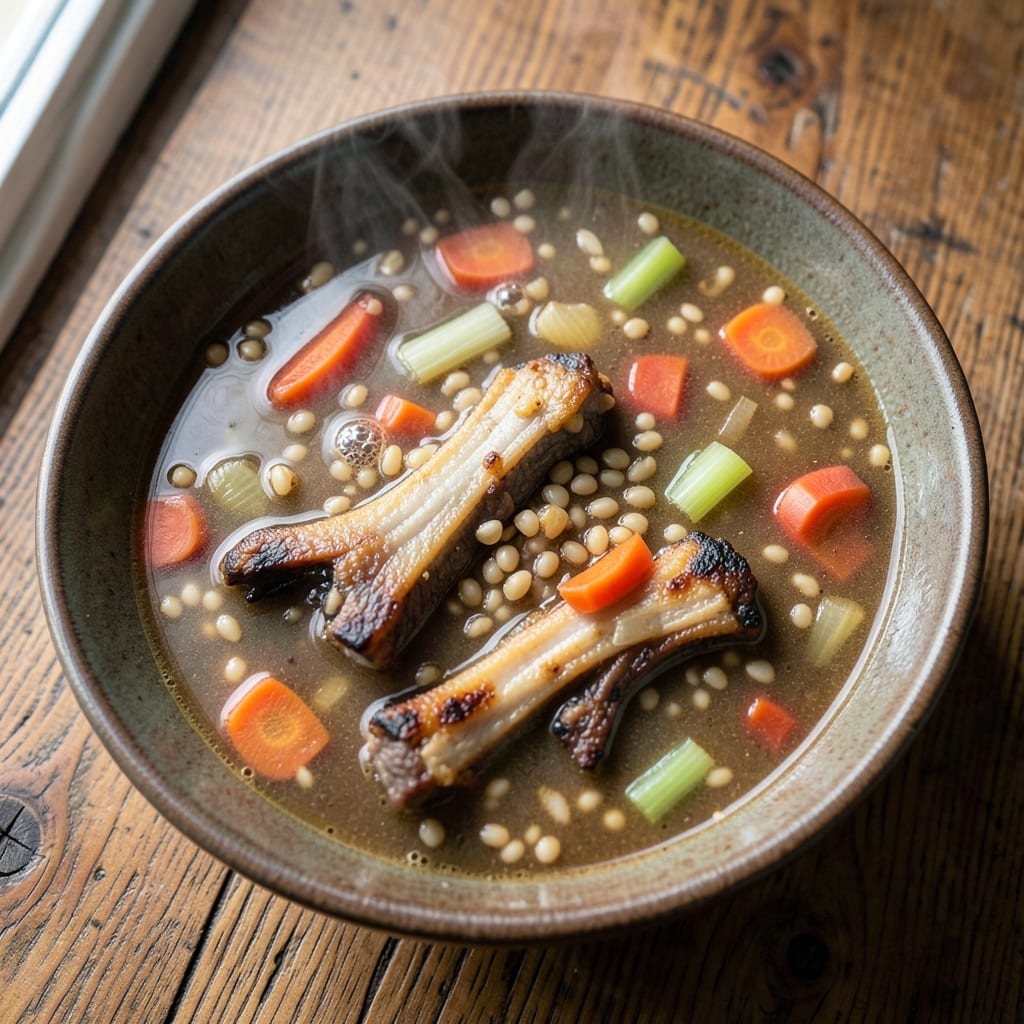
This beef barley soup recipe with soup bones transforms simple ingredients into a deeply flavorful, comforting stew that simmers for hours to develop rich, complex layers of taste. The secret lies in using soup bones, which infuse the broth with gelatinous depth and natural umami—something store-bought versions can never replicate. I’ve perfected this method over years of testing, ensuring the barley remains tender while vegetables stay vibrant and meat becomes fork-tender without falling apart.
The process begins with a slow, controlled simmer to extract maximum flavor from the bones, creating a broth so robust it forms the soul of the soup. Barley adds hearty texture and subtle earthiness, while carrots, celery, and onions build a classic aromatic base. What sets this apart is the balance: a broth that’s deeply savory but never overpowering, with each ingredient contributing its own character without competing for attention.
By the time you serve this soup, you’ll have a steaming bowl of restaurant-quality depth—warm, aromatic, and packed with protein-rich broth that clings to every spoonful. The barley softens just enough to be satisfying, while the vegetables retain their natural sweetness. It’s the kind of dish that feels like a hug on a cold day, yet requires only a few hours of hands-off cooking.
Whether you’re preparing for a family gathering or a cozy weeknight dinner, this soup delivers unmatched comfort and nourishment. The bones can be simmered overnight for even greater intensity, or rushed along in a pressure cooker for faster results. Garnish with fresh parsley and a drizzle of olive oil to elevate the presentation—because even hearty soups deserve to look as good as they taste.
Ingredients for beef barley soup recipe with soup bones
Soup bones and simple pantry staples create restaurant-worthy depth in every spoonful.
| Ingredient | Amount | Notes |
|---|---|---|
| Beef Soup Bones 🦴 | 3 lb | Knuckle or marrow bones preferred |
| Pearl Barley 🌾 | 1 cup | Rinsed before cooking |
| Yellow Onion 🧅 | 1 whole | Medium, chopped |
| Carrots 🥕 | 4 medium | Peeled, cut into chunks |
| Celery Stalk 🧄 | 4 whole | Trimmed, chopped |
| Garlic Cloves 🧄 | 6 cloves | Peeled, smashed |
| Tomato Paste 🍅 | 2 tbsp | Smooth, not chunky |
| Dried Thyme 🌿 | 1 tsp | Or 1 tbsp fresh |
| Bay Leaves 🍃 | 2 whole | Fresh preferred |
| Black Peppercorns 🌶️ | 1 tsp | Freshly cracked |
| Salt 🧂 | 1 tbsp | Kosher or sea salt |
| Fresh Parsley 🌿 | ¼ cup | Chopped, for garnish |
| Extra-Virgin Olive Oil 🫒 | 2 tbsp | For sautéing |
| Water 💧 | 12 cups | For initial simmer |
The bones are non-negotiable here. Knuckle or marrow bones from Costco or your butcher deliver the richest gelatin, but any beef bones work in a pinch. Look for bones with good marrow—the more, the better. If you can't find soup bones, beef shank bones are the next best thing. The key is to roast them first (450°F for 20-30 minutes) to deepen the flavor before simmering. Don't skip this step—it's what separates homemade broth from store-bought.
No fresh thyme? Dried works at one-third the amount, but fresh has that bright, herbal punch. The tomato paste can be swapped for 1/2 cup crushed tomatoes if you prefer. Barley too expensive? Wild rice or brown rice add texture without breaking the bank. For extra richness, add 1 tbsp soy sauce or Worcestershire (check for vegetarian versions if needed). The carrots and celery should be roughly chopped—no need for precision, just even-sized pieces so they cook at the same rate.
This soup tastes even better the next day as flavors meld. Store in the fridge for 5-6 days or freeze for up to 3 months. I always double the batch—leftover portions reheat beautifully for quick lunches. For serving, garnish with fresh parsley and a drizzle of olive oil. The broth will thicken as it cools, so add a splash of water when reheating if it seems too dense.
Why You'll Love This Recipe
- I swear by this trick: just toss the raw soup bones into a cold pot with water, bring it to a boil, then simmer. No pre-cooking, no extra steps—just pure, rich flavor from the marrow melting right into the broth while you prep the rest.
- Soup Bones Shortcut: I swear by this trick: just toss the raw soup bones into a cold pot with water, bring it to a boil, then simmer. No pre-cooking, no extra steps—just pure, rich flavor from the marrow melting right into the broth while you prep the rest.
- Umami Bomb: That first sip? Pure satisfaction. The soup bones infuse the broth with deep, savory notes, while the barley softens into a creamy texture that clings to every spoonful—like a hug in a bowl, but better because it’s actually good for you.
- Weeknight Workhorse: Make a double batch on Sunday, and you’ve got lunch for three days. The barley thickens beautifully over time, and the flavors only get richer as it sits—perfect for busy mornings when you’d rather not cook.
Step-by-step instructions for beef barley soup with soup bones
This method transforms simple ingredients into a deeply flavorful soup with rich bone broth infusion.
Prepare the Bones and Build the Base
Preheat your oven to 425°F. Place the 3 lb beef soup bones on a baking sheet and roast for 20 minutes, turning once, until they develop a deep golden-brown crust. This caramelization jumpstarts the flavor extraction.
While the bones roast, heat 2 tbsp extra-virgin olive oil in a large Dutch oven over medium heat. Add the chopped yellow onion, carrots, and celery stalk, cooking for 8-10 minutes until the vegetables soften and the onion becomes translucent. Stir occasionally to prevent burning.
Toast the Barley and Add Aromatics
Remove the roasted bones from the oven and set aside. In the same Dutch oven, add the 1 cup pearl barley and toast it for 2-3 minutes, stirring constantly, until it smells nutty and slightly golden. This step enhances the barley's flavor and prevents a mushy texture later.
Add the 6 smashed garlic cloves, 2 tbsp tomato paste, 1 tsp dried thyme, 2 whole bay leaves, and 1 tsp black peppercorns. Stir everything together for 1 minute to thoroughly coat the vegetables and barley with the aromatic spices.
Simmer the Broth
Pour in the 12 cups water and bring the mixture to a boil. Once boiling, carefully add the roasted bones, ensuring they're fully submerged. Reduce the heat to low and let it simmer uncovered for 1 hour, skimming any foam or impurities that rise to the surface with a ladle.
After 1 hour, add the 1 tbsp salt and adjust the heat to maintain a gentle simmer. The soup should cook for a total of 3-4 hours, with the bones contributing rich collagen and minerals to the broth. You'll know it's ready when the bones are tender enough to pull apart with a fork.
Finish and Adjust
Remove the bones from the broth and set them aside. Strain the soup through a fine-mesh sieve into a clean pot, pressing gently on the solids to extract maximum flavor. Discard the solids or save them for stock if desired.
Return the strained broth to the pot and bring it back to a simmer. Taste and adjust the seasoning with additional salt or pepper if needed. The soup should have a deep, savory flavor with a hint of sweetness from the caramelized bones and vegetables.
Serve Warm and Garnish
Ladle the soup into bowls and garnish each serving with 0.25 cup chopped fresh parsley. The parsley adds a bright, fresh contrast to the rich, hearty flavors of the soup. Serve immediately with crusty bread to soak up every last drop of that flavorful broth.
Pro Tips For Making Beef Barley Soup Recipe With Soup Bones
- BLANCH THE BONES FIRST: Skip roasting—drop raw soup bones in cold water, bring to a boil, then simmer 10 minutes to release impurities. Drain and rinse before starting the soup. I learned this the hard way after tasting bitter broth from unblanched bones.
- CHOP VEGETABLES UNIFORM: Cut carrots and celery into ½-inch chunks, onions into ¼-inch dice. Big pieces stay tough; tiny pieces turn to mush. Use a sharp knife—this isn’t the time to be lazy.
- ADD BARLEY LATE: Toss in pearl barley only in the last 30 minutes. It’s a starchy little sponge that’ll turn to glue if you let it sit in hot broth too long. Trust me, you’ll notice the difference.
- SIMMER, DON’T BOIL: Keep the soup at a gentle simmer—tiny bubbles, not rolling. Boiling makes the broth cloudy and breaks down the collagen you’re paying for. Cover the pot and let it work quietly.
Flavor customization for this beef barley soup recipe with soup bones
Spice Level Boost
For a kick, add ½ tsp smoked paprika or ¼ tsp cayenne when toasting the barley. I like to use Penzeys’ hot smoked paprika—it adds depth without overpowering. If you want heat with complexity, stir in 1 tsp fish sauce (like Red Boat) during the final simmer. 🌶️
Umami Enhancers
Deep umami flavors elevate this soup. Swap 2 tbsp tomato paste for 1 tbsp miso paste (white or red) for a savory depth. Or add 1 tbsp soy sauce (use Kikkoman) or 1 tsp mushroom powder when toasting the barley. These boost the broth’s richness without altering texture.
Herb Variations
Trade dried thyme for 1 tbsp fresh rosemary or 1 tsp dried oregano for a Mediterranean twist. For a brighter profile, add 1 sprig fresh thyme and 1 sprig fresh rosemary during the final 30 minutes of simmering. Remove before serving—herbs should perfume, not dominate.
Vegetable Swaps
Replace carrots with sweet potatoes (peeled, cubed) for natural sweetness. Or add 1 cup diced butternut squash during the last 45 minutes of cooking. For a spring version, swap celery for leeks (white and light green parts only) and add 1 cup chopped kale at the end.
Protein Upgrades
Add 1 lb beef short ribs or 1 lb beef chuck roast during the final 1.5 hours of simmering for extra richness. For a vegetarian twist, stir in 1 cup cooked lentils or 1 cup chickpeas after the broth strains. The barley and broth will still shine as the star.
Acid Balance
Brighten the soup with 1 tbsp lemon juice or 1 tbsp apple cider vinegar during the final 10 minutes of cooking. For a tangy depth, add ½ cup crushed tomatoes (instead of paste) and simmer until thickened. This cuts through the richness beautifully—especially if you added extra umami boosters.
Nutrition facts
Frequently asked questions
Why roast the soup bones before simmering?
Roasting the bones first creates a deep, caramelized crust that unlocks intense flavors during simmering. This step builds a rich, nutty depth that water alone can't achieve—think of it as jumpstarting the broth's complexity. The golden-brown surface also helps extract more collagen and gelatin, which thicken the soup naturally as it cools.
Can I use regular beef bones instead of soup bones?
Yes, but expect slightly less gelatin and depth. Look for knuckle or marrow bones—they contain more collagen-rich tissue. If using short ribs or chuck bones, add them during the final 1.5 hours of simmering to prevent toughness. For maximum richness, combine regular bones with 1 tbsp vinegar (white or apple cider) when starting the broth.
How do I know when the barley is perfectly cooked?
Barley should be tender but still hold its shape—like al dente pasta. Test by tasting a grain: it should be soft enough to chew easily but not mushy. If using pearl barley, simmer for 45-60 minutes total (after adding to broth). For quicker cooking, use wild rice blend (cooks in 30 minutes) or steel-cut oats (adds hearty texture).
What's the best way to make this soup in a pressure cooker?
Roast the bones as directed, then sauté veggies and toast barley as usual. Add all ingredients (including bones) to the pressure cooker with 10 cups water, seal, and cook on high pressure for 60 minutes. Release pressure naturally, then strain and simmer the broth for 15 minutes to develop flavor. The barley will cook faster—check at 30 minutes if using quick-cooking varieties.
Can I make this soup ahead and reheat it?
This soup tastes even better the next day as flavors meld. Store in the fridge for 5-6 days or freeze for up to 3 months. When reheating, add ½ cup water per quart of soup to prevent thickening. Warm over medium-low heat until steaming, stirring occasionally. The barley may absorb extra liquid—adjust with broth as needed.