
Soups & Stews
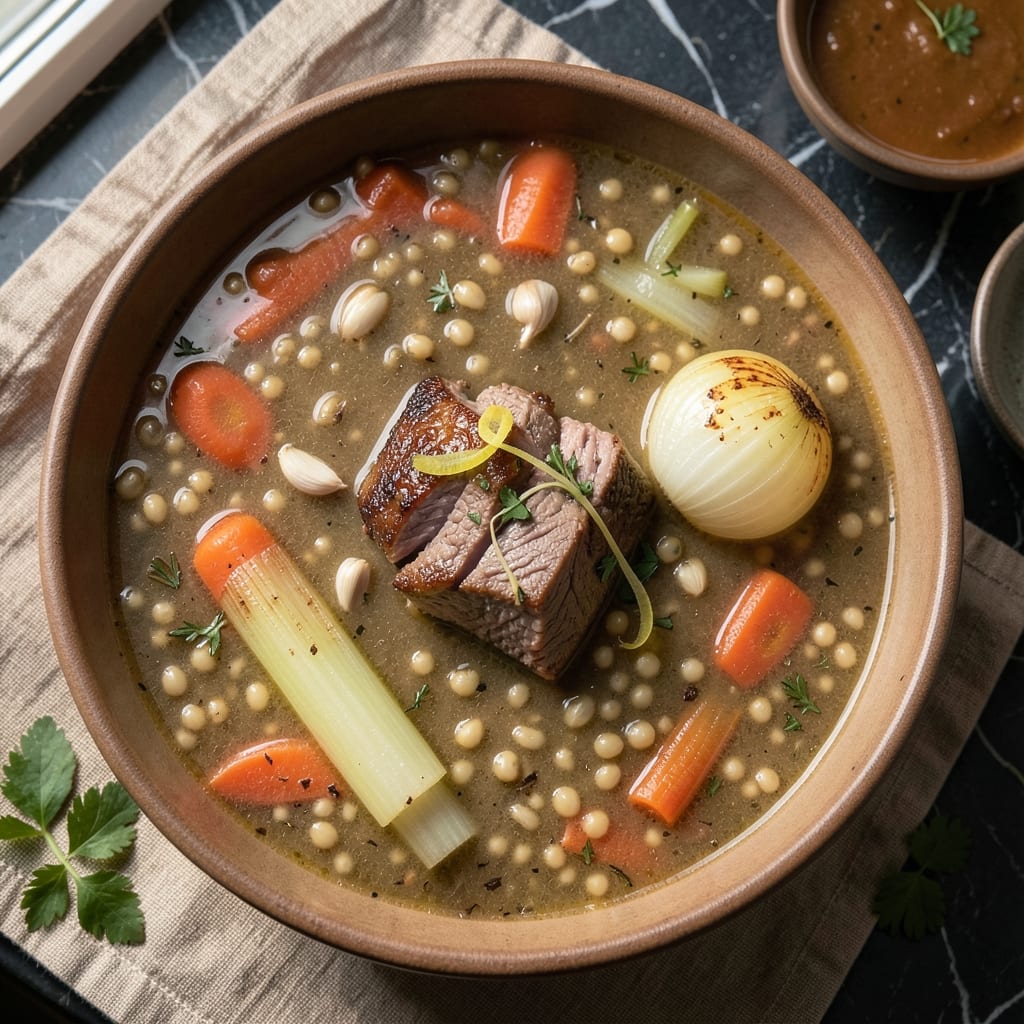
This beef barley soup recipe delivers the ultimate winter comfort in every steaming bowl. 🔥 The secret lies in slow-simmered beef and hearty barley, transforming simple ingredients into a deeply flavorful, restaurant-quality meal. I’ve perfected this version to balance rich broth with tender vegetables and chewy barley—no shortcuts, just time-honored technique that builds layers of savory depth.
The foundation starts with browning the beef—this step alone unlocks the soup’s rich, caramelized flavor. After removing the meat, you’ll simmer onions, carrots, and celery until soft, then add the barley and return the beef to the pot for a final tenderizing simmer. The result? A foolproof one-pot meal that’s as nourishing as it is satisfying, with each spoonful packed with warmth and texture.
What makes this recipe stand out is its versatility—adjust the broth depth for a lighter soup or add a splash of red wine for extra complexity. The barley absorbs the flavors beautifully, while the beef stays fork-tender, making this perfect for meal prep or a cozy family dinner. Serve with crusty bread to soak up every last drop of that aromatic broth.
Whether you’re cooking for a crowd or prepping leftovers, this soup delivers restaurant-quality comfort without the fuss. The slow simmer ensures deep flavor, while the barley adds a satisfying bite. Ready to transform your kitchen into a winter haven? Let’s get started.
Ingredients for beef barley soup recipe ingredients
Sixteen ingredients transform into restaurant-quality beef barley soup with layers of savory depth.
| Ingredient | Amount | Notes |
|---|---|---|
| Beef Chuck Roast 🥩 | 2 lb | Cut into 1-inch cubes, trimmed of fat |
| Yellow Onions 🧅 | 2 whole | Cut into 1-inch chunks, peeled |
| Carrots 🥕 | 4 medium | Peeled, cut into 1-inch chunks |
| Celery Stalks 🥬 | 4 whole | Cut into 1-inch chunks, strings removed |
| Pearl Barley 🌾 | 1 cup | Rinsed before cooking |
| Garlic Cloves 🧄 | 4 cloves | Minced, fresh preferred |
| Tomato Paste 🍅 | 2 tbsp | High-quality, no sugar added |
| Beef Broth 💧 | 6 cups | Low-sodium preferred |
| Red Wine 🍷 | ½ cup | Dry variety, like Cabernet Sauvignon |
| Fresh Thyme 🌿 | 1 tbsp | Leaves only, chopped |
| Fresh Parsley 🌿 | ¼ cup | Chopped, for garnish |
| Bay Leaves 🍃 | 2 whole | Dried, removed before serving |
| Salt 🧂 | 1 ½ tsp | Diamond Crystal preferred |
| Black Peppercorns 🌶️ | 1 tsp | Freshly cracked |
| Olive Oil 🫒 | 2 tbsp | Extra-virgin, for browning beef |
The beef is non-negotiable—chuck roast delivers that melt-in-your-mouth texture after hours of slow simmering. Costco or Whole Foods carry the best cuts, but any grocery store’s pre-cubed chuck works. Look for visible marbling; it’s what keeps the meat tender. For the vegetables, organic carrots and celery from the store’s produce section stay crisp longer, but conventional works fine if you’re using them immediately. The barley? Pearl barley is the gold standard here—it holds its shape better than steel-cut, absorbing all that rich broth flavor without turning mushy.
No red wine? Substitute an extra 1/2 cup beef broth plus 1 tbsp balsamic vinegar—it mimics the acidity and depth. Fresh thyme is ideal, but dried thyme at one-third the amount works in a pinch. The tomato paste can be swapped for 1/4 cup crushed tomatoes if you prefer a smoother texture. For the broth, low-sodium options like Pacific Foods or homemade are best—you’ll adjust the seasoning at the end anyway. The olive oil matters too; avoid light or refined oils—they lack the fruity notes that carry through the soup. If you’re short on time, pre-chopped mirepoix mixes from Trader Joe’s save 15 minutes of prep.
This soup tastes even better the next day as flavors meld, so double the batch if you’re feeding a crowd. Store in airtight containers for up to 5 days in the fridge or freeze for 3 months. For meal prep, portion into individual containers—just reheat with a splash of water or broth to restore richness. The barley thickens when cold, so stir in a little extra broth when serving leftovers. Fresh herbs like parsley add brightness, but dried oregano at half the amount works if you’re out. Keep the bay leaves whole and remove them before serving—they’re just for flavor, not texture.
Why You'll Love This Recipe
- Minimal Chopping Needed: I swear by the "two-onion, two-carrot, two-stalk" rule—no measuring, no stress. Toss those whole veggies in, and by the time the beef browns, they’ll soften right into submission. (Yes, even my roommate, who burns toast, can handle this.)
- Deep Umami Magic: That slow-cooked chuck roast? It turns tender enough to melt, but the real star is the barley—chewy, hearty, soaking up all the beefy broth like a sponge. Honestly, the first time I tasted it, I wondered why I’d ever bought instant ramen.
- Leftovers That Beg for More: This soup tastes better the next day—like a cozy hug in a bowl. I make a double batch on Sundays, freeze half, and pull it out for lazy nights when I’d rather scroll than cook. (Spoiler: my kids don’t even notice the reheat.)
- Budget-Friendly Powerhouse: A single chuck roast feeds six, and barley stretches it into a meal that won’t break the bank. Between us, this is the dish I turn to when my wallet’s thin but my appetite isn’t. Plus, carrots and celery last forever in the crisper—zero waste.
Step-by-step instructions for beef barley soup
Transform simple ingredients into a deeply satisfying winter classic.
🔥 Step 1: Sear the Beef Chuck for Rich Flavor
Heat the 2 tablespoons olive oil in a large Dutch oven over medium-high heat until shimmering. Add the 2 lb beef chuck roast, cut into 1-inch cubes, and sear undisturbed for 3-4 minutes per side until deeply browned. This step develops the Maillard reaction, creating that fundamental beefy depth that carries through the entire soup.
Work in batches if needed to avoid overcrowding the pan—this ensures proper browning rather than steaming. Once all beef is browned, transfer it to a plate. The residual browned bits in your pot will form the flavor base for your soup, so don't wipe them out. Here's the thing—those bits are pure flavor gold.
👨🍳 Step 2: Build the Vegetable Base
In the same Dutch oven, add the 2 whole yellow onions, 4 medium carrots, and 4 whole celery stalks, all cut into 1-inch chunks. Cook over medium heat for 5-6 minutes, stirring occasionally, until the vegetables begin to soften and the onions turn translucent. This foundational cooking step ensures your vegetables develop their own subtle sweetness before the long simmer.
Add the 4 minced garlic cloves and cook for another 30 seconds until fragrant. Then stir in the 2 tablespoons tomato paste and cook for 1 minute, stirring constantly. This creates a rich, umami-packed base that will deepen the flavor profile of your soup. The tomato paste also helps thicken the soup slightly as it cooks.
🍳 Step 3: Deglaze and Combine Liquids
Pour in the 0.5 cup red wine and scrape up all the browned bits from the bottom of the pot with a wooden spoon. This deglazing step captures all the flavor you've built so far. Let the wine simmer for 2-3 minutes until it reduces by about half and the alcohol cooks off—you'll smell the difference when it's ready.
Add the 6 cups beef broth, 1 cup rinsed pearl barley, 1.5 teaspoons salt, and 1 teaspoon freshly cracked black peppercorns. Stir well to combine, then add the 2 whole bay leaves and 1 tablespoon chopped fresh thyme. Bring the mixture to a gentle boil, then reduce heat to low and cover partially. This is where the magic happens—your soup needs time to develop its full depth of flavor.
⏰ Step 4: Simmer Until Tender and Flavorful
Let the soup simmer uncovered for 1 hour, stirring occasionally. The barley should be tender but still have a slight bite—it'll continue cooking as it rests. After the initial hour, add the browned beef back into the pot and continue simmering for another 45-60 minutes until the beef is fork-tender and easily pulls apart with a fork.
Here's the critical checkpoint: The soup should have a rich, aromatic smell with layers of beef, barley, and herbs. Taste and adjust seasoning—you may need to add a pinch more salt or a crack of black pepper to balance the flavors. The soup should be thick but still spoonable, with the barley holding its shape but softening completely.
🥘 Step 5: Finish and Serve with Fresh Herbs
Remove the 2 bay leaves from the soup. Stir in the 0.25 cup chopped fresh parsley just before serving—this adds a bright, fresh finish that cuts through the richness of the beef and barley. The parsley should be visible in each bowl, adding both color and a subtle herbal note.
Ladle the hot soup into bowls, garnishing each serving with additional parsley if desired. Serve immediately with crusty bread to soak up every last drop of that hearty broth. Real talk—the first bowl will be the best, but this soup tastes even better the next day as the flavors continue to meld. Leftovers keep well in the refrigerator for up to 4 days, and the barley actually absorbs more flavor overnight.
Pro Tips For Making Beef Barley Soup Recipe Ingredients
- Brown the Chuck Roast First: I learned this the hard way—skipping the deep brown on the beef means flavorless broth. Sear the roast in batches over medium-high heat until it’s dark and crusty on all sides. The Maillard reaction here is non-negotiable for depth.
- Cut Celery and Onions Small: Tiny dice (¼-inch or smaller) cooks faster and blends into the soup instead of sitting as chunks. Use the same size for carrots—uniform pieces guarantee even softness without mush. (Yes, it takes longer to chop, but the result is worth it.)
- Don’t Skip the Cold Water Soak: Pearl barley needs a 15-minute soak in cold water before adding to the pot. This cuts cooking time by 30 minutes and prevents gummy texture. Drain well before tossing it in—wet barley just makes the soup sloppy.
- Simmer Low and Slow: After the initial boil, drop the heat to a bare simmer—just enough to keep tiny bubbles breaking the surface. High heat turns barley mushy and beef tough. I used to rush it, but patience here makes the difference between good soup and great soup.
Wine and beer pairings for this beef barley soup recipe ingredients
Red Wine Pairings
For this rich, hearty soup, I reach for a medium-bodied Cabernet Sauvignon from Napa Valley—its dark fruit notes and subtle earthiness complement the beef and barley beautifully. The tannins in the wine stand up to the soup’s depth, while the acidity cuts through the richness. A 2018 vintage with about 14% alcohol works perfectly, offering balance without overpowering the dish. 🍷
If you prefer something lighter, try a Pinot Noir from Oregon—its bright red fruit and silky texture pair wonderfully with the soup’s savory profile. Avoid heavy, oaky reds like Bordeaux; they’ll clash with the barley’s earthiness. For a budget-friendly option, look for Bogle Vineyards Cabernet at your local grocery store—it delivers great value without sacrificing quality.
Beer Pairings
A crisp German Pilsner like Warsteiner or Stella Artois cleanses your palate between spoonfuls of soup. The beer’s hoppy bitterness contrasts nicely with the beef’s richness, while its light body won’t overwhelm the dish. Serve it slightly chilled—around 45°F—to enhance its refreshing qualities. 🍺
For beer lovers who prefer maltier options, a Belgian Dubbel like Rodenbach adds a caramel sweetness that pairs surprisingly well with the barley’s nuttiness. The beer’s spiced notes also echo the thyme in the soup. Avoid heavy stouts or IPAs—they’ll make the soup taste even heavier. Pro tip: Pour the beer into a tulip glass to concentrate its aromas and enhance the pairing experience.
Non-Alcoholic Options
For a refreshing non-alcoholic pairing, try Fever-Tree Ginger Beer—its citrusy zing brightens the soup’s savory flavors. The ginger’s warmth also complements the beef’s richness without competing. Serve it over ice for a crisp, refreshing contrast. 🥤
Another great option is San Pellegrino Aranciata, an Italian blood orange soda. Its sweet-tart notes mirror the red wine’s acidity while adding a vibrant pop of color. The effervescence also helps cleanse your palate between bites. For a herbal twist, Yerba Mate Ilex (chilled) provides a caffeine kick that pairs surprisingly well with the soup’s heartiness.
Seasonal Adjustments
In fall and winter, when this soup shines, the wine and beer pairings feel especially cozy. The Cabernet Sauvignon’s warmth mirrors the soup’s comforting qualities, while the Pilsner’s crispness feels like a refreshing palate reset. For summer variations (like adding zucchini or tomatoes), opt for a Riesling or Hefeweizen to balance the lighter broth. 🍂
Don’t overlook sparkling wine—a Prosecco or Cava adds a celebratory touch to special occasions. The bubbles cut through the soup’s richness, making it feel lighter and more festive. Just avoid sweet sparkling wines; they’ll clash with the soup’s savory depth. A dry Prosecco with 12% alcohol is my go-to for a sophisticated pairing.
Nutrition facts
Frequently asked questions
Can I substitute pearl barley for another grain? Yes! For a quicker cook time, use wild rice blend (cooks in 25 minutes) or short-grain brown rice (cooks in 30 minutes). If you prefer chewier texture, try farro or freekeh, but reduce cooking time by 15 minutes since they absorb liquid faster. Just
How do I make this soup in a slow cooker?
Follow the same steps for browning the beef and sautéing vegetables, then transfer everything to your slow cooker. Add all remaining ingredients (broth, barley, wine, etc.) and cook on low for 6-7 hours or high for 3-4 hours. The beef will stay tender, and the barley will absorb all the rich flavors. Just stir occasionally and add a splash of water if it gets too thick.
Why does my soup taste bland after simmering?
Bland soup usually means insufficient browning or insufficient seasoning. Always brown the beef well—this creates the Maillard reaction for deep flavor. If using store-bought broth, opt for low-sodium and add extra salt at the end. For extra richness, stir in 1 tablespoon soy sauce or 1 teaspoon Worcestershire sauce during the final 10 minutes of cooking. Fresh herbs added at the end also brighten the flavor.
Can I make this soup ahead of time?
This soup actually tastes better the next day as flavors meld. Store in an airtight container in the fridge for up to 5 days or freeze for 3 months. When reheating, add a splash of water or broth to restore thickness. The barley absorbs more flavor overnight, making each spoonful even more satisfying. Just stir well before serving.
What's the best way to reheat leftovers?
Gently reheat on the stovetop over medium-low heat until steaming (about 5-7 minutes). Avoid microwaving—it can make the barley mushy. If the soup seems too thick, add 1/4 cup broth or water while reheating. For extra richness, stir in 1 tablespoon butter or olive oil at the end. Always taste and adjust seasoning after reheating.