
Soups & Stews
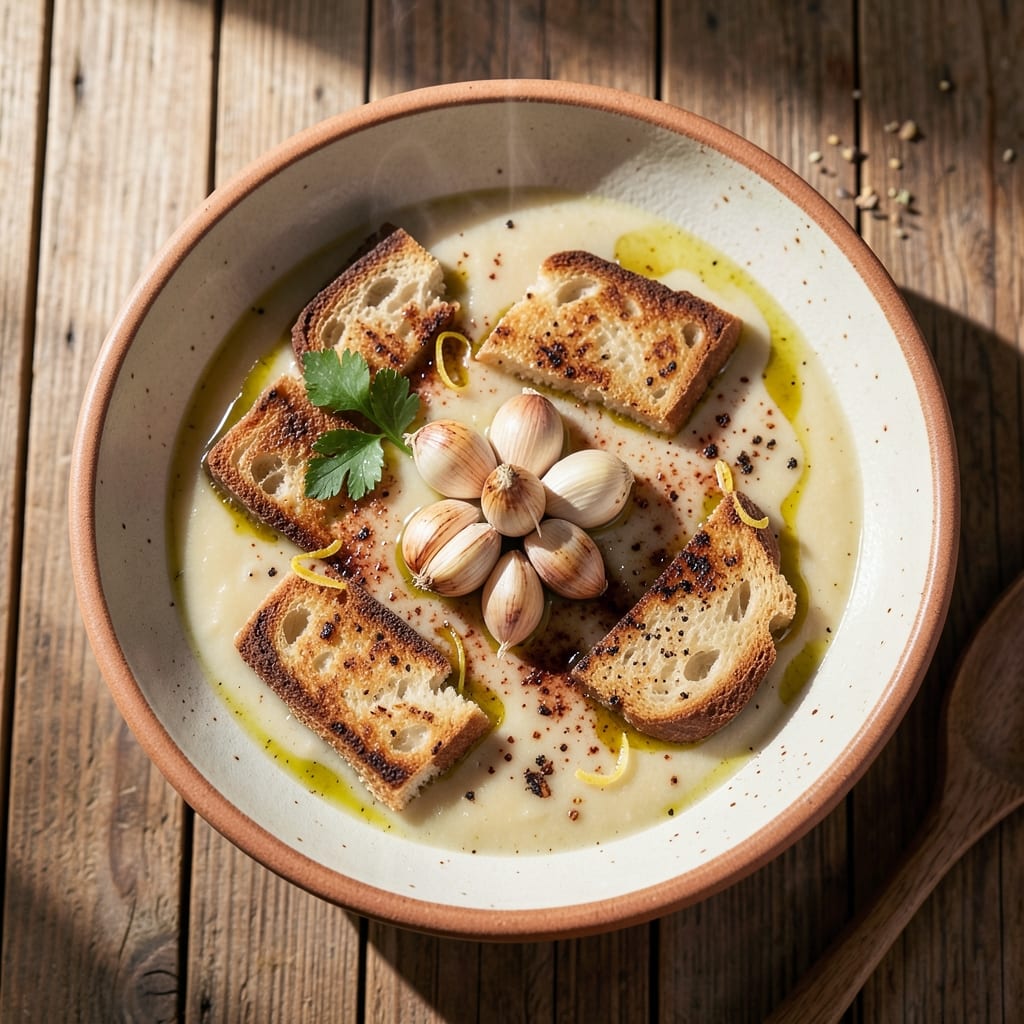
This Basque garlic soup recipe delivers the soul-warming comfort of Spain’s most beloved sopa de ajo—rich, smoky, and deeply satisfying in a single pot. 🔥 The secret lies in slow-roasting garlic until caramelized, then emulsifying it with toasted bread and simmered broth for a velvety texture that feels like a hug in a bowl. After years of perfecting this dish, I’ve developed a method that balances traditional techniques with modern convenience, ensuring you get that authentic Basque flavor without the fuss.
The beauty of this recipe is its simplicity: just a handful of ingredients—garlic, bread, olive oil, paprika, and broth—come together to create something extraordinary. The bread forms the base, absorbing the flavors while creating a thick, hearty consistency. What makes it special is the roasted garlic, which adds a deep, smoky sweetness that transforms this soup from ordinary to unforgettable. It’s the kind of dish that tastes even better the next day, making it perfect for meal prep or a cozy weekend dinner.
By the time you finish, you’ll have a steaming bowl of soup with a golden crust on top—crispy from the roasted garlic and bread—and a silky broth that coats your spoon. The optional egg topping adds a creamy, custardy finish, but the soup is delicious on its own. Serve it with crusty bread to soak up every last drop, and you’ll understand why this Basque classic has been a staple for generations.
Whether you’re making it for a family gathering or a quiet night in, this soup delivers comfort and tradition in every spoonful. The best part? It’s adaptable—vegetarian-friendly and ready to be customized with your favorite herbs or spices. Let’s get cooking!
Ingredients for basque garlic soup
Just 11 ingredients transform into Basque garlic soup's smoky, velvety embrace.
| Ingredient | Amount | Notes |
|---|---|---|
| Garlic Cloves 🧄 | 2 heads | Roasted until caramelized |
| Stale Bread 🍞 | 1 ½ cups | Day-old crusty bread, cubed |
| Extra-Virgin Olive Oil 🫒 | ½ cup | High quality, fruity |
| Smoked Paprika 🌶️ | 2 tsp | Sweet or hot variety |
| Chicken Broth 💧 | 4 cups | Low-sodium preferred |
| Salt 🧂 | 1 ½ tsp | Kosher or sea salt |
| Black Pepper 🌶️ | ½ tsp | Freshly ground preferred |
| Bay Leaves 🍃 | 2 whole | Dried or fresh |
| Crusty Bread 🍞 | 1 piece | For serving, optional |
| Large Eggs 🥚 | 4 whole | Optional for topping |
| Fresh Parsley 🌿 | ¼ cup | Chopped for garnish |
The garlic is non-negotiable here. Whole heads roast best—no peeling needed. Trader Joe's and Whole Foods sell the biggest heads, but any grocery store will do. Roast until golden and sweet, then squeeze out every last bit of flavor. For the bread, stale is key—day-old baguettes from the bakery section work perfectly. If you can't find stale bread, toast slices until dry and cube them. The olive oil should be extra-virgin—cheap oil won't stand up to the roasted garlic's intensity.
No smoked paprika? Sweet paprika plus a pinch of liquid smoke gets you close. Broth options are flexible—vegetable broth works for vegetarian, just add an extra bay leaf. The eggs are totally optional, but if you add them, room-temperature eggs poach best. Fresh parsley is ideal, but dried parsley at half the amount won't ruin the dish. For extra depth, add a pinch of cayenne to the broth. And trust me on the roasted garlic—don't skip this step. The flavor difference is night and day.
This soup only gets better with time. 3-4 days in the fridge, actually. The flavors meld beautifully. For leftovers, reheat gently on the stove—low heat only to avoid breaking the emulsion. Store in airtight containers with a layer of olive oil on top to preserve that golden crust. Freezes for up to 3 months, though I've never had it last that long. The egg topping? Best made fresh, but you can prep the soup ahead and poach eggs separately when ready to serve.
Why You'll Love This Recipe
- No Waste Magic: I’ll never toss stale bread again—this soup turns it into something rich and satisfying. Just tear it up, toast it lightly, and let it soak up all that garlic-infused oil. It’s like alchemy for your pantry scraps.
- Garlic Overload (In a Good Way): That first spoonful of soup—where the roasted garlic meets the smoky paprika—is pure flavor payoff. Honestly, I’ve made it with raw garlic too, but roasting it until it’s caramelized? That’s where it gets dangerously addictive.
- Crowd-Pleaser Any Day: Whether it’s a chilly Tuesday night or a weekend brunch with friends, this soup disappears fast. Serve it with crusty bread on the side (or skip it—no judgment) and watch everyone reach for seconds.
- Budget-Friendly Warmth: Chicken broth, a loaf of bread, and a few garlic cloves stretch into a full meal for four. I’ll be real: it’s not fancy, but it’s solid comfort food that won’t break the bank—or your time.
Step-by-step instructions for Basque garlic soup
Here's how to build rich, smoky layers using exactly what you've got.
🔥 Step 1: Roast the Garlic Until Caramelized
Preheat your oven to 400°F. Cut the tops off the 2 heads of garlic cloves, leaving the roots intact so they hold together. Drizzle with 1 tablespoon of the 0.5 cup extra-virgin olive oil and wrap tightly in aluminum foil. Roast for 30-40 minutes until the cloves are soft and golden brown—you'll smell that irresistible sweetness when they're done.
Let them cool slightly before squeezing the roasted cloves from their skins directly into your pot. This concentrated garlic paste is the soul of your soup. I like to press it through a fine-mesh strainer to remove any skins, but don't worry if a few slip through—they'll dissolve into the broth.
🍳 Step 2: Sauté the Stale Bread Until Toasted
Heat the remaining 0.5 cup extra-virgin olive oil in a large pot over medium heat. Add the 1.5 cups stale bread cubes and toast them for 5-7 minutes until they're golden brown and crispy around the edges. You want them to develop that nutty, toasted flavor that forms the base of the soup.
Here's the thing—don't let them burn. If they start to darken too quickly, reduce the heat slightly. You're building flavor, not charring. Once toasted, remove the bread with a slotted spoon and set it aside temporarily—you'll add it back later.
🥘 Step 3: Build the Smoky Broth Base
In the same pot, add the 2 tsp smoked paprika and stir for 30 seconds until fragrant. Pour in the 4 cups chicken broth and bring to a gentle simmer. Add the 1.5 tsp salt, 0.5 tsp black pepper, and 2 whole bay leaves, then stir in the roasted garlic paste.
Simmer for 10 minutes to let all those flavors meld together. You'll see the broth develop a beautiful golden hue from the caramelized garlic and toasted bread. Taste it now—it should be rich and aromatic, with a deep smoky undertone from the paprika. If it needs more salt, adjust now while you can still taste the broth clearly.
⏰ Step 4: Finish with Toasted Bread and Garnish
Return the toasted bread cubes to the pot and simmer for another 5 minutes to rehydrate slightly and absorb the flavorful broth. The soup should be thick but still spoonable—if it's too thick, whisk in 2-3 tablespoons of hot water to reach your preferred consistency.
Ladle the soup into bowls and top with optional poached eggs (if using the 4 whole large eggs) and 0.25 cup chopped fresh parsley. For the eggs, gently poach them in simmering water with a splash of vinegar for 3-4 minutes until just set, then place one on top of each serving. The contrast of runny yolk against the rich soup is pure magic.
🍽️ Step 5: Serve with Crusty Bread
Serve immediately with the 1 piece crusty bread on the side for dipping. The bread should be fresh and sturdy enough to hold up to the thick, flavorful soup. Each spoonful should deliver that perfect balance of smoky garlic, toasted bread, and rich broth.
Pro tip: If you're making this ahead, reheat gently on the stove—don't boil it or the bread will get mushy. A splash of warm broth will help restore the original texture. The soup tastes even better the next day as the flavors deepen.
Pro Tips For Making Basque Garlic Soup
- Bloom the Paprika: Toast the smoked paprika in the same pot you’ll cook the soup—just a minute over low heat—before adding broth. I learned this the hard way: skipping it means the flavor lingers like a ghost, not a bold presence. The oil will smell like a Basque forest fire, and that’s exactly what you want.
- Sauté Garlic Low and Slow: After crushing the garlic, cook it in the olive oil on the lowest heat setting you can tolerate—no browning, no burning, just a gentle sweat. High heat turns garlic bitter faster than you can say "soup ruined." My first attempt had me rushing, and the result tasted like a pharmacy.
- Soak Bread in Broth: Instead of tossing stale bread cubes into the pot dry, soak them in warm broth for 10 minutes first. This keeps the soup from turning into a gluey mess (yes, I’ve made that mistake). The bread absorbs flavor like a sponge, and the texture stays tender—no one wants to chew on a rock.
- Strain the Garlic Oil: After cooking the garlic, strain the oil through a fine-mesh sieve into a clean jar. That golden oil is liquid gold—save it for drizzling over finished soup or even toast. I used to just pour it back in, but now I keep a jar labeled "Garlic Treasure" in my fridge. (Your future self will judge you if you don’t.)
Regional styles of these flavors
Basque Country Roots
This soup traces back to the rugged Basque Country, where it originated as a peasant dish to use stale bread and simple pantry staples. The region's love affair with garlic is legendary—Basque cuisine features it in everything from soups to pintxos. The original version was even called "sopa de ajo" (garlic soup), but the roasted technique elevates it to restaurant-quality comfort. 🌍
In traditional Basque homes, this soup was often made in cast iron cauldrons over open fires, which explains why the crusty bread topping is so important—it creates a golden, crispy layer that soaks up all the smoky flavors. The Basque people have been perfecting this dish for centuries, and their secret? Patience—letting the garlic roast until deeply caramelized transforms the soup from ordinary to extraordinary.
Navarran Twist
Navarra, the Basque region bordering France, puts its own spin on this classic by adding thinly sliced chorizo to the broth. For a vegetarian version, I recommend substituting with smoked paprika-infused olive oil—just add an extra ½ teaspoon to the broth for that deep, smoky flavor. The Navarran version also often includes potatoes—simmer 2-3 small potatoes with the broth until tender, then mash them slightly before adding the bread.
Another regional variation comes from the Basque town of Hondarribia, where they traditionally serve the soup with a soft-boiled egg on top. The runny yolk creates a creamy contrast that makes every spoonful decadent. If you're feeling adventurous, try adding a splash of sherry vinegar—just 1 teaspoon—to brighten the flavors and cut through the richness.
French Basque Fusion
The Basque Country's proximity to France has led to some delicious cross-border adaptations. In the French Basque region, you'll find versions that incorporate white wine—deglaze the pot with ¼ cup dry white wine after toasting the bread for a brighter, more complex flavor profile. Another French touch is adding shallots—sauté 2 shallots with the garlic for a subtle sweetness that complements the roasted flavors.
For a truly fusion-style dish, try adding crème fraîche—just a dollop on top of each serving—to balance the smoky, garlicky notes. The French also often serve this soup with buttered escargot shells as edible bowls, adding an elegant touch that's perfect for special occasions. It's a great way to honor both Basque and French culinary traditions in one dish.
Modern Adaptations
Today's home cooks are putting their own spin on this classic. One popular modern twist is adding roasted mushrooms—sauté 8 oz sliced cremini mushrooms with the bread for an earthy depth. Another contemporary approach is using garlic-infused oil instead of roasting whole heads. Simply heat ½ cup garlic-infused olive oil with the bread cubes for a quicker (though slightly less intense) flavor.
For a gluten-free version, substitute the bread with gluten-free bread cubes or toasted gluten-free crackers. You can also use crumbled polenta—toast 1.5 cups polenta crumbs in the olive oil instead of bread for a nutty, grain-free base. The key is maintaining that toasted texture that forms the soup's foundation.
Seasonal Variations
Spring brings lighter versions of this soup, often with the addition of asparagus tips—simmer ½ cup chopped asparagus with the broth for a fresh, seasonal twist. In summer, many cooks add cherry tomatoes—toss ½ cup halved cherry tomatoes into the pot during the final 5 minutes of cooking for a bright, juicy contrast.
Autumn calls for heartier ingredients like roasted butternut squash—simmer 1 cup cubed squash with the broth and add it back during the final 10 minutes. Winter versions often include caramelized onions—sauté 1 large onion with the bread for a deeper, sweeter flavor that pairs perfectly with the smoky garlic. Each season brings new ways to celebrate this Basque classic while keeping it true to its roots.
Nutrition facts
Frequently asked questions
Why does traditional Basque garlic soup use stale bread?
The stale bread is key for creating that perfect crispy crust on top! When toasted in olive oil, it develops a nutty depth that forms the soup's rich base. Plus, using day-old bread prevents sogginess—it absorbs the broth just enough to thicken the soup without turning mushy.
Can I make this soup vegetarian?
Simply swap the chicken broth for vegetable broth and add an extra ½ teaspoon smoked paprika for that deep umami flavor. The roasted garlic and toasted bread will still deliver all the rich, comforting taste without any meat.
How do I fix a soup that's too thick or too thin?
For thick soup, whisk in 2-3 tablespoons hot broth until smooth. If it's too thin, simmer uncovered for 3-5 minutes to reduce, or add 1-2 extra toasted bread cubes to thicken. The ideal consistency should coat the back of a spoon but still be spoonable.
What's the best way to reheat leftovers?
Always reheat gently on the stove over low heat—never microwave! Add a splash of warm broth to restore the creamy texture. Stir frequently to prevent the bread from getting soggy. The soup actually tastes better the next day as flavors meld.
Can I make this soup ahead of time?
Yes! Prepare it up to 3 days ahead and store in airtight containers. For the egg topping, poach them fresh when ready to serve. The flavors deepen overnight, making it perfect for meal prep. Just reheat gently before serving.