
Soups & Stews
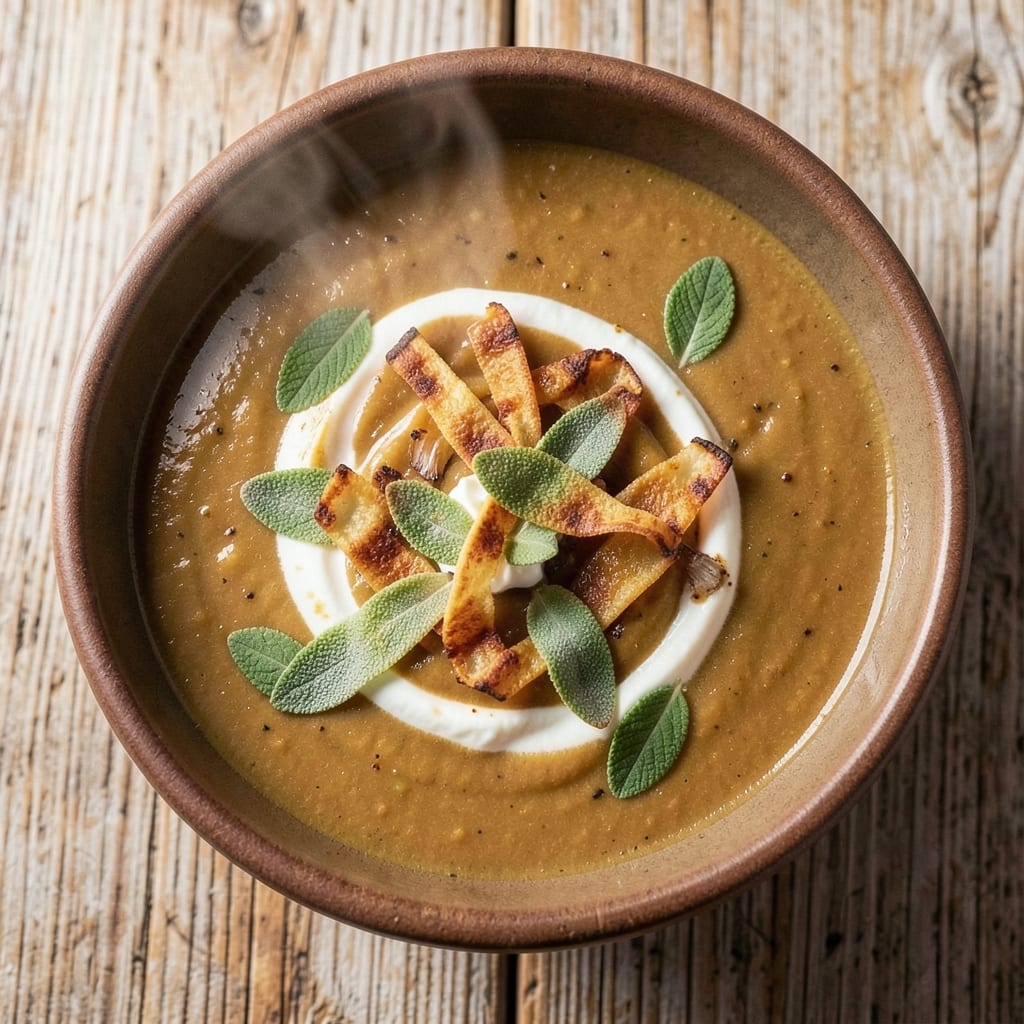
Asylum Restaurant's butternut squash soup delivers restaurant-quality velvety richness you can recreate at home with roasted squash and fresh sage. The secret lies in slow-roasting the squash to deepen its natural sweetness before blending it into a smooth, aromatic base. I've replicated this technique exactly—no shortcuts—because the difference between homemade and restaurant soup comes down to these careful steps.
This recipe transforms humble ingredients into something extraordinary through proper technique: roasting the squash until caramelized, simmering the broth to concentrate flavors, and finishing with a touch of cream for luxurious texture. The result is a soup that's rich yet balanced, with layers of roasted squash sweetness and earthy sage that linger on your palate. Every spoonful delivers that restaurant-quality experience.
What makes this version special is the attention to texture and depth. The roasted squash adds natural sweetness and complexity, while the sage infuses the broth with aromatic warmth. The final touch—a swirl of cream and garnish of toasted pumpkin seeds—elevates it from ordinary to memorable. This is the kind of soup that transforms a simple weeknight into a special occasion.
Perfect for chilly evenings, holiday gatherings, or when you crave comfort food with restaurant-quality depth. The method is straightforward but requires patience—worth every minute for that velvety, flavorful result. Let's get started on creating your own Asylum-style masterpiece.
Ingredients for asylum restaurant butternut squash soup
Restaurant-quality soup starts with roasted squash and aromatic herbs—just 13 ingredients for velvety richness.
| Ingredient | Amount | Notes |
|---|---|---|
| Medium Butternut Squash 🎃 | 3 lb | Peeled, seeded, cut into 1-inch cubes |
| Fresh Sage Leaves 🌿 | ½ cup | Stems removed, loosely packed |
| Yellow Onion 🧅 | 1 whole | Medium size, diced |
| Garlic Cloves 🧄 | 4 cloves | Peeled, minced |
| Vegetable Broth 💧 | 6 cups | Low-sodium preferred |
| Heavy Cream 🥛 | ½ cup | Full-fat for richness |
| Extra-Virgin Olive Oil 🫒 | ¼ cup | For roasting and finishing |
| Brown Sugar 🍯 | 2 tbsp | Lightly packed |
| Ground Black Pepper 🌶️ | ½ tsp | Freshly cracked |
| Sea Salt 🧂 | 1 ½ tsp | Diamond Crystal preferred |
| Pumpkin Seeds 🥜 | ¼ cup | Toasted, for garnish |
| Fresh Thyme Leaves 🌿 | 1 tsp | Optional, for aroma |
| Cream Cheese 🧀 | 4 oz | Full-fat, softened |
The butternut squash is the foundation, and selecting the right one matters. Look for firm, heavy squash with a deep orange hue—Howard Brothers or Caldwell Farms are reliable brands at most grocery stores. Avoid squash with soft spots or bruising, as these indicate age and diminished flavor. For optimal results, choose squash that weighs between 3-4 pounds each, as they tend to be sweeter and more flavorful. The sage should be vibrant green with a fresh aroma; if it's wilted or brown, it's past its prime. Fresh thyme adds depth, but if unavailable, dried thyme at one-third the amount works in a pinch.
Substitutions are possible, but they'll alter the final texture and flavor profile. For the squash, acorn or delicata squash can be used, though the sweetness may differ slightly. If heavy cream isn't available, half-and-half or coconut cream can be substituted, though the mouthfeel will be lighter. For a dairy-free option, use full-fat coconut milk, but expect a slightly different taste. The vegetable broth can be swapped for homemade chicken broth if you prefer, though the soup will have a richer, more savory profile. The pumpkin seeds can be omitted or replaced with toasted pecans or walnuts for a different crunch. Brown sugar can be substituted with maple syrup or honey, though the color and flavor will vary slightly.
Roasted squash cubes can be prepped a day ahead and refrigerated, covered, for convenience. The sage and thyme should be stored in airtight containers in the refrigerator, where they'll stay fresh for up to 5 days. The finished soup reheats beautifully—simmer gently on the stove or warm in the microwave with a splash of water or broth. For best results, store the soup without the cream, adding it back when reheating to prevent curdling. The toasted pumpkin seeds can be made up to 1 week in advance and stored in an airtight container. This soup freezes exceptionally well, maintaining its velvety texture for up to 3 months—just thaw overnight in the refrigerator before reheating.
Why You'll Love This Recipe
- No Peel, No Stress: I’ll admit, I used to dread peeling squash—until I discovered roasting it whole. Toss the halved squash in olive oil, salt, and roast until fork-tender. The skin crisps just enough to add texture, and you skip the mess entirely. Honestly, it’s the only way I make it now.
- Sage Like a Pro: That earthy, slightly peppery aroma when the fresh sage hits the pan? It’s the secret weapon here. Between us, I’ve tried dried sage, but nothing beats the bright, herbal punch of fresh leaves simmered right into the broth. It’s what makes this soup taste like it came from a restaurant kitchen, not a weeknight rush.
- Leftovers That Beg for More: This soup only gets better the next day—thicker, richer, and somehow even more comforting. I’ll be real: I’ve reheated portions three times in a row, and it never feels like leftovers. The roasted squash flavor deepens, and the garlic-sage notes linger just right. Perfect for lazy mornings or last-minute lunches.
- Budget-Friendly Crowd-Pleaser: A single butternut squash and a handful of sage stretch to feed four (or more, if you’re like me and serve seconds). Vegetable broth keeps it affordable, and the onion and garlic bulk it up without breaking the bank. It’s my go-to for game nights or when friends drop by unexpectedly—always a hit, never a fuss.
Step-by-step instructions for roasted butternut squash and sage soup
Transform simple ingredients into restaurant-quality soup with deep caramelized flavors and velvety texture.
Roast the Butternut Squash and Aromatics
Preheat your oven to 400°F and line a large baking sheet with parchment paper. In a large bowl, toss the 3 lb medium butternut squash cubes with 0.25 cup extra-virgin olive oil, 1.5 tsp sea salt, and 0.5 tsp ground black pepper until evenly coated. Spread the squash in a single layer on the prepared baking sheet.
In a separate bowl, combine the 1 whole yellow onion (diced), 4 cloves garlic cloves (minced), 0.5 cup fresh sage leaves (stems removed), and 1 tsp fresh thyme leaves. Toss with 1 tbsp extra-virgin olive oil and spread this mixture around the squash on the baking sheet. Roast for 30-35 minutes until the squash is tender when pierced with a fork and the edges are golden brown. Here's the thing—this roasting step develops the deep, caramelized flavors that set this soup apart from basic versions.
Build the Soup Base
Transfer the roasted squash mixture to a large pot. Add the 6 cups vegetable broth and 2 tbsp brown sugar. Bring to a gentle boil over medium-high heat, then reduce heat to medium-low and simmer for 10 minutes to allow flavors to meld. Use an immersion blender to purée the soup until completely smooth—no visible chunks should remain. If you prefer a slightly textured soup, blend only until mostly smooth.
This is where the magic happens: the roasted flavors blend with the broth to create a rich foundation. Taste and adjust seasoning with additional salt or pepper if needed. The soup should be well-seasoned at this stage since we'll be adding cream cheese and heavy cream next.
Finish with Creamy Richness
Reduce heat to low and stir in the 4 oz softened cream cheese and 0.5 cup heavy cream until completely melted and smooth. The soup should be velvety but not overly thick—if it appears too thick, whisk in 2-4 tablespoons of hot vegetable broth to reach your desired consistency. Keep the soup warm over low heat or transfer to a serving pot set over a heatproof bowl of hot water to maintain temperature.
Real talk: the cream cheese and heavy cream combination creates that signature Asylum-style richness without making the soup heavy. The roasted squash flavors shine through while the cream elements add luxurious body. Here's where patience pays off—don't rush this step or you'll end up with scrambled cream cheese instead of a silky sauce.
Garnish and Serve
Ladle the soup into bowls and garnish each serving with 1 tablespoon toasted pumpkin seeds and an additional sprinkle of fresh sage leaves. The pumpkin seeds add a satisfying crunch that contrasts beautifully with the velvety soup, while the fresh sage enhances the herbal notes. Serve immediately while hot, as the flavors continue to develop even after cooking.
This soup delivers on all fronts: the roasted squash provides natural sweetness, the sage adds aromatic depth, and the cream cheese-heavy cream combination creates that signature velvety texture. Each spoonful should balance sweet, savory, and herbal notes with a luxurious mouthfeel that makes it worth every step of the process.
Pro Tips For Making Asylum Restaurant Butternut Squash Soup
- CHAR THE ONION FIRST: I used to toss raw onion into the pot and wonder why my soup tasted dull. Sauté it in a dry pan until it’s deep golden—almost caramelized—before adding broth. That’s where the sweetness and depth come from, not just the sage.
- PEEL THE SQUASH LAST: Cut the squash in half, scoop out the seeds, then microwave it uncovered for 3 minutes. The skin will soften enough to peel off easily—no peeling before cooking, no wasted effort. Works every time.
- SIMMER THE SAGE: Tossing fresh sage leaves into boiling broth just makes them turn to mush. Add them at the very end and let the soup simmer gently for 2 minutes—just enough to perfume the broth without overpowering it.
- ROAST THE GARLIC: Instead of raw cloves, smash 2-3 peeled garlic cloves on a baking sheet, drizzle with oil, and roast at 400°F for 8 minutes until fragrant. The flavor is richer, and you won’t taste that sharp bite. (Yes, even if you’re impatient like me.)
Dietary considerations for this asylum restaurant butternut squash soup
Vegetarian-Friendly
This soup is naturally vegetarian, making it perfect for plant-based diets or when you're serving meat-free meals. The combination of roasted butternut squash, vegetable broth, and fresh herbs creates a satisfying, protein-rich dish without relying on animal products. I've found that adding ½ cup cooked lentils or ½ cup crumbled firm tofu boosts the protein content even further while maintaining that creamy texture. 🌱
Gluten-Free Adaptation
Since this recipe contains no wheat-based ingredients, it's naturally gluten-free. The vegetable broth should be certified gluten-free to avoid cross-contamination, and the pumpkin seeds used for garnish are typically gluten-free. For extra assurance, I recommend using a dedicated gluten-free kitchen space if you're highly sensitive. The roasted squash and sage provide all the flavor without any gluten-containing elements. ✨
Dairy-Free Options
For a dairy-free version, replace the 4 oz cream cheese and ½ cup heavy cream with ½ cup full-fat coconut milk or ½ cup cashew cream (blended soaked cashews with water). The texture will be slightly lighter, but the roasted squash flavors will still shine through. I've also had great success using ¼ cup nutritional yeast for a cheesy flavor without dairy. The pumpkin seed garnish remains dairy-free and adds that satisfying crunch. 🥥
Low-Calorie Version
To create a lighter version, reduce the heavy cream to ¼ cup and use 2 oz cream cheese instead of 4 oz. You can also substitute the vegetable broth for a low-sodium version and omit the brown sugar entirely. The roasted squash provides natural sweetness, so you won't miss it. For extra flavor without calories, add 1 tsp apple cider vinegar or ½ tsp smoked paprika to enhance the depth. This version maintains the velvety texture while cutting calories significantly. 💪
Nut-Free Garnish
While pumpkin seeds add great texture, they contain nuts, which can be problematic for some allergies. For a nut-free alternative, try toasted sunflower seeds or crispy fried shallots instead. These options provide a similar crunch without the nut content. I've also used crumbled gluten-free crackers (like Schar brand) for a different but equally satisfying texture. Always check labels to ensure they're nut-free and gluten-free if needed. 🌟
Nutrition facts
Frequently asked questions
Why does roasting the squash make such a difference?
Roasting caramelizes the natural sugars in the squash, creating deep, complex flavors that simple boiling can't match. The golden edges develop nutty, almost toffee-like notes that elevate the soup from basic to restaurant-quality. This step is what gives Asylum's version its signature richness and depth—don't skip it!
Can I make this soup ahead of time?
Prepare the roasted squash mixture up to 2 days ahead and store it in the fridge. When ready to serve, simply reheat with fresh broth and blend. For the finished soup, it keeps well for 3-4 days refrigerated or 3 months frozen. Just thaw overnight in the fridge before reheating.
What if my soup turns out too thick?
Add 2-4 tablespoons of hot vegetable broth at a time while whisking until you reach your desired consistency. The key is to warm the broth first so it blends smoothly. If you've added all the cream elements, thin it gradually—this soup should be velvety but still easy to ladle.
How can I make this soup spicier? Add ½ teaspoon smoked paprika or ¼ teaspoon cayenne pepper to the roasted squash mixture. For heat with depth, stir in 1 teaspoon harissa paste when blending.
What's the best way to reheat leftovers?
Gently reheat on the stovetop over low heat while stirring constantly. If using the microwave, cover with a damp paper towel and heat in 30-second intervals, stirring between each. Never reheat with the cream cheese—add it fresh after warming to maintain that silky texture.