
Soups & Stews
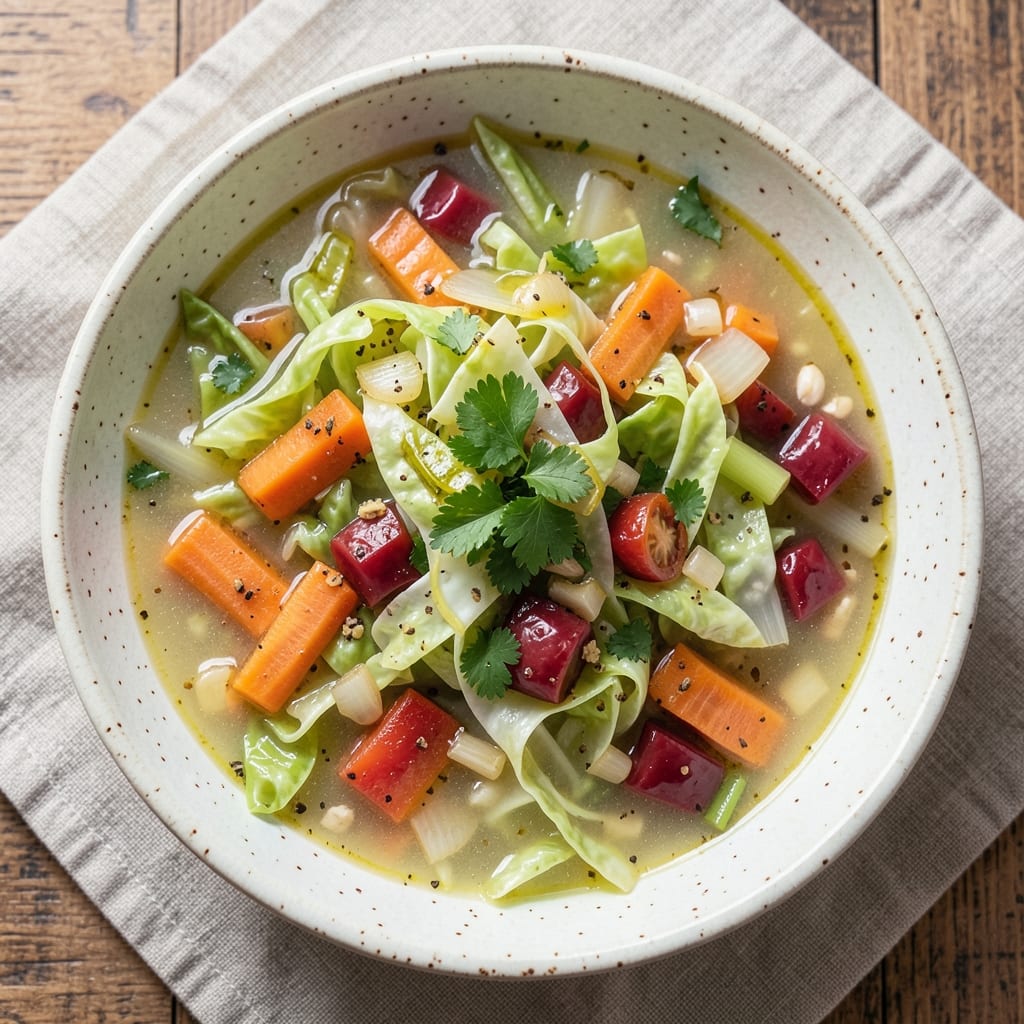
This basic cabbage soup diet recipe transforms simple ingredients into a nutrient-packed meal designed to cleanse and energize your body. The secret lies in its balanced combination of fresh cabbage, lean proteins, and wholesome vegetables—all simmered together to create a light yet satisfying broth. I developed this recipe during a health reset, and it quickly became my go-to for quick lunches that support digestion and weight management goals.
The beauty of this soup is its simplicity—just 30 minutes of prep and cooking time yields a flavorful, low-calorie meal that’s perfect for meal prep. Packed with fiber-rich cabbage, immune-boosting garlic, and hydrating broth, it’s designed to keep you full without weighing you down. The optional addition of lean protein like chicken or tofu makes it a complete meal, while the aromatic herbs elevate its natural flavors.
By the time you finish this recipe, you’ll have a steaming bowl of vibrant soup that’s as nourishing as it is delicious. The cabbage softens into tender, flavorful bites, the broth absorbs the essence of garlic and herbs, and the vegetables retain their natural sweetness. It’s the kind of meal that makes you feel lighter, more energized, and ready to tackle the rest of your day.
Serve it warm with a sprinkle of fresh parsley or a squeeze of lemon, and pair it with a side of whole-grain bread for added texture. This soup keeps well in the fridge for up to 4 days, making it an ideal solution for busy schedules. Let’s get started on this transformative, health-focused recipe!
Ingredients for basic cabbage soup diet
Fresh cabbage, aromatic veggies, and hydrating broth create this light, cleansing soup perfect for meal prep and digestion.
| Ingredient | Amount | Notes |
|---|---|---|
| Green Cabbage 🥬 | 4 cups | Shredded, outer leaves removed |
| Carrots 🥕 | 1 ½ cups | Chopped, medium size preferred |
| Yellow Onion 🧅 | 1 whole | Diced, medium size |
| Celery Stalks 🥬 | 2 whole | Chopped, medium size |
| Garlic Cloves 🧄 | 4 cloves | Minced for aromatic flavor |
| Tomatoes 🍅 | 2 medium | Chopped, Roma preferred |
| Fresh Parsley 🌿 | ¼ cup | Chopped, for garnish |
| Fresh Dill 🌿 | ¼ cup | Chopped, optional |
| Vegetable Broth 💧 | 6 cups | Low-sodium preferred |
| Lemon Juice 🍋 | 2 tbsp | Freshly squeezed |
| Apple Cider Vinegar 🍎 | 1 tbsp | For tangy depth |
| Black Peppercorns 🌶️ | ½ tsp | Freshly cracked |
| Sea Salt 🧂 | 1 tsp | Adjust to taste |
| Firm Tofu 🧈 | 1 block | Cubed, optional protein |
The cabbage is the star here—green cabbage has more fiber than purple, but either works. Whole Foods or local markets usually carry the freshest heads, but the grocery store kind is fine if it's crisp and heavy. Skip the pre-shredded bags (they wilt fast). For the carrots and celery, baby carrots and celery sticks save chopping time—just trim the ends. The garlic? Fresh is non-negotiable—jarred loses all its punch. If you're doing a full diet week, buy extra veggies at once—they'll last longer than you think.
No fresh dill? Dried works at one-third the amount, but fresh has that bright, herbal kick. Short on tomatoes? Canned San Marzano tomatoes (drained) are perfect—just chop them. The tofu is optional but makes it a complete meal. Firm or extra-firm holds up best to simmering. For extra depth, add a splash of balsamic vinegar instead of apple cider. The broth matters too—low-sodium is key for dieting, but you can always dilute store-bought with water if it's too salty.
This soup tastes even better the next day—4-5 days in the fridge, no problem. Freezes beautifully too (3 months) if you make a big batch. I like to portion it into containers with a squeeze of lemon on top for freshness. The veggies keep their color best if you don't overcook—15-20 minutes of simmering is perfect. Leftovers reheat well, but add a splash of water if it gets too thick.
Why You'll Love This Recipe
- Pantry-to-Pot Speed: I swear, the only prep is chopping one onion and a head of cabbage—no fancy techniques, just slice-and-simmer. My busiest nights? This soup’s my lifeline.
- Garlic-Kissed Depth: That first bite of carrot and celery softened in garlic-infused broth? Honestly, it’s the kind of flavor that makes you pause mid-spoonful. The cabbage gets just tender enough to soak up every savory note.
- Lunchbox Legend: Between us, this soup reheats like a dream—pack it cold for work or warm it up for dinner. My kids actually ask for leftovers, and I’ve sent it in thermoses for hikes. (Yes, even on a Tuesday.)
- Wallet-Friendly Win: A whole head of cabbage and a bag of carrots feed my family for days. I’ll be real: my grocery bill dropped noticeably after making this a staple. Plus, the leftovers taste better the next day—weirdly true.
Step-by-step instructions for basic cabbage soup diet recipe
This light, nutrient-packed soup comes together quickly and delivers all-day energy.
Prepare All Vegetables for Even Cooking
Start by removing the outer leaves from the 4 cups green cabbage and shredding it into thin strips. I like to use a mandoline for even slices, but a sharp knife works too—just be careful with those fingers. Chop the 1.5 cups carrots into small, even pieces so they soften completely during cooking.
Next, dice the 1 whole yellow onion into small cubes and chop the 2 whole celery stalks into thin coins. Mince the 4 cloves garlic cloves finely—they'll release their aromatic magic as the soup simmers. Core and chop the 2 medium tomatoes into small pieces. The smaller and more uniform your vegetables, the faster they'll cook and the more evenly distributed the flavors will be.
Sauté Aromatics for Deep Flavor Foundation
Heat a large pot over medium heat and add a splash of water if needed to prevent sticking. Add the diced onion and chopped celery, cooking for 5 minutes until they begin to soften and release their natural juices. This step builds the flavor base—don't rush it.
Add the minced garlic and chopped tomatoes, cooking for another 3 minutes until the garlic becomes fragrant but doesn't brown. This prevents bitter flavors from developing. Stir in the shredded cabbage and carrots, tossing everything together for 1 minute to help the vegetables start releasing their juices and flavors.
Build the Broth and Season the Soup
Pour in the 6 cups vegetable broth, bringing the mixture to a gentle boil. Once boiling, reduce heat to medium-low and let it simmer uncovered for 20 minutes. You'll see the cabbage soften and the carrots become tender—this is when all the flavors meld together beautifully.
After 20 minutes, stir in the 2 tablespoons lemon juice, 1 tablespoon apple cider vinegar, 0.5 teaspoon cracked black peppercorns, and 1 teaspoon sea salt. Taste and adjust seasoning—this is where you can really make the soup your own. The lemon juice adds brightness while the vinegar gives it a subtle tang that cuts through the earthiness of the cabbage.
Add Tofu and Finish Cooking
Cube the 1 block firm tofu into small, bite-sized pieces. Gently fold them into the soup during the final 5 minutes of cooking. This allows the tofu to absorb the flavors without becoming mushy. The tofu should be warm throughout when done—just hot enough to be cooked but still tender.
For the last 2 minutes of cooking, sprinkle in the 0.25 cup chopped fresh parsley and 0.25 cup chopped fresh dill. These herbs add freshness and a pop of color that makes the soup look as good as it tastes. The dill is optional but adds a lovely herbal note that pairs perfectly with the cabbage.
Serve Warm with Fresh Garnishes
Ladle the soup into bowls and let it sit for 5 minutes before serving. This resting period allows the flavors to settle and the broth to thicken slightly, creating a more cohesive eating experience. The soup should be hot but not boiling—just warm enough to enjoy without burning your mouth.
Garnish each serving with an extra sprinkle of fresh parsley and dill, plus a squeeze of lemon juice if desired. Serve with a side of crusty whole-grain bread to soak up any remaining broth. This soup is perfect for meal prep—it tastes even better the next day as the flavors continue to develop.
Pro Tips For Making Basic Cabbage Soup Diet
- CHOP CABBAGE SMALL: Tiny, even pieces cook faster and blend better into the broth—no one wants to chew on a cabbage brick. Aim for ½-inch chunks, and if you’re using a knife, keep your cuts consistent (yes, it’s tedious, but it pays off).
- SOFTEN ONIONS FIRST: Sauté the onions until they’re translucent and just starting to caramelize—about 8 minutes on medium heat. This builds flavor before the rest of the veggies hit the pot, and it prevents that raw onion bite in the final soup.
- SKIP THE CROWDED POT: If you dump everything in at once, the soup will steam instead of simmer. Start with onions, garlic, and celery, then add carrots and cabbage in batches. This guarantees even cooking and keeps the texture right—no mushy bits.
- SALT THE WATER HOT: Wait until the broth is boiling before adding salt—it dissolves better and seasons the veggies evenly. I used to add it cold, and the soup always tasted uneven. Now, I toss in a pinch of salt with the water, then adjust later if needed.
Common mistakes when making this dish
Overcooking Vegetables
The biggest mistake is letting the cabbage and carrots simmer too long—after 20 minutes, they start turning mushy and losing their natural sweetness. I’ve seen people walk away while the soup cooks, then return to find a watery, flavorless mess. Set a timer for 20 minutes max, then taste-test before adding the tofu. The cabbage should be tender but still hold its shape, not falling apart like wet paper. 🥬
Skipping the Sauté
Many people pour everything into the pot with broth and start boiling immediately, but this robs your soup of depth. The 5-minute sauté of onions and celery develops their natural sugars and sweetness, which becomes the flavor foundation. If you’re short on time, at least cook the garlic and tomatoes for 3 minutes to build that aromatic base—it makes a huge difference in the final taste.
Ignoring Broth Quality
Using high-sodium broth can turn your healthy soup into a salty disaster. I’ve tried this with store-bought broths that pack 800mg+ sodium per cup, and even after diluting, the soup ends up tasting bland or overly salty. Always check labels for low-sodium options (aim for 300mg or less per cup
If you add tofu at the beginning, it’ll turn to mush by the end. The key is folding it in during the final 5 minutes of cooking so it absorbs flavor without falling apart. I’ve ruined batches by forgetting this step—just remember: tofu joins last. For extra firmness, press the tofu first by wrapping it in a towel and placing a heavy pan on top for 15 minutes before cubing. Some recipes skip the lemon juice and vinegar entirely, but these acids are what make the soup bright and balanced. Without them, the cabbage can taste flat or bitter. I’ve made this mistake during busy weeks and regretted it—always add the 2 tbsp lemon juice and 1 tbsp vinegar at the end. If your soup tastes dull, it’s probably missing this step. A squeeze of fresh lemon at the table can also revive flavor if needed. Tasting and adjusting seasoning is non-negotiable, yet I’ve seen people serve soup straight from the pot without checking. The broth might need more salt, the cabbage more acid, or the herbs more brightness. Keep a small bowl of salt and a squeeze bottle of lemon nearby while cooking. Trust your taste buds—they’ll tell you what’s missing. 💡Adding Tofu Too Early
Overlooking Acid Balance
Not Adjusting Seasoning
Nutrition facts
Frequently asked questions
Can I make this cabbage soup without tofu?
The tofu is optional and makes it a complete protein meal, but you can omit it entirely. For a vegan version, add 1 cup of cooked beans (like chickpeas or lentils) or skip protein entirely for a lighter broth-based soup. The vegetables alone provide fiber and nutrients to keep you satisfied.
How long can I store leftovers?
This soup keeps well in the fridge for up to 4-5 days in an airtight container. For longer storage, freeze portions for 3 months. Thaw overnight in the fridge and reheat gently on the stove—never microwave directly from frozen to preserve texture. The flavors actually improve after the first day!
Is this soup safe for a low-carb diet?
While this recipe is naturally low-calorie and high in fiber, it does contain vegetables like carrots and onions that contribute carbs. For a stricter low-carb version, reduce the carrots to ½ cup and omit the onion, or use cauliflower instead. The cabbage remains the star with just 5g net carbs per cup.
Can I use chicken broth instead of vegetable?
Yes, but it will add protein and change the flavor profile slightly. Use low-sodium chicken broth (or homemade) to keep it diet-friendly. For a lighter touch, mix half vegetable and half chicken broth. The soup will still be cleansing, but the taste will be richer.
What if I don't have fresh herbs?
No problem! Use ½ teaspoon dried dill (instead of fresh) and 1 teaspoon dried parsley. For extra flavor, add a pinch of dried thyme or oregano. If you're missing both, a pinch of black pepper or a splash of balsamic vinegar can add depth. Fresh herbs are ideal, but dried works in a pinch.