
Soups & Stews
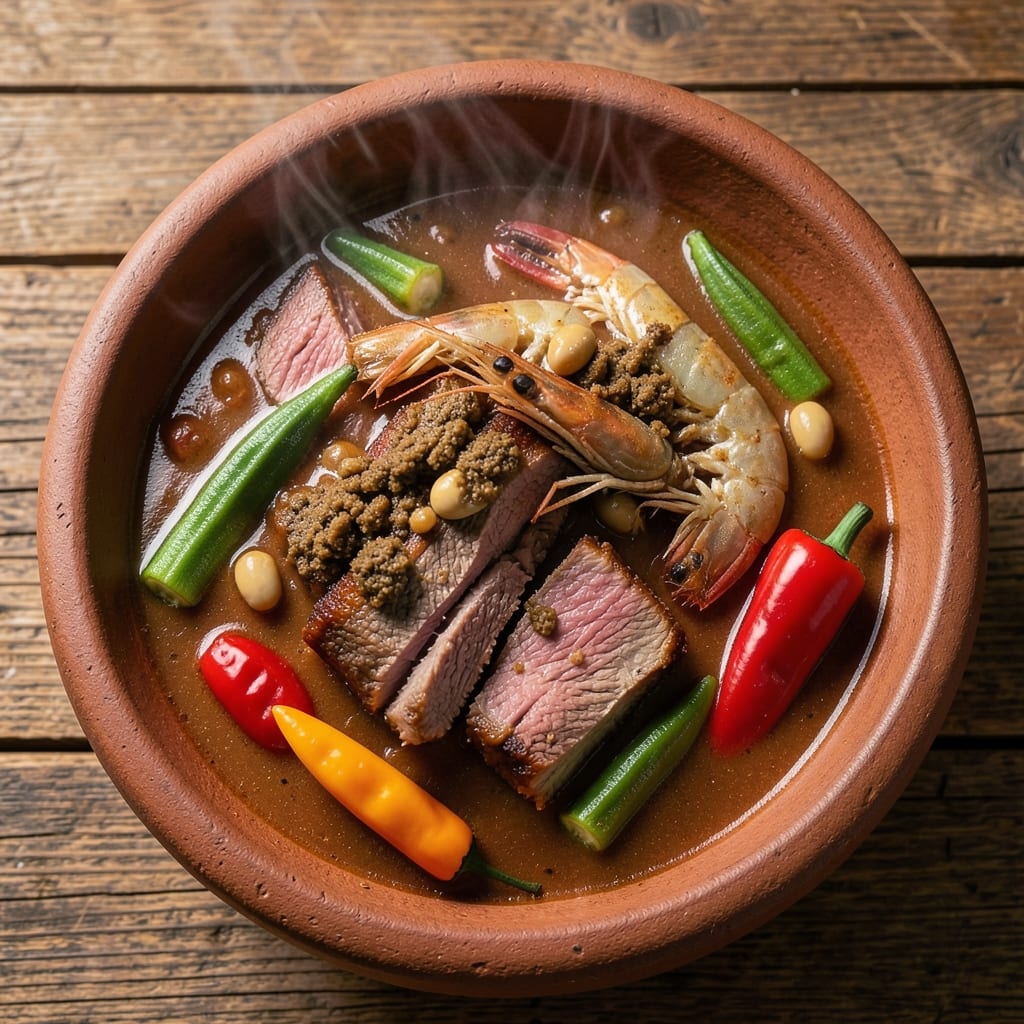
This Banga soup recipe Nigeria brings the bold, peppery flavors of West African comfort food to your kitchen, where okra dumplings float in a rich, spiced broth. 🌟 I first encountered this dish during a visit to Lagos, where it was served at a bustling roadside eatery—its aroma alone had me hooked. The secret lies in balancing the heat of fresh peppers with the earthy depth of crayfish and locust beans, creating a soup that's both hearty and deeply satisfying.
Traditional Banga soup starts with a flavorful stock, often made from a mix of beef, goat, or fish, simmered until the meat falls off the bone. The okra dumplings—made from blended okra, peppers, and spices—are dropped into the broth to thicken and absorb the rich flavors. What makes this recipe special is the layering of textures: tender meat, slippery dumplings, and a broth that's perfectly balanced between spicy and savory.
This dish is a staple in Nigerian households, particularly in the Yoruba region, where it's often served with pounded yam, amala, or eba. The combination of the spicy broth and the soft, starchy swallow creates a meal that's both filling and deeply comforting. Whether you're cooking for family or hosting a gathering, this soup delivers restaurant-quality results at home.
Ready in about 2 hours, this recipe is perfect for a weekend meal or a special occasion. The key is patience—letting the flavors meld and the broth develop its signature richness. Once you taste it, you'll understand why Banga soup is a beloved dish across Nigeria. Let's get cooking!
Ingredients for banga soup recipe nigeria
Bold flavors and hearty textures—this soup brings West African comfort to your table.
| Ingredient | Amount | Notes |
|---|---|---|
| Beef Chuck Roast 🥩 | 2 lb | Cut into 2-inch cubes |
| Fresh Okra 🌶️ | 1 ½ lb | Trimmed and chopped |
| Fresh Red Bell Peppers 🌶️ | 4 whole | Seeds removed, chopped |
| Fresh Scotch Bonnet Peppers 🌶️ | 2 whole | Adjust for heat preference |
| Crayfish 🦐 | ½ lb | Fresh or frozen, shelled |
| Locust Beans (Iru) 🌿 | ¼ cup | Soaked overnight, blended |
| Fresh Ginger 🧄 | 2 tbsp | Grated, fresh preferred |
| Garlic Cloves 🧄 | 8 cloves | Minced, fresh preferred |
| Fresh Cilantro 🌿 | ¼ cup | Chopped, for garnish |
| Dried Crayfish 🦐 | ¼ cup | For extra umami depth |
| Palm Oil 🫒 | ½ cup | For rich, red broth |
| Vegetable Oil 🫒 | ¼ cup | For sautéing |
| Salt 🧂 | 2 tsp | Adjust to taste |
| Ground Black Pepper 🌶️ | 1 tsp | Freshly ground preferred |
| Water 💧 | 8 cups | For broth base |
The beef is your flavor anchor here. Chuck roast breaks down beautifully, giving that rich, meaty depth the broth needs. Grab it from the butcher section—ask for well-marbled cuts if possible. Fresh crayfish are a game-changer (look for them at African markets or frozen in the seafood section), but dried crayfish work in a pinch. The okra? Long, slender varieties hold up best when chopped—avoid those with bumps or bruises. And don't skip the locust beans: soak them overnight for that signature earthy kick. I always double-check my peppers—Scotch bonnet can vary wildly in heat, so taste one first if you're sensitive.
No fresh crayfish? Dried crayfish at double the amount adds similar depth. Short on okra? Substitute with 1 cup frozen okra (thawed and drained). The palm oil is non-negotiable for that signature red broth—African markets or specialty stores carry it, but you can find it online too. For the peppers, jalapeños at half the amount give you heat without the same fruity sweetness. The ginger and garlic? Fresh is ideal, but if you're using powdered, reduce to half the amount. And if you can't find locust beans, blend 1/4 cup walnuts for a similar texture (though less authentic).
This soup tastes even better the next day—let it sit overnight so all the flavors meld. Store the broth separately if you're making the dumplings ahead (they thicken fast). The meat keeps 3-4 days in the fridge, while the dumpling mixture stays fresh for 2 days if refrigerated. For leftovers, reheat gently on low heat—adding a splash of water helps prevent drying. Freeze the broth for up to 3 months if you want to make it a pantry staple. Pro tip: Save those okra stems and peelings—they make great stock!
Why You'll Love This Recipe
- One-Pot Magic: I swear by this recipe because it’s one pot—no chopping chaos, no messy pans. Just throw in the beef, okra, and peppers, let it simmer, and the crayfish melts into the broth like a flavor bomb. Honestly, my kitchen stays cleaner than when I make jollof.
- Scotch Bonnet Kick: That Scotch bonnet pepper isn’t just for heat—it’s the soul of the soup. The slow simmer lets it mellow into a smoky depth that makes every spoonful ridiculously good, especially when the beef gets tender enough to fall apart. (Yes, even on a Tuesday night.)
- Leftovers That Shine: This soup tastes better the next day—seriously. The flavors marry overnight, and reheating it? Just add a splash of water and a pinch of crayfish powder. I make double batches because my kids beg for it at school lunches, and it’s still fresh-tasting.
- Budget-Friendly Feast: Beef chuck roast is cheap, okra’s a pantry staple, and crayfish adds luxury without breaking the bank. Between us, this is how I stretch my grocery money for a full week while still feeling like I’m serving something special. No compromises.
Step-by-step instructions for Banga soup
Here's how to craft this bold Nigerian classic with rich, peppery broth and tender dumplings.
🍳 Step 1: Prepare the Okra Dumplings
In a large bowl, combine the 1.5 lb chopped fresh okra, 2 tbsp grated fresh ginger, 8 minced garlic cloves, 2 tsp salt, and 1 tsp ground black pepper. Mix thoroughly until the okra is well-coated with the seasonings. This step ensures every bite of your dumplings carries that signature spicy kick.
Cover the bowl with plastic wrap and refrigerate for 30 minutes. This resting period allows the okra to absorb the flavors and makes the dumplings easier to shape later. I like to press the mixture gently with my fingers to check for even distribution of the seasonings.
🔥 Step 2: Sauté the Aromatics and Build the Broth
Heat 0.25 cup vegetable oil in a large pot over medium-high heat. Add the 0.5 lb shelled crayfish and cook for 2-3 minutes until they turn pink and slightly crispy. Remove them with a slotted spoon and set aside for later.
In the same pot, add 0.5 cup palm oil and allow it to heat until it shimmers. Add the 4 chopped red bell peppers and 2 chopped Scotch bonnet peppers (adjust for heat preference). Sauté for 5 minutes until the peppers soften and release their vibrant colors. This is where the soup gets its signature deep red hue and fiery flavor.
🥘 Step 3: Cook the Beef and Add Locust Beans
Add the 2 lb cubed beef chuck roast to the pot and brown it on all sides for 5-7 minutes. You'll know it's ready when it develops a rich crust. Pour in 8 cups water and bring to a boil. Skim off any foam that rises to the surface—this ensures a clear, flavorful broth.
Add the 0.25 cup blended locust beans (iru) and the 0.25 cup dried crayfish. Reduce heat to low-medium and let the beef simmer for 1 hour until tender. The soup should reduce slightly, concentrating the flavors. Here's where that deep, umami-rich foundation develops.
👨🍳 Step 4: Shape and Cook the Okra Dumplings
Remove the beef from the pot and set aside. Using your hands, form the seasoned okra mixture into 1-inch balls, packing them firmly but not too tightly. I like to wet my hands slightly to prevent sticking. Drop them gently into the simmering broth, being careful not to break them.
Simmer the dumplings for 20-25 minutes until they float to the surface and are tender when pierced with a fork. The broth should be thick and rich, with the dumplings absorbing all those peppery flavors. If the broth is too thin, let it reduce a bit longer—this is key for that authentic Banga texture.
🍽️ Step 5: Finish and Serve
Return the beef to the pot and stir in the reserved crayfish. Add the 0.25 cup chopped fresh cilantro and simmer for another 5 minutes to allow all the flavors to meld together. Taste and adjust seasoning with additional salt or pepper if needed.
Ladle the hot soup into serving bowls, garnishing each serving with extra cilantro. Serve immediately with pounded yam, eba, or your preferred Nigerian staple. The dumplings should be tender with a slight bite, and the broth should be rich, peppery, and deeply flavorful—just like your favorite street vendor's version!
Pro Tips For Making Banga Soup Recipe Nigeria
- SEAR THE BEEF FIRST: I learned this the hard way—skipping the initial sear means your beef chuck will turn out dry and flavorless. Brown the meat in batches over medium-high heat until deeply caramelized (about 5 minutes per side), then remove it. That crust locks in moisture and builds the soup’s rich base.
- SLICE OKRA THINLY: Thick okra chunks turn mushy and slimy—no one wants that. Cut each pod lengthwise into ¼-inch strips, then slice crosswise into ½-inch pieces. Rinse them in cold water to remove excess slime before adding to the pot. Trust me, it makes a real difference in texture.
- CONTROL THE SCOTCH BONNET: Too much heat from the Scotch bonnet will overpower the soup. Remove the pepper’s seeds and membranes, then chop it finely—just 1-2 teaspoons of chopped pepper per pot is enough for heat. If you’re unsure, taste as you go and adjust. (Yes, even if you’re impatient like me.)
- ADD CRAYFISH LAST: Crayfish shells release flavor but turn rubbery if cooked too long. Stir in the whole crayfish (shells and all) only in the final 10 minutes of simmering. If using pre-boiled crayfish, add them just before serving—this keeps them tender and lets their sweetness shine.
Flavor customization for these flavors
Spice Level Control
Adjusting the heat is all about the peppers—Scotch bonnet delivers serious fire, while red bell peppers add sweetness. For a milder version, reduce Scotch bonnet to 1 pepper and add 1 extra red bell pepper. My go-to for medium heat is 1 Scotch bonnet + 3 red bell peppers. For extra kick, blend 1 habanero into the okra dumpling mixture—trust me, it packs a punch! 🌶️
Protein Swaps
Beef is traditional, but this soup adapts beautifully. For goat meat, use 2 lbs and simmer 1 hour 15 minutes—it stays tender longer. Chicken lovers can substitute 3 lbs bone-in thighs (simmer 45 minutes). I’ve even made a vegetarian version with extra locust beans + smoked tofu for protein. The key is keeping the broth rich—never skip the crayfish!
Vegetarian Adaptations
Skip the meat entirely and build flavor with mushrooms, smoked tofu, and extra locust beans. Sauté 1 lb cremini mushrooms with the crayfish to deepen the umami. For texture, add 1 cup blended pumpkin seeds to the okra dumpling mix. Garnish with toasted pumpkin seeds and avocado slices for a modern twist. The broth will still be hearty—just plant-powered! 🌱
Regional Variations
In Yoruba households, the soup is often spicier with utazi leaves (if available). Hausa versions sometimes include tomato paste for a tangier broth. For a Lagos street-style take, add 1 tbsp fish sauce at the end—it’s a secret weapon for depth. I’ve even seen seafood Banga with shrimp and clams in coastal regions. Experiment to find your favorite!
Dumpling Texture Tips
For softer dumplings, add 1 tbsp cornstarch to the okra mix. For firmer texture, pack the balls tighter when shaping. Overcooking makes them mushy—test with a fork after 20 minutes. Pro move: Use okra pods (the slimy center) in the dumplings for extra slipperiness. The broth should coat a spoon thickly—this is the hallmark of perfect Banga! 💫
Nutrition facts
Frequently asked questions
What makes Banga soup different from other Nigerian soups?
Banga soup stands out with its unique okra dumplings that thicken the broth, creating a rich, peppery texture unlike any other Nigerian soup. While soups like Egusi or Okra rely on ground seeds or pureed vegetables, Banga's dumplings absorb the broth's flavors while adding a satisfying bite. The combination of fresh peppers, crayfish, and locust beans gives it that signature bold, spicy profile.
Can I make Banga soup without fresh crayfish?
Use 0.5 cup dried crayfish instead—just soak it in hot water for 15 minutes first to rehydrate. The flavor will be slightly different but still packed with umami depth. For extra richness, add 1 tbsp crayfish powder when sautéing the peppers. The key is keeping the broth flavorful, even without fresh crayfish.
How do I prevent the okra dumplings from breaking apart?
Handle the dumpling mixture gently and pack it firmly when shaping—don't overmix. Wet your hands slightly before forming them to prevent sticking. For extra durability, add 1 tbsp cornstarch to the okra mix. Drop them carefully into the broth and avoid stirring vigorously. If they break, they'll still taste great—just smaller!
What's the best way to store leftovers?
Store the broth and meat separately in airtight containers for 3-4 days in the fridge. The dumplings can be made fresh or reheated separately (they thicken when cold). For longer storage, freeze the broth for up to 3 months. Reheat gently on low heat—adding a splash of water prevents drying. The flavors actually improve overnight!
Can I make Banga soup with chicken instead of beef?
Yes! Use 3 lbs bone-in chicken thighs instead of beef. Simmer for 45 minutes until fully cooked. Chicken works well because it stays tender longer. For extra flavor, add 1 chicken bouillon cube when making the broth. The soup will have a lighter texture but still be deeply satisfying.