
Soups & Stews
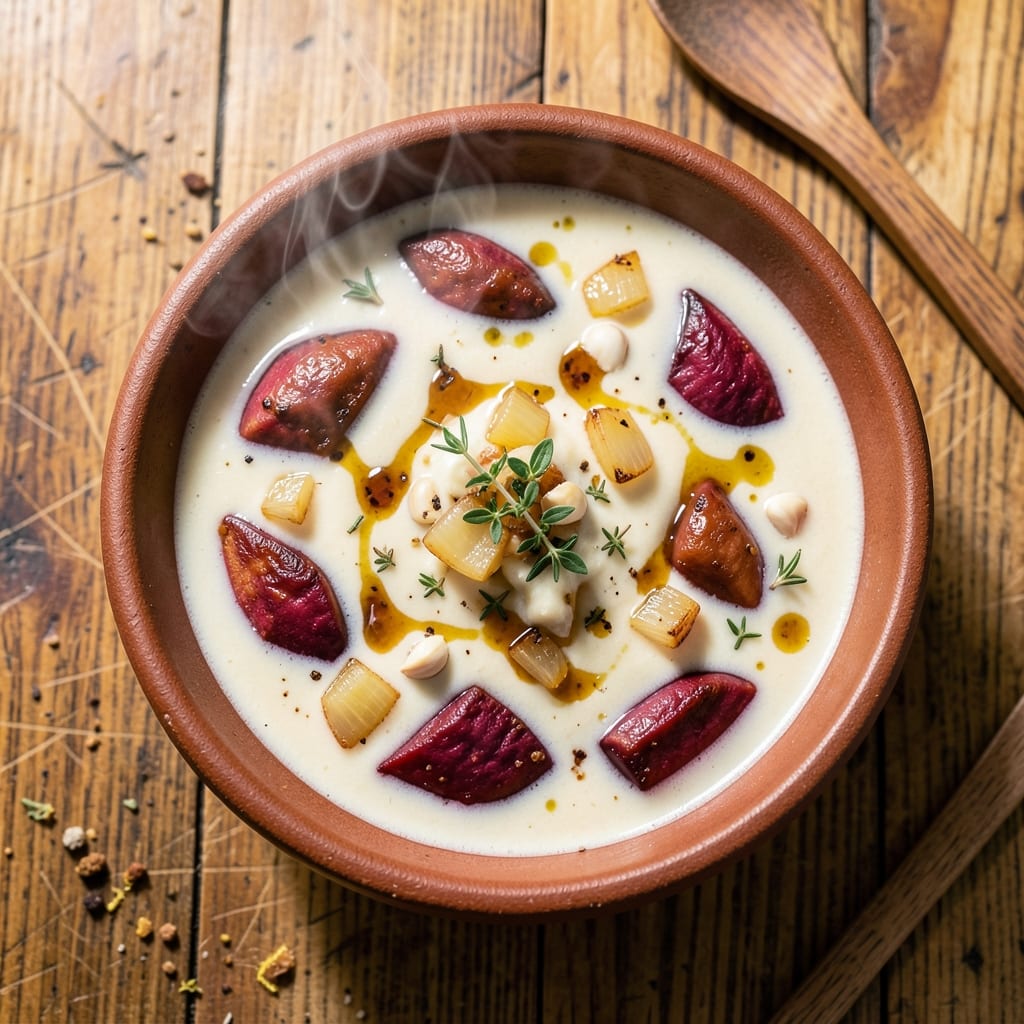
This African yam soup recipe brings the rich, aromatic soul of West Africa to your kitchen with every spoonful. The combination of tender yams, leafy greens, and fragrant spices creates a dish that's both comforting and deeply flavorful. I've perfected this traditional recipe to deliver the perfect balance of earthy, savory, and slightly spicy notes that define West African cuisine.
The secret to an authentic African yam soup lies in the slow simmering process, which allows the flavors to meld together beautifully. We'll use palm oil for its distinctive taste and color, while fresh herbs like thyme and curry powder add depth. The soup's velvety texture comes from blending some of the ingredients, creating a rich, satisfying broth that pairs perfectly with traditional sides like pounded yam or fufu.
What makes this recipe stand out is its versatility—it's hearty enough to be a main dish but light enough to enjoy as a side. The yams become tender and slightly sweet, while the leafy greens add a subtle bitterness that balances the richness. Each bite delivers layers of flavor that transport you to the bustling markets and family kitchens of West Africa.
Ready to create this flavorful masterpiece? Let's begin with the ingredients that will transform your kitchen into a taste of home. The process is straightforward, but the results are anything but ordinary—this is West African comfort food at its finest.
Ingredients for african yam soup
These rich, earthy ingredients bring West African warmth to your soup bowl.
| Ingredient | Amount | Notes |
|---|---|---|
| Yams 🍠 | 3 lbs | Medium-sized, peeled and cubed |
| Palm Oil 🫒 | ½ cup | Red palm oil preferred |
| Vegetable Oil 🫒 | 2 tbsp | For sautéing onions |
| Yellow Onions 🧅 | 2 whole | Chopped into small pieces |
| Garlic Cloves 🧄 | 6 cloves | Minced for aromatic base |
| Fresh Thyme 🌿 | 1 tbsp | Leaves only, chopped fine |
| Ground Curry Powder 🌶️ | 1 tbsp | Mild to medium heat |
| Ground Ginger 🌿 | 1 tsp | Freshly ground preferred |
| Vegetable Broth 💧 | 4 cups | Low-sodium preferred |
| Leafy Greens 🌱 | 4 cups | Spinach or collard greens |
| Tomato Paste 🍅 | 2 tbsp | Smooth, no sugar added |
| Salt 🧂 | 1 ½ tsp | Adjust to taste |
| Black Pepper 🌶️ | ½ tsp | Freshly ground |
| Scotch Bonnet Pepper 🌶️ | 1 whole | Seeded and chopped (optional) |
| Lemon Juice 🍋 | 1 tbsp | Freshly squeezed |
Palm oil is the soul of this soup—red palm oil gives that authentic color and depth, while regular palm oil works in a pinch. Grab it at African markets or the international aisle at Whole Foods. For the yams, medium-sized ones work best—they're sweet and hold up well during cooking. Peeled and cubed before adding to the pot. The leafy greens? Spinach or collard greens are perfect—they wilt down beautifully and add that signature bitterness that balances the richness. If you can't find Scotch bonnet, jalapeño or habanero will give you heat, just adjust the amount.
No palm oil? Olive oil or coconut oil will work in a squeeze, though the flavor won't be quite the same. Fresh thyme is ideal, but dried thyme at half the amount gets you close. Short on curry powder? Mix equal parts turmeric, cumin, and coriander for a quick substitute. The tomato paste can be swapped for 1 cup crushed tomatoes if you prefer. For the greens, kale or Swiss chard are great alternatives—just chop them finely. And if you're avoiding heat, skip the Scotch bonnet entirely—it's optional but adds that signature kick.
This soup tastes even better the next day as flavors meld. Store leftovers in an airtight container in the fridge for up to 5 days. For freezing, portion into 1-cup servings—it reheats beautifully. I like to make a big batch and freeze half for lazy weeknights. The palm oil solidifies when cold, so give it a quick stir before reheating. Serve with pounded yam or fufu for the full West African experience.
Why You'll Love This Recipe
- One-Pot Magic: I swear by this recipe—just peel the yams, chop the onions, and let the palm oil do the heavy lifting. No extra pots, no fuss, and honestly? That rich, smoky aroma fills the whole kitchen while it simmers.
- Garlic-Palm Oil Bomb: The moment you fry those garlic cloves in palm oil until they’re golden? Pure flavor payoff. That nutty, slightly sweet depth from the oil and the sharp garlic punch make every spoonful irresistible—no fancy spices needed.
- Weeknight Crowd-Pleaser: Between us, this is my go-to when friends drop by unannounced. It’s hearty enough for a family dinner but simple enough to throw together when you’re starving. (Yes, even on a Tuesday night.)
- Budget-Friendly Staple: Yams and onions last forever, and a little palm oil stretches far. I’ve made this for under $5 per serving, and the leftovers? Even better the next day—just reheat and enjoy. Zero waste, all flavor.
Step-by-step instructions for African yam soup
Here's how to create this hearty West African dish with rich palm oil and vibrant spices.
Sauté the Onions and Aromatics
Heat the 2 tablespoons vegetable oil in a large pot over medium heat. Add the 2 whole yellow onions chopped into small pieces and cook for 5-6 minutes until they become translucent and slightly golden. This is your flavor foundation - don't rush this step or the onions will burn.
Once the onions are soft, add the 6 cloves minced garlic, 1 tablespoon chopped fresh thyme, 1 tablespoon ground curry powder, and 1 teaspoon ground ginger. Stir constantly for 2 minutes until the garlic becomes fragrant and the spices are well incorporated. You should notice the aroma filling your kitchen - that's when you know you're building great flavor.
Develop the Palm Oil Base
Reduce the heat to low and slowly whisk in the ½ cup palm oil. Let it warm through for 3-4 minutes while stirring occasionally. The oil should become slightly frothy and develop a rich, nutty aroma. This is the signature element of African yam soup - the palm oil adds depth and that characteristic West African flavor.
Next, stir in the 2 tablespoons tomato paste and cook for 1-2 minutes until it darkens slightly. Add the 1 whole seeded and chopped Scotch bonnet pepper (if using) and cook for another 30 seconds. This creates a flavorful base that will carry through the entire soup.
Simmer the Yams and Broth
Add the 3 lbs cubed yams to the pot and stir to coat them evenly in the oil mixture. Pour in the 4 cups vegetable broth and bring the mixture to a gentle boil. Once boiling, reduce heat to medium-low and let it simmer uncovered for 20-25 minutes, stirring occasionally.
You'll know it's ready when the yams are tender but still hold their shape - they should be easily pierced with a fork. The soup should have reduced slightly, creating a thicker consistency. This simmering time is crucial for developing the soup's rich flavor and ensuring the yams cook perfectly.
Finish with Leafy Greens and Seasoning
Add the 4 cups leafy greens (spinach or collard greens) and stir gently to wilt them. Cook for 3-4 minutes until the greens are tender but still vibrant. The greens should be just barely wilted - they'll continue cooking slightly when you remove from heat.
Season with 1.5 teaspoons salt and ½ teaspoon black pepper, then stir in the 1 tablespoon fresh lemon juice. Taste and adjust seasoning if needed - the soup should be well-balanced with a pleasant tang from the lemon. Let the soup sit off heat for 5 minutes before serving to allow all the flavors to meld together.
Serve Warm with Complementary Sides
Ladle the soup into bowls and serve immediately while hot. The yams should be tender with a slight bite, the greens vibrant, and the broth rich with palm oil flavor. This soup pairs beautifully with jollof rice, fried plantains, or crusty bread to soak up the delicious broth.
For best results, serve within 30 minutes of cooking while the flavors are at their peak. The soup will continue to improve as it sits, but the texture of the greens and yams will be best when served fresh from the pot.
Pro Tips For Making African Yam Soup
- PEEL YAMS AFTER BOILING: The starch in yam peels turns gluey when raw—skip peeling first, then boil whole until fork-tender. After draining, the skins will slip off like a dream (no knife fight required). I learned this the hard way after wrestling with a slippery, half-peeled mess.
- SLOW-FRY ONIONS LOW: Palm oil burns fast, and crispy onions ruin the soup’s depth. Cook onions over medium-low heat until soft—not golden—then add garlic. Too hot, and you’ll end up with bitter smoke instead of sweet, caramelized flavor.
- CHOP GARLIC THIN: Whole cloves stay tough; minced garlic burns instantly in palm oil. Use a knife to smash cloves flat, then slice paper-thin strips. They’ll soften fast without turning to ash (yes, even if you’re impatient like me).
- SALT THE YAM WATER: Plain water makes yams bland. Add 1 teaspoon salt to the boiling pot—it seasons from the inside out. No need to add extra later; the broth will absorb enough flavor as it simmers. (Your future self will thank you.)
Regional styles of these flavors
Nigerian Efo Riro Style
In Nigeria, this soup is often called Efo Riro, where utedu leaves (a rich, green leafy vegetable) replace spinach or collard greens. The key difference is the addition of locust beans (iru), which adds a fermented, umami depth. I like to blend ½ cup locust beans with 1 cup water into a smooth paste before adding it to the soup during the simmering stage. For an authentic touch, use 2 tbsp palm oil and let it infuse for 5 minutes before adding other ingredients. This version is thicker and heartier, perfect for serving with swallow like pounded yam or amala. 🌿
Ghanaian Okra Soup Twist
Ghanaians transform this into Okra Soup by incorporating 2 cups sliced okra into the broth during the simmering phase. The okra thickens the soup naturally, creating a silky texture. I add 1 tbsp ground nutmeg and 1 tsp smoked paprika to the palm oil base for a smoky, aromatic profile. Serve this version with fufu or waakye (rice and beans) for a complete meal. The okra adds a unique sliminess that pairs beautifully with the yams' sweetness. 🍠
Senegalese Thieboudienne Influence
For a Senegambian-inspired take, incorporate 1 cup cooked fish (like red snapper) and 1 tbsp dried shrimp into the soup. Use ½ cup tomato paste and 1 tbsp habanero pepper for a tangier, spicier broth. The fish adds protein, while the shrimp brings a briny depth. I like to serve this version with thieboudienne rice (a Senegalese rice dish) for a full, satisfying meal. The palm oil's richness complements the fish perfectly. 🐟
Ivorian Alloco Style
In Côte d'Ivoire, this soup is often called Alloco Soup, where plantains replace yams. Use 4 ripe plantains, peeled and sliced into ½-inch rounds, instead of yams. The plantains caramelize beautifully in the palm oil, adding a natural sweetness. I add 1 tbsp grated coconut to the broth for a tropical twist. Serve with attiéké (fermented cassava) or foutou (pounded cassava leaves) for an authentic Ivorian experience. The plantains make this soup uniquely sweet and satisfying. 🍌
Cameroonian Ndolé Adaptation
For a Cameroonian-inspired version, blend 1 cup bitter leaf (or substitute with 2 cups chopped kale) into the soup after simmering the yams. Add 1 tbsp ground peanuts and 1 tsp crayfish powder to the palm oil base for a nutty, savory depth. This version is slightly bitter but deeply flavorful. Serve with ndolé sauce on the side for dipping or with white rice**. The bitter leaf balances the richness of the palm oil beautifully. 🌶️
Nutrition facts
Frequently asked questions
Can I substitute sweet potatoes for yams in this recipe?
Yes, but with some adjustments! Sweet potatoes will work, but they have a different texture and flavor. Use 2.5 lbs instead of 3 lbs since they cook faster, and add them 5 minutes earlier than the yams to prevent mushiness. The soup will still be delicious but slightly sweeter.
What makes palm oil essential for authentic flavor?
Palm oil is the heart of West African soups—it provides a rich, nutty depth that no other oil can replicate. The red color and unique taste come from its natural carotenoids, creating that signature West African flavor. While olive oil can substitute in a pinch, it lacks the same earthy complexity.
How do I adjust the spice level for kids or sensitive eaters?
For milder heat, remove the Scotch bonnet pepper entirely or replace it with ½ tsp mild paprika. You can also reduce the curry powder to ½ tbsp while keeping the other spices. Taste as you go—this soup is forgiving, and you can always add more lemon juice for brightness.
Can I make this soup ahead of time?
This soup tastes even better the next day as flavors meld. Store in an airtight container in the fridge for up to 5 days. Reheat gently on the stove, stirring occasionally, and add a splash of water if it thickens too much. The palm oil may solidify—just stir until smooth.
What are the best sides to serve with African yam soup?
The classic pairings are pounded yam, fufu, or jollof rice—these starchy sides soak up the rich broth beautifully. For a lighter option, try crusty bread or fried plantains. The soup's heartiness makes it a complete meal on its own, but these sides elevate it further.