
Soups & Stews
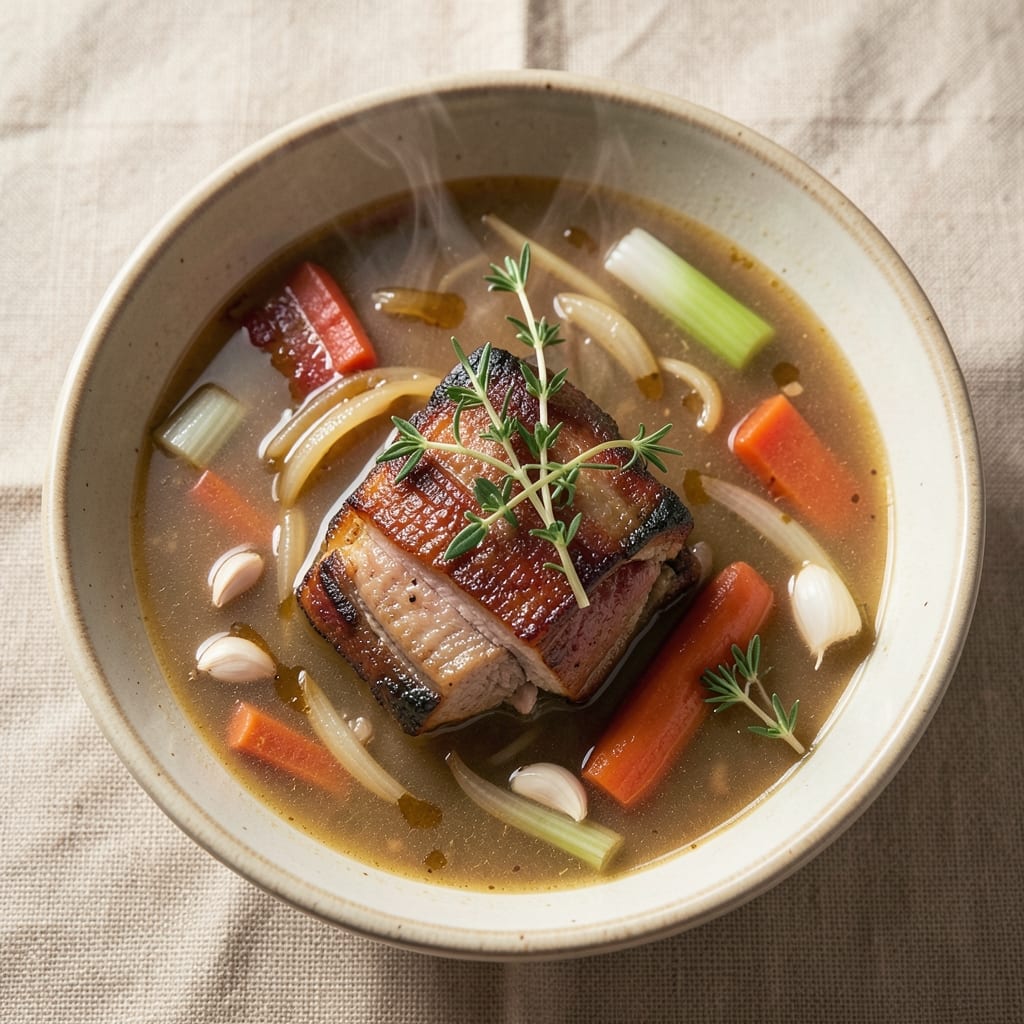
This bacon hock soup delivers the kind of deep, smoky richness that transforms a simple meal into something extraordinary. The bacon hock—slow-cooked until tender—infuses the broth with layers of umami and savory depth that no other cut can match. What starts as a humble pot of ingredients becomes a flavor-packed masterpiece after hours of gentle simmering, where every spoonful carries the essence of slow-cooked perfection.
The secret lies in balancing the bacon hock’s bold flavor with aromatic vegetables, herbs, and a touch of acidity to brighten the richness. Carrots, celery, and onions form the foundation, while bay leaves and thyme add earthy complexity. The key is patience—letting the broth develop its full, velvety texture and allowing the meat to fall apart effortlessly. This isn’t just soup; it’s a one-pot feast that warms the soul and satisfies even the heartiest appetites.
By the time you’re done, you’ll have a deeply flavorful, restaurant-quality soup that’s hearty enough for a winter dinner but simple enough for a weeknight. The bacon hock melts into tender strands, while the broth becomes a rich, golden elixir that’s perfect for ladling over crusty bread. Every ingredient plays a role, but the bacon hock steals the show with its unmistakable, smoky allure.
Serve it with a sprinkle of fresh parsley and a dash of black pepper to elevate the flavors even further. This soup is the kind of dish that turns ordinary meals into memorable experiences—rich, comforting, and impossible to resist. Let’s get started on creating this timeless classic.
Ingredients for bacon hock soup
Nine core ingredients plus a splash of acidity—this is where smoky magic happens.
| Ingredient | Amount | Notes |
|---|---|---|
| Bacon Hock 🥓 | 2 lbs | Fresh, uncooked, bone-in |
| Yellow Onion 🧅 | 2 whole | Chopped into large chunks |
| Carrots 🥕 | 4 whole | Medium size, peeled, cut into chunks |
| Celery Stalks 🧄 | 4 whole | Cut into 2-inch pieces |
| Garlic Cloves 🧄 | 6 cloves | Smashed, not minced |
| Fresh Thyme 🌿 | 2 sprigs | Stems removed for leaves |
| Bay Leaves 🌿 | 2 whole | Dried or fresh |
| Fresh Parsley 🌿 | ¼ cup | Chopped, for garnish |
| Apple Cider Vinegar 🍎 | 1 tbsp | For brightness |
| Kosher Salt 🧂 | 1 ½ tsp | Diamond Crystal preferred |
| Black Peppercorns 🌶️ | 1 tsp | Freshly cracked |
| Whole Grain Bread 🍞 | 1 loaf | For serving, torn into pieces |
| Water 💧 | 12 cups | Filtered preferred |
The bacon hock is non-negotiable here—it’s the soul of this soup. Look for fresh hocks at specialty butchers or well-stocked grocery stores like Whole Foods or Trader Joe's. The deeper the red, the fresher it is. If you can’t find hocks, smoked pork hocks work in a pinch, but fresh is ideal. Carrots and celery should be firm with vibrant color—no limp or discolored stalks. The thyme and bay leaves? Organic is worth it if you’re using them fresh, but dried works fine too. I always grab extra parsley—half goes in the pot, half gets torn over the top at the end for that restaurant finish.
No bacon hock? Smoked turkey neck or pork shoulder can mimic the depth, though nothing beats the authentic smokiness. Fresh thyme unavailable? Dried thyme at one-third the amount gets you close. The vinegar is crucial for balance—rice vinegar works too, but apple cider adds subtle sweetness. Bread for serving? Any crusty loaf works—sourdough, baguette, or even a good whole wheat. The water should be cold to start—hot water can cook the veggies too quickly and dull the flavors. And yes, you can use bouillon cubes if you’re in a rush, but homemade stock is where this soup truly shines.
This soup tastes even better the next day—3-4 days in the fridge is ideal. For longer storage, freeze portions in airtight containers for up to 3 months. The bacon hock will keep its texture beautifully. To reheat, warm gently on the stove—never microwave, or you’ll break the emulsion. I always make a double batch. One for dinner, one for lunches all week. The broth reduces beautifully when reheated, so add a splash of water if it gets too thick. Serve with extra black pepper and a drizzle of the cooking fat—that’s the good stuff.
Why You'll Love This Recipe
- One-Pot Magic: I swear by this recipe—just toss the bacon hock, onions, carrots, and celery into a pot, cover with water, and let it simmer. No fancy prep, no constant stirring, and honestly? That’s all it takes for something this rich.
- Deep Umami Bomb: Between us, the bacon hock alone makes this soup ridiculously good—smoky, salty, with that melt-in-your-mouth richness. Add the garlic and you’ve got a flavor combo that’ll have everyone asking for seconds (and thirds).
- Leftovers That Shine: This soup actually tastes better the next day. I make a double batch on Sundays, and by Wednesday, it’s still the star of my lunch. The flavors meld like crazy, and reheating takes two minutes.
- Budget-Friendly Feast: Bacon hock is a steal compared to other meats, and the veggies stretch it into a hearty meal for days. I’ll be real: my grocery bill drops when I stock up on this ingredient—plus, it’s way more satisfying than takeout.
Step-by-step instructions for bacon hock soup
Here's how to transform humble ingredients into a deeply flavorful soup with layers of smoky richness.
Render the Bacon Hock Fat and Build the Base
Place the 2 lbs bacon hock in a large Dutch oven and set it over medium heat. Let it render fat undisturbed for 15-20 minutes, turning occasionally, until the fat is golden and the meat begins to brown deeply. This slow rendering creates the foundation for your soup's rich flavor - don't rush it.
Once the bacon hock is nicely browned, add the 2 whole yellow onions, 4 whole carrots, and 4 whole celery stalks. Stir to combine with the rendered fat, coating everything evenly. The vegetables will begin to soften as they absorb the bacon hock's concentrated flavor. This step develops the soup's umami depth that will carry through the entire cooking process.
Add Aromatics and Liquid for Deep Flavor Development
Pour in the 12 cups water and bring everything to a rolling boil. Once boiling, reduce heat to low and add the 6 smashed garlic cloves, 2 sprigs fresh thyme, 2 whole bay leaves, and 1 tbsp apple cider vinegar. The vinegar brightens the soup and helps balance the richness of the bacon hock.
Let the soup simmer gently for 3 hours, maintaining a very low bubble. This long cooking time is crucial - it allows the collagen in the bacon hock to break down into gelatin, creating that signature silky texture. Skim any foam that rises to the surface during the first hour to keep the broth clear.
Season and Finish the Soup
After 3 hours, remove the bacon hock from the pot and let it cool slightly before shredding the meat off the bone. Discard any large bones and return the meat to the pot. Season with 1.5 tsp kosher salt and 1 tsp freshly cracked black peppercorns. The soup should taste rich and balanced - if it needs more acidity, add another ½ tsp of vinegar.
Simmer for an additional 30 minutes to allow all the flavors to meld together. The soup should have a deep, smoky aroma with layers of sweetness from the vegetables and savory notes from the bacon hock. Taste and adjust seasoning if needed - remember that the bread will absorb some flavors when served.
Prepare for Serving
Just before serving, stir in the 0.25 cup chopped fresh parsley. This adds a final bright note that cuts through the richness. Ladle the soup into bowls and serve immediately with torn pieces of the 1 loaf whole grain bread on the side. The bread will soak up the flavorful broth beautifully.
This soup tastes even better the next day as the flavors continue to develop. If making ahead, store in the refrigerator for up to 3 days or freeze for up to 3 months. The texture will be even more luxurious after chilling and reheating.
Pro Tips For Making Bacon Hock Soup
- CRISP THE HOCK FIRST: That bacon hock won’t render fat properly if you just toss it in raw—start by browning it in a cold pan over medium heat. Let it sit there for 10-12 minutes, turning occasionally, until the fat pools and the meat pulls slightly away from the bone. I used to rush this, and the soup always tasted flat afterward.
- CHOP VEGGIES UNIFORM: Carrots and celery should be cut into ½-inch chunks, not random sizes—this ensures even cooking. Onions go in whole until softened, then get chopped fine for the final simmer. After burning through three batches of mushy carrots, I finally measured my knife work.
- SKIP THE BOIL: Once you add broth, resist the urge to crank the heat—simmer gently instead. A rolling boil will turn your bacon hock into rubber. Keep it at a steady bubble where you see tiny ripples, not violent churning. (Yes, even if you’re impatient like me.)
- STRAIN THE FAT: After simmering, strain the soup through a fine-mesh sieve to remove all the solids—this keeps the broth silky. Press the veggies with a spoon to extract every last drop of flavor. I skip this when I’m lazy, but the difference in texture is noticeable.
Serving suggestions for this bacon hock soup
Bread Pairings
This rich soup needs a sturdy bread that can handle its depth. I always serve it with crusty whole grain bread torn into chunks—it soaks up the broth beautifully while adding texture. For extra indulgence, try sourdough or brioche for a buttery contrast. If you want something lighter, warm baguette slices with garlic butter on the side work perfectly. 🍞
Cheese Toppings
Add a sprinkle of sharp cheddar or Parmesan cheese just before serving to elevate the flavors. The cheese melts slightly from the soup's heat, creating a creamy, savory finish. For a Southern touch, try crumbled blue cheese—its tang cuts through the richness wonderfully. I like to keep it simple with grated Parmesan for a classic touch.
Pickled Veggies
Bright, tangy pickled vegetables add a refreshing contrast to the soup's richness. Thinly sliced pickled red onions or pickled jalapeños work beautifully. I also love adding quick-pickled cucumbers (slice cucumbers, toss with ½ cup vinegar, 1 tbsp sugar, and ½ tsp salt) for a crisp, zesty bite. These pickles balance the soup's depth perfectly. 🌶️
Herb Garnishes
Fresh herbs add a pop of color and brightness. I always finish with chopped parsley, but cilantro or dill work too. For a smoky twist, add a sprinkle of crumbled fried sage—its crispy edges contrast the soup's silky texture. A few thinly sliced green onions also add a fresh, oniony note that ties everything together.
Extra Crunch
For texture lovers, toasted pumpkin seeds or crushed pork rinds add a satisfying crunch. I like to sprinkle toasted sesame seeds for an unexpected Asian-inspired twist. If you want something heartier, crumbled bacon (from the same batch used in the soup) ties the dish together beautifully. These toppings keep the soup interesting with every bite. 💛
Nutrition facts
Frequently asked questions
What makes bacon hock different from regular pork hock?
Bacon hock is a smoked, cured pork hock that's been partially cooked and seasoned with salt, sugar, and spices. This gives it a distinct smoky flavor and firmer texture compared to regular pork hock. The curing process also means it has less fat content, making it leaner but packed with concentrated flavor.
Can I substitute bacon hock with another meat?
Yes! If you can't find bacon hock, try smoked turkey neck or pork shoulder for similar richness. For a vegetarian option, use mushrooms (like portobello) or smoked tofu—though the flavor won't be identical. The key is choosing a meat with collagen for that silky broth texture.
Why does this soup need such a long cooking time?
The 3-hour simmer is essential to break down the collagen in the bacon hock, creating a velvety broth. This slow process also infuses the vegetables with deep, smoky flavor. If you're short on time, you can pressure cook it for 45 minutes, but the flavor won't be as developed.
How do I know when the bacon hock is done?
The meat should be fork-tender and easily shred away from the bone. The broth will also thicken slightly as it cooks. If you're unsure, test a small piece—it should fall apart with minimal pressure. Overcooking won't hurt, but it may make the meat slightly tougher.
Can I make this soup in a slow cooker?
Brown the bacon hock first in a skillet, then transfer everything to the slow cooker. Cook on low for 6-8 hours or high for 4-5 hours. The slow cooker method is perfect for hands-off flavor development. Just add the vinegar and herbs at the beginning and season at the end.