
Soups & Stews
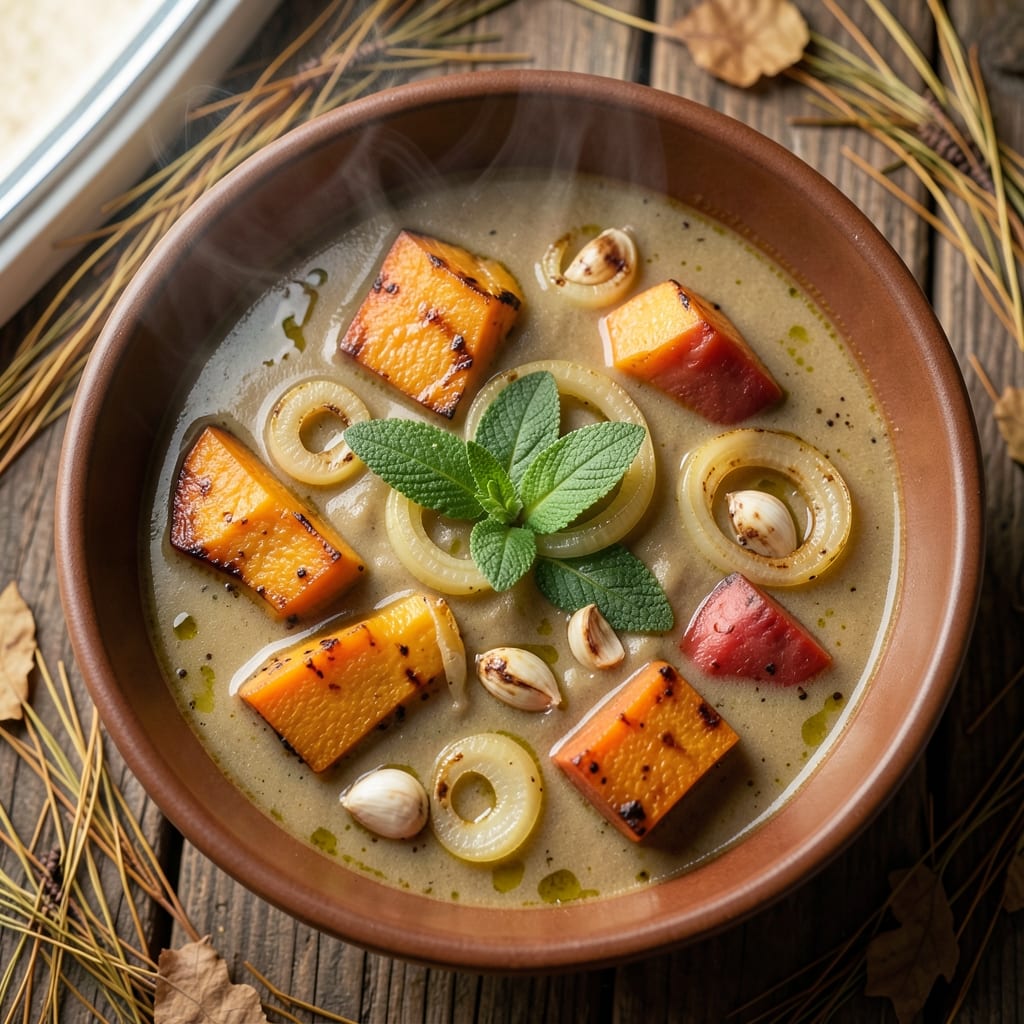
This autumnal harvest soup recipe transforms seasonal produce into a rich, comforting bowl that captures the essence of fall. 🍂 The secret lies in roasting the vegetables first—pumpkin, squash, and root vegetables caramelize into sweet, concentrated flavors that form the heart of the soup. Sage and thyme add earthy depth, while a touch of creaminess balances the natural sweetness.
What sets this recipe apart is the perfect harmony of textures—creamy blended sections alongside tender roasted chunks—creating a symphony of flavors in every spoonful. The soup simmers low and slow, allowing all the ingredients to meld into a cohesive, deeply satisfying dish that feels both rustic and refined.
By the time you're done, you'll have a soup that's hearty enough to stand as a main course but light enough to feel like a celebration of autumn's bounty. The aroma alone will have everyone gathering at the table, while the first taste delivers that perfect balance of sweet, savory, and aromatic herbs.
Serve with crusty bread for soaking up every last drop, or pair it with a simple green salad for a complete fall meal. The beauty of this recipe is its versatility—add chicken for extra protein, mushrooms for umami depth, or keep it vegetarian for a purely plant-based feast.
Ingredients for autumnal harvest soup
Seasonal produce meets cozy comfort—here's what brings this harvest soup to life.
| Ingredient | Amount | Notes |
|---|---|---|
| Sugar Pumpkin 🎃 | 2 lbs | Peeled, seeded, cubed (about 6 cups) |
| Butternut Squash 🎃 | 2 lbs | Peeled, seeded, cubed (about 4 cups) |
| Sweet Potatoes 🍠 | 1 ½ lbs | Peeled, cubed (about 3 cups) |
| Yellow Onion 🧅 | 1 whole | Chopped (about 1 cup) |
| Garlic Cloves 🧄 | 4 cloves | Peeled, minced |
| Fresh Sage Leaves 🌿 | ½ cup | Chopped (about 10 leaves) |
| Fresh Thyme Leaves 🌿 | ¼ cup | Chopped (about 5 sprigs) |
| Vegetable Broth 💧 | 6 cups | Low-sodium preferred |
| Heavy Cream 🥛 | ½ cup | Full-fat for richness |
| Extra-Virgin Olive Oil 🫒 | ¼ cup | For roasting vegetables |
| Salt 🧂 | 1 ½ tsp | Kosher or sea salt |
| Black Pepper 🌶️ | ½ tsp | Freshly ground |
| Ground Nutmeg 🌿 | ¼ tsp | Freshly grated preferred |
| Maple Syrup 🍁 | 2 tbsp | For subtle sweetness |
The vegetables are the stars, so don't skimp on quality. Local farmers markets or the produce section at Whole Foods often carry the sweetest pumpkins and squash—look for vibrant orange color and firm texture. Sweet potatoes should feel heavy for their size, and the skin should be smooth without blemishes. For the herbs, fresh is non-negotiable—dried thyme and sage won't give the same earthy depth. If you can't find fresh sage, dried works at one-third the amount, but it won't be the same. Roast the vegetables until they're caramelized and tender—this step transforms their flavor from good to extraordinary.
No butternut squash? Acorn or kabocha squash works beautifully as a substitute. Running short on fresh herbs? Dried thyme and sage will work in a pinch, but reduce to one-third the amount. The vegetable broth is where flavor builds—low-sodium is key so you can control the seasoning. For extra richness, half-and-half or coconut milk can replace the heavy cream. And if you're watching calories, Greek yogurt or cashew cream adds tangy creaminess without the same heaviness. The maple syrup adds just a touch of sweetness—grade B is best for its deeper flavor profile.
Roasted vegetables keep well for 3 days in the fridge, so make extra if you're entertaining. The finished soup reheats beautifully—just warm gently on the stove, stirring occasionally. For best texture, store the soup without blending until reheating, then blend half for creaminess and leave the other half chunky. Freezes for up to 3 months, though the texture may break down slightly. I always make a double batch—one for dinner, one for lunches. The aroma alone makes the kitchen feel like fall.
Why You'll Love This Recipe
- I’ll be real: butternut squash and sugar pumpkin stretch across multiple meals, and sweet potatoes are cheaper than takeout. Make a big batch, freeze half, and you’ve got a 30-minute meal for months—no grocery stress, just flavor.
- One-Pot Magic: I swear by this—just toss everything (peeled squash, cubed pumpkin, even the onions) into one pot with broth and garlic. No chopping boards, no extra pans, just 20 minutes of simmering while I sip tea and pretend I’m not cooking.
- Sweet-Savory Balance: Honestly, the combo of roasted sweet potatoes and caramelized onions with a hint of nutmeg is ridiculously good. The pumpkin adds creaminess without heaviness, and the garlic? Oh, it’s the secret weapon that ties everything together.
- Weeknight & Holiday: Between us, this soup is my go-to for both Tuesday dinners and Thanksgiving leftovers. Serve it with crusty bread for a casual night in, or dress it up with a drizzle of maple cream for a cozy fall gathering—same recipe, just different vibes.
Step-by-step instructions for autumnal harvest soup
This rich, aromatic soup comes together in stages—roasted vegetables build deep flavor while herbs infuse the broth.
🔥 Step 1: Roast the Vegetables for Maximum Flavor
Preheat your oven to 400°F and line two large baking sheets with parchment paper. Arrange the 2 lbs sugar pumpkin, 2 lbs butternut squash, and 1.5 lbs sweet potatoes in a single layer on the sheets. Drizzle evenly with 0.25 cup extra-virgin olive oil and toss to coat completely.
Spread the vegetables evenly, leaving space between pieces so they roast rather than steam. Sprinkle with 1 tsp salt and 0.25 tsp black pepper, then roast for 25-30 minutes until the edges are deep golden brown and the vegetables begin to soften. The aroma will fill your kitchen—this is when the natural sugars caramelize.
🍳 Step 2: Sauté Aromatics and Build the Broth Base
While the vegetables roast, heat a large Dutch oven over medium heat. Add 1 whole chopped yellow onion and cook for 5 minutes until softened and translucent. Add the 4 minced garlic cloves and cook for another 30 seconds until fragrant—don't let it brown or it'll turn bitter.
Stir in the 0.5 cup chopped fresh sage leaves and 0.25 cup chopped fresh thyme leaves, cooking for 1 minute until the herbs release their essential oils. Pour in the 6 cups vegetable broth and bring to a gentle simmer. Add the roasted vegetables directly from the baking sheet to the pot.
🥘 Step 3: Simmer and Infuse the Soup
Add 1 tsp salt, 0.25 tsp black pepper, and 0.25 tsp ground nutmeg to the pot. Stir gently to combine, then reduce heat to low-medium and let the soup simmer uncovered for 20-25 minutes. The vegetables should be fork-tender with no resistance when pierced.
Here's where the magic happens: The roasted vegetables release their concentrated flavors into the broth while the fresh herbs infuse subtle earthy notes. Taste the broth and adjust seasoning if needed—this is your chance to balance the natural sweetness of the vegetables with the savory broth.
🍲 Step 4: Finish with Cream and Sweetness
Remove the pot from heat and let it cool slightly for 5 minutes. Use an immersion blender to purée the soup until smooth—if you prefer texture, leave about 20% of the vegetables unblended. Stir in the 0.5 cup heavy cream and 2 tbsp maple syrup, then return to low heat for 2-3 minutes just to warm through.
The cream adds luxurious body while the maple syrup enhances the natural sweetness of the autumn vegetables. Taste again and adjust seasoning—this is your final opportunity to perfect the balance. The soup should be rich but not overpowering, with bright herbal notes cutting through the creaminess.
Pro Tips For Making Autumnal Harvest Soup
- CHAR THE ONIONS FIRST: I learned this the hard way—sautéing onions with garlic and spices until they’re deep golden (not brown) before adding squash and pumpkin makes the whole soup taste richer. Skip this, and you’ll just end up with a mushy, underflavored mess. Ten minutes of patience here changes everything.
- CUT SQUASH IN EVEN PIECES: Butternut squash and sweet potatoes cook unevenly if they’re lumpy. Cut them into 1.5-inch cubes (same size as pumpkin chunks) so they all soften at once. I used to rush this, and half the batch would turn to mush while the other half stayed rock-hard.
- SALT THE WATER LIKE THE SEA: The broth needs enough salt to balance the natural sweetness of the squash and pumpkin. Use 1.5 teaspoons per quart of water (or to taste)—this isn’t the time to be shy. Weak broth ruins the harmony of the flavors, and you’ll regret it when you’re halfway through.
- ROAST THE VEGETABLES FIRST: Toss the pumpkin, butternut squash, and sweet potatoes with oil, salt, and a pinch of cinnamon before roasting at 400°F for 20 minutes. The caramelized edges add depth that raw veggies can’t match. (Yes, it’s an extra step—but your soup will taste like it came from a farm stand, not a recipe box.)
Essential equipment for great autumnal harvest soup
Dutch Oven Essentials
The Dutch oven is my go-to for this soup—its heavy construction distributes heat evenly, preventing scorching while allowing slow simmering. I use a Le Creuset 6-quart with its signature enameled interior, which also makes cleanup a breeze. For budget-friendly options, Lodge's cast iron Dutch oven works beautifully and develops a natural non-stick patina over time. 🔥
Immersion Blender
An immersion blender transforms this soup from rustic to refined by creating silky smooth sections without transferring hot liquid to a countertop blender. My favorite is the Ninja 1100-watt—it handles thick soups effortlessly and has a comfortable grip. For a more affordable option, the Oster Classic delivers consistent results. Always blend in batches if your soup is very thick to avoid overloading the motor.
Roasting Pans
Two rimmed baking sheets are essential for roasting the vegetables simultaneously. I prefer half-sheet pans (18x13 inches) from Wilton—they're sturdy, affordable, and fit most home ovens. Line them with parchment paper for easy cleanup and to prevent sticking. If you're short on space, a large jelly roll pan works in a pinch, though you may need to roast in batches. 🌿
Measuring Tools
Precision matters with spices and liquids, so invest in quality tools. A stainless steel measuring spoon set from OXO ensures accurate measurements for your ground nutmeg and maple syrup. For liquids, a glass liquid measuring cup with clear markings helps track the 6 cups vegetable broth and 0.5 cup heavy cream. A digital kitchen scale (like Escali Primo) is ideal for weighing the 2 lbs pumpkin and 2 lbs squash—it's more precise than volume measurements for dense vegetables.
Wooden Spoon
A heat-resistant wooden spoon (I use Oxo Good Grips) is perfect for stirring the soup without scratching the Dutch oven's surface. Wood naturally releases moisture, preventing the soup from sticking during the 20-25 minute simmer. Avoid metal utensils—they can react with acidic ingredients or scratch enameled cookware. For extra durability, choose a spoon with a beechwood handle, which stands up to high heat better than some plastic alternatives.
Fine-Mesh Strainer
If you prefer a chunkier texture but want to strain out any herb stems, a fine-mesh strainer (like OXO Good Grips) works well. I also keep one handy for rinsing fresh herbs before chopping. For larger debris, a colander suffices, but a fine-mesh strainer catches smaller particles that could make the soup gritty. Pro tip: Run hot water over the strainer before use to remove any factory residue. ✨
Nutrition facts
Frequently asked questions
Can I make this soup without a Dutch oven?
A Dutch oven is ideal for even heat distribution, but you can use a large stockpot or heavy-bottomed pot instead. Just stir occasionally to prevent sticking. For roasting, any oven-safe skillet or baking dish works—just ensure it fits your oven racks comfortably.
What if I don't have fresh sage or thyme?
Use dried herbs at one-third the amount (e.g., 1 tbsp dried sage instead of 0.5 cup fresh). Toast the dried herbs in a dry pan for 30 seconds before adding to enhance their flavor. For extra depth, add a pinch of smoked paprika or cinnamon to mimic the earthy notes.
How can I make this soup vegetarian or vegan?
Replace the heavy cream with coconut milk or cashew cream (blend soaked cashews with water). For extra protein, add white beans or lentils during the simmering stage. Use vegetable broth and skip the maple syrup or use agave instead. The soup will still be rich and satisfying!
Can I prepare this soup ahead of time?
Roast the vegetables 1 day ahead and store them in the fridge. Assemble the soup the next day, but skip blending until just before serving. Reheat gently on the stove, blending half for creaminess. The flavors deepen overnight, making it even more delicious. Freeze for up to 3 months—thaw in the fridge before reheating.
What’s the best way to serve leftover soup?
Ladle into bread bowls or rustic mugs for a cozy presentation. Garnish with toasted pumpkin seeds, crispy sage leaves, or a drizzle of olive oil. For extra flair, top with crumbled feta or grated Parmesan. Serve with crusty sourdough or garlic bread for dipping.