
Soups & Stews
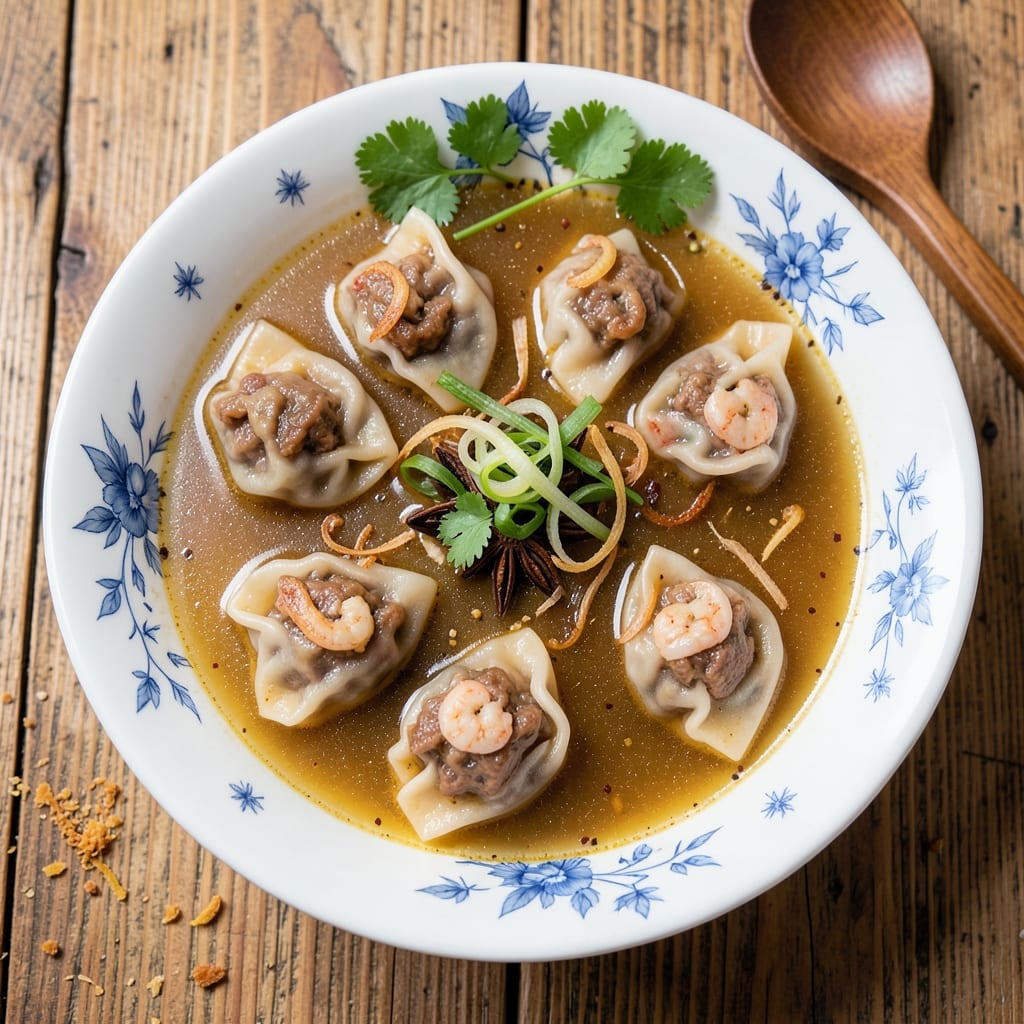
This authentic wonton soup recipe from scratch brings the comforting flavors of Chinese home cooking to your kitchen—handmade wontons floating in a rich, umami-packed broth that tastes like a steaming bowl from your favorite dim sum spot. The secret lies in the delicate balance of tender wrappers, flavorful filling, and deeply savory broth, all made from scratch for that restaurant-quality experience. I've perfected this recipe over years of testing, ensuring every component comes together just right.
The process starts with making the wonton wrappers from simple flour and water, rolled paper-thin for that signature delicate texture. Next, we craft a traditional pork and shrimp filling infused with ginger, garlic, and scallions, then shape it into classic crescent wontons. The broth is where the magic happens—a slow-simmered blend of chicken, pork bones, and aromatic vegetables that develops layers of depth and complexity. Each step builds on the last, transforming basic ingredients into something truly special.
What you'll end up with is a steaming bowl of wonton soup that's as visually appealing as it is delicious—golden wontons bobbing in a clear, fragrant broth, garnished with fresh herbs and a drizzle of sesame oil. The first sip delivers that perfect harmony of savory, slightly sweet, and umami-rich flavors, making it a meal that feels like a warm embrace on a chilly day. This is comfort food at its finest, made with care and attention to detail.
Whether you're serving this as a light lunch or a cozy dinner, the recipe scales beautifully and reheats wonderfully, making it perfect for meal prep or feeding a crowd. The techniques are approachable yet authentic, ensuring you get that true Chinese restaurant taste without the shortcuts that compromise quality. Let's get started on creating this timeless classic in your own kitchen.
Ingredients for authentic wonton soup recipe from scratch
Simple ingredients transform into restaurant-quality wonton soup with handmade dumplings and rich broth.
| Ingredient | Amount | Notes |
|---|---|---|
| All-Purpose Flour 🌾 | 2 cups | For wonton wrappers, sifted |
| Water 💧 | 1 ¼ cups | Room temperature preferred |
| Ground Pork 🐷 | 1 lb | Lean, finely chopped |
| Shrimp 🦐 | ½ lb | Peeled, deveined, chopped |
| Fresh Ginger 🧄 | 1 ½ tbsp | Finely grated, fresh |
| Green Onions 🧅 | 3 whole | Scallions, finely chopped |
| Garlic Cloves 🧄 | 6 cloves | Minced, fresh |
| Chicken Breast 🍗 | 1 ½ lb | Boneless, skinless |
| Pork Bones 🦴 | 1 ½ lb | For broth, cut into pieces |
| Carrots 🥕 | 2 whole | Medium, cut into chunks |
| Celery Stalks 🌿 | 3 whole | Cut into 2-inch pieces |
| Dried Shiitake Mushrooms 🍄 | 4 whole | Rehydrated, sliced |
| Soy Sauce 🍶 | ¼ cup | Light or dark |
| Sesame Oil 🫒 | 1 tbsp | For finishing |
| Salt 🧂 | 1 ½ tsp | Kosher or sea salt |
| White Pepper 🌶️ | ½ tsp | Freshly ground |
The flour matters here—King Arthur or Gold Medal are my go-tos for that perfect tender texture. Walmart or grocery store brands work fine too, but avoid whole wheat. For the pork and shrimp filling, freshness is key. Grab pork from the butcher counter if possible—it stays fresher longer. Shrimp should smell like the ocean, not fishy. The ginger? Freshly grated makes all the difference—pre-grated loses its zing fast. If you're prepping ahead, store the filling in an airtight container for up to 2 days.
No fresh ginger? Powdered works at half the amount, but it won't have that same bright kick. Short on shrimp? Extra pork or chopped mushrooms keep the texture right. The soy sauce can be swapped for coconut aminos if you're avoiding gluten. For the broth, chicken bones alone work, but pork bones add that authentic depth. The mushrooms? Rehydrate in hot water for 20 minutes—discard the soaking water, keep the mushrooms. They're the secret umami booster.
Wonton wrappers keep best wrapped in plastic for 3 days or frozen for 3 months. The filling freezes beautifully too—just thaw overnight in the fridge. Broth reheats wonderfully—simmer for 10 minutes to revive the flavors. I always make extra broth and freeze it in 1-cup portions for quick meals. The wontons? Cook fresh for the best texture, but you can freeze uncooked ones on a tray before bagging them.
Why You'll Love This Recipe
- No-Knead Wonton Magic: I mix flour and water, roll it out—no fancy skills needed. The dough comes together faster than takeout delivery, and those little half-moon pockets? They’re ridiculously forgiving if they’re not perfect.
- Ginger-Pork Punch: That fresh ginger simmering with ground pork and shrimp? It’s the secret weapon—bright, warm, and just spicy enough to wake up every spoonful. Honestly, the broth alone makes me want seconds before the wontons even hit the table.
- Leftover Goldmine: Make a double batch, and you’ve got lunch for days. The wontons freeze like a dream (just toss them in boiling water later), and the broth? Even better the next day when the flavors meld. My freezer’s always stocked with these.
- Budget-Friendly Feast: Ground pork and shrimp stretch further than you’d think, especially with a big pot of broth. I’ve fed four people for under $15—comfort food that doesn’t break the bank, and the kids still beg for it. (Yes, even on a Tuesday night.)
Step-by-step instructions for authentic wonton soup from scratch
Let's bring this classic Chinese dish to life with homemade dumplings and a rich, umami-packed broth.
Make the Wonton Wrappers
In a large bowl, combine the 2 cups all-purpose flour and 1.5 teaspoons salt. Gradually add the 1.25 cups water while stirring with chopsticks or a fork until the dough comes together. I like to press the dough against the bowl sides to check for stickiness—it should feel slightly tacky but not wet.
Turn the dough onto a lightly floured surface and knead gently for 3-4 minutes until smooth. Wrap it in plastic wrap and let it rest for 30 minutes at room temperature. This resting period relaxes the gluten, making the wrappers easier to roll thin. Divide the dough into 4 equal portions and roll each into a thin rectangle, about 1/16-inch thick. Cut into 3-inch squares using a sharp knife or pizza cutter. Cover with a damp towel to prevent drying.
Prepare the Wonton Filling
In a large bowl, combine the 1 lb ground pork, 0.5 lb chopped shrimp, 1.5 tablespoons grated fresh ginger, 3 finely chopped green onions, and 6 minced garlic cloves. Add 0.25 cup soy sauce, 0.5 teaspoon white pepper, and 1 teaspoon salt (I use half of the total salt here to balance the flavors). Mix gently with your hands until just combined—don't overwork the mixture or the shrimp will turn rubbery.
Form the filling into 1-inch balls and set aside. You should have about 16 balls for the 4 servings. The filling should hold its shape when pressed gently but still feel soft enough to mold easily. If it's too sticky, chill for 10 minutes before shaping.
Assemble and Boil the Wontons
Bring a large pot of water to a gentle boil—you want small bubbles, not a rolling boil, to prevent the wontons from cooking too quickly. Dip a wonton wrapper in water, place a filling ball in the center, then fold the wrapper diagonally to form a triangle. Pinch the edges firmly to seal, leaving a small opening for steam to escape. Repeat with remaining wrappers and filling.
Add the wontons to the boiling water 3 at a time, stirring gently to prevent sticking. Cook for 3-4 minutes until they float to the surface. Use a slotted spoon to transfer them to a plate. Keep the wontons warm in a 200°F oven while you prepare the broth. Don't overcrowd the pot or they'll steam instead of boil.
Make the Umami-Rich Broth
In a large stockpot, combine the 1.5 lb pork bones, 1.5 lb chicken breast, 2 chopped carrots, 3 chopped celery stalks, and 4 rehydrated sliced shiitake mushrooms. Add 8 cups cold water and bring to a boil over high heat. Once boiling, reduce to a simmer, skimming off any foam that rises to the surface for the first 10 minutes. This ensures a clear, clean broth.
Simmer uncovered for 1.5 hours until the broth reduces slightly and the meat is tender enough to shred easily. Strain the broth through a fine-mesh sieve, pressing on the solids to extract maximum flavor. Discard the solids and return the broth to the pot. Season with remaining 0.5 teaspoon salt and 1 tablespoon sesame oil, stirring to combine.
Finish and Serve
Return the wontons to the simmering broth and cook for 2-3 minutes until heated through. Ladle the soup into bowls, placing 4 wontons per serving. Garnish each bowl with additional green onions and a drizzle of sesame oil. The broth should be aromatic with a deep, savory aroma—this is your sign that the umami flavors have developed perfectly.
Serve immediately with extra wontons on the side for dipping. The soup should be hot enough to create steam when you lift the bowl, ensuring every bite delivers that authentic, comforting warmth. Pair with a simple side salad or steamed bok choy for a complete meal.
Pro Tips For Making Authentic Wonton Soup Recipe From Scratch
- STEAM DON’T BOIL WONTONS: Drop them in simmering—not boiling—water, or they’ll turn to glue. I learned this after watching my first batch disintegrate like overworked dough. Keep the water at a gentle bubble, and they’ll stay intact.
- GRIND PORK COLD: Chill the ground pork in the fridge for 10 minutes before mixing it into the wonton filling. Cold fat stays firmer, so the filling holds shape when you roll them. (Yes, even if you’re impatient like me.)
- GINGER JUICE NOT PASTE: Grate fresh ginger finely and squeeze out excess liquid with your hands—no blender, no muddy broth. I used to skip this, and my soup always tasted watered down. A dry, aromatic ginger base makes all the difference.
- FREEZE FILLING BALLS: Shape the pork-shrimp filling into small balls, then freeze them on a tray for 30 minutes before rolling. They’ll hold together better when dipping, and you can store extras for weeks. (Your future self will thank you.)
Common mistakes when making this dish
Overworking the Dough
I've made this mistake more than once—kneading the wonton dough too aggressively develops too much gluten, making the wrappers tough instead of delicate. The dough should be just combined with minimal handling. After mixing the flour, salt, and water, knead for only 3-4 minutes until smooth. Press the dough against the bowl sides to check for stickiness—it should feel slightly tacky but not wet. Overworking turns your wrappers into chewy, unsatisfying shells that won't hold their shape properly in the broth. 🌾
Skipping the Rest
The 30-minute rest for the dough is non-negotiable for authentic texture. Without it, the gluten tightens up, making rolling difficult and resulting in uneven thickness. I learned this the hard way when my first batch turned out lopsided. Let the dough rest at room temperature while you prep the filling—it's worth the wait for those perfect, paper-thin wrappers. The filling can also benefit from a 10-minute chill if it's too sticky to handle.
Underseasoned Filling
The pork and shrimp filling needs careful seasoning to balance all the flavors. I recommend using only half the salt (1 tsp total) in the filling itself, reserving the rest for the broth. Taste the filling before shaping—it should be flavorful but not salty. Many home cooks forget about the white pepper, which adds a subtle warmth that complements the shrimp beautifully. Don't be afraid to adjust with a pinch more soy sauce if needed, but remember you'll be adding more salt to the broth later.
Boiling Too Vigorous
A rolling boil will cook your wontons too quickly on the outside while leaving them raw inside. Aim for a gentle boil with small bubbles—this allows the wontons to cook evenly through. I usually add them 3 at a time to prevent overcrowding, which can cause them to steam instead of boil properly. If your pot isn't large enough, cook in batches and keep the first batch warm in a 200°F oven while you finish the rest. The goal is 3-4 minutes of cooking time until they float.
Neglecting the Broth Skimming
The first 10 minutes of broth simmering are critical for clarity. Skim off any foam that rises to the surface—this removes impurities that would otherwise cloud your beautiful golden broth. I use a fine-mesh skimmer for this step, working quickly to remove as much foam as possible. If you skip this, your broth will develop a murky appearance and less appealing texture. The skimming also helps concentrate the flavors, making each sip more intense with that authentic umami depth.
Overcooking the Wontons
Once your wontons float to the surface, they're ready—but don't leave them in the water! Overcooking makes them tough and rubbery. Transfer them immediately to a plate and keep them warm in the oven while you finish the broth. When reheating them in the broth at the end, just 2-3 minutes is all you need to warm through. The key is timing: cook them fresh each time for that perfect al dente texture that makes every bite satisfying. 🥟
Nutrition facts
Frequently asked questions
Can I make the wonton wrappers ahead of time?
Wrappers keep beautifully in an airtight container for 3 days at room temperature or 3 months in the freezer. To reheat frozen wrappers, thaw them in the fridge overnight or microwave for 10 seconds between damp paper towels. They'll be slightly softer but still perfect for shaping.
What if I don't have pork or shrimp for the filling?
No problem! Try a vegetarian version with finely chopped mushrooms and tofu (crumbled and drained), or swap shrimp for extra pork. For seafood lovers, scallops work wonderfully—they add a delicate sweetness. Just adjust the filling seasoning slightly since seafood absorbs flavors differently.
How do I fix a broken wonton seal while cooking?
If the filling leaks during boiling, simply press the edges together with your fingers while cooking. For a quick fix, use a tiny dab of water on the broken seam to reseal it. The wonton will still cook perfectly—just stir gently to prevent sticking. This happens more with thicker wrappers, so aim for that 1/16-inch thickness for best results.
Can I use store-bought wonton wrappers?
Yes, but homemade wrappers make all the difference in authenticity! Store-bought wrappers work in a pinch, but they lack that delicate, paper-thin texture. If using them, look for square or round wrappers labeled for soup. For best results, boil them for 1-2 minutes less than homemade ones—they cook faster.
What's the secret to making the broth extra flavorful?
Simmer the broth uncovered for the full 1.5 hours—this allows flavors to concentrate. For deeper umami, add 1 dried shiitake mushroom to the broth while simmering (remove before serving). Another trick: toast the pork bones in a 400°F oven for 10 minutes before simmering to enhance their natural flavors.