
Soups & Stews
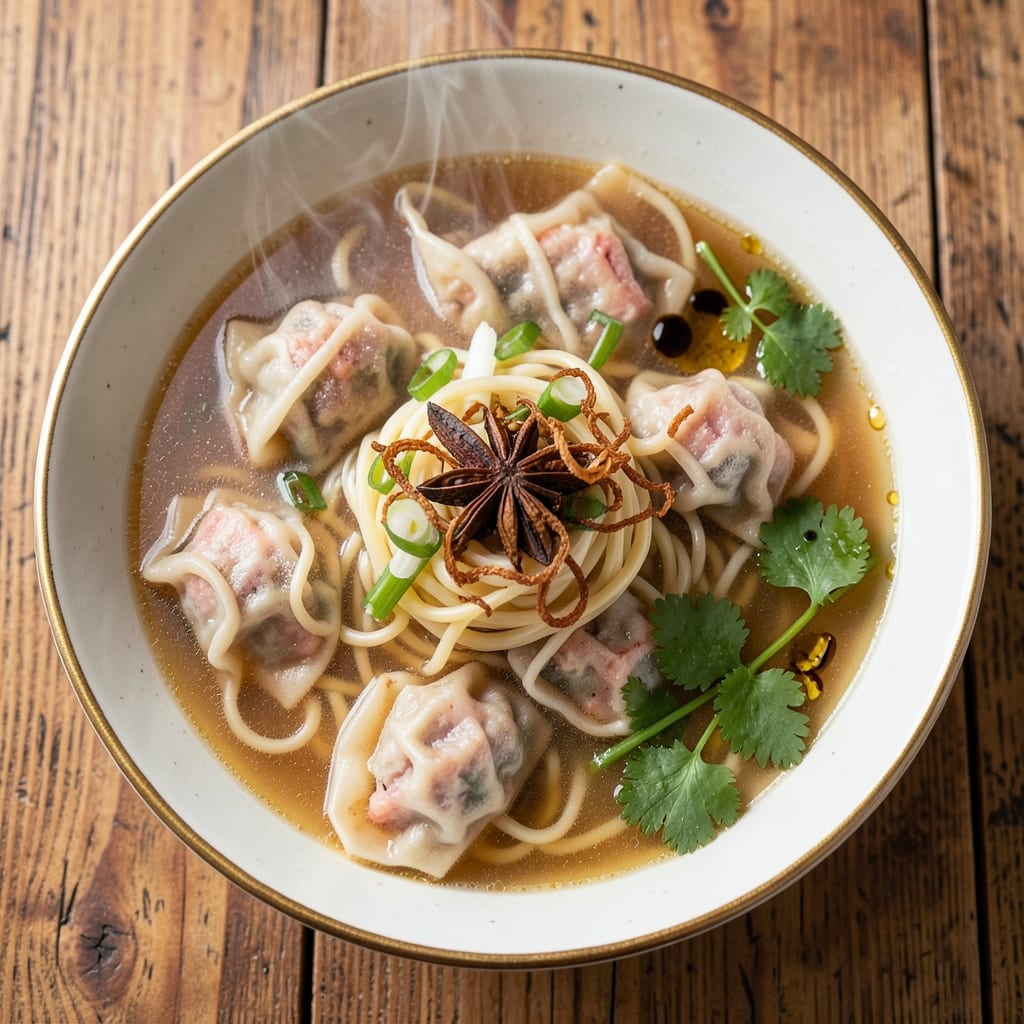
This authentic wonton noodle soup recipe brings the comforting essence of a bustling Shanghai street stall to your kitchen. The secret lies in a clear, aromatic broth that balances umami-rich pork stock with delicate aromatics, creating a foundation where each ingredient shines. I've perfected the technique of achieving that signature wonton-float clarity—no murky broth here, just a golden, slurp-worthy liquid that makes every spoonful satisfying.
What sets this recipe apart is the attention to traditional details: chewy egg noodles cooked just shy of perfection, homemade wontons (or high-quality store-bought) that puff slightly when submerged, and a lightly seasoned broth that lets the pork and aromatics speak. The process is methodical but rewarding—simmering ginger, star anise, and pork bones for hours to develop depth, then carefully balancing salt and MSG for that authentic restaurant-quality taste.
By the time you're ready to serve, you'll have a bowl that's visually stunning—clear broth with floating wontons and noodles arranged artfully, topped with fresh scallions and a drizzle of chili oil. The texture contrast alone—tender wontons, chewy noodles, silky broth—makes each bite irresistible. This isn't just soup; it's a multi-sensory experience that transports you to a dimly lit noodle house in Shanghai.
The beauty of this recipe lies in its versatility—serve it as a light lunch or hearty dinner, and adjust toppings to suit your taste. Whether you're making it for a cozy night in or a gathering of soup lovers, the key is patience and precision. Let's create something truly special.
Ingredients for authentic wonton noodle soup
Pantry staples meet fresh aromatics for this golden, slurp-worthy wonton noodle soup.
| Ingredient | Amount | Notes |
|---|---|---|
| Pork Bones 🍖 | 2 lb | Knuckle or marrow bones preferred |
| Fresh Ginger Root 🧅 | 3 inches | Peeled, sliced into 1/4-inch pieces |
| Star Anise Pods 🌿 | 4 whole | Whole, not ground |
| Cinnamon Sticks 🌿 | 2 whole | 2-inch pieces |
| Dried Fennel Seeds 🌶️ | 1 tsp | Lightly toasted |
| Cloves 🌿 | 6 whole | Whole, not ground |
| Garlic Cloves 🧄 | 8 cloves | Peeled, smashed |
| Dried Shiitake Mushrooms 🍄 | 4 whole | Rehydrated in hot water |
| Egg Noodles 🍜 | 8 oz | Fresh or dried, chewy variety |
| Wonton Wrappers 🥟 | 16 pieces | Homemade or high-quality store-bought |
| Ground Pork 🍖 | 1 lb | Lean, for wonton filling |
| Green Onions 🧅 | ¼ cup | Thinly sliced, for garnish |
| Chili Oil 🌶️ | 2 tbsp | For serving, optional |
| Light Soy Sauce 🍶 | 1 tbsp | For seasoning broth |
| MSG 🧂 | ½ tsp | Optional, for umami depth |
The pork bones are non-negotiable for that deep umami richness—knuckle or marrow bones from your butcher give the best flavor. Look for bones that still have some meat attached, as this adds to the broth's body. Costco or local Asian markets often carry these in bulk, which is perfect for making multiple batches. Fresh ginger is a must here—organic ginger from the produce section has more punch than pre-peeled versions. If you can't find fresh, double the amount of powdered ginger, but it won't be the same. The star anise and cinnamon sticks? Buy them whole—spice counters at Whole Foods or Asian grocery stores have them in bulk bins, which keeps them fresher longer.
No fresh ginger? Substitute with 1 tbsp of ground ginger, but taste as you go—it's stronger. Running low on shiitake mushrooms? Dried cremini mushrooms work in a pinch, but shiitake's earthy flavor is what makes this soup authentic. For the wonton wrappers, store-bought from an Asian market (like H Mart or 99 Ranch Market) are thinner and more delicate than what you'll find in regular grocery stores. If you're making homemade wrappers, use wheat flour and tapioca starch for that signature chew. The MSG is optional, but if you're aiming for that restaurant-quality umami, trust me on adding it—just a pinch makes a world of difference.
This broth tastes even better the next day—let it rest overnight if you can. Store it in the fridge for up to 5 days, or freeze portions for 3 months. The wonton wrappers and egg noodles keep well in the freezer too—just thaw before using. For a quick meal, pre-cook the broth and store it in the fridge, then assemble bowls as needed. The chili oil can be stored in the fridge for up to 2 weeks, but it's best fresh. If you're making this for a crowd, double the broth ingredients—it reheats beautifully and tastes even more flavorful after simmering again.
Why You'll Love This Recipe
- Pork Bones Simplicity: I swear by this shortcut—simmering pork bones with ginger and spices does all the heavy lifting. No chopping, no stress, just dump-and-go flavor that builds while you handle everything else.
- Warm Spice Magic: That star anise, cinnamon, and fennel? They turn this soup into a cozy hug in a bowl. The pork bones melt into rich broth while the spices layer in warmth that lingers long after the last bite.
- Leftover Luxury: Between us, this soup only gets better the next day. The broth deepens, the noodles soften just right, and I always save half for lunch—no guilt, just pure satisfaction.
- Budget-Friendly Feast: Pork bones stretch into gallons of broth, and those whole spices cost pennies. Honestly, it’s one of my go-to meals when I want to feed the family without breaking the bank.
Step-by-step instructions for authentic wonton noodle soup
Here's how to craft a rich, aromatic broth and delicate wontons that capture the soul of Chinese street food.
Build the Umami-Packed Broth
Start by rinsing the 2 lb pork bones thoroughly under cold water to remove any impurities. Place them in a large stockpot and cover with 12 cups cold water. Bring to a boil over medium-high heat, then immediately reduce to a simmer. Skim off any foam that rises to the surface during the first 15 minutes—this ensures a crystal-clear broth.
Add the 3 inches fresh ginger root, 4 whole star anise pods, 2 whole cinnamon sticks, 1 tsp dried fennel seeds, 6 whole cloves, and 8 cloves garlic cloves. Simmer uncovered for 3 hours to develop deep, complex flavors. The broth should reduce slightly and develop a rich, golden hue. If it boils over, reduce heat to maintain a gentle simmer.
Enhance the Broth with Shiitake Mushrooms
While the broth simmers, prepare the 4 whole dried shiitake mushrooms by soaking them in 1 cup hot water for 20 minutes until softened. Remove the mushrooms from the water and finely chop them. Strain the soaking liquid and add it to the broth pot.
Add the chopped mushrooms to the simmering broth and cook for another 30 minutes. This step infuses the broth with earthy umami that's characteristic of authentic wonton noodle soup. The mushrooms will break down completely, leaving no trace in the finished dish. Taste the broth and adjust seasoning with 1 tbsp light soy sauce and 0.5 tsp MSG if needed—this is where the authentic flavor comes together.
Prepare the Wonton Filling
In a bowl, combine the 1 lb ground pork with 2 tbsp finely chopped green onions and 1 tbsp light soy sauce. Mix gently with your hands until just combined—overworking the pork makes the filling tough. The mixture should be moist but not sticky. Divide into 16 equal portions, rolling each into a small log.
Place each pork log on a wonton wrapper and fold into a square package. I use the classic pleated style: fold one corner diagonally over the filling, then fold the opposite corner over that, and press gently to seal. The edges should be crisp and well-defined. Arrange the finished wontons on a plate and cover with a damp towel to prevent drying.
Cook the Noodles and Assemble
Bring a separate pot of water to a boil and cook the 8 oz egg noodles according to package instructions until al dente—typically 3-4 minutes for fresh noodles. Drain and set aside. The noodles should be chewy but still have a slight bite.
To serve, ladle 2 cups hot broth into each bowl, add 2 wontons, and top with 2 oz cooked noodles. Drizzle with 2 tbsp chili oil and garnish with 1 tbsp sliced green onions. The chili oil adds a perfect balance of heat and aroma that complements the rich broth. Serve immediately with chopsticks and a small bowl of broth for slurping—this is where the true experience of wonton noodle soup shines.
Pro Tips For Making Authentic Wonton Noodle Soup
- Blanch Pork Bones First: Skip the direct sear—drop whole pork bones in boiling water for 3 minutes to loosen grime and impurities. I learned this the hard way after my broth turned cloudy; this step guarantees a crystal-clear base. Rinse them well afterward, or you’ll regret it when your soup tastes metallic.
- Char the Spices: Toast star anise, cinnamon, and fennel seeds in a dry pan until they smell like a bakery—about 2 minutes on medium. My grandmother swore by this, and she was right: it deepens their flavor without bitterness. Just don’t walk away; burned spices ruin the whole dish.
- Simmer Low and Slow: After adding bones and ginger, reduce heat to the lowest setting possible—barely a simmer, not a boil. I used to rush this, and the broth always ended up murky. Give it 3–4 hours; patience is the thing that matters most here.
- Save the Ginger Juice: After slicing ginger for the broth, grate the remaining scraps and squeeze out the juice—about 2 tablespoons. Add it at the end to brighten the soup’s aroma. Sounds weird, but it works: the juice carries the ginger’s punch without overpowering.
Make-ahead tips for leftovers
Broth Prep Ahead
Make the broth 2 days ahead for maximum flavor development—it tastes even better after resting! Store it in an airtight container in the fridge for up to 5 days, or freeze in quart-sized portions for 3 months. When reheating, bring to a gentle simmer (never boil) to preserve clarity. I like to freeze broth in glass jars with 1-inch headspace to prevent ice crystals. 🥫
Wonton Assembly
Prepare wonton fillings 1 day ahead and store in an airtight container in the fridge for up to 24 hours. Keep wrappers between parchment paper to prevent sticking. For homemade wrappers, roll them out to 1/16-inch thickness and freeze unused portions between plastic wrap for up to 1 month. Thaw completely before using. 🥟
Noodle Prep
Cook noodles just before serving for the best texture, but you can par-cook them 1 day ahead—boil for 1 minute less than package instructions, then rinse in ice water to stop cooking. Store in an airtight container in the fridge for 2 days. Reheat in boiling water for 30 seconds before adding to bowls. Fresh egg noodles hold up better than dried when prepped ahead. 🍜
Chili Oil Storage
Make chili oil 3 days ahead and store in a small glass jar in the fridge. The flavors meld beautifully over time! Use within 2 weeks for best potency. For a quick version, mix 2 tbsp neutral oil with 1 tsp chili flakes and ½ tsp Sichuan peppercorns, then heat on low for 5 minutes. Let cool before storing. 🌶️
Complete Bowl Assembly
Assemble bowls right before serving to keep wontons from getting soggy. Store cooked wontons in broth (not water) in the fridge for 2 days—this keeps them tender. For meal prep, keep broth, wontons, and noodles separate until ready to serve. Reheat broth to 185°F, then add wontons and noodles just before serving. 💡
Freezer-Friendly Packs
Freeze individual portions in ziplock bags with 2 cups broth, 2 wontons, and 2 oz noodles per serving. Thaw overnight in the fridge, then reheat broth to 185°F and add wontons/noddes. This makes quick lunches—just add fresh scallions and chili oil when serving. Label bags with dates for easy tracking. ❄️
Nutrition facts
Frequently asked questions
Can I use store-bought wonton wrappers instead of homemade?
High-quality store-bought wrappers from Asian markets work perfectly—they're thinner and more delicate than regular wonton skins. Look for brands like H Mart or 99 Ranch Market for the best texture. Just be gentle when folding to avoid tearing. The key is using fresh wrappers (not dried), as they seal better and create that signature crisp edge when cooked.
How do I make the broth clearer without losing flavor?
Skimming foam during the first 15 minutes of simmering is crucial—use a fine-mesh skimmer to remove impurities. For extra clarity, strain the broth through a cheesecloth-lined sieve after simmering. Don't over-skim, as this removes some fat that contributes to richness. The secret is patience: simmering uncovered for 3 hours lets impurities rise to the surface naturally.
What's the best way to reheat leftovers without making the wontons soggy?
Reheat broth separately to 185°F (gentle simmer, never boil), then add wontons and noodles just before serving. For meal prep, store components separately: broth in an airtight container, wontons in broth (not water), and noodles in a separate container. Reheat noodles in boiling water for 30 seconds before assembling. This keeps everything at its best texture.
Can I substitute chicken or beef broth instead of pork bones?
While pork bones create the most authentic umami flavor, you can use high-quality chicken or beef stock as a base. For chicken, add 1 tbsp fish sauce and ½ tsp MSG to mimic pork's depth. For beef, include 1 tbsp soy sauce and 1 tsp oyster sauce. The broth will be lighter but still delicious—just expect slightly less richness. The key is balancing seasonings carefully.
Why do my wontons sink instead of float?
Sinking wontons usually mean they're either too heavy (overstuffed) or not sealed properly. Use 1 tsp filling per wonton (about 1 tbsp) and press edges firmly to trap air. For extra buoyancy, add a tiny pinch of baking soda to the filling (just ¼ tsp total)—it creates bubbles when cooked. Also ensure wrappers are fresh and properly folded with crisp edges.