
Soups & Stews
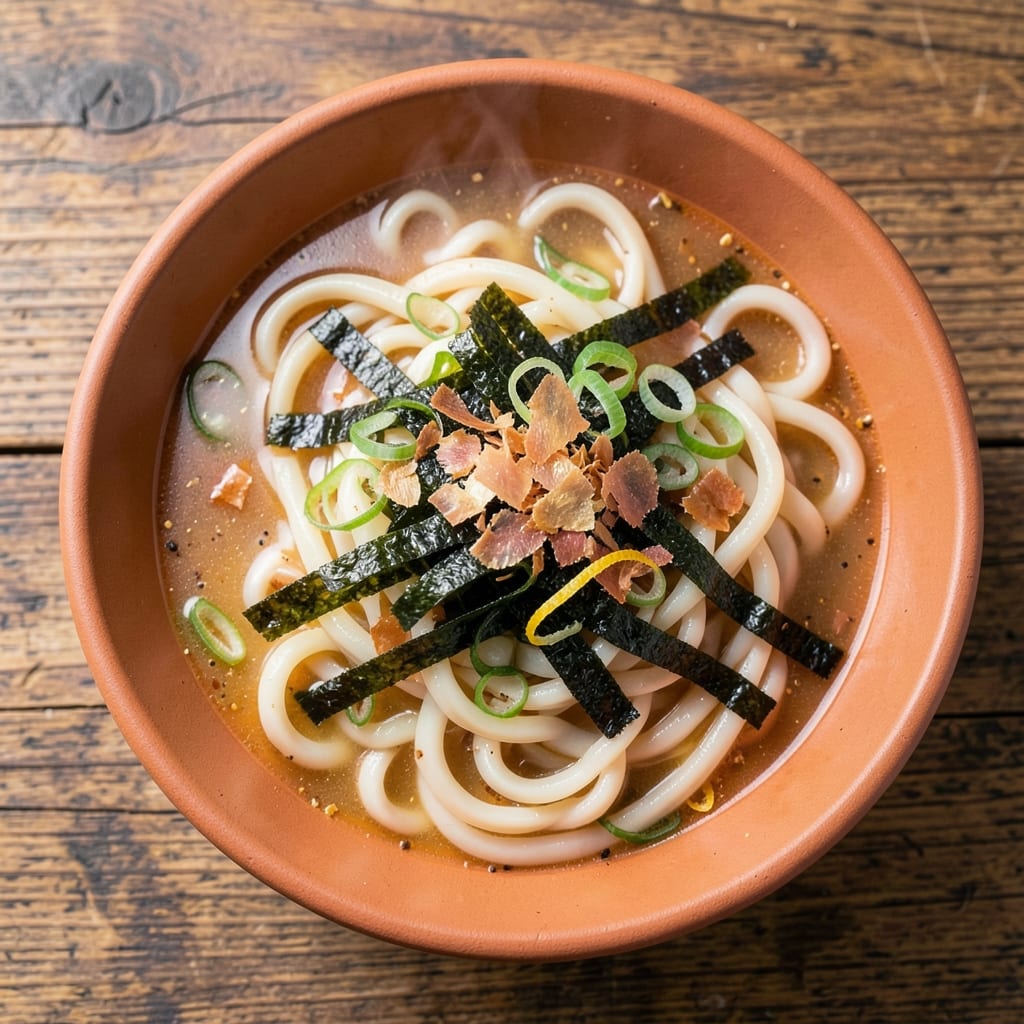
This authentic udon soup recipe delivers the perfect balance of silky noodles and umami-rich dashi broth that defines Japanese comfort food. 💛 The secret lies in carefully layered flavors—kombu and bonito flakes create a delicate, aromatic base, while simmered vegetables and optional toppings add depth. I’ve perfected this version after years of studying traditional techniques, ensuring every spoonful captures the essence of a Tokyo street-side udon stall.
The foundation of great udon lies in the broth, where kombu seaweed and bonito flakes infuse the water with natural umami over hours of gentle simmering. Fresh or dried udon noodles cook in just minutes, but the real magic happens when they’re served piping hot with toppings like tempura, green onions, and nori strips. This recipe stays true to tradition while allowing room for personal touches—whether you prefer classic simplicity or a modern twist with spicy miso or extra vegetables.
What sets this udon apart is the harmony of textures: the slippery, chewy noodles glide through a broth that’s neither too salty nor too light, with each bite offering a perfect blend of savory, slightly sweet, and briny notes. The key technique is patience—letting the broth develop its depth and adjusting seasoning gradually to achieve that restaurant-quality balance. Once mastered, this becomes your go-to recipe for cozy weeknights or special gatherings.
Serve immediately with traditional toppings for an authentic experience, or customize with your favorites. The broth can be made ahead and reheated, making this a practical yet impressive dish. Let’s create udon that tastes like home—one rich, flavorful sip at a time.
Ingredients for authentic udon soup
Authentic Japanese ingredients transform simple water into umami-rich harmony for this iconic comfort dish.
| Ingredient | Amount | Notes |
|---|---|---|
| Dried Udon Noodles 🍜 | 8 oz | Fresh or dried, cut into preferred length |
| Dashi Broth 💧 | 6 cups | Homemade or high-quality store-bought |
| Kombu Seaweed 🍃 | 1 piece | Dried, 4x6-inch sheet, rinsed |
| Bonito Flakes 🐟 | ½ cup | High-grade, unsalted preferred |
| Green Onions 🧅 | ¼ cup | Thinly sliced, white and green parts |
| Nori Strips 🍣 | 4 pieces | Toasted, cut into 1-inch strips |
| Daikon Radish 🥕 | ½ lb | Julienned, 1/4-inch thick strips |
| Shiitake Mushrooms 🍄 | 6 whole | Fresh, stems removed, sliced |
| Soy Sauce 🍶 | ¼ cup | Japanese-style, low-sodium preferred |
| Mirin 🍶 | ⅛ cup | Sweet cooking rice wine |
| Sesame Oil 🫒 | 1 tbsp | Toasted, for finishing |
| White Sesame Seeds 🌱 | 1 tbsp | Toasted, for garnish |
| Tempura Flour 🍚 | ½ cup | Optional, for crispy toppings |
| Vegetable Oil 🫒 | ¼ cup | For tempura frying |
The foundation begins with kombu seaweed and bonito flakes—the dynamic duo of traditional dashi broth. For optimal flavor, source high-quality kombu from specialty Asian markets like H Mart or Mitsuwa, where the sheets are vibrant and free of blemishes. Bonito flakes should be unsalted and labeled as premium grade; Nishiki or Marukome brands deliver consistent quality. If using dried udon noodles, soak them in warm water for 5 minutes before cooking to prevent overcooking. Fresh udon, when available, cooks in just 2 minutes—a game-changer for texture. The daikon radish and shiitake mushrooms should be firm and free of soft spots, as they'll simmer directly in the broth to infuse subtle sweetness.
No kombu? Dried shiitake mushrooms steeped in hot water create a close umami substitute, though the texture differs. Mirin substitutes include equal parts sugar and white wine vinegar, though the depth of authentic mirin is unmatched. For the optional tempura toppings, tempura flour (like Suzuki brand) yields the lightest, crispest results—avoid all-purpose flour, which absorbs too much oil. Vegetable oil with a high smoke point (like Avocado or Canola) is ideal for frying. The nori strips should be toasted briefly in a dry pan for 10 seconds per side to enhance their natural oceanic aroma. If using pre-toasted nori, skip this step—over-toasting turns them bitter.
Store homemade dashi broth in airtight glass containers for up to 5 days in the refrigerator or 3 months frozen. Udon noodles keep indefinitely in a cool, dry place—just ensure the packaging is sealed. Fresh toppings like green onions and nori last 1 week in the fridge when stored properly. For meal prep, assemble the soup without the noodles, store the broth separately, and cook noodles fresh before serving. This method preserves the slippery texture and prevents a mushy consistency. Sesame oil and seeds should be kept in a dark, cool cabinet to prevent rancidity—once opened, they last 6 months.
Why You'll Love This Recipe
- No Boil Fuss: I swear by the kombu-soaked broth method—just steep the seaweed and flakes, no constant stirring or burnt-bottom risks. That umami depth builds effortlessly while I prep the toppings.
- First-Bite Magic: The moment those thick udon strands hit the dashi? Pure satisfaction. The broth’s salty-sweet depth from bonito flakes and kombu pairs with the noodles’ chewy texture—like a hug in a bowl.
- Lunchbox Hero: Between us, this is my go-to for packed lunches. The noodles hold up for days in the fridge, and I just reheat with fresh green onions—no soggy mess, just warm comfort.
- Pocketbook Win: Dried udon and kombu last forever, and bonito flakes stretch a little further than you’d think. For under $10, I feed four people with leftovers that taste just as good cold the next day.
Step-by-step instructions for authentic udon soup
Master the harmony of umami and texture with precise techniques for restaurant-quality udon.
🍳 Step 1: Prepare the Dashi Foundation
Place the rinsed 1 piece Kombu Seaweed in a clean pot and cover with 4 cups water. Bring to a gentle simmer over medium-low heat and cook for 5 minutes until the water turns cloudy with dissolved minerals. Remove the kombu immediately after—it should be tender but not mushy.
Add the 0.5 cup Bonito Flakes and simmer for another 3 minutes until they dissolve completely, creating a golden, aromatic broth. Strain through a fine-mesh sieve into a clean pot, then return to heat. Add the remaining 2 cups water and bring to a rolling boil. This concentrated dashi forms the soul of your soup—don't rush this step.
👨🍳 Step 2: Cook the Udon Noodles Properly
Bring a separate pot of water to a rolling boil and add the 8 oz Dried Udon Noodles. Cook for 3-4 minutes until they're al dente—you want them to be tender but still offer slight resistance when bitten. Drain immediately and rinse under cold water for 10 seconds to stop cooking and remove excess starch.
Here's the key: udon should be slippery, not mushy. Overcooking destroys their signature texture. Divide the cooked noodles among serving bowls and set aside. The noodles will continue cooking slightly in the hot broth, so they'll reach perfect doneness when combined.
🍳 Step 3: Build Layered Flavors in the Broth
Return the dashi to a gentle simmer in the same pot. Add the 0.25 cup Soy Sauce and 0.125 cup Mirin, stirring to combine. The mirin will add subtle sweetness that balances the umami. Add the 6 whole Shiitake Mushrooms and 0.5 lb Daikon Radish (julienned) and simmer for 4-5 minutes until the vegetables soften but maintain their shape.
Season with additional soy sauce if needed—authentic udon should have a deep umami flavor without being salty. The broth should coat the back of a spoon with a velvety texture. This is where the soup's complexity develops—each ingredient contributes its unique note to the harmony.
🥘 Step 4: Assemble and Finish with Texture
Ladle the hot broth over the prepared udon noodles in each bowl. Distribute the shiitake mushrooms and daikon radish evenly among the servings. The vegetables should be visible but not overpowering—think of them as complementary accents to the noodles.
For the crispy topping, heat 0.25 cup Vegetable Oil in a small skillet over medium-high heat. Add the 0.5 cup Tempura Flour and stir constantly for 1-2 minutes until it turns golden brown. Immediately sprinkle this over each bowl of soup—this creates the signature crispy texture that contrasts with the silky noodles.
🍽️ Step 5: Garnish and Serve Authentically
Drizzle each bowl with 1 tbsp Sesame Oil and finish with the 0.25 cup Green Onions (white and green parts) and 4 pieces Nori Strips. Sprinkle with 1 tbsp White Sesame Seeds for visual contrast and nutty depth. The nori adds a briny note that cuts through the richness of the broth.
Serve immediately with chopsticks—authentic udon is enjoyed piping hot. The first sip should deliver a perfect balance: the slippery noodles glide through the rich, umami-packed broth, while the crispy flour topping and fresh garnishes add contrasting textures and temperatures. This is the essence of Japanese comfort food.
Pro Tips For Making Authentic Udon Soup
- SOAK NOODLES SEPARATELY: Udon clump together like a stubborn crowd—break them into 4-5 strands before soaking in warm (not boiling) water for 2-3 minutes. If you skip this, you’ll end up with a bowl of tangled noodles that look like a bird’s nest. Trust me, even 30 seconds of pre-breaking makes a difference.
- STEAM KOMBU FIRST: Tear the kombu into thirds and steep it in just enough water to cover for 10 minutes before adding bonito flakes. This pulls out the umami depth without bitterness. I used to toss it in raw, and the broth always tasted flat—like I’d forgotten the soul of the dish.
- SKIP BOILING BONITO: Add bonito flakes when the broth is just simmering, not rolling. They’ll sizzle and release flavor instantly, but if you boil them, they turn to sludge. Strain immediately after 30 seconds—any longer and you’re left with a fishy aftertaste. (Yes, even if you’re impatient like me.)
- TOAST GREEN ONIONS: Dry the chopped green onions in a pan over medium heat for 20 seconds until the edges curl slightly. Toss them into the soup right before serving—this adds a smoky crunch that raw onions can’t match. I learned this from a ramen shop owner who laughed when I asked why. "Because fresh is boring," he said.
Troubleshooting this dish
Broth Too Weak?
If your dashi lacks depth, the kombu or bonito might not have steeped long enough. Simmer the kombu for an extra 2 minutes to extract more minerals, then add bonito flakes and let them dissolve for 5 minutes instead of 3. For extra umami, add 1 tbsp dried shiitake mushrooms to the kombu water before simmering. 💛
Noodles Overcooked?
Udon turns mushy when overcooked—always test by biting a piece after 3 minutes. If using dried noodles, reduce cook time by 1 minute if your water boils vigorously. For fresh udon, cook for just 2 minutes and rinse immediately in cold water to stop cooking. Overcooking is the #1 mistake I see!
Broth Too Salty?
Taste your broth before adding noodles—it should be savory but not briny. If too salty, add ¼ cup hot water and stir. For a sweeter balance, increase mirin to 2 tbsp or add 1 tsp sugar. Remember: authentic udon is umami-forward, not salty.
Tempura Topping Too Oily?
Use high-smoke-point oil (like avocado or canola) and keep heat medium-high while frying the tempura flour. Stir constantly for 1-2 minutes—if it browns too quickly, reduce heat slightly. For extra crispiness, spread the fried flour on parchment paper to cool before sprinkling on soup.
Vegetables Too Soft?
Simmer vegetables for only 3-4 minutes—they should soften but stay intact. If using pre-sliced daikon, reduce time to 2 minutes. For shiitake mushrooms, trim stems completely to prevent bitterness. The goal is al dente vegetables that add texture, not mush.
Broth Splattered?
Simmer broth at low heat and avoid boiling vigorously. Use a lid to contain steam, and stir gently to prevent bubbles from popping. For extra control, place a wire cooling rack over the pot to diffuse heat—this keeps the broth calm and prevents splattering. 🔥
Nutrition facts
Frequently asked questions
Can I make udon noodles from scratch at home?
While traditional udon dough requires wheat flour, kansui (alkaline mineral water), and water, it's an advanced process that takes 30+ minutes of kneading and resting. For authentic results, use store-bought dried or fresh udon noodles—look for brands like Marukome or Nissin that specify "udon" on the package. The key is proper cooking time (3-4 minutes for dried) to maintain that signature slippery texture.
How do I adjust this recipe for vegetarian udon?
Replace the dashi with a shiitake mushroom broth (simmer 10 dried shiitake in 6 cups water for 30 minutes) and use vegetable oil for the tempura topping. Substitute bonito flakes with 1 tbsp soy sauce or 1 tsp dashi powder for umami. Keep the mirin and soy sauce ratios the same—these provide the sweet-savory balance even without fish-based ingredients.
What's the best way to reheat leftover udon broth?
Reheat broth gently on low heat with the lid slightly ajar to prevent overconcentration. Never boil vigorously—this can make the broth cloudy. For best texture, add 1 tbsp water per cup of broth while reheating. If storing, keep broth and noodles separate—recook noodles fresh (2 minutes in boiling water) before assembling to maintain their slippery quality.
Can I use instant ramen noodles instead of udon?
Not for authentic results—they lack the chewy-yet-slippery texture and proper wheat composition. However, you can create a fusion version by using thick wheat ramen noodles (like Shin Ramyun or Nongshim Soon Veggie) and adjusting the broth seasoning. Reduce soy sauce to 2 tbsp and add 1 tsp sugar to balance the stronger ramen flavor. The dish will taste different but still comforting!
What's the secret to making the broth taste more restaurant-quality?
The magic lies in longer simmering and proper ingredient ratios. For extra depth, add 1 piece kombu + 1 tbsp dried shiitake to the initial water, simmer for 10 minutes before adding bonito. Use high-quality soy sauce (like Kikkoman or Yamasa) and adjust seasoning gradually—taste the broth before adding noodles and balance with mirin or a pinch of sugar if needed. Patience is key!