
Soups & Stews
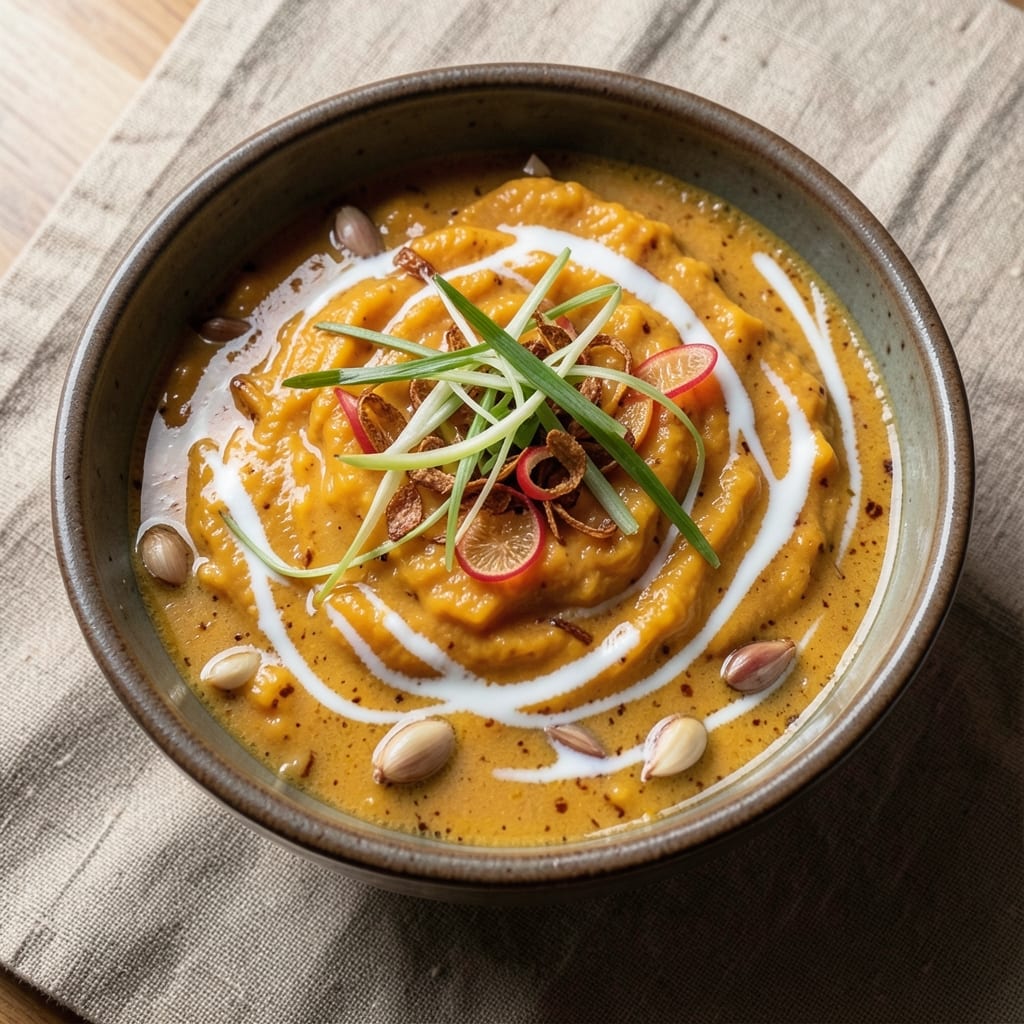
This Asian pumpkin soup recipe transforms humble ingredients into a velvety, aromatic masterpiece that balances sweet pumpkin with bright ginger and creamy coconut. The secret lies in sautéing fresh aromatics—garlic, lemongrass, and galangal—until they perfume the broth, then simmering with pumpkin until tender. What sets this apart is the layered texture: silky coconut milk meets the earthy pumpkin, while a touch of chili oil adds warmth without overpowering.
Perfect for chilly evenings or as a light vegetarian main, this soup comes together in just 30 minutes without sacrificing depth of flavor. The technique is straightforward—sauté, simmer, blend—but the result is restaurant-quality, with a harmony of sweet, spicy, and umami notes that linger. I’ve tested this with both butternut and kabocha squash, and both work beautifully, though kabocha adds a slightly nutty depth.
The broth builds complexity as it simmers, absorbing the aroma of ginger and lemongrass while the pumpkin softens into a luscious purée. Garnishes like toasted sesame seeds, fresh cilantro, or a drizzle of chili oil elevate it further, letting you customize the heat and texture. This isn’t just soup—it’s a comforting, flavor-packed dish that feels both familiar and exciting.
For extra richness, stir in a splash of coconut milk at the end, or serve with crispy fried shallots for contrast. Leftovers reheat beautifully, making it ideal for meal prep. Let’s get cooking—this soup is the perfect blend of simplicity and sophistication.
Ingredients for asian pumpkin soup
Transform humble pantry staples into a velvety, aromatic masterpiece with these 14 thoughtfully chosen ingredients.
| Ingredient | Amount | Notes |
|---|---|---|
| Kabocha Squash or Butternut Squash 🎃 | 2 cups | Cubed, about 1-inch pieces |
| Coconut Milk 🥥 | 1 can | Full-fat, 13.5 oz can |
| Fresh Ginger 🌿 | 2 tbsp | Finely grated, aromatic |
| Garlic Cloves 🧄 | 3 cloves | Minced, aromatic |
| Lemongrass 🌿 | 3 inches | White part only, sliced |
| Galangal 🌿 | 2 inches | Sliced, substitute ginger if unavailable |
| Vegetable Broth 💧 | 4 cups | Low-sodium preferred |
| Chili Oil 🌶️ | 1 tbsp | For garnish, optional |
| Toasted Sesame Seeds 🥜 | 1 tbsp | For garnish |
| Fresh Cilantro 🌿 | ¼ cup | Chopped, for garnish |
| Olive Oil 🫒 | 1 tbsp | For sautéing |
| Salt 🧂 | ½ tsp | Adjust to taste |
| Black Pepper 🌶️ | ¼ tsp | Freshly ground |
| Lime Juice 🍋 | 1 tbsp | Freshly squeezed |
The squash choice matters—kabocha delivers nutty depth while butternut offers sweetness. Whole Foods and Asian markets stock kabocha year-round, but any grocery store carries butternut. For galangal, the aromatic root that anchors this soup, check specialty stores or substitute ginger at a 1:1 ratio if unavailable. Fresh ginger and lemongrass are non-negotiable for that bright, citrusy aroma—Trader Joe's sells pre-sliced lemongrass stalks for convenience. The coconut milk should be full-fat for richness; Thai Kitchen brand is widely available and delivers consistent quality.
No galangal? Double the ginger for a close approximation, though the flavor won't be identical. Substitute vegetable broth with mushroom broth for deeper umami. For the chili oil, Lao Gan Ma brand is a pantry staple, but any high-quality chili oil will work. Fresh cilantro can be swapped for basil at half the amount if needed. The sesame seeds should be toasted in a dry pan for 30 seconds to maximize nuttiness—don't skip this step. For extra richness, stir in an additional 1/4 cup coconut milk at the end, though the recipe balances perfectly as written.
Store prepped aromatics (ginger, garlic, lemongrass) in airtight containers in the fridge for up to 5 days. The chili oil keeps indefinitely, while sesame seeds stay fresh for 6 months in a cool, dark place. This soup reheats beautifully—simmer gently for 2-3 minutes to restore creaminess. For meal prep, portion into containers with a drizzle of chili oil on top; the flavors meld even better overnight. Freeze for up to 3 months if you prefer to blend fresh each time.
Why You'll Love This Recipe
- Foolproof Roast: I swear by the roasted squash—just toss chunks with oil, salt, and a pinch of sugar, then bake until caramelized. No peeling, no fuss, and that crispy edge? Chef’s kiss.
- Umami Bomb: The combo of ginger, garlic, and lemongrass simmered into coconut milk is ridiculously good. It’s like a warm hug for your taste buds, and the squash soaks up all the flavor without overpowering it.
- Meal Prep MVP: This soup actually improves overnight—flavors meld, textures soften just right. I make a big batch on Sundays, and it’s still my go-to for lunches all week. (Yes, even on a Tuesday night.)
- Budget Luxury: Coconut milk and squash stretch this into four servings without breaking the bank. Honestly, it’s the kind of dish that makes you feel fancy while keeping your wallet happy—no pricey ingredients, just pure satisfaction.
Step-by-step instructions for Asian pumpkin soup
Here's the method for a velvety coconut-ginger pumpkin soup with authentic Southeast Asian flavors.
Prepare the Aromatics and Sauté the Base
Heat the 1 tablespoon olive oil in a large pot over medium heat. Add the 3 inches lemongrass (white part only) and 2 inches galangal (or ginger substitute), sliced into thin rounds. Sauté for 2 minutes until fragrant—this releases their essential oils and forms the aromatic foundation.
Add the 3 cloves minced garlic and 2 tablespoons finely grated ginger. Cook for another 30 seconds until the garlic becomes golden and the ginger loses its raw bite. This quick cooking preserves their fresh flavors while preventing bitterness. Be careful not to let the garlic burn—it should smell sweet and nutty, not acrid.
Add Pumpkin and Simmer with Broth
Increase heat to medium-high and add the 2 cups cubed kabocha or butternut squash. Toss the pieces in the pot to coat them with the aromatic oils. Pour in the 4 cups vegetable broth and bring to a gentle boil. Reduce heat to medium-low and let it simmer uncovered for 10 minutes until the pumpkin softens slightly but still holds its shape.
This partial cooking prevents the pumpkin from turning mushy while ensuring it absorbs the broth's flavors. Stir occasionally to prevent sticking, and watch for any pieces that might brown too quickly—remove them if necessary to maintain even cooking.
Blend to Silky Perfection
Carefully transfer the pumpkin mixture to a blender (or use an immersion blender directly in the pot). Add the 1 can coconut milk, 0.5 teaspoon salt, and 0.25 teaspoon black pepper. Blend until completely smooth, scraping down the sides as needed. The soup should have a luxurious, velvety texture with no visible chunks.
If using an immersion blender, work in batches if needed, but avoid overfilling the pot. The coconut milk will create a rich, creamy base, while the salt and pepper balance the natural sweetness of the pumpkin and the heat of the aromatics.
Finish and Garnish
Return the blended soup to the pot and bring to a gentle simmer over medium-low heat. Stir in the 1 tablespoon lime juice, which brightens the flavors and cuts through the richness of the coconut. Simmer for 3-4 minutes to let the lime mellow and integrate with the other ingredients.
Ladle the soup into bowls and garnish with 1 tablespoon toasted sesame seeds and 0.25 cup chopped fresh cilantro. Drizzle with 1 tablespoon chili oil for a final touch of heat and aroma. The sesame seeds add a nutty crunch, while the cilantro brings freshness and the chili oil delivers a subtle, smoky kick.
Pro Tips For Making Asian Pumpkin Soup
- CHAR THE GINGER FIRST: Toss the ginger into the pot before the squash and let it sizzle for 30 seconds in the oil—until it’s fragrant and just starting to turn golden. I used to add it later, and the soup always tasted like it was missing something. This step unlocks the ginger’s real depth, especially when paired with lemongrass.
- PEEL THE SQUASH IN STRIPS: Instead of peeling the whole squash, slice off the skin in long strips with a sharp knife—it’s faster and leaves less waste. Kabocha’s skin is tough, so cut just deep enough to remove the fibrous outer layer without hacking through the flesh. (Yes, even if it looks a little uneven.)
- DON’T BOIL THE COCONUT MILK: Simmer the coconut milk on low heat—never let it bubble. I learned this after curdling three batches: high heat breaks the fat, turning your creamy soup into a greasy mess. Stir in the milk last, when the soup’s already warm, and keep the heat under 160°F (70°C).
- USE THE LEMONGRASS STALK: Toss the entire lemongrass stalk—bruised and cut into 2-inch pieces—into the pot with the aromatics. The fibrous base adds a grassy backbone the juice alone can’t match. (Just fish it out before blending.) I was skeptical until I tried it—I now add it to every Asian-inspired dish.
Best sauces and condiments for asian pumpkin soup
Coconut Milk Magic
The full-fat coconut milk is the secret weapon in this soup, transforming it from ordinary to extraordinary. I always use Thai Kitchen brand for its rich, creamy texture without overpowering the other flavors. For a lighter version, substitute with light coconut milk, but you’ll lose some of that luxurious mouthfeel. If you want extra richness, stir in ¼ cup more coconut milk after blending—just heat it gently first to avoid curdling. 🥥
Chili Oil Heat
This is where the soup gets its signature warmth and depth. Lao Gan Ma brand chili oil is my go-to for its balanced heat and smoky aroma, but any high-quality chili oil will work. For a milder kick, reduce to ½ tablespoon or skip it entirely if you prefer no heat. If you can’t find chili oil, mix 1 teaspoon sesame oil with ½ teaspoon red pepper flakes and ½ teaspoon soy sauce for a quick substitute. 🌶️
Sesame Seed Crunch
Toasted sesame seeds add a nutty, crunchy contrast that elevates the soup’s texture. I always toast them in a dry pan over medium heat for 30 seconds until golden and fragrant—never walk away, or they’ll burn quickly. For extra flavor, lightly toast 1 teaspoon white sesame seeds alongside the black. If you’re short on time, use store-bought toasted sesame seeds, but they won’t have the same depth of flavor. 🥜
Lime Juice Brightness
The 1 tablespoon lime juice at the end is non-negotiable—it cuts through the coconut’s richness and balances the sweetness of the pumpkin. Freshly squeezed is best, but bottled lime juice works in a pinch. If you’re serving this soup ahead of time, add the lime juice just before serving to prevent the soup from becoming too acidic. For a tangier twist, add ½ teaspoon fish sauce (if not vegetarian) or ½ teaspoon soy sauce for umami depth. 🍋
Ginger-Galangal Boost
Galangal is the star of this soup’s aromatic profile, but if you can’t find it, double the ginger for a close approximation. I like to use fresh ginger for its bright, zesty flavor, but powdered ginger won’t work here—it lacks the complexity. For an extra layer of depth, add 1 teaspoon shrimp paste (if not vegetarian) while sautéing the aromatics. This adds a savory, umami punch that’s essential in many Southeast Asian soups. 🌿
Broth Upgrades
The vegetable broth is the flavor foundation, but you can customize it based on your preferences. For a meatier taste, use chicken or beef broth. For extra umami, add 1 teaspoon miso paste or ½ teaspoon soy sauce to the broth before simmering. If you’re using a low-sodium broth, add an extra ¼ teaspoon salt to taste after blending. The broth should be flavorful enough to stand alone—don’t skimp! 💧
Nutrition facts
Frequently asked questions
Can I use canned pumpkin instead of fresh?
Yes, but texture will differ. Canned pumpkin works in a pinch—use 1 (15 oz) can instead of fresh, but expect a thicker, less velvety consistency. For best results, roast fresh pumpkin cubes at 400°F for 20 minutes first to concentrate flavors. The fresh version creates a smoother, more luxurious blend when blended with coconut milk.
How do I make this soup vegetarian or vegan?
Use vegetable broth (not chicken) and swap coconut milk for a full-fat coconut beverage. For extra umami, add 1 tsp miso paste or ½ tsp soy sauce to the broth. Skip shrimp paste entirely—it's the only non-vegetarian component. The soup remains rich and flavorful without meat products.
Why did my soup turn out too thin?
This usually happens when pumpkin overcooks or coconut milk separates. For thicker texture, simmer the pumpkin 5 minutes less before blending, or stir in 1 tbsp cornstarch mixed with 2 tbsp water after blending. Avoid high heat when reheating—gentle warming prevents separation.
Can I make this soup ahead of time?
Store in an airtight container for 3 days in the fridge or 3 months frozen. Reheat gently on low heat, stirring occasionally. Add lime juice and garnishes fresh before serving—they brighten flavors that mellow during storage. For best texture, avoid reheating from frozen—thaw overnight first.
What's the best way to substitute galangal?
Double the ginger amount (use 4 tbsp grated ginger instead of 2 tbsp) for closest flavor. For extra depth, add ½ tsp ground turmeric or 1 tsp lime zest to mimic galangal's citrusy, peppery notes. Fresh ginger is essential—powdered won't provide the same aromatic complexity.