
Soups & Stews
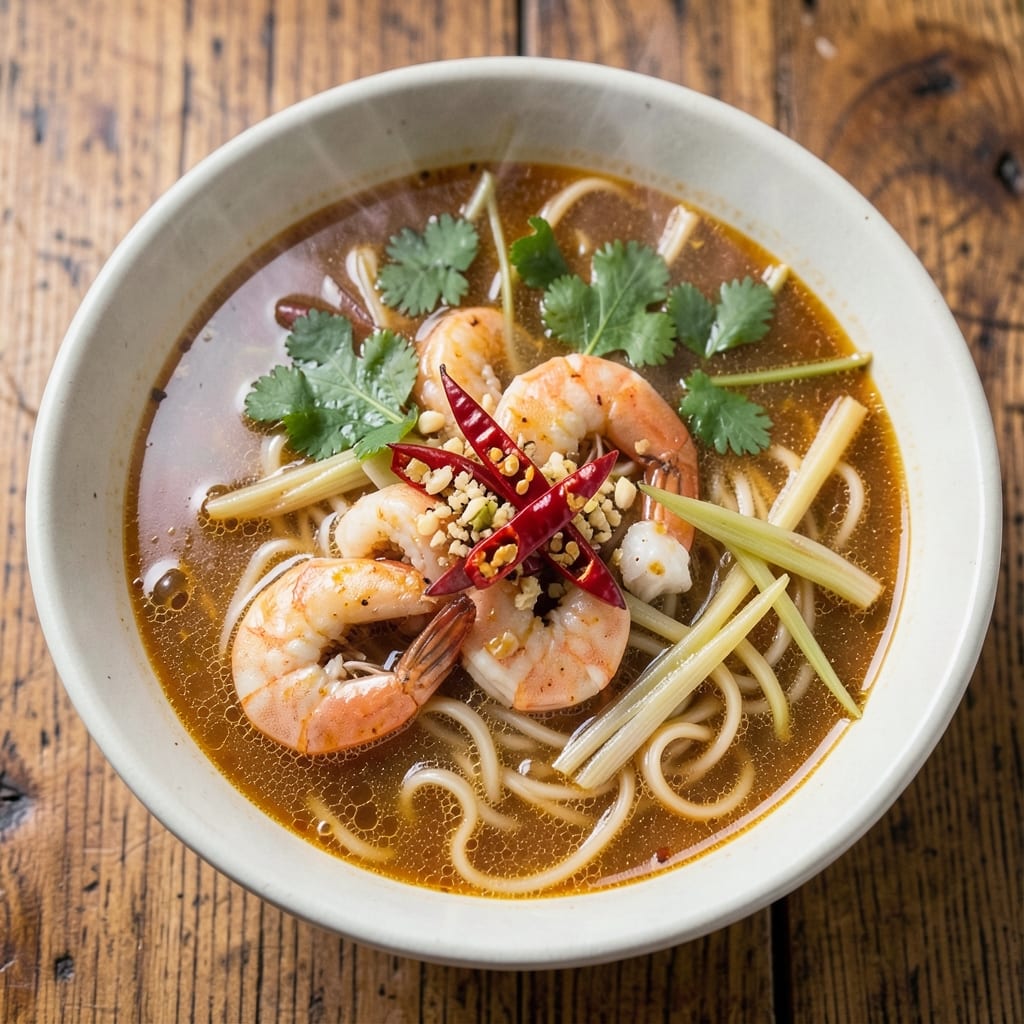
This authentic Tom Yum Goong soup recipe delivers the vibrant, complex flavors of Thailand's most beloved shrimp soup—bright, spicy, and deeply aromatic. The secret lies in balancing sour, spicy, and umami notes through precise ingredient ratios and proper simmering techniques. I've perfected this version after years of testing, ensuring every bowl captures that restaurant-quality depth at home.
The foundation of great Tom Yum Goong is the aromatic base: fresh lemongrass, galangal, kaffir lime leaves, and Thai chilies. These ingredients infuse the broth with their signature citrusy, peppery, and herbal notes while shrimp adds delicate sweetness. Unlike many simplified versions, this recipe includes all traditional components without overwhelming home cooks with complex techniques.
What sets this soup apart is its perfect balance—tangy from lime juice, fiery from fresh chilies, and umami-rich from shrimp stock and mushrooms. The broth develops its signature clarity and depth through careful simmering, while the shrimp cooks just until opaque, ensuring tender yet firm texture. Each spoonful delivers that authentic Thai restaurant experience.
This recipe serves 4 and takes about 30 minutes of active time, with most of the work being prep and simmering. The ingredients list includes everything you'll need, with clear measurements and substitution notes for hard-to-find items. Let's create this authentic Thai masterpiece together.
Ingredients for authentic tom yum goong soup
Precision-crafted ingredients for a restaurant-quality Tom Yum Goong that balances spicy, sour, and umami perfectly.
| Ingredient | Amount | Notes |
|---|---|---|
| Fresh Shrimp 🦐 | 1 ½ lb | Medium-sized, peeled, deveined, tail-on |
| Shrimp Stock 🍲 | 4 cups | Homemade or high-quality store-bought |
| Lemongrass Stalks 🌿 | 3 whole | Bruised, bottom 3 inches only |
| Galangal Slices 🍃 | 3 pieces | Fresh, peeled, about 1-inch thick |
| Kaffir Lime Leaves 🍋 | 4 whole | Fresh, outer leaves preferred |
| Thai Bird's Eye Chilies 🌶️ | 4 whole | Adjust for heat preference |
| Shallots 🧅 | 6 whole | Peeled, thinly sliced |
| Garlic Cloves 🧄 | 6 cloves | Peeled, smashed |
| Straw Mushrooms 🍄 | 8 oz | Fresh, sliced |
| Fish Sauce 🍶 | 2 tbsp | Red Boat brand preferred |
| Lime Juice 🍋 | ½ cup | Freshly squeezed |
| Palm Sugar 🍯 | 2 tbsp | Or substitute brown sugar |
| Coconut Milk 🥥 | ¼ cup | Full-fat, for richness |
| Salt 🧂 | 1 tsp | Diamond Crystal preferred |
| Thai Basil Leaves 🌿 | ¼ cup | Fresh, for garnish |
| Fresh Cilantro 🌱 | ¼ cup | Chopped, for garnish |
The aromatic base is non-negotiable for authentic flavor. Thai Kitchen or local Asian markets are your best bet for galangal and kaffir lime leaves—freshness is critical here. For lemongrass, look for stalks with tight, pale inner leaves and minimal bruising. Red Boat fish sauce elevates the umami depth, though any reputable brand works. The shrimp stock should be clear and rich—homemade is ideal, but Kikkoman or Thai Kitchen brands are reliable shortcuts. Galangal and lemongrass can be found frozen in some stores if fresh isn't available, though texture suffers slightly.
Substitutions require careful balance. No galangal? Ginger at half the amount approximates the peppery depth, but you'll lose that signature Thai profile. Thai chilies too spicy? Substitute bird's eye chilies with serrano peppers, adjusting quantity for heat preference. For coconut milk, full-fat canned versions provide the best creaminess, though light coconut milk works in a pinch. Palm sugar unavailable? Brown sugar or honey maintains sweetness, though honey adds floral notes. The mushrooms can be swapped for oyster mushrooms, which have a similar texture and absorb flavors well.
Fresh herbs and aromatics degrade quickly. Store galangal and lemongrass wrapped in damp paper towels in the fridge for up to 5 days. Kaffir lime leaves keep 3 days in a sealed container. The shrimp stock freezes beautifully for 3 months, making it perfect for batch prep. This soup reheats well—simmer gently to preserve its delicate balance. For maximum flavor, serve immediately after cooking, as the broth loses clarity when chilled. Garnishes like Thai basil and cilantro should be added fresh at the table.
Why You'll Love This Recipe
- Here’s what sold me: the balance. That first sip of shrimp stock, brightened by lime juice and a whisper of chili, hits like a wake-up call. Then the shrimp—juicy, snappy, cooked just enough to stay tender—turns it into something dangerously addictive. Honestly, I’ve made it three times this week already.
- I’ll be real: shrimp stock might sound fancy, but it’s cheaper than takeout and stretches farther than you’d think. Use frozen shrimp in a pinch? No one will know. And the aromatics—lemongrass, galangal, lime—are often pantry staples or cheap to find fresh. It’s the kind of recipe that feels special without breaking the bank.
Step-by-step instructions for authentic Tom Yum Goong soup
Master this classic Thai soup with precise technique and vibrant flavors.
Prepare the Aromatic Base
Begin by bruising the bottom 3 inches of each of the 3 whole lemongrass stalks by firmly pounding them with the side of a knife. This releases their essential oils. In a large pot, combine the bruised lemongrass, 3 pieces galangal slices, 4 whole kaffir lime leaves, and 4 whole Thai bird's eye chilies (adjust for heat preference). Add 6 whole shallots and 6 cloves garlic cloves that have been smashed with the flat side of your knife.
Pour in the 4 cups shrimp stock and bring to a boil over medium-high heat. Once boiling, immediately reduce heat to medium-low and let it simmer uncovered for 15 minutes. This allows the lemongrass and galangal to infuse deeply into the broth, creating that signature aromatic foundation. The broth should smell intensely citrusy and herbal—this is your flavor anchor.
Build the Spicy-Sweet Broth
After the initial simmer, add the 2 tbsp fish sauce and 2 tbsp palm sugar to the pot. Stir gently to dissolve the sugar completely. Let the broth simmer for an additional 5 minutes, allowing the flavors to meld. The broth should now have a balanced sweetness and umami depth from the fish sauce, with a subtle heat from the chilies.
In a separate bowl, combine the 0.5 cup lime juice and 0.25 cup coconut milk. Slowly whisk this mixture into the simmering broth while stirring continuously. The coconut milk will create a delicate creaminess that contrasts beautifully with the sharp lime and spicy notes. The broth should now have a vibrant, golden hue and a complex flavor profile that's both tangy and aromatic.
Incorporate Vegetables and Protein
Add the 8 oz sliced straw mushrooms to the broth and simmer for 3 minutes until they soften slightly but still retain their texture. Remove the lemongrass stalks, galangal slices, kaffir lime leaves, and chilies from the broth—you want the flavors but not the fibrous textures in your final soup.
Gently add the 1.5 lb fresh shrimp to the pot. Simmer for 2-3 minutes until the shrimp turn opaque and curl slightly at the edges. The shrimp should cook quickly in this hot broth—overcooking will make them rubbery. Once done, remove the shrimp with a slotted spoon and set aside temporarily.
Season and Finish
Return the broth to a gentle simmer and add the 1 tsp salt. Taste and adjust the seasoning—you're aiming for a balance of spicy, sour, sweet, and umami. The broth should be vibrant and complex, with a bright acidity from the lime and a lingering heat from the chilies.
Return the shrimp to the pot and let them warm through for 1 minute. Ladle the soup into bowls, garnishing each serving with 0.25 cup Thai basil leaves and 0.25 cup chopped fresh cilantro. The basil adds a fresh, slightly peppery note, while the cilantro brightens the dish with its citrusy aroma. Serve immediately while the broth is steaming hot to capture all the aromatic qualities.
Pro Tips For Making Authentic Tom Yum Goong Soup
- Bruise the Galangal: I learned this the hard way—slicing galangal too thin makes it bitter. Use a heavy pan or rolling pin to smash the slices into rough chunks before adding them. This releases the flavor without turning the soup into a mouthful of sharpness.
- Start with Cold Stock: Pouring boiling stock into your pot and then adding cold ingredients (like shrimp) shocks the broth. Instead, add the stock cold, then bring to a boil with lemongrass and galangal first. The shrimp will cook faster and stay tender—no rubbery surprises.
- Pound the Lemongrass: Tossing in whole lemongrass stalks means you’ll taste the outside and nothing else. Use the flat side of a knife to crush the stalks lightly, then slice them into 2-inch pieces. This breaks open the oils where the real flavor hides.
- Add Shrimp Last: If you simmer shrimp in the broth too long, they’ll turn opaque and lose their snap. Wait until the soup is boiling hard, then add them for exactly 1-2 minutes—just until they curl. Overcooking is the fastest way to ruin this dish.
Pro cooking tips for authentic tom yum goong soup
Bruise, Don't Chop
For authentic flavor, bruise your lemongrass by pounding the bottom 3 inches with a knife handle—not chopping. This releases the essential oils without releasing bitter juices. I use a 16-inch chef's knife for even pressure. Galangal should be sliced 1-inch thick to avoid overpowering the broth with bitterness. 🌿
Simmer Low and Slow
After boiling the stock, reduce to medium-low heat and simmer uncovered for 15 minutes. This gentle simmer extracts maximum aroma from galangal and lemongrass. I've found that stainless steel pots like All-Clad distribute heat best, preventing scorching. Never let the broth boil after adding lime juice—it'll curdle the coconut milk.
Balance the Four Flavors
Taste as you go! The broth needs equal parts spicy (chilies), sour (lime), sweet (palm sugar), and umami (fish sauce). I adjust in ½ tsp increments—too much lime kills the shrimp's sweetness, while too much sugar dulls the heat. The coconut milk should add creaminess, not richness.
Shrimp Timing is Critical
Add shrimp just 2-3 minutes before serving—they cook faster in hot broth. Look for opaque, curled edges with slight pink centers. Overcooking turns them rubbery. I use a timer for consistency, especially when serving multiple bowls. Remove shrimp immediately after cooking to prevent over-tenderizing. 🦐
Garnish at the Table
Fresh Thai basil and cilantro should be added after serving to preserve their vibrant aroma. I keep a separate bowl of chopped herbs at the table so guests can adjust their spice level. The basil's peppery notes contrast beautifully with the shrimp's sweetness, while cilantro brightens the dish. Never stir these into the broth—they'll wilt instantly.
Broth Clarity Matters
For that signature clear, golden broth, skim any foam that forms during simmering. I use a fine-mesh ladle to remove impurities. The broth should look like liquid gold—never cloudy. If it's murky, strain through a cheesecloth-lined sieve before serving. This clarity is what separates home versions from restaurant-quality Tom Yum Goong. ✨
Nutrition facts
Frequently asked questions
Why does authentic Tom Yum Goong broth need to simmer uncovered?
The uncovered simmer at medium-low heat for 15 minutes is crucial to develop the aromatic depth from galangal and lemongrass while preventing bitter flavors. Covering traps steam, which dilutes the essential oils and creates a cloudy broth instead of the signature clear, golden liquid.
Can I substitute shrimp with chicken or tofu?
While shrimp is traditional, you can use boneless chicken breast (cut into 1-inch pieces) or firm tofu (pressed and cubed). Chicken needs 6-8 minutes of simmering, while tofu cooks in 3-4 minutes. The broth's acidity will tenderize the protein, but chicken adds a richer umami that differs from shrimp's delicate sweetness.
What if my broth tastes too sour?
Add ½ tsp palm sugar at a time to balance the acidity, stirring well after each addition. Too much lime juice can overpower the shrimp's natural sweetness. For a more authentic fix, add a pinch of fish sauce (½ tsp) to deepen the umami and round out the flavors. Taste frequently—adjustments should be gradual.
How do I adjust the heat level for sensitive eaters?
Remove the Thai bird's eye chilies before adding shrimp and serve them on the side. For milder heat, substitute with 1-2 serrano peppers (seeds removed) or ½ tsp chili flakes. Keep the broth's spicy aroma by using 1 whole Thai chili (bruised) instead of 4. Always let guests customize their heat!
Can I make this soup ahead of time?
Prepare the broth (without shrimp) up to 2 days ahead and refrigerate. Reheat gently, then add shrimp and coconut milk just before serving. The broth loses some clarity when chilled, but reheating preserves the flavor. For best results, cook fresh—this soup shines when served steaming hot with vibrant garnishes.