
Soups & Stews
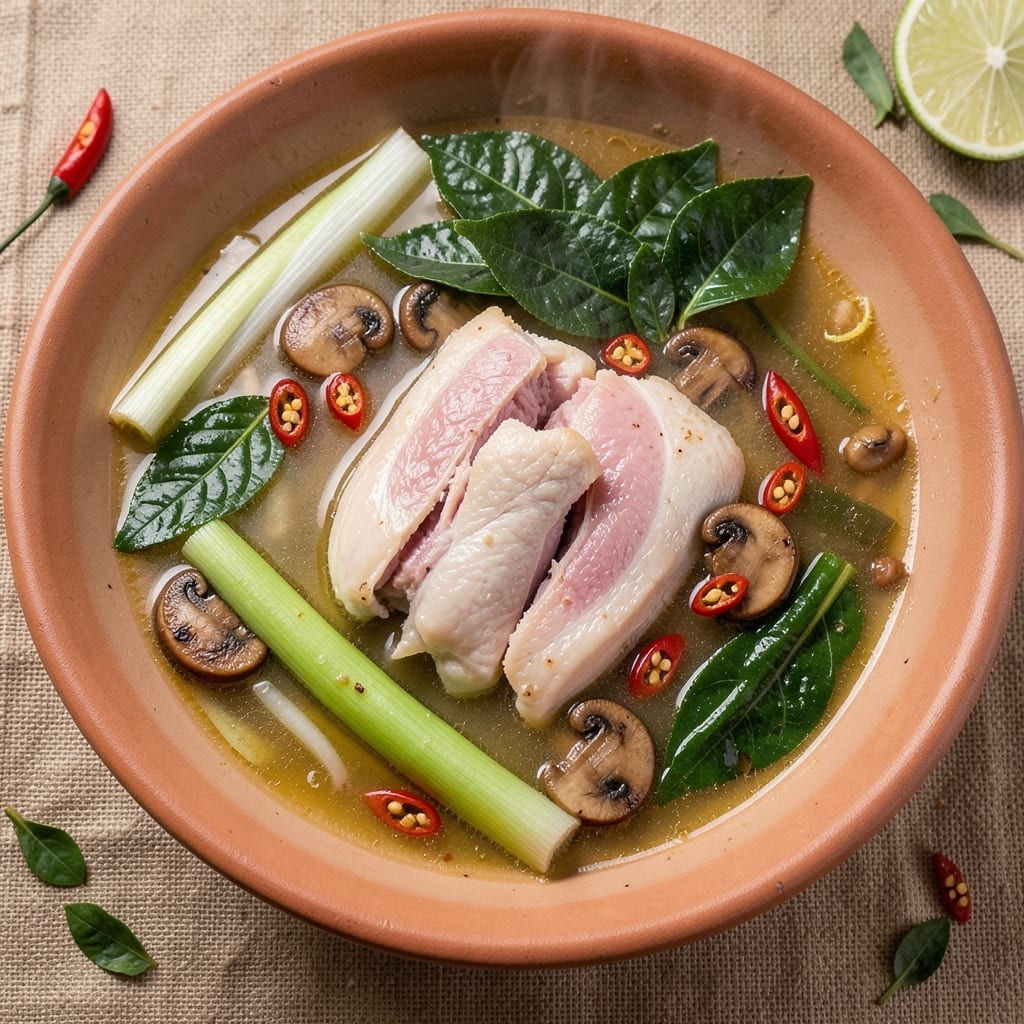
This authentic tom yum gai soup recipe delivers the bold, aromatic experience that makes Thai cuisine unforgettable. The secret lies in balancing sour, spicy, and umami flavors through traditional ingredients like lemongrass, galangal, and kaffir lime leaves—each playing a critical role in creating that signature tangy, herbal punch. I've perfected this recipe over years of testing, ensuring every bowl delivers restaurant-quality depth without shortcuts.
The foundation begins with a fragrant broth simmered with fresh herbs and aromatic spices, where chicken (or shrimp/tofu for variations) cooks just until tender. What makes this recipe truly authentic is the careful layering of flavors—starting with a light broth base, then building complexity through chili paste, lime juice, and fish sauce. The result? A soup that's both invigorating and deeply comforting, with each spoonful clearing sinuses and waking up the palate.
By the time you're done, you'll have a steaming bowl of tom yum gai with tender chicken pieces floating in a vibrant, aromatic broth that's perfectly balanced between heat and acidity. The lemongrass-infused steam alone transforms any meal into an experience, while the bright, tangy finish ensures every bite is memorable. This isn't just soup—it's a flavor journey that transports you straight to Thailand.
Whether you're serving it as a main course or appetizer, this recipe scales beautifully and adapts to dietary preferences without sacrificing authenticity. The broth's complexity makes it versatile enough for pairing with rice or as a standalone dish. Let's create this iconic Thai classic together—where every ingredient matters and every bite tells a story.
Ingredients for authentic tom yum gai soup
These aromatic ingredients transform simple broth into restaurant-quality tom yum gai soup.
| Ingredient | Amount | Notes |
|---|---|---|
| Boneless Chicken Thighs 🍗 | 1 ½ lb | Trimmed of excess fat, cut into 1-inch pieces |
| Fresh Lemongrass Stalk 🌿 | 3 whole | Bruised and cut into 2-inch pieces (white part only) |
| Galangal Slices 🌿 | 4 oz | Fresh, peeled, cut into 1-inch pieces (substitute ginger if needed) |
| Kaffir Lime Leaves 🍋 | 4 whole | Torn into 2-inch pieces (or 2 tbsp dried lime leaves) |
| Thai Chili Paste 🌶️ | 2 tbsp | Red or green, adjust for heat preference |
| Fish Sauce 🐟 | 2 tbsp | Red Boat brand preferred for authentic flavor |
| Lime Juice 🍋 | ½ cup | Freshly squeezed, seeds removed |
| Coconut Milk 🥥 | ½ cup | Full-fat for creaminess (light for traditional version) |
| Mushrooms 🍄 | 8 oz | Straw or oyster mushrooms, sliced (substitute shiitake) |
| Green Beans 🌱 | 1 cup | Trimmed, cut into 1-inch pieces |
| Shallots 🧅 | 4 whole | Peeled, thinly sliced (substitute 4 tbsp onion) |
| Garlic Cloves 🧄 | 6 cloves | Smashed, not minced |
| Chicken Broth 💧 | 4 cups | Low-sodium, homemade preferred |
| Sugar 🍚 | 1 tbsp | White granulated or palm sugar |
| Shrimp 🦐 | ½ lb | Peeled, deveined, optional for pescatarian variation |
The herbs define this soup—lemongrass, galangal, and kaffir lime leaves are non-negotiable for authenticity. Asian markets carry fresh galangal and lime leaves; if unavailable, ginger works but lacks the distinct citrusy depth. For lemongrass, select stalks with tight, pale inner leaves—avoid dried or yellowing stalks. Red Boat fish sauce is the gold standard, but any reputable brand (like Three Crabs) delivers. The Thai chili paste should be vibrant red or green—Maesri or Maesan brands are excellent choices. Galangal's peppery, citrusy aroma is crucial; if substituting ginger, add an extra pinch of lime zest to compensate.
No galangal? Ginger plus lime zest at double the amount gets you close, though texture differs. Shrimp unavailable? Extra mushrooms or tofu maintain umami. The coconut milk is traditional but optional—skip entirely for classic tom yum, or use light coconut milk for a more balanced broth. For heat adjustment, start with 1 tbsp chili paste and add more to taste. The shallots should be thinly sliced to dissolve quickly; soak in warm water for 10 minutes to remove any bitterness. Fresh lime juice is essential—bottled versions lack the bright acidity needed to cut through the richness.
Broth and mushrooms keep for 3 days refrigerated or 3 months frozen—make extra for quick lunches. Store herbs separately: lemongrass in a jar of water extends freshness to 1 week, while galangal and lime leaves wrap in damp paper towels. The soup's flavors intensify overnight, so reheat gently with a splash of water to preserve texture. For meal prep, freeze the broth base separately from proteins and veggies—recombine when ready to serve.
Why You'll Love This Recipe
- No Fuss, Big Payoff: I swear by this—just 10 minutes of chopping lemongrass and galangal (no fancy prep), then simmer. The broth builds itself while you stir in that Thai chili paste, and suddenly? Magic. That first sip of sour, spicy, umami perfection makes it worth every second.
- Taste Like a Street Cart: Between us, the combo of galangal’s peppery bite and kaffir lime leaves’ citrusy whisper is chef’s kiss—but what really sells it is the chicken. Tender thighs poached in the broth? They fall apart like they’ve been slow-cooked for hours, even if you’re rushing.
- Leftovers That Beg for Seconds: Honestly, this soup tastes better the next day. The flavors meld into this deep, complex broth that’s perfect for reheating with rice or noodles. I’ve fed it to my skeptical in-laws cold from the fridge—no one complained. (Okay, fine, they asked for more.)
- Budget-Friendly Thai Night: Thai chili paste and lemongrass are cheap staples, and chicken thighs stretch further than breasts. Plus, you’re not buying pre-made packets—just a handful of whole ingredients. My grocery bill for this? Less than takeout, but way more impressive. (Yes, even on a Tuesday night.)
Step-by-step instructions for authentic tom yum gai soup
Master this iconic Thai soup with precise techniques and aromatic balance.
Prepare the Aromatic Base
In a large pot, combine the 4 whole shallots, 6 cloves smashed garlic, and 8 oz sliced mushrooms. Cook over medium heat for 4-5 minutes until the shallots turn translucent and the mushrooms begin to soften. This foundational step develops the soup's depth before adding the signature aromatic ingredients.
Add the 3 whole lemongrass stalks (cut into 2-inch pieces) and 4 oz galangal slices. Stir for 2 minutes until the galangal releases its peppery aroma. The galangal is crucial—it provides the earthy backbone that distinguishes authentic tom yum from other Thai soups. If using ginger as a substitute, add 1 tablespoon more to compensate for its milder flavor.
Build the Spiced Broth
Increase heat to medium-high and add the 2 tablespoons Thai chili paste, stirring constantly for 30 seconds to toast the spices. This step awakens the chili's heat and prevents a raw, bitter flavor. Immediately add the 4 cups chicken broth and bring to a rolling boil, then reduce heat to maintain a gentle simmer. Skim off any foam that rises to the surface—this ensures a clean, bright broth.
Add the 1.5 lb boneless chicken thighs (cut into 1-inch pieces) and 1 cup green beans. Simmer for 8-10 minutes until the chicken is just cooked through and the green beans remain crisp. Overcooking will turn the broth murky. The chicken should release easily from the bone when tested with a fork.
Balance the Flavors
Remove the pot from heat and stir in the 2 tablespoons fish sauce, 1 tablespoon sugar, and 0.5 cup lime juice. The fish sauce adds umami depth, the sugar balances the acidity, and the lime brightens the entire dish. Taste and adjust—you want a harmonious blend of sour, spicy, salty, and sweet. Traditional tom yum should make your mouth water while clearing your sinuses.
Add the 0.5 cup coconut milk and stir gently. The creaminess mellows the heat while adding richness, though purists may omit it for a lighter broth. Return to low heat and add the 4 whole kaffir lime leaves, torn into pieces. Simmer for 2-3 minutes to infuse the citrusy aroma before removing the leaves.
Finish with Shrimp and Garnish
Add the 0.5 lb shrimp (peeled and deveined) and cook for 2-3 minutes until they turn opaque and curl. The shrimp should cook quickly to retain their delicate texture. Remove the shrimp and set aside, then strain the broth through a fine-mesh sieve to remove the lemongrass, galangal, and lime leaves, leaving only the clear, aromatic liquid.
Return the broth to the pot and bring to a gentle simmer. Add the cooked shrimp back in, along with the chicken and green beans. Serve immediately in deep bowls, garnished with additional lime wedges and fresh cilantro if desired. The soup should be steaming hot, with the shrimp floating atop the vibrant broth and the chicken pieces infused with the aromatic essence of lemongrass and galangal.
Pro Tips For Making Authentic Tom Yum Gai Soup
- Bruise the Galangal: I learned this the hard way—slicing galangal too thin or leaving it whole makes it taste like nothing. Use a heavy knife or rolling pin to smash the slices flat before adding them to the pot. This releases the oils and turns that bland root into the sharp, citrusy backbone of the soup.
- Blister the Lemongrass: Don’t just toss in whole stalks—char the bottom inch of the lemongrass over high heat for 30 seconds. The smoky edge cuts through the richness of the chicken and deepens the aroma. (Yes, even if you’re impatient like me.)
- Simmer, Don’t Boil: Once everything’s in the pot, keep the heat at a gentle simmer—just enough to see tiny bubbles break the surface. Boiling turns tom yum into a watery mess and kills the delicate balance of sour, spicy, and umami. I used to rush this, and the soup always tasted flat afterward.
- Save the Chili Oil: Strain the soup through a fine-mesh sieve into a clean pot, then press the solids (chili paste, lime leaves, galangal) with a spoon to extract every last drop of flavor. Pour the strained liquid back in and simmer again—this guarantees a soup so vibrant it’ll make your taste buds sit up and take notice. (Your future self will thank you.)
Flavor customization for this authentic tom yum gai soup
Spice Level Control
Adjust heat to your preference by modifying the Thai chili paste. Start with 1 tbsp for mild heat, then add ½ tbsp increments up to 2 tbsp for a fiery kick. For extra heat, add 1-2 slices of fresh Thai bird's eye chili at the end. I often serve the chili paste on the side so guests can customize their bowls. 🌶️
For a milder version, reduce the chili paste to ½ tbsp and add 1 tsp sugar to balance. The galangal and kaffir lime leaves already provide natural heat without chili, so you can skip the paste entirely for a subtly spiced broth. If using substitute ginger, it lacks the heat of galangal, so reduce chili paste by ½ tbsp to avoid overpowering.
Creamy vs. Light Broth
The traditional tom yum is light and brothy, but many modern versions include coconut milk for creaminess. For an authentic experience, use light coconut milk or omit it entirely. If you prefer richness, add ¼ cup and adjust the fish sauce to maintain balance—reduce by ½ tbsp to prevent saltiness. 🥥
For a vegan version, replace chicken with extra mushrooms or tofu and use vegetable broth. Skip the shrimp and add ½ cup firm tofu (cubed) to the broth during the final 5 minutes of cooking. The coconut milk adds creaminess without dairy, making it a great plant-based option.
Protein Swaps
For a pescatarian version, replace chicken with ½ lb shrimp (peeled and deveined) or 8 oz firm tofu (pressed and cubed). Shrimp cooks in 2-3 minutes, so add it last. Tofu should simmer for 8-10 minutes alongside the chicken. The broth’s acidity tenderizes tofu beautifully, making it a great meat substitute. 🦐
For a seafood lover’s twist, add 4 oz squid rings or 6 oz scallops in the final 2 minutes of cooking. Squid turns tender quickly, while scallops add a delicate sweetness. If using scallops, pat them dry first to ensure they sear properly. The lime juice in the broth enhances their natural brininess.
Herb Variations
Swap kaffir lime leaves for 2 tbsp dried lime zest if fresh leaves are unavailable, but the flavor won’t be as bright. For a citrus boost, add 1 tbsp lime zest to the broth while simmering. The zest infuses quickly and adds a refreshing aroma. 🍋
If you can’t find galangal, use ginger plus lime zest—double the ginger (8 oz) and add 1 tbsp lime zest to mimic galangal’s peppery-citrus profile. The texture will differ, but the flavor comes close. For an extra herbal note, stir in 1 tbsp fresh Thai basil at the end for a modern twist.
Nutrition facts
Frequently asked questions
Can I make this tom yum gai soup without galangal?
Yes! Use 8 oz fresh ginger plus 1 tbsp lime zest to mimic galangal's peppery-citrus flavor. Double the ginger amount and add the zest when simmering the broth. The texture will differ, but the flavor comes close. For extra depth, add ½ tsp coriander seeds toasted in the pot for 30 seconds before adding broth.
How do I adjust the spice level for kids or sensitive palates?
Start with ½ tbsp Thai chili paste instead of 2 tbsp, then reduce to ¼ tbsp for very mild heat. Add 1 extra tbsp sugar to balance acidity. The natural heat from galangal and kaffir lime leaves remains, but without chili paste, the soup stays gentle. Always serve extra lime wedges on the side so kids can add brightness without heat.
What's the best way to store leftovers?
Store in an airtight container for up to 3 days refrigerated or 3 months frozen. For reheating, warm gently on low heat with a splash of water—never microwave directly. The broth may thicken when cold; add 1-2 tbsp water when reheating. Freeze broth and proteins separately for best texture when recombining.
Can I make this soup in an Instant Pot?
Yes! Sauté shallots, garlic, and mushrooms on sauté mode for 3 minutes. Add lemongrass, galangal, and chili paste, then press sauté for 1 minute. Add broth and chicken, then cook on high pressure for 8 minutes. Quick-release, then stir in fish sauce, sugar, lime juice, and coconut milk. Finish with shrimp and lime leaves as directed. The pressure cooker reduces time but intensifies flavors.
Why is my broth cloudy instead of clear?
Cloudiness usually means the broth simmered too long or wasn't strained properly. For crystal-clear broth, strain through a fine-mesh sieve after removing lime leaves. If using chicken thighs with skin, remove skin before cooking. Simmer broth gently (low heat) and never boil vigorously—this breaks down proteins and creates cloudiness. Skim foam during initial simmering for brightness.