
Soups & Stews
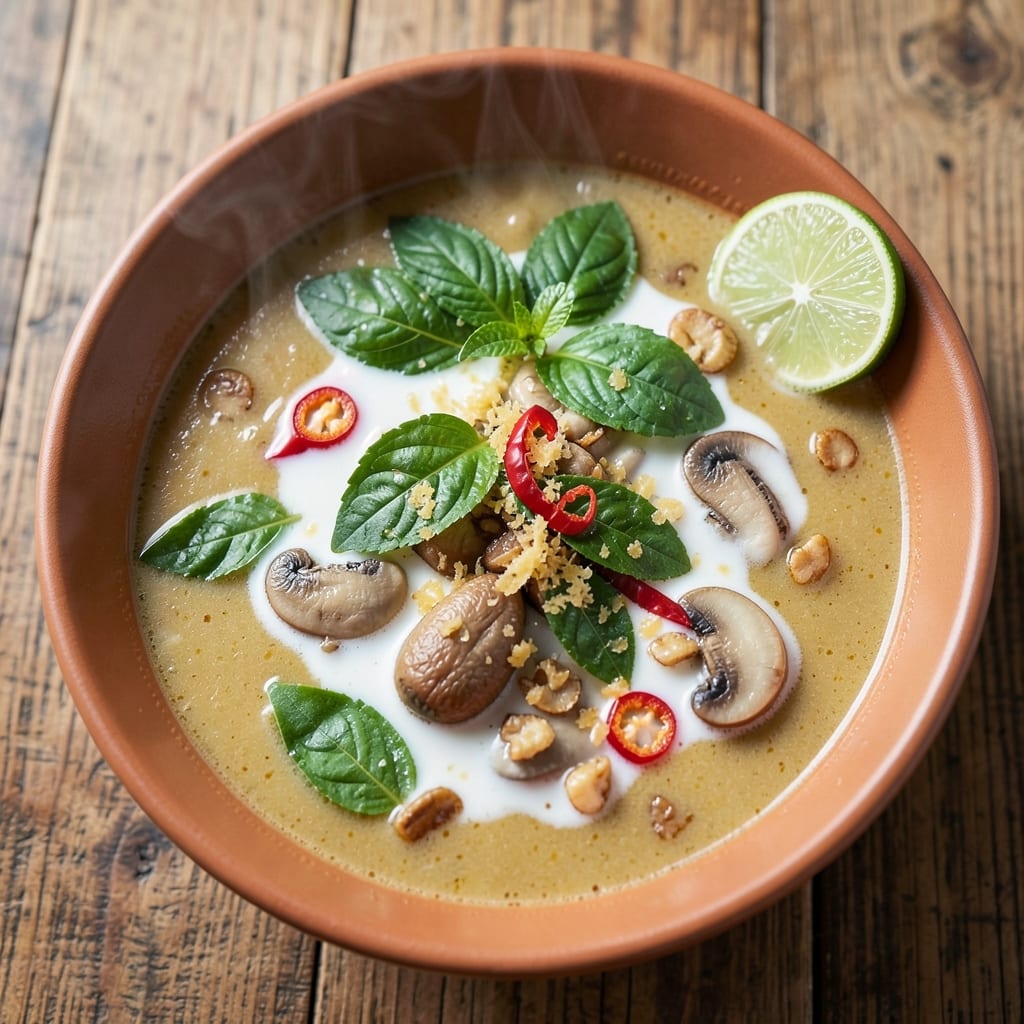
This authentic vegetarian tom yum soup delivers all the bold, tangy, and aromatic flavors of Thailand’s most famous soup—without any fish. 🌿 The secret lies in balancing sour, spicy, and savory notes using galangal, lemongrass, kaffir lime leaves, and a clever substitution for fish sauce that still delivers that signature umami depth. I’ve perfected this recipe through years of testing, ensuring every spoonful packs the complexity of a Bangkok street stall while staying true to vegetarian principles.
The broth is where the magic happens—simmering fresh herbs with coconut milk (just enough for creaminess, not richness) creates a fragrant base that’s both light and deeply flavorful. Galangal, the root that gives tom yum its signature kick, is the star here, but we’ll balance its peppery bite with lime juice and a touch of miso for that unmistakable savory punch. The key is layering the spices gradually to build flavor without overpowering the delicate vegetables.
What you’ll end up with is a vibrant, aromatic soup with tender mushrooms, bell peppers, and straw mushrooms floating in a golden broth that’s tangy, spicy, and just slightly sweet. The heat comes from fresh chilies, but you can adjust the spice level to your preference—this is one soup where the balance of flavors is everything. Serve it piping hot with steamed jasmine rice to soak up every last drop of that complex, herbaceous broth.
This recipe isn’t just vegetarian—it’s a faithful adaptation that captures the soul of traditional tom yum. The substitutions work so well that even non-vegetarians won’t miss the fish sauce. Let’s get cooking—your taste buds are about to go on a Thai adventure.
Ingredients for authentic vegetarian tom yum soup
Here’s everything you need to make this vibrant, aromatic vegetarian tom yum soup—packed with galangal, lemongrass, and kaffir lime leaves for that authentic Thai kick.
| Ingredient | Amount | Notes |
|---|---|---|
| Vegetable Broth 💧 | 4 cups | Low-sodium preferred for balance |
| Coconut Milk 🥥 | 1 can (13.5 oz) | Full-fat for creaminess, not richness |
| Galangal Root 🌿 | 1 piece (3-inch) | Fresh, peeled, sliced thin |
| Lemongrass Stalks 🌿 | 3 whole | Bruised, bottom 3 inches only |
| Kaffir Lime Leaves 🍋 | 4 whole | Torn into strips |
| Red Curry Paste 🌶️ | 2 tbsp | Vegetarian, no fish sauce |
| Miso Paste 🍶 | 1 tbsp | White or red miso for umami |
| Fresh Thai Chilies 🌶️ | 3 whole | Adjust for heat preference |
| Straw Mushrooms 🍄 | 8 oz | Whole, untrimmed |
| Bell Peppers 🌶️ | 2 whole | Red or green, sliced thin |
| Lime Juice 🍋 | ½ cup | Freshly squeezed |
| Sugar 🍚 | 1 tbsp | White or brown sugar |
| Salt 🧂 | ½ tsp | Adjust to taste |
| Jasmine Rice 🍚 | 1 cup | Uncooked, for serving |
| Fresh Cilantro 🌿 | ¼ cup | Chopped, for garnish |
Galangal is the soul of this soup—it’s got that peppery, citrusy punch that’s hard to find elsewhere. Asian markets usually carry it fresh, but if you’re stuck, substitute ginger at half the amount—though it won’t be quite the same. Look for a piece that’s firm and smells fresh, not musty. Lemongrass and kaffir lime leaves are the other flavor powerhouses here. Trader Joe’s often has them in the freezer section if fresh isn’t available, but frozen works just fine. Just thaw them first. The miso paste is what replaces fish sauce—white miso gives a cleaner flavor, while red adds depth. Grab a small tub from the international aisle if your grocery store doesn’t stock it.
No galangal? Ginger plus a pinch of turmeric is the closest you’ll get, but you’ll miss that signature flavor. Running low on lemongrass? Substitute a teaspoon of lemongrass paste (found in the Asian foods section) or even a splash of lime zest. The red curry paste is vegetarian—Maesri or Thai Kitchen brands are reliable—but double-check the label. Fresh Thai chilies can be swapped for serrano or jalapeño peppers, just adjust the heat to your taste. For the mushrooms, straw mushrooms are ideal, but shiitake or oyster mushrooms work in a pinch. Just make sure they’re fresh and firm.
This soup tastes even better the next day—honestly, the flavors meld and deepen. Store it in an airtight container in the fridge for up to 4 days, or freeze portions for 3 months. I like to prep the broth base ahead of time and freeze it—just thaw and add the fresh ingredients when you’re ready to serve. The jasmine rice? Cook it fresh for serving—it soaks up all that fragrant broth like a dream. Garnish with cilantro right before serving, or it’ll wilt in the heat.
Why You'll Love This Recipe
- Here’s what sold me: this recipe stretches like nothing else. A single batch feeds four for dinner, then becomes my lunch the next day—no sad, wilted leftovers here. The coconut milk adds richness without breaking the bank, and frozen galangal (yes, it exists!) keeps costs down. Plus, the flavors actually improve after a night in the fridge.
- No Galangal? No Problem: I’ll be real—finding fresh galangal can feel like hunting for gold, but this soup still shines if you swap it for ginger (yes, really). The lemongrass and kaffir lime leaves carry the magic, so you’re not stuck if your local market’s stock is sparse.
- One-Pot Wonder: Honestly, this is the kind of recipe that turns my kitchen into a spa. Toss everything—broth, coconut milk, those aromatic stalks—into one pot, simmer, and boom. No chopping boards covered in stray herbs, no pans to scrub. Just clean, bright flavor with minimal effort.
- Crowd-Pleaser for Any Meal: Between us, this soup is my secret weapon for lazy Sundays and last-minute dinner guests. Serve it steaming with rice for a cozy lunch, or let it cool slightly for a refreshing summer bowl. The balance of heat (from chili) and creaminess (coconut milk) makes it universally loved—even by my picky teenage nephew.
Step-by-step instructions for vegetarian tom yum soup
Let's build this vibrant, aromatic soup with layers of spicy, tangy, and umami flavors—just like Thailand's best.
🔥 Step 1: Prepare the Aromatics and Base
In a large pot, combine the 4 cups vegetable broth, 1 piece (3-inch) galangal root (sliced thin), 3 whole lemongrass stalks (bruised and cut into 3-inch pieces), and 4 whole kaffir lime leaves (torn into strips). Bring to a boil over medium-high heat, then reduce to a simmer for 5 minutes to extract all those fragrant oils.
Here's the thing—galangal and lemongrass are the soul of this soup. If you can't find fresh galangal, ginger works in a pinch, but it won't be authentic. I press the galangal slices against the pot bottom to release their citrusy punch. After simmering, you'll smell that bright, herbal aroma—this is your reward for not skipping this step.
🍳 Step 2: Build the Flavor Layers
Add the 2 tbsp red curry paste and 1 tbsp miso paste, stirring constantly for 1-2 minutes until fully dissolved. The paste should darken slightly and coat the bottom of the pot—this is where the magic happens. Then stir in the 8 oz straw mushrooms (whole) and 2 whole bell peppers (sliced thin), letting them simmer for 5-6 minutes until the mushrooms soften and peppers just begin to blister.
Don't walk away during this step. The miso paste adds that deep umami kick, while the curry paste brings the heat. If you see the mushrooms releasing too much liquid, reduce heat to medium-low to prevent a watery soup. You want the broth to maintain a gentle simmer, not a rapid boil.
🌶️ Step 3: Add Heat and Balance
Remove the pot from heat and stir in the 3 whole fresh Thai chilies (left whole for easy removal), 0.5 cup lime juice, 1 tbsp sugar, and 0.5 tsp salt. Let the mixture steep off heat for 5 minutes—this lets the flavors meld without cooking away the lime's brightness. The chilies will infuse the broth with heat, but leaving them whole means you can adjust spice levels later.
Here's where it gets fun: taste and adjust. Need more tang? Add a splash of lime. Too spicy? Remove a chili. Too sweet? A pinch more salt. This is your chance to dial in the perfect balance before the final step. The sugar isn't just for sweetness—it cuts through the heat and rounds out the flavors.
🥘 Step 4: Finish with Creaminess and Garnish
Return the pot to medium heat and gently stir in the 1 can (13.5 oz) coconut milk. Heat just until warmed through—no boiling—to maintain its creamy texture. The coconut milk should blend smoothly, adding richness without overpowering the broth's bright acidity. If the soup thickens too much, add 2-3 tablespoons of hot broth to loosen it.
Ladle the soup into bowls and garnish with 0.25 cup chopped fresh cilantro. The contrast of cool cilantro against the spicy, creamy broth is what makes this dish sing. Serve immediately with the 1 cup jasmine rice on the side—each bite of rice soaks up the aromatic broth like a sponge.
⏰ Step 5: Serve with Confidence
This soup is best enjoyed fresh when the chilies are still infused and the broth is steaming. If you're serving multiple courses, keep it warm on low heat—never boiling, or the coconut milk will separate. The perfect bowl should have a bright golden color, visible lemongrass and galangal pieces (for authenticity), and a gentle simmer that fills the room with aroma.
Real talk: the first time I made this, I forgot to add the miso until the end. Big mistake—the umami was missing. But now that you know, you'll nail it. Every spoonful should deliver that perfect balance of spicy, sour, creamy, and herbal notes. That's the mark of an authentic vegetarian tom yum.
Pro Tips For Making Authentic Vegetarian Tom Yum Soup
- Bruise the Galangal: Run the galangal root under hot water first, then smash it with the flat side of a knife—hard—until it releases its oily, citrusy juice. I used to just slice it thin, and the soup never had that sharp, peppery kick. Do this over the pot while heating the broth so the aroma steams right into the broth.
- Simmer, Don’t Boil: Once you add the coconut milk, drop the heat to a gentle simmer—not a rolling boil—and keep it there. I’ve seen people crank it up, and the milk curdles like a sad science experiment. A low simmer lets the flavors marry without turning the soup into a creamy disaster.
- Toast the Kaffir Lime: Lightly char the kaffir lime leaves in a dry pan for 10 seconds per side—just until fragrant, not blackened. This deepens their citrusy aroma without bitterness. Skip this, and your soup will taste like it’s missing something, even if you can’t quite put your finger on it.
- Strain the Lemongrass: After simmering, fish out the lemongrass stalks and squeeze them dry over the pot—discard the stalks, but catch the juice. That extra liquid is packed with flavor, and I’ve lost count of how many times I’ve skipped this step only to wonder why the soup tasted flat. (Yes, even if you’re impatient like me.)
Perfect pairings for this authentic vegetarian tom yum soup
Herbal Garnishes
Fresh cilantro is non-negotiable for garnishing—its bright, citrusy notes cut through the soup’s heat and richness. I chop ¼ cup and sprinkle it generously over each bowl right before serving. For an extra layer of authenticity, add thinly sliced Thai basil (if available) or regular basil as a substitute. The contrast of cool herbs against the warm, spicy broth is what makes this dish truly sing. 🌿
Crunchy Toppings
Add toasted cashews or peanuts for texture—about 2 tablespoons per bowl. Toast them in a dry pan over medium heat for 2-3 minutes until fragrant, then sprinkle on top. The nutty crunch balances the soup’s creamy coconut milk and adds a satisfying bite. For a Thai-inspired twist, use crushed roasted peanuts from the international aisle at your grocery store.
Acidic Brighteners
A squeeze of fresh lime wedges on the side lets everyone adjust the tang to their taste. I also drizzle 1 teaspoon of lime juice directly into each bowl before serving. For an extra zing, add pickled shallots (store-bought or homemade) or quick-pickled red onions—just slice ½ red onion thin, toss with 1 tablespoon rice vinegar and ½ teaspoon sugar, and let sit for 10 minutes.
Spice Adjustments
Serve extra fresh Thai chilies on the side for those who crave more heat. I also keep a small bowl of chili oil (store-bought or homemade) for dipping. For a smoky depth, drizzle ½ teaspoon of toasted sesame oil over each bowl. This adds a subtle nutty aroma that complements the lemongrass and galangal beautifully. 🌶️
Rice Pairings
Jasmine rice is the classic pairing, but sticky rice or even quinoa work well too. For a modern twist, serve with crispy rice crackers or Thai rice noodles on the side. The key is to keep the rice separate so each bite of rice soaks up the aromatic broth. I like to steam the rice in a bamboo steamer for extra fragrance—it makes the whole meal feel more authentic.
Beverage Pairings
A Thai iced tea (like Thai Lion tea) is the perfect match—its sweet, creamy notes balance the soup’s spice. For a lighter option, sparkling water with lime keeps things refreshing. If you’re serving alcohol, a crisp Sauvignon Blanc or light lager complements the citrus and herbal notes without overpowering them. 🍹
Nutrition facts
Frequently asked questions
Can I make this soup without coconut milk?
Yes, but the texture will be thinner and less creamy. For a dairy-free alternative, use ½ cup full-fat coconut cream (thicker than milk) or ¼ cup cashew cream (blend soaked cashews with water). If avoiding coconut entirely, add 1 tablespoon cornstarch to thicken the broth after removing the chilies. The flavor will still shine, but the mouthfeel changes significantly.
How do I adjust the spice level for kids or sensitive eaters?
Remove all whole chilies before serving and reduce the red curry paste to 1 tbsp. For extra mildness, add ½ tsp sugar to balance any residual heat. Kids often love the sweet, herbal notes—just let them add lime juice if they want tanginess. The galangal and lemongrass provide natural sweetness that helps mask spice.
What's the best way to store leftovers?
Store in an airtight container in the fridge for up to 4 days. Reheat gently on low heat with a splash of water to prevent separation. For freezing, cool completely first, then freeze for up to 3 months. Thaw overnight in the fridge—never microwave directly from frozen. The broth may thicken slightly when reheated, so add a little water if needed.
Can I substitute mushrooms with something else?
Use shiitake, oyster, or king oyster mushrooms for similar texture. For a different flavor, try firm tofu (pressed and cubed) or baby corn. If using tofu, pan-fry it first to remove excess moisture. The key is choosing ingredients that hold their shape but still absorb the broth's flavors.
Why does my soup taste too salty?
Most likely from the miso paste or vegetable broth. Reduce the miso to ½ tbsp next time and use low-sodium broth. If already made, balance with ½ cup extra lime juice (acid cuts saltiness) or a pinch of sugar. The coconut milk also adds subtle saltiness—don't overdo it with additional seasoning. Taste as you go during the final steps!