
Soups & Stews
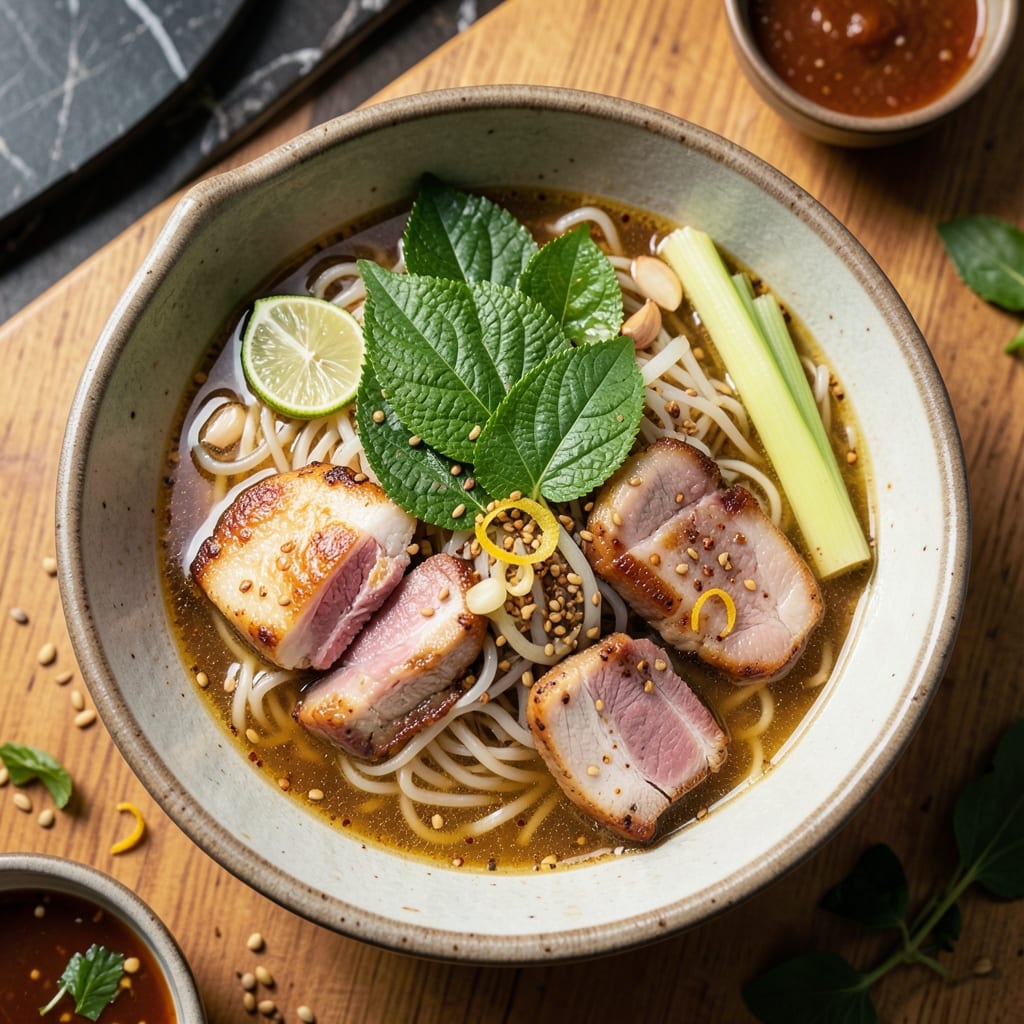
This authentic Thai noodle soup recipe transports you to bustling Bangkok street markets with its fragrant lemongrass-coconut broth and perfect balance of spicy, sour, and savory flavors. The secret lies in toasting whole spices—galangal, coriander, and cumin—until they release their aromatic oils, forming the foundation of a rich, velvety broth that's impossible to resist. Every sip delivers layers of complexity from fresh herbs, lime, and chili, making this more than just soup—it's an experience.
What sets this recipe apart is the authentic technique of simmering coconut milk with aromatic pastes (a blend of lemongrass, kaffir lime leaves, and shallots) until the flavors meld into harmony. The broth is then carefully balanced with fish sauce, palm sugar, and lime juice to achieve that signature Thai equilibrium—never too sweet, never too spicy, but always perfectly satisfying. Whether you choose rice noodles for their chewy texture or egg noodles for heartier bites, they absorb the fragrant broth beautifully.
The result is a steaming bowl of restaurant-quality noodle soup that's ready in under an hour, with just 15 minutes of active prep. Tender protein—whether it's shredded chicken, sliced pork, or crispy tofu—floats in the golden broth alongside fresh garnishes like bean sprouts, Thai basil, and crisp lettuce. The contrast of temperatures and textures makes each bite unforgettable, proving that authentic Thai flavors are entirely achievable at home.
This recipe scales effortlessly for weeknight dinners or crowd-pleasing gatherings, and the broth freezes beautifully for future meals. The key to success? Patience in building the flavors and confidence in balancing the components—trust the process, and you'll have a dish that rivals your favorite Thai restaurant. Let's get cooking!
Ingredients for authentic thai noodle soup
These aromatic ingredients transform simple broth into restaurant-quality Thai noodle soup magic.
| Ingredient | Amount | Notes |
|---|---|---|
| Galangal Root 🌿 | 1 piece | Fresh, peeled, sliced thin |
| Lemongrass Stalks 🌿 | 4 whole | Bruised, bottom 3 inches only |
| Kaffir Lime Leaves 🍋 | 4 whole | Fresh, lightly bruised |
| Shallots 🧅 | 6 whole | Peeled, halved lengthwise |
| Garlic Cloves 🧄 | 6 cloves | Peeled, smashed |
| Coriander Seeds 🌶️ | 1 tbsp | Toasted until fragrant |
| Cumin Seeds 🌶️ | 1 tbsp | Toasted until fragrant |
| Light Coconut Milk 🥥 | 1 can | Full-fat for richness |
| Chicken or Vegetable Broth 💧 | 4 cups | Homemade preferred |
| Fish Sauce 🍶 | 2 tbsp | Red Boat preferred |
| Palm Sugar 🍯 | 2 tbsp | Or substitute brown sugar |
| Lime Juice 🍋 | 3 tbsp | Freshly squeezed |
| Thai Chili Paste 🌶️ | 1 tbsp | Adjust for spice level |
| Rice Noodles 🍜 | 8 oz | Or egg noodles for texture |
| Thai Basil 🌿 | ¼ cup | Fresh, torn by hand |
| Bean Sprouts 🌱 | 1 cup | Fresh, rinsed |
| Lettuce Leaves 🥬 | 4 whole | Butter lettuce preferred |
| Crushed Peanuts 🥜 | ¼ cup | Toasted for crunch |
| Protein Option 🍗 | 1 lb | Chicken, pork, or tofu |
The galangal and lemongrass are non-negotiable for that authentic Thai aroma. Asian markets carry fresh galangal—look for firm, pale roots with no dark spots. If you can't find it, ginger is a pinchable substitute (half the amount), but it won't be the same. Kaffir lime leaves? Freeze extras—they keep for months and add magic to curries too. Toast your coriander and cumin seeds in a dry pan until fragrant—this releases their oils and builds the broth's depth. Penzeys Spices sells pre-toasted seeds if you're short on time, but fresh toasting makes all the difference.
No fish sauce? Soy sauce plus a dash of anchovy paste works in a pinch, but Red Boat is the gold standard. Palm sugar's hard to find? Brown sugar or coconut sugar are fine—just reduce other sweetness. The Thai chili paste? Maesri or Sriracha are solid substitutes if you can't find authentic. For protein, shredded chicken or crispy tofu both work beautifully. Pro tip: marinate your protein in lime juice and fish sauce for 15 minutes before adding—it soaks up the flavors like a sponge.
This broth tastes even better the next day as flavors meld. Store it in airtight containers for up to 5 days in the fridge or 3 months frozen. Noodles? Cook them fresh when serving—they get mushy if prepped ahead. Garnishes like Thai basil and bean sprouts add crunch and freshness, so don't skip them. Double the broth and freeze half for future quick meals—it reheats beautifully and tastes like you slaved away for hours.
Why You'll Love This Recipe
- No Chopping Marathon: The galangal and lemongrass are the stars, but they’re forgiving—slice them thick if you’re in a hurry. I’ve burned my finger more times than I can count trying to mince shallots perfectly, but this soup doesn’t care if they’re rough. (Between us, the garlic gets a quick smash with the flat side of my knife—no finesse needed.)
- Herb Magic Unlocked: That first sip? It’s like a punch to your taste buds—galangal’s peppery kick, lemongrass’s citrusy whisper, and kaffir lime leaves adding a floral secret. Honestly, I didn’t think I’d like the galangal at first, but now it’s the reason I make this every time. (Yes, even on a Tuesday night when I just want something that feels special.)
- Leftover Hero: This soup only gets better the next day. The broth deepens, the aromatics meld into something richer, and reheating it takes two minutes. I freeze portions too—just add fresh herbs when I’m ready, and it’s like I’m back in a Bangkok alleyway. My college kid devours it straight from the fridge for lunch. No judgment here.
- Budget-Friendly Luxury: Shallots and garlic are cheap, lemongrass and galangal last forever if you freeze them, and kaffir lime leaves stretch across multiple batches. I’ve made this for $3 a serving, and it still feels like a restaurant dish. Here’s what sold me—it’s the one recipe that makes me feel fancy without breaking the bank. (Not the prettiest, but the taste makes up for it.)
Step-by-step instructions for authentic Thai noodle soup
Here's how to build a fragrant, balanced bowl of Thai noodle soup that captures the essence of street carts.
Toast the Spice Seeds and Build the Aromatic Base
In a dry skillet over medium heat, toast the 1 tablespoon coriander seeds and 1 tablespoon cumin seeds for 2-3 minutes until fragrant and lightly golden. This step unlocks their warm, earthy flavors—don't skip it. Transfer the toasted seeds to a spice grinder and pulse until finely ground.
In the same skillet, add the 6 whole shallots and 6 cloves garlic, cooking for 5-6 minutes until the shallots soften and turn golden. Add the 1 piece sliced galangal root, bottom 3 inches of 4 lemongrass stalks, and 4 lightly bruised kaffir lime leaves. Cook for another 2 minutes until the galangal releases its citrusy aroma and the lemongrass softens slightly. This aromatic trio forms the soul of your broth.
Simmer the Broth with Coconut and Seasonings
Pour in the 4 cups chicken or vegetable broth and scrape up any browned bits from the bottom of the pan. Add the 1 can light coconut milk, 2 tablespoons fish sauce, 2 tablespoons palm sugar, and 1 tablespoon Thai chili paste. Bring to a gentle boil, then reduce heat to low and let it simmer uncovered for 15 minutes to allow the flavors to meld.
Taste and adjust seasoning—you want a balance of salty, sweet, and spicy. The broth should be fragrant with notes of citrus, coconut, and subtle heat. If it's too thin, simmer longer to reduce slightly. Real talk: this is where the magic happens, so don't rush it. The longer it simmers, the deeper the flavors develop.
Prepare the Protein and Noodles
While the broth simmers, prepare your 1 pound protein option. For chicken, slice into thin strips and marinate with 1 tablespoon lime juice and 1 teaspoon fish sauce for 10 minutes. For pork or tofu, slice into thin strips and set aside. Soak the 8 ounces rice noodles in warm water for 10-15 minutes until pliable but still firm to the bite—over-soaking makes them mushy.
Drain the noodles and rinse briefly under cold water to stop the cooking process. Keep them covered to prevent drying out. The noodles should be tender but still hold their shape when drained. This is the perfect texture for Thai noodle soup—al dente enough to provide structure, but soft enough to soak up the flavorful broth.
Assemble and Garnish Each Bowl
Ladle 1 cup of hot broth into each of four bowls. Add the protein and let it warm through for 1-2 minutes. Then, divide the noodles evenly among the bowls, letting them absorb some of the broth's warmth. The noodles should be submerged but not hidden—just enough to create a beautiful presentation.
Top each bowl with ¼ cup bean sprouts, 1 whole lettuce leaf, 1 tablespoon Thai basil, and 1 tablespoon crushed peanuts. Finish with a squeeze of 1 teaspoon lime juice per bowl. The contrast of textures—crisp sprouts, tender noodles, crunchy peanuts—elevates every bite. Serve immediately while everything is hot and the aromas are at their peak.
Pro Tips For Making Authentic Thai Noodle Soup
- Char the Aromatics Properly: Slather sliced shallots and garlic in 1 tablespoon oil, then cook over medium-high until edges turn deep golden—almost black in spots. I used to stop at light brown, but that’s where the smoky depth disappears. Galangal and lemongrass get added after this step, so don’t rush them into the pot.
- Slice Galangal Thinly: Use a mandoline or sharp knife to cut galangal into paper-thin slices—no thicker than 1/8 inch. Thick pieces stay tough and underseasoned. I learned this the hard way when my soup tasted like it was missing something, then realized the galangal wasn’t breaking down.
- Don’t Overcrowd the Pot: Add noodles last, then let them cook in batches if needed. Crowding turns the broth murky and steams instead of simmers. I once dumped everything in at once and ended up with a gluey, uneven mess—now I reserve 1 cup of broth to rehydrate noodles separately if the pot’s too full.
- Toast Kaffir Lime Leaves: Lightly char the leaves over a gas flame for 10 seconds per side until fragrant. This intensifies their citrusy aroma without bitterness. I was skeptical until I tried it—I now add them whole to the broth for the last 5 minutes, then fish them out before serving.
Common mistakes when making your authentic thai noodle soup
Skipping Spice Toasting
Toasted spices are the flavor foundation—never skip this step! The warm, nutty aroma from coriander and cumin seeds comes only from toasting. I've made this mistake and ended up with flat, one-dimensional broth. Use a dry skillet over medium heat for 2-3 minutes until seeds smell fragrant. If you're in a rush, Penzeys Spices sells pre-toasted seeds, but fresh toasting makes all the difference. 🌶️
Using Wrong Substitutes
Galangal isn't ginger—it has a citrusy, peppery kick that's essential. I once used ginger in a pinch and lost that signature Thai aroma. For galangal, look for firm, pale roots at Asian markets. Kaffir lime leaves? Freeze extras—they keep for months. No fish sauce? Soy sauce plus anchovy paste works, but Red Boat fish sauce is the gold standard. Don't compromise on these key ingredients.
Overcooking the Broth
Simmering too long reduces the broth too much, making it thick and heavy. The ideal simmer time is 15 minutes on low heat. I've seen recipes that boil vigorously for hours—this destroys the delicate coconut milk and makes the broth taste cooked. Keep it at a gentle simmer, and taste frequently to balance flavors. The broth should be fragrant, not reduced to a paste. ⏰
Prepping Noodles Too Early
Rice noodles turn mushy if cooked too far ahead. Soak them for just 10-15 minutes in warm water until pliable, then drain and rinse briefly with cold water. I've ruined perfect broth by adding pre-cooked noodles that had sat for hours. Keep them covered and prepare them last-minute. The noodles should be tender but still hold their shape—this is key for that perfect al dente texture. 🍜
Ignoring the Garnishes
Bean sprouts, Thai basil, and crushed peanuts aren't just decoration—they add critical texture and freshness. I once served a bowl without them and felt like something was missing. The crunch of peanuts and fresh herbs cut through the richness of the coconut broth. Don't skip these final touches—they elevate the dish from good to amazing. Garnish each bowl right before serving for maximum impact. 🌿
Rushing the Flavor Balance
Taste as you go! The broth needs all three elements—salty (fish sauce), sweet (palm sugar), and spicy (chili paste)—in perfect harmony. I've made the mistake of adding all seasonings at once and ending up with an unbalanced mess. Adjust gradually: start with 1 tablespoon fish sauce, then add sugar and chili paste one at a time. The goal is a broth that's fragrant, balanced, and makes you want to take another sip. Patience here is everything. 💫
Nutrition facts
Frequently asked questions
What's the secret to getting that authentic Thai aroma in the broth?
Toast your cumin and coriander seeds until fragrant—that's where the magic happens! The warm, nutty aroma comes from releasing their essential oils. Don't skip toasting the shallots, garlic, galangal, lemongrass, and kaffir lime leaves either. These aromatic ingredients need to sweat together for 2-3 minutes to build that signature Thai depth.
Can I make this soup vegetarian or vegan?
Use vegetable broth instead of chicken broth and swap fish sauce for soy sauce plus a dash of miso paste for umami. For protein, try crispy tofu or mushrooms. The broth will still be rich and fragrant—just adjust the seasoning to taste since you're missing the fish sauce's saltiness.
How do I adjust the spice level for sensitive eaters?
Start with ½ teaspoon of Thai chili paste instead of 1 tablespoon, or use sriracha which is milder. For extra heat control, serve chili flakes on the side so everyone can customize their bowl. The broth's natural sweetness from palm sugar will help balance any residual spice.
Can I make this soup ahead of time?
Yes! The broth freezes beautifully for up to 3 months—just store it in airtight containers. Reheat gently and add fresh noodles when serving. For the best texture, prepare the garnishes (bean sprouts, herbs) separately and add them fresh to maintain crispness. The broth actually tastes better the next day as flavors meld!
What's the difference between rice and egg noodles in this dish?
Rice noodles are the traditional choice—they're soft, slightly chewy, and absorb the broth beautifully. Egg noodles are heartier with a firmer bite, great if you prefer more texture. For this recipe, use 8 oz rice noodles for authenticity or 7 oz egg noodles if substituting. Soak both types just until pliable!