
Soups & Stews
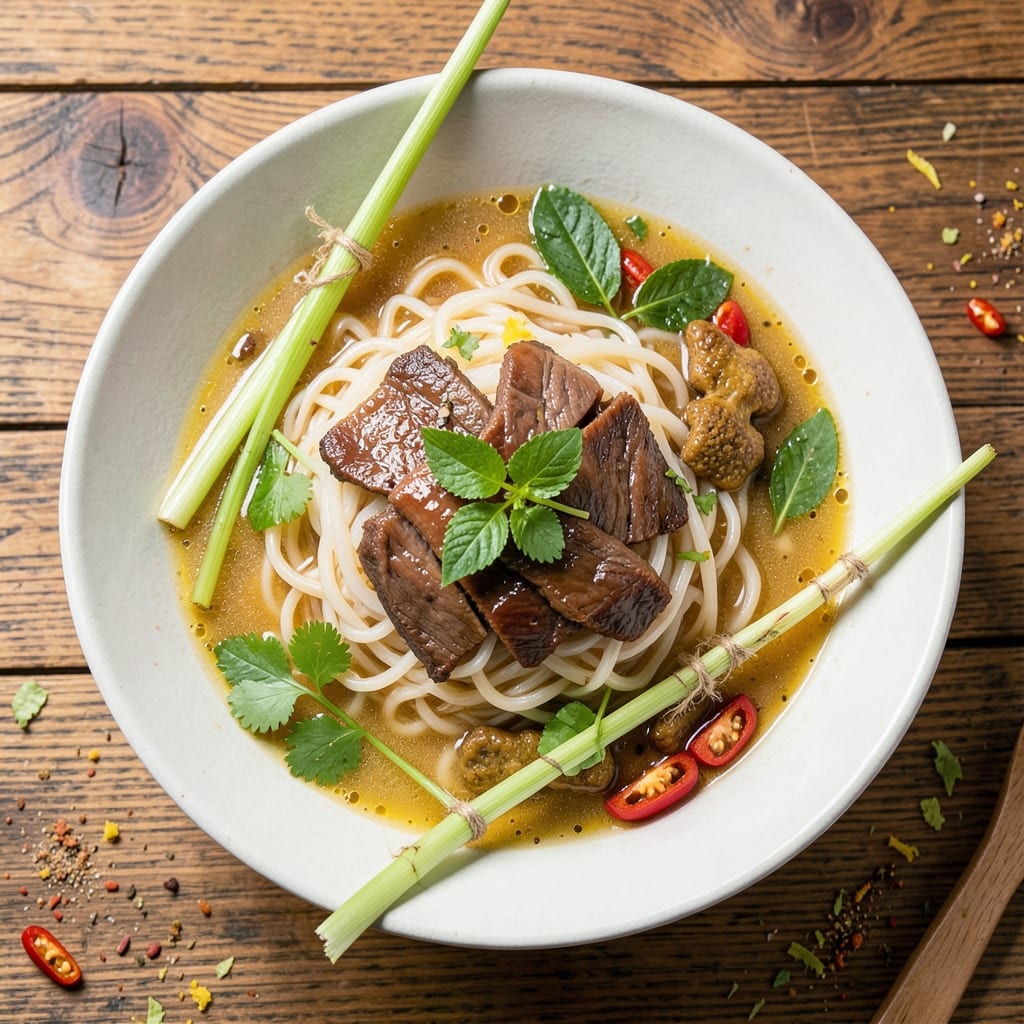
The authentic Thai beef noodle soup recipe I'm sharing transforms a simple pot into a fragrant, aromatic masterpiece that captures the soul of street-side Thai cuisine. 🌟 The secret lies in the broth—where fragrant lemongrass, galangal, and kaffir lime leaves infuse the liquid with layers of citrusy, herbal depth, while a delicate balance of chili, fish sauce, and lime creates that signature tangy-spicy harmony.
What sets this recipe apart is the traditional technique of searing beef slices until caramelized, then simmering them in the aromatic broth until fork-tender. The noodles—thin, slippery rice noodles—are cooked just until al dente, ensuring they hold their shape while absorbing the rich, savory broth. Every element comes together to create a bowl that's both comforting and vibrant.
This isn't just a soup; it's an experience. The broth is fragrant enough to fill your kitchen with warmth, the beef melts in your mouth, and the noodles provide the perfect texture contrast. The beauty of this recipe is its adaptability—you can adjust the spice level to your preference or even transform it into a creamy coconut version with just one addition.
Whether you're serving it for a cozy weeknight dinner or impressing guests with your culinary skills, this authentic Thai beef noodle soup delivers restaurant-quality results at home. Let's get started on creating your own fragrant, flavorful bowl of magic.
Ingredients for authentic thai beef noodle soup
Fragrant herbs, tender beef, and slippery noodles—this is the heart of authentic Thai beef noodle soup.
| Ingredient | Amount | Notes |
|---|---|---|
| Thin Beef Slices 🥩 | 1 lb | Sirloin or flank, thinly sliced |
| Fresh Lemongrass Stalks 🌿 | 3 whole | Bruised, outer leaves removed |
| Galangal Slices 🍃 | 2 pieces | About 1-inch thick slices |
| Kaffir Lime Leaves 🍋 | 4 whole | Torn into large pieces |
| Red Chili Peppers 🌶️ | 2 whole | Bird's eye or Thai chili |
| Garlic Cloves 🧄 | 6 cloves | Smashed with side of knife |
| Shallots 🧅 | 4 whole | Peeled, cut into thick slices |
| Fish Sauce 💧 | 2 tbsp | Red Boat brand preferred |
| Palm Sugar 🍯 | 2 tbsp | Or light brown sugar |
| Lime Juice 🍋 | ½ cup | Freshly squeezed |
| Thai Rice Noodles 🍜 | 8 oz | Sen lek or sen yai variety |
| Vegetable Oil 🫒 | ¼ cup | For high-heat searing |
| Green Onions 🧅 | 4 whole | Thinly sliced, for garnish |
| Fresh Cilantro 🌿 | ¼ cup | Chopped, for garnish |
| Thai Chili Paste 🌶️ | 1 tbsp | Maesri or similar |
The aromatic trio of lemongrass, galangal, and kaffir lime leaves is non-negotiable for that signature Thai fragrance. Look for fresh lemongrass with tight, pale stalks—avoid the woody outer leaves. Galangal has a ginger-like appearance but a more citrusy, peppery bite; find it in the international aisle or Asian markets. Kaffir lime leaves are essential for that bright, citrusy aroma—freeze any extras in a bag for future use. If you can't find galangal, ginger at half the amount works in a pinch, but it won't be the same. For the chili, Thai bird's eye peppers deliver the perfect heat—adjust to taste, but don't skip them entirely.
No fish sauce? Soy sauce plus a splash of Worcestershire gets you close, though the umami won't be identical. The Red Boat brand is the gold standard, but any reputable Asian market fish sauce will do. Palm sugar is key for that authentic sweetness—light brown sugar works if you're in a hurry, but it lacks the caramel depth. For the noodles, Thai rice noodles (sen lek) are ideal, but egg noodles can substitute if you're desperate. The beef should be sirloin or flank steak, sliced paper-thin against the grain for that melt-in-your-mouth texture. If you can't find fresh galangal or kaffir lime leaves, frozen works—just thaw and pat dry before using.
The broth keeps for 3 days in the fridge—even better the next day as flavors meld. Freeze extras in ice cube trays for quick future bowls. The noodles cook in 2 minutes, so have them ready to go before the broth is done. Garnishes like green onions and cilantro should be added fresh at serving time. This soup reheats beautifully—just warm gently on the stove and adjust seasoning with extra lime or fish sauce. Double the recipe if you're feeding a crowd; it's that good.
Why You'll Love This Recipe
- Make a double batch on Sunday: the soup reheats beautifully for lazy lunches, and the leftovers freeze like a dream. Need to impress guests? Add a fried egg on top and suddenly it’s fancy. My roommates call it “the soup that does it all.”
- No Knife Skills Needed: I swear by this—just slice the beef thin (or buy pre-sliced) and crush the lemongrass with the side of your knife. Galangal’s tough but you don’t even need to peel it; just smash it like you’re angry at it. The hardest part? Finding the lime leaves at the store. Worth it.
- First Bite Magic: That moment when the broth hits your tongue—sweet, funky galangal warmth with a whisper of chili and bright lime leaf perfume? It’s the kind of flavor that makes you pause mid-slurp. The beef stays tender, the broth sings, and honestly? It’s the closest I’ve gotten to a Bangkok street stall in my kitchen.
- Weeknight to Party Fix: Make a double batch on Sunday: the soup reheats beautifully for lazy lunches, and the leftovers freeze like a dream. Need to impress guests? Add a fried egg on top and suddenly it’s fancy. My roommates call it “the soup that does it all.”
Step-by-step instructions for authentic Thai beef noodle soup
Let's build this aromatic soup layer by layer—where every ingredient transforms into complex, fragrant harmony.
🍳 Step 1: Build the Fragrant Broth Base
Heat the 0.25 cup vegetable oil in a large pot over medium-high heat. Add the 4 whole shallots and 6 cloves garlic—let them sizzle for 2 minutes until fragrant and just beginning to color. Here's the thing—don't walk away. Burnt aromatics ruin everything.
Add the 2 pieces galangal slices and 3 whole lemongrass stalks (bruised by pounding lightly with a knife). Stir for 1 minute until the galangal releases its citrusy aroma. The broth should smell like a Thai market—bright, herbal, and slightly peppery. If it doesn't, you're not using enough galangal.
🔥 Step 2: Develop Depth with Chili and Chili Paste
Toss in the 2 whole red chili peppers (whole, not sliced—they'll infuse flavor without turning the broth red) and 1 tbsp Thai chili paste. Stir for 30 seconds until the paste darkens slightly and coats the aromatics. This is where the soup gets its signature heat and complexity.
Pour in 4 cups water (enough to cover ingredients) and bring to a rolling boil. Once boiling, reduce heat to medium-low and simmer uncovered for 15 minutes. Skim off any foam that rises—this ensures a clean, clear broth. The aroma should now be deeply aromatic, with layers of lemongrass, galangal, and chili working together.
👨🍳 Step 3: Sweeten and Season the Broth
Add the 2 tbsp palm sugar and 2 tbsp fish sauce to the simmering broth. Stir gently and taste—this is your quality checkpoint. The broth should balance sweet, salty, and umami with a hint of heat. If it needs more sweetness, add another ½ tbsp palm sugar. If it needs salt, add ½ tbsp fish sauce (but don't overdo it—fish sauce is potent).
Simmer for another 10 minutes to let the flavors meld. Then add the 4 whole kaffir lime leaves (torn) and 1 lb thin beef slices. Return to a gentle simmer and cook for 8-10 minutes until the beef is just cooked through but still tender. Overcooking turns it tough—test with a fork for doneness.
🥘 Step 4: Prepare and Assemble the Noodles
While the beef cooks, soak the 8 oz Thai rice noodles in warm water for 10-15 minutes until pliable but still firm. Drain and set aside. Here's the trick—don't over-soak or they'll turn mushy. The noodles should hold their shape when squeezed gently between fingers.
Ladle 2 cups broth (with beef) into each of 4 bowls. Add 2 oz noodles to each bowl and top with beef. The broth should cover the noodles by about ½ inch—if not, add more hot broth from the pot. This ensures every bite has that perfect broth-to-noodle ratio.
🍽️ Step 5: Finish with Lime and Fresh Herbs
Stir 0.125 cup lime juice (about ¼ of the total) into each bowl. The acidity brightens the broth and cuts through the richness. Add 1 tbsp chopped fresh cilantro and 1 whole green onion (thinly sliced) to each bowl. The herbs should float on top—this is where the visual appeal comes from.
Serve immediately with extra lime wedges on the side. Each spoonful should deliver a symphony of lemongrass brightness, galangal depth, chili heat, and umami richness. The broth should coat the noodles perfectly, with the beef melting tenderly. And here's the real talk—if you skip the lime at the end, you're missing the soul of the dish.
Pro Tips For Making Authentic Thai Beef Noodle Soup
- Blanch the Galangal: Drop those slices in boiling water for 30 seconds first—it softens them without turning the broth bitter. I used to skip this and ended up with a mouthful of chewy, overpowering chunks every time.
- Slice Beef Against the Grain: Cut those strips paper-thin and perpendicular to the muscle fibers—this guarantees they cook fast and stay tender. Thick slices turn rubbery, and nobody wants that in noodle soup.
- Burn the Chili Peppers: Char the whole peppers directly over a gas flame (or under a broiler) until blackened—this unlocks deeper, smoky heat. Skip this, and your broth tastes flat, even if you pile on fresh chili later.
- Strain the Broth Twice: First pass through a fine-mesh sieve for solids, then a cheesecloth-lined strainer for that silky texture. The second strain removes the last of the bitterness from galangal and lime leaves—trust me, it matters.
Best sauces and condiments for these flavors
Thai Chili Paste
The star of the show is Thai chili paste—specifically Maesri brand if you can find it. This paste is a concentrated blend of bird's eye chilies, garlic, shallots, lemongrass, galangal, and shrimp paste, delivering that signature Thai heat and depth. For a milder version, reduce to ½ tbsp or swap for sambal oelek (though it lacks the same complexity). I like to toast 1 tsp of the paste in the oil before adding water—this deepens the flavor by caramelizing the aromatics. 🌶️
Fish Sauce Balance
Red Boat fish sauce is non-negotiable here—it provides the umami backbone that makes this soup authentic. Use it sparingly at first (2 tbsp total), as it's potent. Taste as you go: the broth should sing with saltiness, funk, and depth. If your fish sauce tastes off (like ammonia), it's past its prime—replace it. For a vegetarian version, use 1 tbsp soy sauce + 1 tsp miso paste (though it won't be identical).
Palm Sugar Secret
Palm sugar (or light brown sugar) adds caramel depth that white sugar can't match. Toast 1 tbsp of the sugar in the pot for 30 seconds before adding water—this creates a subtle buttery note. If you're using coconut sugar, reduce to 1½ tbsp since it's less refined. For a keto-friendly twist, replace with erythritol (but expect a sharper sweetness). The sugar should dissolve completely—strain if needed for a silky broth. 🍯
Lime Juice Finish
Fresh lime juice is the acidic brightener that ties everything together. I squeeze ½ cup total and divide it among bowls at serving time—this prevents the broth from turning bitter. For extra zing, add zest from 1 lime to the broth while simmering. If you're out of limes, key lime juice works in a pinch, but lemon falls short (it lacks the citrusy tang). Serve with wedges on the side for customizable heat and acidity. 🍋
Fresh Herb Garnishes
The cilantro and green onions aren't just decoration—they add freshness that cuts through the richness. Pulse ¼ cup cilantro in a food processor for a finer texture, or leave whole for a rustic look. For a spicier garnish, add thinly sliced Thai chilies or crushed peanuts (½ cup) for crunch. If you hate cilantro, swap for basil or mint—just reduce to 2 tbsp to avoid overpowering. The herbs should float visibly on top for that Instagram-worthy presentation. ✨
Optional Creamy Twist
For a coconut milk variation, stir ½ cup full-fat coconut milk into the broth during the final 5 minutes of simmering. This transforms the soup into a Tom Kha-style version with velvety richness. Use canned Thai Kitchen coconut milk for authentic flavor—avoid sweetened versions. For extra decadence, top with crushed roasted cashews (¼ cup). The coconut milk should blend seamlessly, adding creaminess without drowning the other flavors. 🥥
Nutrition facts
Frequently asked questions
Can I substitute galangal if I can't find it?
Yes, you can use ginger as a substitute, but reduce it to half the amount (about 1-inch slice instead of 2 pieces). The flavor won't be identical—galangal has a citrusy, peppery bite that ginger lacks—but it will still add depth. For best results, toast the ginger lightly in the oil before adding water to enhance its flavor.
How spicy should this soup be?
The recipe balances heat with sweet and sour, so it should be noticeably spicy but not overwhelming. For milder heat, reduce the Thai chili paste to ½ tbsp and remove the whole chili peppers before simmering. If you love spice, add an extra 1 tbsp chili paste or serve with sliced Thai chilies on the side for customizable heat.
What's the best way to store leftovers?
Store leftovers in an airtight container in the fridge for up to 3 days. The broth actually tastes better the next day as flavors meld! Reheat gently on the stove, adding a splash of water if the broth thickens. For longer storage, freeze the broth (without noodles) in ice cube trays—thaw and reheat for quick future bowls.
Can I make this soup vegetarian?
Yes, but you'll need to replace the beef with mushrooms or tofu (firm tofu works best). Skip the fish sauce and use 1 tbsp soy sauce + 1 tsp miso paste for umami. For extra protein, add crispy baked tofu cubes on top. The broth will still be flavorful, though the authentic Thai taste will differ slightly without fish sauce.
Why does my broth look cloudy?
Cloudy broth usually means the aromatics (like galangal or lemongrass) weren't cooked long enough or the broth wasn't skimmed properly. Strain the broth through a fine-mesh sieve to remove any particles. For a clearer broth, simmer uncovered for an extra 5 minutes to let impurities rise and skim them off.