
Soups & Stews
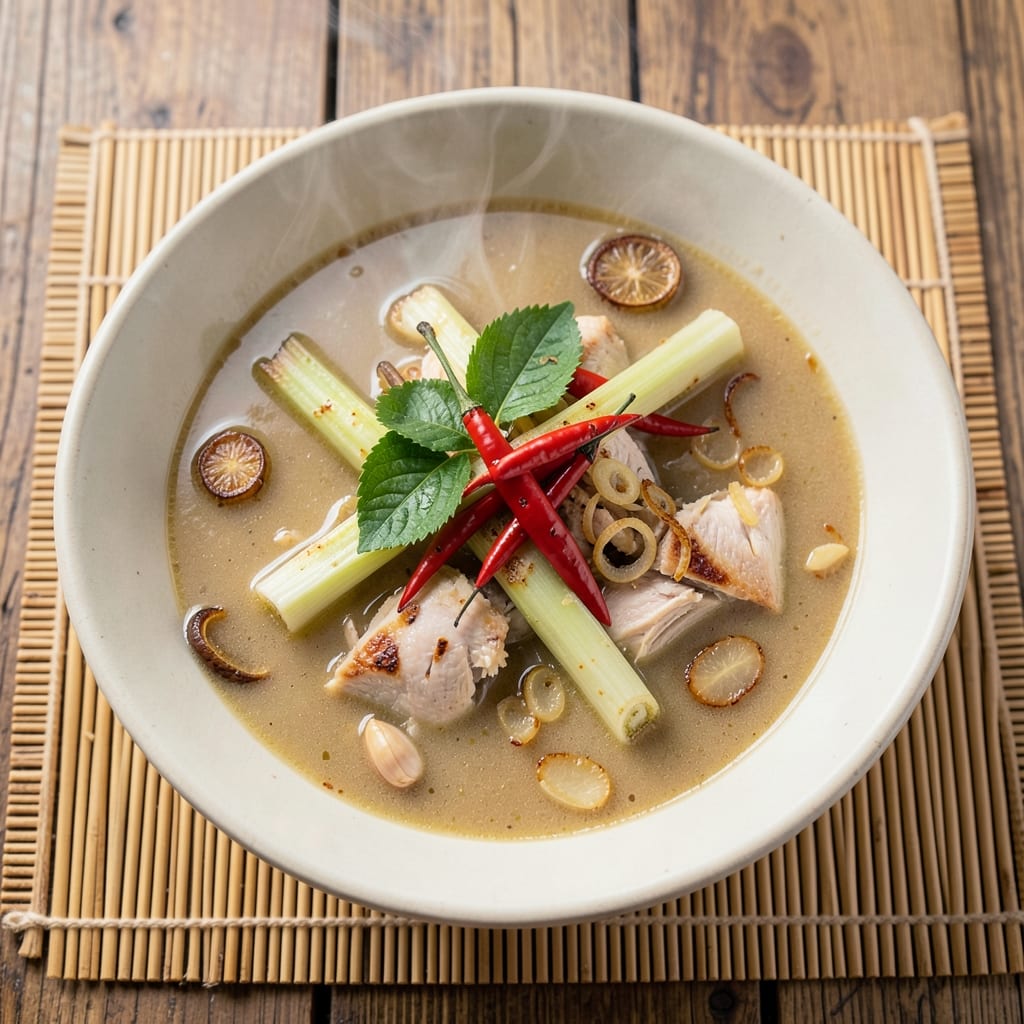
This authentic Thai lemongrass soup recipe transports you to bustling Bangkok street markets with its aromatic broth and perfect balance of citrus and herbs. The secret lies in fresh lemongrass, galangal, and kaffir lime leaves—ingredients that infuse the soup with layers of fragrant complexity. I've perfected this version through years of testing, ensuring every spoonful delivers the true essence of Thai cuisine without shortcuts.
The foundation begins with a fragrant broth where lemongrass and galangal simmer until their oils release, creating that signature Thai aroma. Coconut milk adds richness while balancing the bright citrus notes from lime juice and fish sauce. Traditional techniques like blooming the spices in hot oil and simmering gently ensure maximum flavor extraction without bitterness.
What makes this recipe truly authentic is the careful balance of flavors—sour from lime, spicy from chili, and herbal from fresh basil. The result is a clear, fragrant broth with tender vegetables or protein, all harmonized in perfect proportion. Each ingredient plays a crucial role, from the aromatic herbs to the umami depth of fish sauce.
This soup serves as both a comforting meal and a celebration of Thai culinary tradition. Whether you're serving it at a dinner party or enjoying a quiet weeknight supper, the authentic techniques and fresh ingredients ensure every bowl tastes like it was made in a Bangkok kitchen. Let's create this fragrant masterpiece together.
Ingredients for authentic thai lemongrass soup
Fresh herbs and aromatic roots create this fragrant Thai masterpiece with perfect citrus balance.
| Ingredient | Amount | Notes |
|---|---|---|
| Fresh Lemongrass Stalks 🌿 | 3 whole | Bruised to release oils, bottom 3 inches only |
| Galangal Slices 🌿 | 3 pieces | Peeled, 1-inch thick slices |
| Kaffir Lime Leaves 🍋 | 4 whole | Bruised for aroma, stems removed |
| Thai Bird's Eye Chilies 🌶️ | 3 whole | Seeds removed for mild heat |
| Shallots 🧅 | 4 whole | Peeled, thinly sliced |
| Garlic Cloves 🧄 | 6 cloves | Minced for depth |
| Coconut Milk 🥥 | 1 ½ cups | Full-fat, canned preferred |
| Vegetable or Chicken Stock 💧 | 4 cups | Homemade preferred, low-sodium |
| Lime Juice 🍋 | ¼ cup | Freshly squeezed |
| Fish Sauce 🍶 | 2 tbsp | Red Boat preferred |
| Palm Sugar 🍯 | 2 tbsp | Or brown sugar in pinch |
| Fresh Thai Basil Leaves 🌿 | ½ cup | Torn, not chopped |
| Protein of Choice 🍗 | 1 lb | Chicken thigh or shrimp |
| Vegetable Oil 🫒 | 2 tbsp | For blooming spices |
| Salt 🧂 | 1 tsp | Diamond Crystal preferred |
The aromatic trio—lemongrass, galangal, and kaffir lime leaves—demands freshness for authentic flavor. Asian markets carry these best, but most grocery stores stock them in the produce section. Look for lemongrass with tight stalks (avoid wilted) and galangal with firm, pale yellow flesh. The Red Boat fish sauce is non-negotiable for that signature umami depth; don't substitute with generic brands. For protein, chicken thighs hold up best to the long simmer, while shrimp cooks in just minutes—add it at the end. The Thai basil should be bright green with no black stems, available at specialty markets or well-stocked grocery stores.
No galangal? Substitute ginger at half the amount, though it won't replicate the citrusy depth. Out of kaffir lime leaves? Double the lime zest from regular limes, but you'll miss the floral aroma. The palm sugar can be swapped for brown sugar, though it lacks the caramel notes. For heat control, remove chili seeds for mild or keep them for authentic spice. The coconut milk must be full-fat—light versions thin the soup. And if you're vegetarian, use vegetable stock instead of chicken, but add an extra 1 tbsp soy sauce for umami. The shallots and garlic should be minced finely for proper flavor infusion.
This soup shines when made fresh, but the broth freezes beautifully for up to 3 months—just thaw and reheat gently. Store the protein separately if prepping ahead. For serving, keep the lemongrass, galangal, and lime wedges on the table so guests can adjust heat and citrus to taste. The Thai basil wilts quickly, so add it last or serve it on the side. Reheat slowly over low heat to preserve the delicate aromatics—never microwave. Leftovers keep 4-5 days in the fridge, though they rarely last that long.
Why You'll Love This Recipe
- I’ll be real: the shallots and lemongrass look intimidating, but you only need to smash the galangal and slice the shallots thin—no dice, no fuss. The lemongrass just gets bruised and tossed in whole, and suddenly you’re a Thai kitchen pro.
- No Chopping Nightmare: I’ll be real: the shallots and lemongrass look intimidating, but you only need to smash the galangal and slice the shallots thin—no dice, no fuss. The lemongrass just gets bruised and tossed in whole, and suddenly you’re a Thai kitchen pro.
- Herb-Packed Punch: That first sip? Citrusy, spicy, and earthy all at once—galangal’s peppery kick meets lemongrass’s brightness, with kaffir lime leaves adding a floral whisper. It’s the kind of flavor that makes you pause mid-slurp, like, “Wait, why isn’t everything this good?”
- Leftover Goldmine: This soup begs for seconds, and the best part? It tastes even better the next day. Reheat it with a splash of coconut milk and a squeeze of lime, and suddenly you’ve got a 10-minute lunch that feels like a restaurant meal.
Step-by-step instructions for authentic Thai lemongrass soup
Mastering this fragrant soup comes down to technique and patience—each aromatic element must bloom properly.
Bloom the Aromatics in Vegetable Oil
Heat the 2 tablespoons vegetable oil in a heavy-bottomed pot over medium-low heat. Add the 4 whole shallots and 6 cloves garlic, cooking until the shallots soften and turn translucent—about 5 minutes. This gentle cooking prevents burning while allowing their flavors to develop fully.
Next, add the 3 pieces galangal slices and 3 whole lemongrass stalks (bruised and cut to 3-inch pieces). Cook for another 3 minutes until the galangal releases its piney aroma. The lemongrass should infuse the oil with its citrusy essence without browning. If the oil starts to smoke, reduce heat immediately—this is your cue to lower the temperature further.
Add Chilies, Kaffir Lime Leaves, and Stock
Increase heat to medium and add the 3 whole Thai bird's eye chilies (seeds removed) and 4 whole kaffir lime leaves. Stir for 1 minute to bloom their flavors—you'll notice the chilies darken slightly and the lime leaves release their floral aroma. This step is critical for building the soup's signature complexity.
Pour in the 4 cups vegetable or chicken stock and bring to a gentle simmer. Add the 1 teaspoon salt and 2 tablespoons palm sugar, stirring until dissolved. The sugar should caramelize just enough to balance the soup's acidity without crystallizing. Taste and adjust seasoning—authentic Thai soups rely on this delicate equilibrium between sweet, salty, and umami.
Cook the Protein Until Tender
Add the 1 lb protein of choice (chicken thigh or shrimp) and simmer gently for 10-12 minutes until fully cooked. For chicken, use an instant-read thermometer to confirm it reaches 165°F. For shrimp, they should turn opaque and curl slightly. Overcooking will make them rubbery—remove them as soon as they're done and set aside.
Here's the thing—don't skip the resting period. Let the protein rest for 5 minutes before adding it back to the soup. This prevents it from becoming tough as it finishes cooking in the hot broth. The broth should now be fragrant and deeply aromatic, with the lemongrass and galangal flavors fully integrated.
Finish with Coconut Milk and Acid
Reduce heat to low and slowly whisk in the 1.5 cups coconut milk. Stir constantly to prevent curdling—this is where many home cooks go wrong. The coconut milk should melt smoothly into the broth, creating a velvety texture without breaking. If the soup appears too thick, add ¼ cup hot stock to adjust consistency.
Stir in the 0.25 cup lime juice and 2 tablespoons fish sauce, tasting as you go. The lime juice brightens the flavors while the fish sauce adds depth. The soup should now balance all elements: the herbal galangal, citrusy lemongrass, sweet palm sugar, and salty fish sauce. If it tastes too acidic, add a pinch more sugar; if it needs more umami, add another splash of fish sauce.
Garnish and Serve Immediately
Return the protein to the pot and heat through for 1-2 minutes. Ladle the soup into bowls, then garnish each serving with 0.5 cup fresh Thai basil leaves (torn, not chopped). The basil should float on top, releasing its anise-like aroma when the soup is served. Serve immediately while the broth is steaming hot—this soup loses its vibrant character as it cools.
Each spoonful should deliver a harmonious blend of herbal, citrusy, and creamy notes. The lemongrass should be perceptible but not overpowering, while the galangal adds a subtle piney warmth. The coconut milk should create a luxurious mouthfeel without masking the broth's complexity. This is the essence of authentic Thai lemongrass soup—where every ingredient plays its part in perfect balance.
Pro Tips For Making Authentic Thai Lemongrass Soup
- BLEND LEMONGRASS ROUGH: I used to finely chop lemongrass and end up with a bitter, fibrous mess. Now I split the stalk lengthwise, scrape out the pale inner pith with a spoon (discard the tough outer layers), then chop just that—about 3 inches of pith per bowl of soup. The texture becomes silky, not stringy, and the flavor stays bright.
- STIR-FRY SHALLOTS UNTIL GOLDEN: Skip the quick sauté—let those shallots actually caramelize for 5-7 minutes until they’re deep golden, not just softened. This builds the soup’s base flavor, and you’ll taste the difference when the coconut milk comes in. (Yes, it’s tempting to rush, but don’t.)
- TIE KAFFIR LIME IN A BAG: Toss 2-3 whole kaffir lime leaves into a small cheesecloth pouch before adding to the pot. You’ll extract the aromatic oils without the leaves turning to mush in the broth—just fish it out before serving. (No more straining soup through tiny leaf bits.)
- SIMMER GALANGAL LOW AND SLOW: Galangal burns faster than you’d think. After adding it with the lemongrass, reduce heat to low and let it steep for 10 minutes before adding chilies or coconut milk. This coaxes out its citrusy depth without turning the broth bitter. (I learned this after one very sad, acrid batch.)
Wine and beer pairings for this dish
Thai White Wine Pairings
For this fragrant soup, I reach for crisp, aromatic Thai white wines that mirror its herbal and citrus notes. A Thai Gewürztraminer from Chang or Meaw Chai is perfect—its lychee and rose aromas complement the lemongrass and basil beautifully. The slight sweetness balances the soup's acidity while enhancing the coconut milk's richness. Serve it slightly chilled (45-50°F) to preserve its delicate bouquet. 🍷
Light Beer Complements
A Thai lager like Singha or Leo is my go-to beer pairing—its clean, crisp profile cuts through the soup's creamy texture without overpowering. The subtle malt sweetness harmonizes with the palm sugar, while the effervescence cleanses your palate between bites. For a craft option, try a Thai-style wheat beer with citrus notes, like those from Bangkok Beerworks. Serve at 40-45°F to maintain its refreshing quality.
Rosé for Versatility
If you prefer red wine, a Thai rosé from Chateau La Vie offers surprising versatility. Its dry profile and red fruit undertones bridge the soup's herbal and creamy elements. The acidity in rosé mirrors the lime juice, while its subtle tannins complement the coconut milk's texture. Serve at 50-55°F to let its floral notes shine alongside the Thai basil. 🌸
Non-Alcoholic Options
For non-drinkers, a Thai iced tea (like Thai Iced Tea from Chaokoh) is a refreshing match—its sweetness and herbal notes echo the soup's flavors. Alternatively, a sparkling lime soda with a splash of Thai fish sauce (yes, really!) adds umami depth while keeping it light. The effervescence mirrors the broth's fragrant steam, making it a surprisingly authentic pairing.
Serving Temperature Tips
All beverages should be served slightly cooler than room temperature to enhance their aromatics. For wine, I chill mine for 15-20 minutes before serving, while beer benefits from 30 minutes in the fridge. The key is to let the drink's crispness contrast with the soup's warmth, creating a perfect sensory balance. Pro tip: Keep your glassware clean and dry—moisture dulls the aromas of both the soup and your drink. ✨
Nutrition facts
Frequently asked questions
Why does authentic Thai lemongrass soup have coconut milk if it's supposed to be clear?
The coconut milk adds richness and balances the bright citrus and herbal notes—but it's used judiciously! Traditional versions often feature a creamy finish rather than a completely clear broth. The key is whisking it in slowly at the end to create a velvety texture without curdling. For a clearer version, reduce to ½ cup coconut milk and add extra stock to maintain consistency.
Can I substitute fresh lemongrass with powdered or paste?
Fresh lemongrass is essential for authentic flavor—its oils release beautifully when bruised and simmered. Powdered or paste won't provide the same citrusy depth. If you absolutely must substitute, use 1 tbsp lemongrass paste per stalk, but add it directly to the broth and simmer longer to extract the flavor. The aroma will still be present but less complex.
How do I adjust the heat level for picky eaters?
Remove all chili seeds before adding them to the broth for mild heat, or reduce the quantity to 1-2 chilies. For no heat at all, omit the chilies entirely and add a pinch of sugar to balance the acidity. The galangal already provides herbal warmth without spice, so the soup will still taste authentically fragrant.
What's the best way to store leftovers?
Store the soup in an airtight container and refrigerate for up to 4-5 days. The broth's flavors deepen overnight, but reheat gently over low heat to preserve the delicate aromatics. For longer storage, freeze the broth separately from the protein (which cooks faster when reheated). Thaw overnight in the fridge before reheating.
Can I make this soup vegetarian?
Replace the protein with mushrooms (shiitake or oyster) or tofu for texture. Use vegetable stock and add 1 tbsp soy sauce for umami depth. The galangal and lemongrass flavors will still shine, though the broth will be lighter. Garnish with extra Thai basil and lime wedges to enhance freshness.