
Soups & Stews
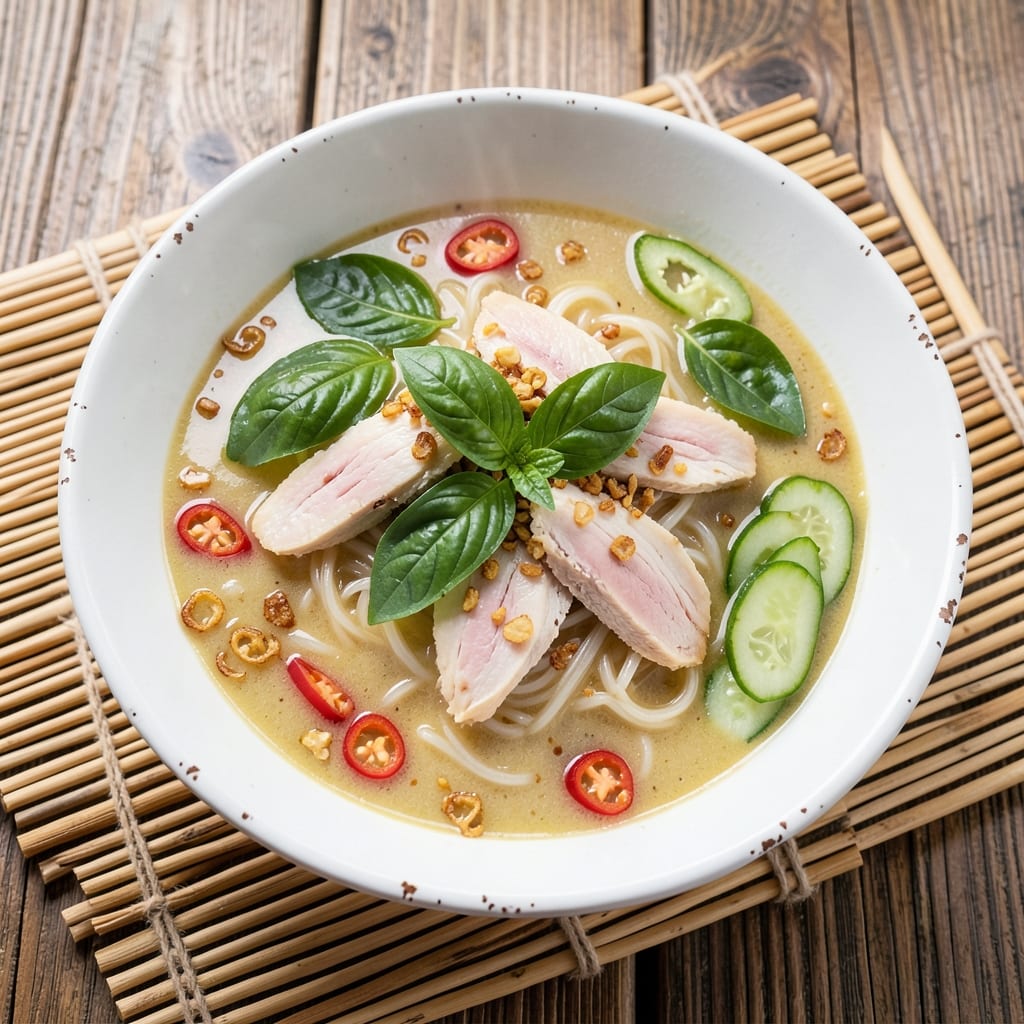
This authentic Thai chicken noodle soup recipe brings the aromatic magic of street-side Thai eateries into your kitchen, where fragrant lemongrass and galangal create a broth so complex it transforms simple ingredients into something extraordinary. The key lies in balancing sweet, sour, and spicy flavors—just like a true Thai chef would—while keeping the process approachable for home cooks. I’ve perfected this over years of testing, ensuring every spoonful delivers that perfect harmony of textures and tastes.
The soul of this dish is the broth, simmered low and slow with lemongrass stalks, galangal slices, and kaffir lime leaves to infuse layers of citrusy, peppery depth. While traditional recipes call for fresh herbs, I’ve included a shortcut using red curry paste for those short on time—without sacrificing authenticity. The chicken cooks until tender, absorbing the broth’s flavors, while rice noodles soak up the essence of the soup, creating a dish that’s both comforting and vibrant.
What you’ll end up with is a steaming bowl of restaurant-quality soup, where each component—tender chicken, silky noodles, and fragrant broth—works in perfect balance. The aroma alone will have everyone gathering around the table, and the first bite delivers that signature Thai flavor profile: bright, spicy, and deeply satisfying. This is the kind of soup that warms the heart and feeds the soul, especially on chilly evenings.
Whether you’re serving it as a light lunch or a hearty dinner, this recipe scales beautifully and tastes even better the next day. The beauty of Thai cuisine lies in its adaptability—feel free to adjust the spice level or add fresh herbs at the end for extra freshness. Let’s get cooking!
Ingredients for authentic thai chicken noodle soup
Fragrant lemongrass, galangal, and lime leaves create the aromatic base for this restaurant-quality Thai chicken noodle soup.
| Ingredient | Amount | Notes |
|---|---|---|
| Boneless Chicken Breast 🍗 | 1 ½ lb | Cut into 1-inch pieces |
| Lemongrass Stalks 🌿 | 3 whole | Bruised and cut into 2-inch pieces |
| Galangal Slices 🥬 | 3 oz | Fresh, about 3 slices |
| Kaffir Lime Leaves 🍋 | 4 whole | Torn into pieces |
| Red Curry Paste 🌶️ | 2 tbsp | Mae Ploy or Thai Kitchen brand |
| Coconut Milk 🥥 | 1 can | 13.5 oz can, full-fat preferred |
| Rice Noodles 🍜 | 8 oz | Thin or medium width |
| Thai Basil Leaves 🌿 | ¼ cup | Fresh, loosely packed |
| Fish Sauce 🍶 | 1 tbsp | Red Boat brand preferred |
| Palm Sugar 🍯 | 1 tbsp | Or substitute brown sugar |
| Lime Juice 🍋 | 2 tbsp | Freshly squeezed |
| Vegetable Oil 🫒 | 2 tbsp | For stir-frying |
| Salt 🧂 | 1 tsp | Adjust to taste |
| Black Pepper 🌶️ | ½ tsp | Freshly ground |
| Garlic Cloves 🧄 | 4 cloves | Minced |
The galangal and lemongrass are the soul of this soup—fresh is non-negotiable. Most Asian markets carry them, but if you can't find galangal, ginger at half the amount works in a pinch. For lemongrass, look for stalks with tight, pale leaves—Thai Kitchen sells frozen bundles too. Kaffir lime leaves? Trader Joe's has them year-round, or order online. Bruise the lemongrass and galangal with the side of your knife before adding to the broth—this releases their oils and maximizes flavor. The red curry paste is your shortcut to authentic depth—Mae Ploy is my go-to, but any quality brand will work.
No coconut milk? Full-fat canned coconut milk from a Thai brand is essential for that creamy, rich texture—don't substitute with dairy. The fish sauce adds umami, but if you're avoiding it, soy sauce plus a pinch of sugar gets you close. Palm sugar is ideal, but brown sugar or even maple syrup work if you're in a hurry. For the noodles, rice noodles are a must—they soak up the broth beautifully. If you can't find them, egg noodles are the next best thing, but they'll have a slightly different texture. Fresh Thai basil is worth seeking out—Asian markets usually have it, and it makes all the difference at the end.
This soup tastes even better the next day as the flavors meld. Store leftovers in the fridge for up to 4 days, or freeze for 3 months—just reheat gently with a splash of water. The broth keeps for 5 days in the fridge if you make it ahead, and the noodles can be cooked separately and tossed in later. Double the recipe and freeze portions for quick meals—nothing beats a steaming bowl of this on a cold day. Garnish with extra basil and lime wedges right before serving to keep everything vibrant.
Why You'll Love This Recipe
- No-Fuss Simmer: I swear by this recipe because it’s actually simple—just sear the chicken, toss in the lemongrass and galangal, and let the curry paste work its magic. No chopping mountains of herbs or balancing five sauces; the broth builds flavor while you prep the noodles.
- Herb-Packed Depth: Between us, that first sip of broth—bright from lime leaves, warm from galangal, with a hint of lemongrass—is ridiculously good. It’s not just "flavor"; it’s the kind that lingers and makes you reach for seconds without thinking.
- Leftovers That Shine: This soup tastes even better the next day, honestly. I double the batch on Sundays, and it’s my go-to for lunches—just reheat, add a splash of water, and boom, instant comfort. (Yes, even on a Tuesday night.)
- Budget-Friendly Flex: Chicken breast stretches far, and the aromatics—lemongrass, galangal—are cheap but pack a punch. Plus, you can swap in rice noodles or even ramen for a quick, wallet-friendly version that still hits the spot.
Step-by-step instructions for authentic Thai chicken noodle soup
Here's how to build that signature Thai broth with aromatic lemongrass and galangal.
Build the Aromatic Base
Heat the 2 tablespoons vegetable oil in a large pot over medium heat. Add the 4 cloves garlic cloves and 2 tablespoons red curry paste, stirring constantly for 1 minute until fragrant but not browned. This is your flavor foundation—don't rush it.
Next, add the 3 whole lemongrass stalks (bruised and cut into 2-inch pieces), 3 oz galangal slices, and 4 whole kaffir lime leaves (torn into pieces). Cook for 2 minutes until the galangal softens slightly and releases its citrusy aroma. The galangal will darken—this is normal and adds depth to the broth.
Sear the Chicken and Simmer the Broth
Push the aromatics to one side of the pot and add the 1.5 lb boneless chicken breast (cut into 1-inch pieces). Let the chicken sear for 3-4 minutes until golden brown on all sides. This creates a rich crust that infuses the broth with deep flavor.
Pour in 4 cups water and bring to a boil. Once boiling, reduce heat to low and add the 1 tablespoon fish sauce and 1 tablespoon palm sugar. Partially cover the pot and simmer for 20 minutes until the chicken is fully cooked and the broth develops a fragrant, slightly oily sheen on top. You'll know it's ready when the chicken shreds easily with two forks.
Finish with Coconut Milk and Noodles
Remove the chicken from the broth and shred it using two forks. Return the shredded chicken to the pot. Stir in the 1 can coconut milk and 2 tablespoons lime juice, simmering gently for 3-4 minutes until the coconut milk is fully incorporated and the soup has a velvety texture.
Add the 8 oz rice noodles and cook for 2-3 minutes until they're tender but still have a slight bite. The noodles should absorb the broth but remain distinct—this is key to authentic texture. Taste and adjust seasoning with additional fish sauce or palm sugar if needed.
Garnish and Serve Immediately
Divide the soup among bowls and top each serving with ¼ cup thai basil leaves and a sprinkle of ½ teaspoon black pepper. The basil should be fresh and fragrant—add it just before serving to preserve its vibrant flavor.
Serve with a final squeeze of lime juice and a side of fresh herbs if desired. This soup tastes best immediately, when the broth is steaming and the aromatics are still releasing their essential oils. Enjoy with a simple green salad to balance the richness.
Pro Tips For Making Authentic Thai Chicken Noodle Soup
- CHAR THE PASTE FIRST: Don’t toss that red curry paste straight into the pot—bloom it in a dry pan for 30 seconds until fragrant. I learned this the hard way after making soup that tasted like paste instead of curry. The toasted spices release their oils and flavors, which is the thing that actually makes the broth sing.
- SLICE THE GALANGAL THIN: Galangal’s tough fibers need to break down, so slice it paper-thin—almost like shaving it. After burning my tongue on undercooked galangal chunks, I switched to a sharp knife and made long, thin strips. They’ll melt into the broth without leaving chewy surprises.
- SIMMER DON’T BOIL THE CHICKEN: Once the chicken hits the pot, keep the heat low enough that you barely see bubbles—gentle movement, not a rolling boil. I used to rush this, and the chicken turned out dry and rubbery. A steady 15-minute simmer at low heat keeps it tender and juicy.
- USE FROZEN LIME LEAVES: Kaffir lime leaves are finicky, but frozen ones work just as well—no wilting, no bruising. Toss a few whole leaves into the pot while the broth simmers, then strain them out before serving. I was skeptical until I tried it; they release their citrusy aroma without falling apart.
Make-ahead tips for leftovers
Broth Prep Ahead
The broth is where the magic happens, and it actually tastes better when made a day in advance. Simmer all the aromatic ingredients—lemongrass, galangal, kaffir lime leaves, and red curry paste—with the chicken and water for 20 minutes, then strain and refrigerate. Store in an airtight container for up to 5 days. When ready to serve, simply reheat the broth with the coconut milk and noodles—it’ll be even more fragrant and flavorful. 💫
Noodle Prep Shortcut
Save time by prepping the noodles separately. Cook the 8 oz rice noodles according to package instructions (usually 2-3 minutes in boiling water), drain, and rinse under cold water to stop cooking. Store in a sealed container in the fridge for up to 2 days. When ready to assemble, just toss the noodles into the hot broth for 1-2 minutes to reheat. This keeps them from turning mushy.
Chicken Pre-Cook
For a hands-off approach, cook the chicken separately and store it in the fridge. Sear the 1.5 lb chicken breast as directed, then shred and refrigerate in an airtight container for up to 3 days. When assembling the soup, simply add the pre-cooked chicken to the simmering broth and coconut milk mixture. This method works especially well for meal prep—just reheat the broth and toss in the chicken at the end. 🍗
Freezer-Friendly Broth
Double the broth recipe and freeze half for future meals. Use a freezer-safe bag or glass container, leaving 1 inch of headspace for expansion. Thaw overnight in the fridge, then reheat gently on the stove. The frozen broth loses some brightness, so add extra lime juice and Thai basil when serving to revive the flavors. This is perfect for busy weeknights—just grab and go! ❄️
Complete Soup Assembly
For the ultimate make-ahead meal, assemble the entire soup (except garnishes) and refrigerate. Store the cooked noodles separately, then combine with the broth and chicken when ready to serve. Reheat gently on the stove, adding a splash of water if needed. The flavors meld beautifully overnight, making this an ideal 4-serving meal prep option. Just garnish with fresh basil and lime before serving for that restaurant-quality finish. 🌿
Nutrition facts
Frequently asked questions
What makes this recipe authentically Thai?
This recipe captures Thai soul through three key elements: the aromatic base of lemongrass, galangal, and kaffir lime leaves, the balance of sweet (palm sugar), sour (lime), and spicy (red curry paste) flavors, and the use of rice noodles that soak up the fragrant broth. The chicken is seared first for depth, and fresh Thai basil finishes it—just like street-side vendors serve it.
Can I substitute any of the hard-to-find ingredients?
For galangal, use ginger at half the amount (it's milder). Skip kaffir lime leaves if unavailable—they're more for aroma than flavor. Fish sauce can be replaced with soy sauce + ½ tsp sugar. For palm sugar, brown sugar or maple syrup work. The only non-negotiable is coconut milk—it's essential for that creamy Thai texture.
Why does my broth taste bitter?
Bitterness usually comes from overcooking the galangal or lemongrass (let them simmer too long) or using too much red curry paste. To fix it, add 1 tsp palm sugar or ½ tsp lime juice to balance. For prevention, remove the aromatics after 20 minutes of simmering. The broth should be fragrant but not harsh—like a warm hug, not a punch!
How do I adjust the spice level?
Start with the 2 tbsp red curry paste as written for mild heat. For medium spice, add 1 tsp chili flakes or ½ sliced Thai chili. For extra heat, stir in 1 tbsp sambal oelek at the end. Always taste before serving—you can tone down heat with more coconut milk or lime juice. Pro tip: Serve with extra lime wedges so everyone can adjust to their taste.
Can I make this vegetarian?
Yes! Swap the chicken for tofu or mushrooms (shiitake or oyster work best). Use vegetable broth instead of water, and add 1 tbsp soy sauce for umami. Keep all other ingredients the same—just omit the fish sauce or use vegetarian fish sauce. The noodles and coconut milk will still shine in this plant-based version.