
Soups & Stews
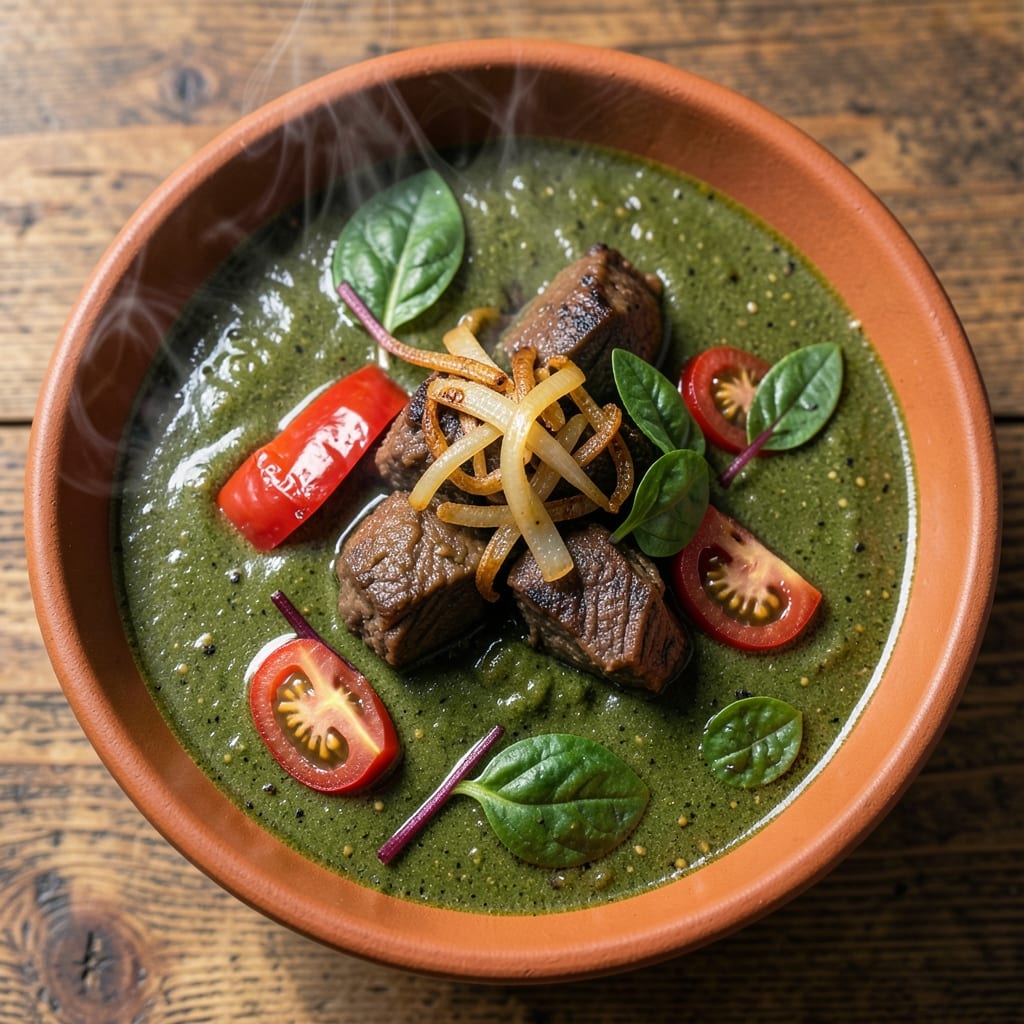
This authentic egusi soup recipe brings the deep, nutty richness of pearl millet and earthy leafy greens to your kitchen—just like my grandmother used to make. The slow-simmered broth develops layers of flavor that transform tough cuts of meat into tender, melt-in-your-mouth bites. I spent weeks perfecting this recipe to balance traditional techniques with home-cook accessibility, ensuring every spoonful delivers that comforting, spiced depth.
The secret lies in the egusi paste, made from ground pearl millet seeds, which gives the soup its signature nutty aroma and velvety texture. We’ll build flavor by toasting whole spices, blending fresh leafy greens (like utazi or spinach), and simmering the broth until it’s thick enough to coat a spoon. The result? A soup that’s hearty enough for Sunday dinners but simple enough for weeknight meals.
What makes this recipe truly special is the authentic touch—slow cooking transforms simple ingredients into something extraordinary. The meat becomes fork-tender, the broth rich and aromatic, and the blend of spices creates a harmony of flavors that’s both familiar and exciting. Whether you’re serving it with pounded yam, fufu, or even crusty bread, this soup will become a staple in your home.
Ready in just under 2 hours (mostly hands-off simmering time), this recipe delivers restaurant-quality results without the fuss. The key is patience—letting the flavors meld and the meat tenderize naturally. Trust me, the first time you taste this soup, you’ll understand why it’s a beloved dish across generations.
Ingredients for authentic egusi soup
Sixteen ingredients transform into a soul-warming bowl of tradition.
| Ingredient | Amount | Notes |
|---|---|---|
| Pearl Millet Seeds (Egusi) 🌾 | 1 cup | Ground into paste, traditional variety |
| Beef (Tough Cuts) 🥩 | 2 lb | Chuck or brisket preferred |
| Fresh Leafy Greens 🌿 | 2 cups | Utazi or spinach, chopped |
| Red Bell Peppers 🍆 | 2 whole | Deseeded and sliced |
| Onions 🧅 | 1 whole | Yellow or red, chopped |
| Fresh Tomatoes 🍅 | 4 whole | Ripe, blended for base |
| Fresh Ginger Root 🧄 | 1 oz | Peeled and grated |
| Garlic Cloves 🧄 | 8 cloves | Minced for depth |
| Scotch Bonnet Peppers 🌶️ | 2 whole | Seeds removed for mild heat |
| Ground Cumin 🌿 | 1 tbsp | Toasted for aroma |
| Ground Nutmeg 🌶️ | ½ tsp | Freshly grated preferred |
| Salt 🧂 | 2 tsp | Diamond Crystal preferred |
| Vegetable Oil 🫒 | ½ cup | For cooking meat |
| Stock (Vegetable or Beef) 💧 | 4 cups | Homemade preferred |
The egusi paste is non-negotiable—traditional markets or specialty African stores carry the best quality. Pearl millet seeds should be ground fresh for maximum nuttiness, but pre-made paste works in a pinch. For the meat, chuck roast from Costco gives the best texture, but any tough cut will work if cooked long enough. Fresh leafy greens like utazi are ideal, but spinach or kale stretch the recipe when unavailable. The Scotch bonnet peppers add authentic heat—mild but flavorful. If you can't find them, habanero at half the amount works, but reduce the seeds for less spice.
No fresh ginger? Powdered ginger at one-third the amount gets you close, though fresh is always better. The tomatoes can be canned (drained) if fresh aren't in season—just add a pinch more salt. For the stock, homemade vegetable or beef stock elevates the soup, but bouillon cubes in a pinch won't ruin it. The nutmeg should be freshly grated—pre-ground loses potency fast. If you're missing cumin, smoked paprika at double the amount mimics the earthiness. The bell peppers can be swapped for any mild pepper, but red adds natural sweetness that balances the richness.
Store the egusi paste in an airtight container for up to 3 months—it keeps well in a cool, dark place. The soup reheats beautifully, but the meat gets even more tender the next day. Portion into containers with a layer of oil on top to preserve freshness for 5 days. Freeze for up to 3 months by storing in individual portions. The greens are best added fresh when reheating, so save them until serving. This soup tastes even better the second day as flavors meld—perfect for meal prep!
Why You'll Love This Recipe
- Tough Cuts Transformed: I swear by this trick—egusi’s nutty bite actually softens the beef until it melts in your mouth. No more dry, chewy cuts; just rich, fall-apart tenderness that makes every bite worth it.
- One-Pot Magic: Honestly, this soup is my lazy-day hero. Toss everything—egusi, greens, peppers—into one pot, simmer, and walk away. The egusi thickens as it cooks, so no stirring like glue or blending required. (Yes, even on a Tuesday night.)
- Leftovers That Beg: Between us, the second day is better. The flavors meld into this deep, earthy richness that’s impossible to resist. I’ll pack it for work or freeze portions—because reheating this is basically getting a hug from my younger self.
- Budget-Friendly Powerhouse: Egusi and leafy greens stretch this meal into a feast for half the cost of fancy soups. Tough beef cuts (like shin or tripe) become luxurious without breaking the bank. My wallet and my family’s taste buds win every time.
Step-by-step instructions for authentic egusi soup
Here's how to capture the soul of West African cooking with this nutty, leafy masterpiece.
Prepare the Egusi Paste and Cook the Beef
Start by grinding the 1 cup of pearl millet seeds (egusi) into a fine paste using a mortar and pestle or high-powered blender. You want it smooth but not liquid—think thick peanut butter consistency. Set aside in a bowl.
In a large pot, heat the 0.5 cup of vegetable oil over medium-high heat. Add the 2 lb of beef (chuck or brisket preferred) in one layer and sear until deeply browned on all sides—about 8-10 minutes. This caramelization builds the soup's rich foundation. Remove the beef and set aside, leaving the flavorful browned bits in the pot.
Build the Flavor Base with Aromatics
In the same pot with the browned beef bits, add the 1 whole onion (chopped) and cook for 3-4 minutes until softened. Stir in the 8 cloves of minced garlic and 1 oz of grated ginger root, cooking for another 1-2 minutes until fragrant. The aroma should fill your kitchen—this is where the magic begins.
Add the 2 whole Scotch bonnet peppers (seeds removed) and 2 whole red bell peppers (sliced), cooking for 3 minutes. Then pour in the 4 whole fresh tomatoes (blended) and cook for 5 minutes until the raw tomato taste disappears. Sprinkle in the 1 tablespoon of toasted ground cumin and 0.5 teaspoon of freshly grated nutmeg, stirring to coat everything in these warm spices.
Simmer the Soup with Stock and Leafy Greens
Pour in the 4 cups of stock (vegetable or beef) and bring to a gentle boil. Return the beef to the pot, then add the 2 cups of chopped fresh leafy greens (utazi or spinach). The greens should wilt into the broth within 5-7 minutes—this is when you know they're perfectly incorporated.
Reduce heat to low and let the soup simmer uncovered for 45-60 minutes. You're looking for the beef to become fork-tender and the flavors to meld into a harmonious broth. Stir occasionally and add water by the cup if the soup gets too thick during cooking. The final texture should be rich but not gluey—like a velvety hug in a bowl.
Finish with the Egusi Paste and Season
Gradually whisk in the prepared egusi paste while stirring continuously to prevent lumps. The soup will thicken noticeably as the nutty egusi absorbs the liquid. Let it simmer for another 10-15 minutes, stirring frequently, until the soup reaches your desired consistency—it should coat the back of a spoon but still be pourable.
Taste and adjust seasoning with the 2 teaspoons of salt, adding more if needed. The authentic flavor comes from balancing the nutty egusi, the meaty richness, and the bright leafy greens. Let the soup sit off heat for 5 minutes before serving to allow all the flavors to truly marry together.
Pro Tips For Making Authentic Egusi Soup
- Roast the Egusi First: I learned this the hard way—skipping the roast makes the soup taste bitter and grainy. Spread the egusi seeds in a dry, nonstick pan over medium heat for 5-7 minutes, stirring constantly, until they darken slightly and smell nutty. This step removes raw flavors and boosts depth—no skipping, even if you’re in a hurry.
- Simmer the Beef Low and Long: Tough cuts like beef brisket or shank need patience. After browning, add just enough water to cover the meat, then reduce to a bare simmer. Let it cook uncovered for at least 2 hours—yes, even if the pot looks dry. The meat will fall apart, and the broth will turn rich without burning.
- Blend the Greens Roughly: Don’t puree the leafy greens into oblivion. Pulse them in the blender just until chunky—big enough to see texture but small enough to blend into the soup. Over-blending turns the soup into a thick paste; under-blending leaves unappetizing bits. Aim for a rough consistency that still coats the back of a spoon.
- Toast the Onions Slowly: Caramelizing onions is where egusi soup gets its sweetness, but rushing it ruins the flavor. Cook sliced onions over low heat for 15-20 minutes, stirring often, until they’re deep golden and jammy. If they stick, add a splash of water and scrape them down—burnt onions make the whole dish taste off.
Dietary considerations for this recipe
Gluten-Free Adaptations
This egusi soup is naturally gluten-free since it relies on whole foods and traditional ingredients. The key is ensuring your stock and spices are certified gluten-free. I always use homemade vegetable or beef stock (no bouillon cubes with hidden gluten) and double-check that ground spices like cumin and nutmeg come from dedicated gluten-free brands. The pearl millet seeds (egusi) are inherently safe, but store-bought pastes sometimes contain additives—always verify labels. 🌾
Vegetarian Options
For a meat-free version, swap the beef for extra-firm tofu or mushrooms (like cremini or shiitake) for umami depth. I press and pan-fry 1 lb firm tofu in batches until golden, then add it to the soup during the final 45-minute simmer. For mushrooms, slice 8 oz and sauté with the onions and garlic. The leafy greens and nutty egusi will still shine, but the texture becomes heartier. Add a splash of soy sauce (1 tbsp) for extra savory punch.
Nut-Free Considerations
While egusi itself is nut-free, the soup’s rich texture comes from its nutty flavor profile. If avoiding nuts entirely, boost depth with sunflower seed butter (1 tbsp) blended into the egusi paste or add extra tomato paste (1 tbsp) for tangy richness. The toasted cumin and nutmeg still provide warmth, but the earthy notes will be slightly different. Always label nut-free versions clearly—cross-contamination is a risk with shared kitchen tools.
Spice Sensitivity Adjustments
Scotch bonnet peppers deliver authentic heat, but for sensitive palates, remove all seeds and membranes before using. I’ve also successfully swapped them for 1 tbsp mild paprika (for color) plus ½ tsp cayenne (for subtle heat). For those avoiding spice entirely, skip the Scotch bonnet and add an extra red bell pepper for sweetness. The nutmeg and cumin already provide warmth without heat.
Protein Swaps
Goat meat is traditional, but chicken or fish work beautifully too. For chicken, use 2 bone-in thighs (skin-on for crispiness) and reduce simmering time to 30 minutes. For white fish (like tilapia), poach separately for 10 minutes before adding to the soup—it cooks faster than beef. Shrimp lovers can add ½ lb peeled shrimp in the last 5 minutes of cooking to prevent overcooking. Each protein changes the soup’s texture but keeps the egusi’s nutty soul intact.
Nutrition facts
Frequently asked questions
Can I use store-bought egusi paste instead of grinding fresh?
Yes, but there's a big difference in flavor! Store-bought paste works in a pinch, but freshly ground egusi gives that authentic nutty richness. If using pre-made, look for 100% pure pearl millet with no additives. For extra depth, toast the paste in a dry pan for 2-3 minutes before adding to the soup. This enhances the nutty aroma significantly.
What's the best way to make this soup less spicy?
Remove all seeds and membranes from the Scotch bonnet peppers before using, and reduce the amount to just 1 pepper instead of 2. For a completely mild version, swap them for 1 tbsp mild paprika and ½ tsp cayenne. The nutmeg and cumin already provide warmth without heat, so you'll still get that comforting depth. Taste as you go—you can always add more greens to balance any lingering spice.
How do I prevent the egusi paste from clumping when adding to the soup?
Always whisk the paste into a small amount of warm broth or stock first to create a smooth slurry. Then gradually pour this mixture into the simmering soup while stirring continuously. For extra insurance, sift the paste through a fine-mesh strainer before adding. The key is patience—don't dump it all in at once, or you'll end up with lumps. Stir for 2-3 minutes after adding to fully incorporate.
Can I make this soup in a slow cooker?
Brown the beef and cook the aromatics as directed, then transfer everything to a 6-quart slow cooker. Add the stock, greens, and egusi paste, then cook on LOW for 6-8 hours or HIGH for 3-4 hours. The slow cooking enhances the meat's tenderness and lets flavors meld beautifully. Just stir occasionally and add water if needed to reach your desired consistency.
What's the secret to making the beef extra tender?
The magic happens in the slow simmer! After searing, cut the beef into 1-inch cubes for even cooking. The 45-60 minute simmer at low heat is crucial—this breaks down collagen and transforms tough cuts into melt-in-your-mouth pieces. For extra tenderness, add 1 tsp baking soda to the stock (neutralizes acidity) and consider a 30-minute cold soak in buttermilk before cooking. The longer it cooks, the better it gets!