
Soups & Stews
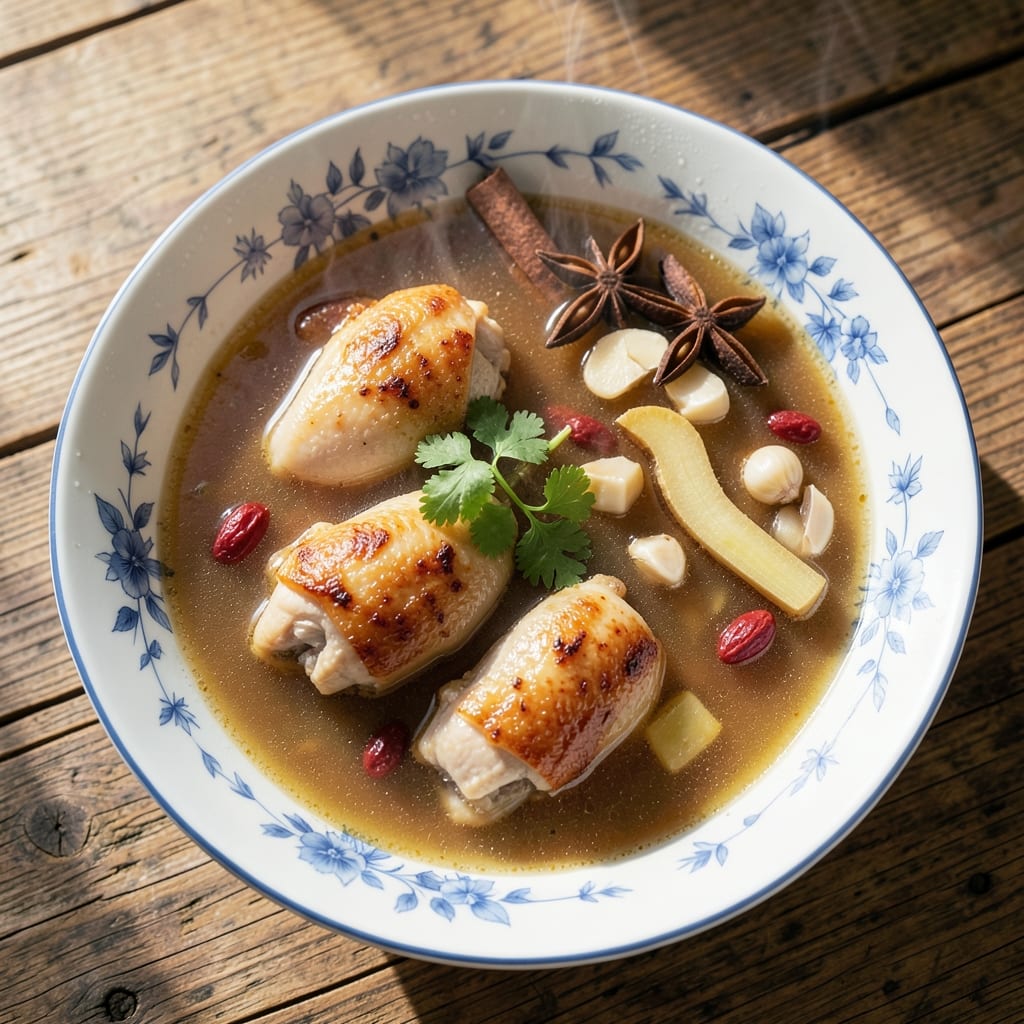
This authentic Chinese chicken soup recipe brings the comforting flavors of home to your kitchen, where star anise and ginger create a fragrant broth that simmers for hours. The slow-cooked chicken becomes tender enough to fall apart, while chewy noodles soak up every drop of that aromatic liquid. I've perfected this dish over years of testing, balancing traditional techniques with home-cooking practicality—no shortcuts, just deep, satisfying flavor.
The secret lies in the broth: simmering chicken bones with star anise, cinnamon, and goji berries unlocks a complexity that store-bought soups can't match. Fresh ginger and garlic add brightness, while a splash of Shaoxing wine deepens the umami. The noodles—wide, chewy, and hand-pulled style—are the perfect vessel for the rich, savory broth. This isn't just soup; it's a restorative, heartwarming experience that tastes like a hug in a bowl.
What makes this recipe truly authentic is the attention to detail: the slow simmer that develops flavor, the careful balance of spices, and the final touch of green onions and cilantro for freshness. Every ingredient plays a role, from the chicken's collagen-rich bones to the goji berries that add subtle sweetness. The result is a bowl of soup that's nourishing, comforting, and impossible to resist—exactly what you'd find in a Cantonese home kitchen.
Serve it steaming hot with a side of jasmine rice or steamed dumplings for the full experience. The leftovers reheat beautifully, making this the ultimate meal-prep-friendly dish. Here's how to make it—step by step, just like my grandmother taught me.
Ingredients for authentic chinese chicken soup
Six pounds of aromatic broth ingredients transform into a comforting bowl of Cantonese tradition.
| Ingredient | Amount | Notes |
|---|---|---|
| Chicken Bones and Meat 🍗 | 3 lb | Collagen-rich for rich broth |
| Fresh Ginger Root 🧄 | 3 oz | Peeled, sliced into thick coins |
| Garlic Cloves 🧄 | 8 cloves | Peeled, lightly smashed |
| Star Anise Pods 🌿 | 2 whole | Whole pods for infusion |
| Cinnamon Sticks 🌿 | 2 whole | 2-inch pieces for aroma |
| Goji Berries 🍇 | ½ cup | Dried, rinsed if dusty |
| Shaoxing Wine 🍷 | ½ cup | Dry Chinese cooking wine |
| Dried Shiitake Mushrooms 🍄 | 4 whole | Rehydrated for umami depth |
| Green Onions 🧅 | ½ cup | Thinly sliced for garnish |
| Fresh Cilantro 🌿 | ¼ cup | Chopped, for brightness |
| Wide Egg Noodles 🍜 | 1 lb | Fresh or dried, chewy texture |
| Light Soy Sauce 🥢 | 2 tbsp | For seasoning broth |
| Sesame Oil 🫒 | 1 tbsp | Toasted, for finishing |
| Salt 🧂 | 1 tsp | Adjust to taste |
The chicken bones are the foundation—look for collagen-rich parts like wings and legs at your local butcher. Asian markets often have pre-cut chicken bones for broth, but if you're using whole pieces, break them into smaller chunks for even cooking. Fresh ginger and garlic are non-negotiable here; organic ginger with tight skin is ideal. Star anise and cinnamon should be whole pods and sticks—Penzeys or local spice shops carry high-quality versions. Goji berries add subtle sweetness, but if you can't find them, dried cranberries at half the amount work in a pinch. Shaoxing wine is the secret weapon—Trader Joe's carries a decent version, but any dry Chinese cooking wine will do.
No Shaoxing wine? Dry sherry or even white wine in a bind, but it won't be identical. Fresh shiitake mushrooms are best, but dried shiitake from the Asian aisle rehydrates beautifully—just soak them in hot water for 20 minutes. For the noodles, fresh egg noodles give that authentic chew, but dried ramen noodles (the wide, flat kind) work if you're in a hurry. The sesame oil should be toasted—look for dark, aromatic bottles at the store. If it smells like nothing, it's not good. And cilantro? Fresh is best, but dried at one-tenth the amount gets you close if you're avoiding it.
Broth keeps for 5 days in the fridge and freezes beautifully for 3 months—just thaw overnight in the fridge. I always make double batches because it's impossible to resist seconds. Store noodles in an airtight container with a paper towel to prevent sogginess. The ginger and garlic can be prepped ahead and frozen in a sealed bag for up to 3 months. Leftovers reheat perfectly—just add a splash of water if they've thickened too much. This soup tastes even better the next day as flavors meld.
Why You'll Love This Recipe
- One-Pot Magic: I swear by this recipe—just toss in chicken bones, a hunk of ginger, and a few whole spices, then let the broth work its magic. No chopping, no fuss, and the house smells like heaven while you’re at it.
- Ginger-Garlic Bomb: That first sip? Pure flavor payoff. The star anise and cinnamon give it this deep, warm backbone, while the garlic and ginger hit like a cozy punch. My kids actually finish their soup—rare for them.
- Leftovers That Shine: Make a big batch, and it only gets better. The broth thickens overnight, and reheating it? Still rich, still soul-warming. I freeze portions for lazy Mondays or when my mom calls and says, “I’m sick.”
- Budget Booster: Chicken bones are cheap, and a few spices stretch this into a week’s worth of meals. Honestly, I save more by making this than buying takeout—plus, it’s way healthier. The star anise? Tiny but mighty, adds depth without cost.
Step-by-step instructions for star-anise infused chicken soup
Here's how to craft a deeply aromatic broth that captures the essence of Chinese home cooking.
Prepare the Chicken and Aromatics
Begin by separating the chicken bones and meat. Clean the bones thoroughly under cold water, removing any remaining meat and discarding cartilage or gristle. Cut the meat into 2-inch chunks and set aside. In a large Dutch oven, combine the 3 lb chicken bones and meat with 3 oz fresh ginger root (peeled and sliced into thick coins), 8 cloves garlic (peeled and lightly smashed), 2 whole star anise pods, and 2 whole cinnamon sticks.
This aromatic bundle forms the soul of your soup. The ginger and garlic will mellow during cooking, while the star anise and cinnamon infuse subtle sweetness and warmth. Don't skip rinsing the goji berries—any dust will cloud the broth's clarity. Add the 0.5 cup goji berries (rinsed if dusty) to the pot as well.
Simmer the Broth for Deep Flavor
Add 8 cups cold water to the Dutch oven (enough to cover the ingredients by 2 inches). Bring to a gentle boil over medium-high heat, then immediately reduce to a low simmer. You want just small bubbles breaking the surface—anything more vigorous will cloud the broth. Skim off any foam that rises during the first 10 minutes of cooking.
Simmer uncovered for 1 hour, allowing the broth to develop depth. The chicken bones should break down slightly, releasing collagen that will thicken the broth naturally. After 1 hour, strain the broth through a fine-mesh sieve into a clean pot, pressing gently on the solids to extract maximum flavor. Discard the solids.
Build Umami with Shiitake and Shaoxing
Return the strained broth to the Dutch oven and add the 4 whole dried shiitake mushrooms (rehydrated in hot water for 20 minutes if needed). Pour in the 0.5 cup Shaoxing wine and 2 tbsp light soy sauce. Bring to a gentle simmer and cook for 15 minutes, allowing the mushrooms to dissolve and infuse their earthy umami into the broth.
Season with the 1 tsp salt, adjusting to taste. The broth should be flavorful but not salty—Chinese soups rely on layered aromatics rather than heavy seasoning. If you prefer a clearer broth, strain again through cheesecloth for a silky texture.
Cook the Noodles and Finish
While the broth simmers, cook the 1 lb wide egg noodles according to package instructions until al dente (usually 4-5 minutes for fresh noodles). Drain and rinse briefly under cold water to stop cooking, then toss with 1 tbsp toasted sesame oil to prevent sticking.
Return the broth to a gentle simmer and ladle 1½ cups into each of 6 bowls. Arrange the noodles in the center of each bowl, then top with 2 tbsp chopped green onions and 1 tbsp chopped fresh cilantro. The contrast of chewy noodles against the delicate broth creates the perfect texture balance.
Serve with Traditional Garnishes
Bring the soup to the table immediately, as the aromatics will continue releasing flavor. The star anise-infused broth should have a rich, golden hue with subtle red speckles from the goji berries. Each spoonful should deliver layers of ginger warmth, garlic sweetness, and umami depth from the shiitake.
For authenticity, serve with extra green onions and cilantro on the side, allowing diners to customize their bowls. The noodles should be chewy yet tender, perfectly complementing the silky broth. This is a soup meant to be shared—steaming bowls of comfort in every bite.
Pro Tips For Making Authentic Chinese Chicken Soup
- Char the Ginger: Toss thick slices of ginger in a dry pan over medium-high heat until they’re fragrant and just starting to brown—about 2 minutes. I learned this the hard way: skipping this step means your soup will taste like medicine instead of something comforting. The charred edges release oils that deepen the flavor, and it’s the first step that makes the whole dish sing.
- Don’t Rush the Bones: Start with a screaming-hot pot and let the chicken bones sizzle for 5 minutes before adding water. This isn’t the time to be gentle—you’re rendering fat and building flavor. After that, simmer uncovered for at least 45 minutes, skimming foam regularly. I’ve seen people cut this short, and the broth ends up thin and bland. Patience here is non-negotiable.
- Smash the Star Anise: Lightly crush the star anise pods with the flat side of a knife before adding them to the pot. This releases their essential oils faster, so the broth absorbs their warm, licorice-like depth instead of just getting a faint hint of them. My grandmother swore by this, and she was right: the difference is noticeable, even if you’re not a flavor snob.
- Save the Garlic Water: After mincing the garlic, soak the cloves in cold water for 10 minutes to remove the harshness. Drain and rinse them before adding to the pot—this keeps the flavor bright and sweet, not bitter. I was skeptical until I tried it: the garlic in my soup now tastes intentional, not like a missed note in the symphony. (Yes, even if you’re impatient like me.)
Serving suggestions for this recipe
Garnish Like a Pro
Fresh herbs elevate this soup from good to unforgettable. I always garnish with 2 tbsp chopped green onions and 1 tbsp chopped cilantro per bowl—this adds vibrant color and a bright finish that cuts through the richness. For extra flair, sprinkle with toasted sesame seeds (just ½ tsp per bowl) or a drizzle of toasted sesame oil right before serving. 🌿
Pair with Steamed Dumplings
Serve alongside steamed pork and shrimp dumplings for the ultimate Cantonese meal. I like to make a batch of pan-fried potstickers or steamed siu mai—their crispy bottoms and tender fillings contrast perfectly with the silky broth. For a vegetarian option, steamed veggie dumplings with shiitake and cabbage work beautifully too.
Rice Bowl Upgrade
Turn leftovers into a satisfying rice bowl by serving over jasmine rice or steamed white rice. Top with extra noodles, a soft-boiled egg, and a sprinkle of crispy fried shallots. The rice soaks up all the remaining broth, creating a hearty, comforting meal. I often add a few sliced shiitake mushrooms for extra umami. 🍚
Wine and Tea Pairings
A crisp dry Riesling complements the soup's aromatic broth beautifully—the acidity balances the richness. For tea lovers, serve with jasmine green tea or a light oolong to cleanse the palate between bites. If you prefer beer, a light lager like Tsingtao keeps things refreshing without overpowering the flavors.
Family-Style Serving
This soup shines when served family-style in a large pot at the center of the table. Use a clay soup pot or cast iron Dutch oven to keep it warm and maintain those aromatic steamy flavors. Provide extra bowls of broth for second helpings—it's impossible to resist! I always set out small bowls of extra green onions and cilantro so everyone can customize their bowls.
Leftovers Reinvented
Reheat leftovers gently on the stovetop with a splash of water or broth to restore their silky texture. Transform them into fried noodle soup by pan-frying the noodles with a little oil until crispy, then pouring hot broth over them. Add a beaten egg for extra richness—this is my go-to quick lunch when I'm short on time. 💡
Nutrition facts
Frequently asked questions
Can I use chicken breast instead of bones for this soup?
While you can use chicken breast, the broth won't be as rich or flavorful. Chicken bones contain collagen that releases during simmering, creating a naturally thickened, aromatic broth. For the best results, use a mix of 2 lb chicken breast and 1 lb chicken bones—this gives you tender meat with some depth of flavor.
What if I can't find star anise or goji berries?
No problem! For star anise, use ½ tsp ground anise seed or 1 cinnamon stick (though the flavor will be slightly different). For goji berries, substitute ½ cup dried cranberries or ¼ cup raisins—they add sweetness but won't replicate the exact texture. The soup will still taste delicious!
How do I know when the broth is ready?
The broth is ready when it smells deeply aromatic and has a golden hue with subtle red speckles from the goji berries. Simmer for at least 1 hour, skimming foam regularly. Taste it—it should be flavorful but not overly salty. If it's too thin, simmer uncovered for 15-20 minutes more to thicken naturally.
Can I make this soup in an Instant Pot?
Yes! Use the Sauté function to cook the aromatics, then add 8 cups water and pressure cook for 45 minutes on high. Quick-release the pressure, strain the broth, and finish as directed. The Instant Pot speeds up the process but may slightly reduce the depth of flavor compared to stovetop simmering.
Why does my soup taste bland?
Blandness often comes from insufficient simmering or skimping on aromatics. Ensure you simmer the broth for at least 1 hour (longer is better) and use all the spices—star anise, cinnamon, and shiitake mushrooms are key for depth. Taste as you go and adjust with soy sauce or salt if needed. Fresh ginger and garlic are non-negotiable for brightness!