
Soups & Stews
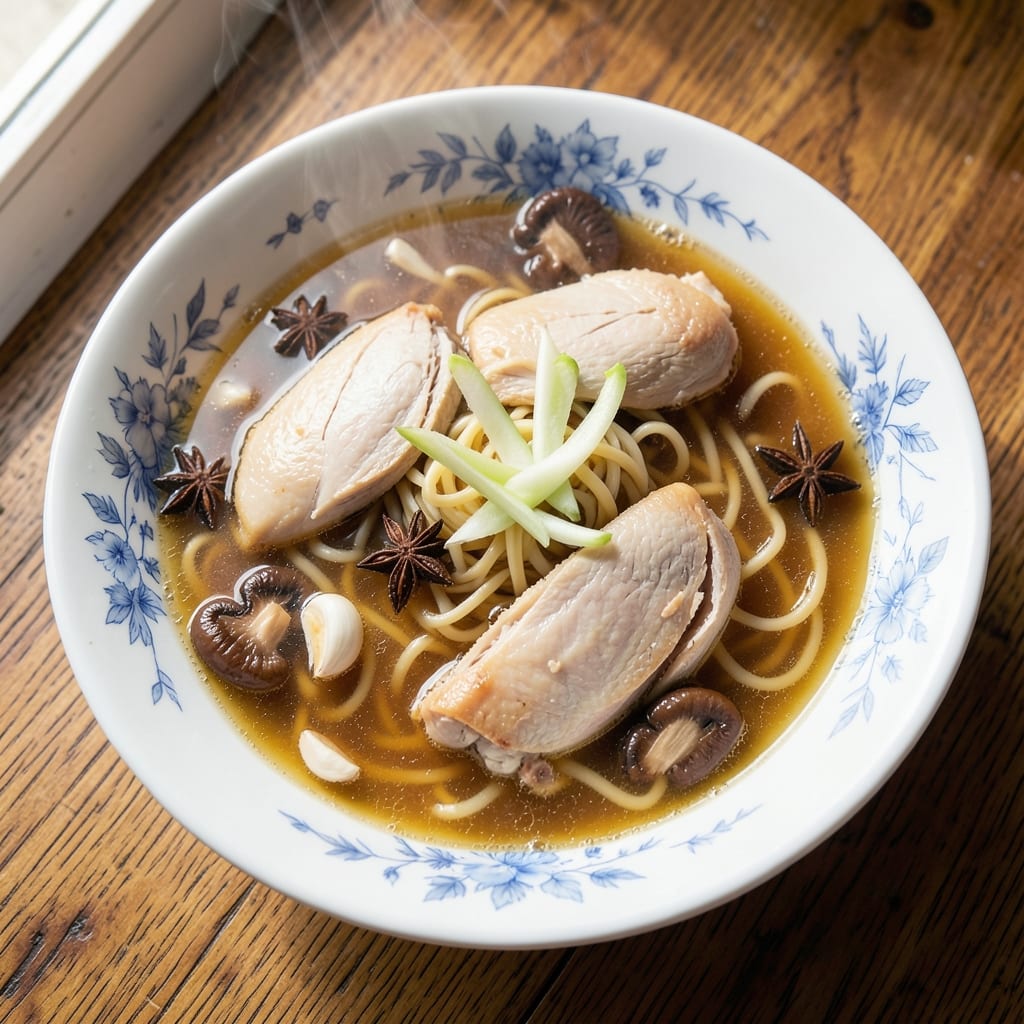
This authentic Chinese chicken noodle soup recipe delivers the comforting, aromatic broth and chewy noodles that make it a staple in Chinese households. The secret lies in star-anise and ginger, which infuse the broth with deep, warm flavors that linger long after the first sip. Unlike many Western versions, this recipe stays true to traditional techniques—slow-simmered broth, poached chicken for tenderness, and egg noodles that hold their chew without turning mushy.
The broth begins with a fragrant base of ginger, garlic, and star anise, simmered until the flavors meld into a rich, golden liquid. Chicken thighs (not breasts) are poached in this broth, ensuring they stay juicy and infused with the same aromatic notes. Meanwhile, fresh egg noodles are cooked just until al dente, so they absorb the broth beautifully without losing texture. Soy sauce and a touch of chili oil add depth and a subtle kick, balancing the soup’s comforting warmth.
What sets this recipe apart is the attention to authenticity—no shortcuts, just the careful layering of flavors that define Chinese comfort food. The result is a bowl of soup that’s deeply satisfying, with every spoonful offering tender chicken, chewy noodles, and a broth so flavorful it tastes like it’s been simmering for hours. Garnish with cilantro and green onions for freshness, and serve with a drizzle of chili oil for that signature Chinese restaurant finish.
This soup is perfect for chilly days, recovery meals, or whenever you crave a taste of home. The instructions are straightforward but precise, ensuring you achieve that restaurant-quality depth of flavor without requiring advanced skills. Let’s get started—your taste buds will thank you.
Ingredients for authentic chinese chicken noodle soup
Six aromatic ingredients transform into a bowl of restaurant-quality chicken noodle soup.
| Ingredient | Amount | Notes |
|---|---|---|
| Chicken Thighs (Bone-In, Skin-On) 🍗 | 2 ½ lb | Skin left on for crispiness |
| Fresh Ginger 🧄 | 2 tbsp | Peeled, thinly sliced (about 1 oz) |
| Garlic Cloves 🧄 | 6 cloves | Minced, not crushed |
| Star Anise Pods 🌿 | 2 whole | Whole pods, not ground |
| Dried Shitake Mushrooms 🍄 | 4 whole | Rehydrated in warm water |
| Egg Noodles (Fresh or Dried) 🍜 | 1 ½ lb | Thick, chewy variety preferred |
| Light Soy Sauce 🥄 | ½ cup | Not dark soy for color |
| Chicken Broth (Low-Sodium) 💧 | 6 cups | Homemade or quality store-bought |
| Green Onions 🧅 | ¼ cup | Sliced, for garnish |
| Cilantro 🌿 | ¼ cup | Chopped, for garnish |
| Chili Oil 🌶️ | 1 tbsp | For finishing, optional |
| Sesame Oil 🫒 | 1 tsp | For aroma, not cooking |
| Salt 🧂 | 1 tsp | Adjust to taste |
| White Peppercorns 🌶️ | ½ tsp | Lightly crushed |
The star anise and ginger are non-negotiable for that authentic Chinese aroma. Whole star anise pods (not ground) add depth—buy them at Asian markets or the international aisle at Walmart. Fresh ginger is best, but if you grab the jarred kind, make sure it's labeled 'preserved in oil' for that extra punch. The chicken thighs? Bone-in, skin-on is key—thighs stay juicier than breasts, and the skin crisps up beautifully. For the mushrooms, dried shiitake is traditional, but any dried mushroom works in a pinch. Rehydrate them in warm water first—they'll plump up and add umami to the broth.
No star anise? Anise seeds or fennel seeds work at half the amount, but you'll lose that signature flavor. Short on ginger? Galangal root (if you can find it) has a similar kick, or just double the garlic. The soy sauce matters—light soy for flavor, dark soy only if you want color (but it'll make the broth darker). For the noodles, fresh egg noodles are ideal (check the Asian market section), but good-quality dried ones work too. Just don't overcook them—they should be al dente when they hit the broth.
This soup tastes even better the next day, so make a big batch. Store leftovers in the fridge for 4-5 days—the flavors deepen as it sits. For freezing, portion into containers with a layer of broth on top to prevent drying. Reheat gently on the stove, adding a splash of water if it gets too thick. The chili oil and sesame oil should go on fresh—don't add them until serving, or they'll lose their kick. Garnish with green onions and cilantro right before eating for that fresh, bright finish.
Why You'll Love This Recipe
- Skin-On Magic: The bone-in, skin-on thighs? That’s the secret weapon—crispy golden edges and jelly-like marrow that melts into the broth. I swear, the first time I skipped the skin, I missed that rich, savory depth. (Yes, even on a Tuesday night.)
- Spice Cabinet Shortcut: Star anise and dried shitake? I keep these in my pantry anyway, so no extra shopping. Toss them in with the ginger and garlic, and suddenly you’ve got that deep, aromatic base without hunting for exotic ingredients.
- Soup That Works Anywhere: Cold? Warm? Packed for lunch? This broth stays bold for days—perfect for meal prep or bringing to a sick friend. Honestly, I’ve reheated it three times and it’s still better than takeout.
- Budget Meal That Feeds: Chicken thighs and dried mushrooms stretch this into a full meal for half the cost of pre-made soup. Between us, the leftovers are my go-to when I’m too tired to cook. (And they’re still crave-worthy.)
Step-by-step instructions for authentic Chinese chicken noodle soup
Here's how to make a rich, aromatic broth with tender chicken and chewy noodles—just like your favorite Chinese restaurant.
Prepare the Chicken and Aromatics
First, pat the 2.5 lb chicken thighs dry with paper towels—this helps the skin crisp up beautifully. Trim any excess fat but leave the skin on for maximum flavor. Cut each thigh into 2-inch pieces and set aside in a bowl.
Peel and thinly slice the 2 tbsp fresh ginger (about 1 ounce) and mince the 6 cloves garlic. Lightly crush the 2 whole star anise pods with the flat side of a knife to release their essential oils. Toss everything with the chicken pieces, ensuring each piece gets coated with the aromatic ingredients.
Build the Star-Anise Infused Broth
In a large stockpot, combine the chicken and aromatics with 6 cups low-sodium chicken broth. Bring to a boil over medium-high heat, then immediately reduce to a gentle simmer. Skim off any foam that rises to the surface during the first 5 minutes—this ensures a clear, clean broth.
Simmer uncovered for 45 minutes, stirring occasionally. The broth should reduce slightly and develop a deep golden color. You'll notice the star anise pods floating—don't remove them yet, as their flavor infuses the broth. The chicken should be tender and easily pull away from the bone at this point.
Add Mushrooms and Season
While the broth simmers, prepare the 4 whole dried shitake mushrooms by soaking them in warm water for 20 minutes until pliable. Drain and slice them into quarters. Add them to the pot along with the 0.5 cup light soy sauce, 1 tsp salt, and 0.5 tsp lightly crushed white peppercorns. Stir gently and simmer for another 10 minutes to meld the flavors.
Taste the broth and adjust seasoning if needed—this is where the authenticity shines. The soy sauce should add just enough umami without overpowering the natural chicken flavor. The mushrooms will soften and contribute a rich, earthy depth to the soup.
Cook the Noodles and Finish
Bring a separate pot of water to a rolling boil and cook the 1.5 lb egg noodles for 2-3 minutes less than the package directions (they'll finish in the soup). Drain and set aside. Meanwhile, carefully remove the chicken from the broth using tongs and let it cool slightly before shredding it into bite-sized pieces.
Return the shredded chicken to the pot and add the cooked noodles. Stir gently to combine, then turn off the heat. Drizzle in 1 tsp sesame oil for aroma and let the soup sit for 5 minutes to allow the flavors to marry. The noodles should be chewy but tender, and the broth should coat them perfectly.
Serve with Fresh Garnishes
Ladle the soup into bowls and garnish each serving with 0.25 cup sliced green onions and 0.25 cup chopped cilantro. For an extra kick, add a drizzle of 1 tbsp chili oil—this adds a subtle heat that balances the soup's richness. Serve immediately while hot, with extra noodles on the side if desired.
This soup tastes even better the next day as the flavors deepen, but the noodles hold their texture perfectly when reheated gently. The star anise-infused broth and chewy egg noodles make this a comforting, restaurant-quality dish you'll want to make again and again.
Pro Tips For Making Authentic Chinese Chicken Noodle Soup
- Crack the Skin First: I used to skip this, but trust me—rendering those thighs with the skin intact is what gives the broth that rich, golden depth. Pat the skin dry thoroughly (yes, even if it feels excessive), then sear them skin-side down in a cold pot over medium heat. Let them sit undisturbed for 8-10 minutes until the skin crisps and releases its fat—this is the flavor foundation. If you rush, you’ll end up with a pale, watery broth instead of something velvety.
- Blanch the Shitakes: Soak dried shitakes, but don’t just toss them in. Blanch them first in boiling water for 10 minutes to soften them properly—this prevents them from turning to mush later. After soaking, slice them thick (about ¼-inch) and reserve the soaking liquid (strain out any grit) to add back to the broth later. It’s the difference between flavorful mushrooms and sad, mushy bits.
- Char the Aromatics: Skip the gentle simmering of garlic and ginger—this isn’t a delicate consommé. After browning the chicken, toss in the whole star anise, 3 smashed garlic cloves, and 2-inch slices of ginger. Let them sizzle in the rendered fat for 2-3 minutes until the garlic turns deep golden and the ginger edges darken slightly. This caramelization builds layers of flavor that no slow simmer alone can match.
- Strain Twice, Once Hot: Strain the broth once through a fine-mesh sieve to catch all the debris, then let it cool slightly before straining it again through cheesecloth or a clean kitchen towel. This second strain removes the fine particles that make broth cloudy and dull. Do it while the broth is still warm but not boiling—hot liquid tears the fabric, and you’ll end up with a mess. Patience here guarantees a crystal-clear, restaurant-quality broth.
Pro cooking tips for great authentic chinese chicken noodle soup
Broth Simmering Secrets
Simmering the broth at a gentle boil (small bubbles, not rolling) is crucial—this prevents the star anise from burning and allows its flavors to infuse evenly. I use a large stockpot with a diameter wider than its height to maximize surface area and reduce simmering time. Skim off any foam that rises in the first 5 minutes—this removes impurities and keeps the broth crystal clear. 🌡️
Chicken Poaching Perfection
Bone-in, skin-on chicken thighs are non-negotiable—they stay juicier than breasts and develop a crispy skin when simmered properly. After 45 minutes, the chicken should pull away from the bone easily. If it's not tender enough, add 1 cup hot water and simmer another 10 minutes. Never rush this step, as undercooked chicken will make the soup taste bland. 🍗
Noodle Texture Mastery
Cook egg noodles for 2-3 minutes less than package instructions—they'll finish cooking in the hot broth. Fresh egg noodles hold their chew better than dried, but if using dried, boil them in salted water with 1 tbsp oil to prevent sticking. The goal is al dente noodles that absorb broth without turning mushy. 🍜
Flavor Layering Technique
Add dried shiitake mushrooms and soy sauce only after the chicken has poached—this prevents them from overcooking and turning to mush. The mushrooms should soften but remain intact, adding earthy depth. Taste the broth before adding noodles and adjust with ½ tsp more soy sauce if needed. The final touch of sesame oil right before serving adds aroma without cooking. 🌿
Garnish Like a Pro
Fresh garnishes elevate the dish—slice green onions diagonally for visual appeal and chop cilantro finely for even distribution. Drizzle chili oil last (it burns at high heat) and serve immediately. For extra authenticity, add a sprinkle of toasted sesame seeds or a few crushed red pepper flakes. 🌶️
Make-Ahead Magic
This soup tastes even better the next day as flavors meld. Store leftovers in the fridge for 4-5 days or freeze for 3 months. When reheating, add 2 tbsp water per bowl to prevent thickening. The star anise can be removed before reheating if you dislike its texture. 💡
Nutrition facts
Frequently asked questions
Can I use chicken breasts instead of thighs?
While it's possible, thighs are ideal for this recipe because they stay juicier and more flavorful during the long simmer. Chicken breasts can dry out, making the soup taste less rich. If you must use breasts, marinate them first in 1 tbsp soy sauce and 1 tsp sesame oil for 30 minutes before cooking to help retain moisture.
What if I can't find star anise? What's the best substitute?
You can substitute with ½ tsp anise seeds or ½ tsp fennel seeds, but the flavor won't be identical. For a closer match, combine ¼ tsp ground cinnamon and ¼ tsp ground cloves. The star anise gives the broth its signature warm, slightly sweet aroma—skip it if you're pressed, but your soup will taste different.
How do I make this soup spicier?
Add 1 tsp chili flakes or 1 tbsp chili garlic sauce to the broth while simmering, or drizzle extra chili oil on each bowl before serving. For heat lovers, stir in 1 tsp gochujang (Korean chili paste) with the soy sauce. Always taste first—you can adjust, but you can't take out excess spice once it's in.
Can I use regular dried noodles instead of egg noodles?
Regular dried noodles will work, but they won't have the same chewy texture. For the best results, use fresh egg noodles or udon noodles—they hold up better in broth. If using dried, cook them 1 minute less than package instructions and add them to the hot broth to finish cooking. The goal is al dente noodles that don't turn mushy.
Why does my broth taste bitter?
Bitterness usually comes from overcooking the aromatics (like star anise or ginger) or using too much soy sauce. Remove the star anise pods after 30 minutes of simmering to prevent bitterness. For the soy sauce, start with ¼ cup and taste as you go—you can always add more, but you can't remove excess. A splash of rice vinegar can also help balance bitterness.