
Soups & Stews
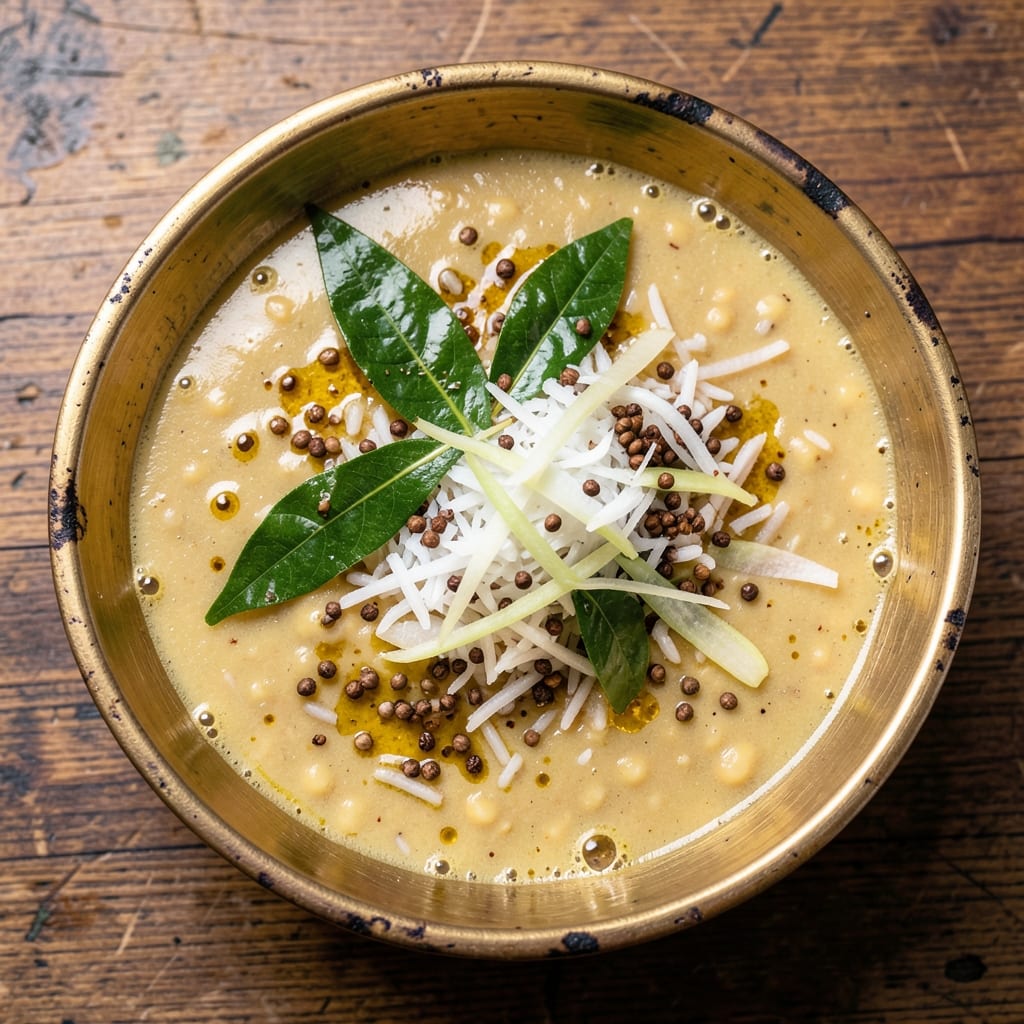
This Attukal Pongal Soup brings the heart of Tamil Nadu's sacred Attukal Temple tradition into your kitchen—a nourishing, spiced lentil-rice blend steeped in cultural heritage. 🌟 The dish, traditionally prepared during the Attukal Pongala festival, transforms simple ingredients into a fragrant, one-pot comfort that's both vegetarian and deeply satisfying. I've adapted the traditional method to create a soup version that's equally rich in flavor and easy to prepare.
The beauty of this recipe lies in its simplicity and depth. A blend of moong dal and rice simmers with aromatic spices—cumin, mustard seeds, and curry leaves—until tender and infused with their warm flavors. The addition of ginger, garlic, and coconut milk creates a velvety texture that balances the earthiness of the lentils and rice. This version keeps all the soul of the original while offering a lighter, more adaptable form perfect for modern kitchens.
What makes this soup truly special is its ability to comfort and nourish. The spices not only create layers of flavor but also aid digestion, making it a staple during festivals and daily meals alike. Each spoonful delivers the essence of Tamil hospitality—warm, aromatic, and deeply comforting. The recipe is designed to be flexible, allowing you to adjust the spice level or add vegetables like drumsticks or carrots for extra texture.
Perfect for family gatherings, festive occasions, or a cozy weeknight dinner, this Attukal Pongal Soup delivers restaurant-quality results with minimal effort. The long simmering process allows the flavors to meld beautifully, creating a dish that's as rewarding to make as it is to enjoy. Let's bring the spirit of Attukal into your home kitchen.
Ingredients for attukal soup recipe in tamil
Simple spices and lentils transform into a fragrant, comforting Tamil tradition in one pot.
| Ingredient | Amount | Notes |
|---|---|---|
| Yellow Moong Dal 🌾 | 1 cup | Split variety preferred |
| Long-Grain White Rice 🍚 | ½ cup | Uncooked, rinsed well |
| Fresh Curry Leaves 🌿 | ¼ cup | Packed, whole leaves |
| Mustard Seeds 🌶️ | 1 tbsp | Whole, light brown preferred |
| Ground Cumin Seeds 🌿 | 1 tsp | Freshly ground preferred |
| Fresh Ginger 🧄 | 1 inch | Peeled, grated finely |
| Garlic Cloves 🧄 | 4 cloves | Peeled, minced finely |
| Light Coconut Milk 🥥 | 1 cup | Full-fat for creaminess |
| Tomatoes 🍅 | 2 medium | Ripe, diced small |
| Onion 🧅 | 1 whole | Medium, finely chopped |
| Green Chilies 🌶️ | 2 whole | Slit lengthwise, adjust heat |
| Ghee or Coconut Oil 🫒 | 3 tbsp | For authentic flavor |
| Salt 🧂 | 1 ½ tsp | Adjust to taste |
| Turmeric Powder 🌿 | ½ tsp | Fresh root preferred |
| Asafoetida Powder 🌶️ | ¼ tsp | Optional, for depth |
The curry leaves are non-negotiable here—they carry that unmistakable South Indian aroma. Indian grocery stores or specialty markets have them fresh year-round, but if you can't find them, freeze-dried curry leaves work in a pinch. For the ginger and garlic, fresh is always better—Trader Joe's or Whole Foods carry good quality. The moong dal should be split and yellow, not whole or green. I always buy mine from Indian stores where they're sold in bulk, but any grocery store with a good spice section will have it. Look for good marbling in the dal—it means fresher grains.
No fresh curry leaves? Dried curry powder at half the amount works, but it won't have the same punch. Short on coconut milk? Cashew cream (soaked cashews blended with water) gives a similar richness. The green chilies can be swapped for red chili powder if you prefer milder heat—just one-quarter teaspoon for the same two chilies. For extra depth, add a pinch of black salt (kala namak) if you've got it—it's a classic Tamil touch. The tomatoes can be canned if needed, but fresh is always better when in season.
This soup tastes even better the next day as flavors meld. Store in an airtight container in the fridge for up to 5 days. For freezing, portion into containers with 1 inch of headspace—it reheats beautifully. The ghee adds incredible flavor, but if you're avoiding dairy, coconut oil works perfectly. I usually make a double batch and freeze half—perfect for lazy weeknights when you need comfort fast.
Why You'll Love This Recipe
- One-Pot Wonder: I swear by this recipe when I’m too tired to wash pots—just toss everything into one vessel, simmer, and walk away. The moong dal softens perfectly while the rice absorbs all that fragrant cumin and curry leaf magic without needing a separate pot.
- Taste Like Home: That first whiff of mustard seeds sizzling in ghee? Instant nostalgia. The earthy cumin and bright curry leaves cut through the mild sweetness of the moong dal, giving it this just-right balance—creamy but never heavy, like my grandma’s version but with half the effort.
- Leftovers? Better: Between us, this soup only gets better the next day. The rice plumps up, the flavors meld deeper, and I actually look forward to reheating it. Honestly, I make double batches on purpose—lunches for the week are basically solved.
- Budget Magic: A bag of moong dal and a handful of spices cost less than takeout for two, yet it feeds my family for days. No fancy ingredients, no wasted leftovers, and zero guilt when I serve it with a side of papad or a simple onion salad. Practical? Absolutely. Delicious? Ridiculously.
Step-by-step instructions for Attukal Pongal soup
Here's how to transform simple lentils and rice into a fragrant, hearty soup that captures Tamil comfort food at its best.
🍳 Step 1: Temper the Spices in Ghee
Heat the 3 tbsp ghee or coconut oil in a heavy-bottomed pot over medium heat. Add the 1 tbsp mustard seeds and let them splutter for 30 seconds until they pop like tiny fireworks. This is your signal to add the 1 tsp ground cumin seeds and 0.25 tsp asafoetida powder—they'll bloom with aroma in seconds.
Next, add the 0.25 cup fresh curry leaves and 2 whole green chilies (slit lengthwise). Swirl the pot gently so the curry leaves sizzle and release their perfume. You'll know it's perfect when the oil shimmers and the spices dance around the pot—this is the soul of the dish right here.
👨🍳 Step 2: Build the Aromatic Base
Push the spices to one side of the pot and add the 1 whole onion (finely chopped) and 1 inch fresh ginger (grated). Sauté for 3-4 minutes until the onions turn translucent and the ginger loses its raw bite. Here's where it gets good—add the 4 cloves garlic cloves (minced) and stir for 30 seconds until fragrant.
Now add the 2 medium tomatoes (diced small) and cook for 2 minutes until they soften. Sprinkle in the 0.5 tsp turmeric powder and stir for 1 minute to let the spices meld. This step builds the flavor foundation—don't rush it, or you'll miss the depth of flavor.
🥘 Step 3: Combine Lentils, Rice and Liquid
Add the 1 cup yellow moong dal and 0.5 cup long-grain white rice to the pot, stirring to coat the grains in the aromatic oil. Pour in 3 cups water (yes, it seems like a lot, but trust me) and bring to a rolling boil. Once boiling, reduce heat to low-medium and let it simmer uncovered for 15 minutes—this breaks down the lentils and rice.
After 15 minutes, add the 1 cup light coconut milk and 1.5 tsp salt. Stir gently and continue simmering for another 15-20 minutes until the lentils and rice are tender but not mushy. You want the texture to be creamy yet distinct—like a thick, comforting hug in soup form. Taste and adjust salt if needed.
⏰ Step 4: Finish with Gentle Heat
Once the lentils and rice are perfectly cooked, remove the pot from heat and let it sit for 5 minutes. This resting period allows the flavors to meld completely. I know it's tempting to eat it immediately, but patience here makes all the difference.
Garnish with an extra sprinkle of fresh curry leaves and serve hot with a side of crispy papad or steamed rice. The soup should be fragrant with a balance of spicy, tangy, and creamy notes—each spoonful should feel like a warm embrace on a chilly day.
Pro Tips For Making Attukal Soup Recipe In Tamil
- Soak Rice Separately: I learned this the hard way—mixing the rice with moong dal while cooking makes the rice mushy and the dal undercooked. Soak the rice alone for 20 minutes first, then drain and add it to the dal later. The rice stays fluffy, and the dal gets that perfect tender-but-firm texture.
- Bloom the Spices: Skip the urge to dump all spices at once. Dry roast mustard seeds and cumin in oil until they pop and smell like a Tamil kitchen—about 30 seconds on medium heat. This unlocks their flavor and prevents the soup from tasting flat. (Yes, even if you’re impatient like me.)
- Simmer, Don’t Boil: After adding water, let the soup come to a gentle simmer—not a rolling boil. High heat turns attukal soup into glue. Keep it at a low, steady bubble for 15-18 minutes, stirring occasionally, so the dal absorbs water evenly and the rice doesn’t turn to porridge.
- Toast Curry Leaves Last: Add curry leaves at the very end—just before switching off the heat. They burn fast and turn bitter if left too long. A handful of fresh leaves, crushed lightly, gives that unmistakable aroma without overpowering the dish. (Your future self will thank you.)
Flavor customization for this attukal soup recipe in tamil
Spice Level Control
Adjust the heat to match your preference by modifying the green chilies. For mild flavor, use 1 chili or swap for ¼ tsp red chili powder. If you love spicy, add 3-4 chilies or a pinch of cayenne pepper at the end. I like to keep it balanced—2 chilies give just the right kick without overwhelming the creamy coconut milk. 🌶️
Creamy Variations
Swap coconut milk for cashew cream (blend ½ cup soaked cashews with ½ cup water) for a nutty depth. For extra richness, stir in 2 tbsp yogurt at the end—it adds tanginess that cuts through the spices. I’ve also seen versions with ½ cup grated paneer for protein, but keep it optional since traditional Attukal Pongal is vegetarian without dairy.
Vegetable Additions
Boost texture and nutrition by adding 1 cup chopped drumsticks (peeled) or ½ cup carrots (diced) with the lentils and rice. For heartier portions, include ½ cup sweet potatoes (cubed)—they soak up the flavors beautifully. I often add ½ cup spinach at the end for a vibrant pop of color and nutrients. Pro tip: Cook harder veggies first for 5 minutes before adding the dal and rice.
Protein Boost
Make this soup heartier by stirring in ½ cup cooked chickpeas or ½ cup tofu (cubed) at the end. For a non-vegetarian twist (if needed), add ½ cup shredded chicken or ½ cup paneer (cubed) after simmering. The key is to add protein after the lentils and rice are tender so they don’t turn mushy. I’ve even seen versions with ½ cup boiled eggs for extra protein—just crack them in at the very end.
Herb & Garnish Twists
Elevate the dish with fresh herbs like cilantro or mint. Add ¼ cup chopped cilantro at the end for brightness, or 5-6 mint leaves for a refreshing twist. For garnish, try toasted coconut flakes (sprinkle 1 tbsp on top) or a drizzle of tempered mustard seeds (heat 1 tsp mustard seeds in 1 tsp oil, then drizzle). These small touches add layers of flavor that make the soup feel restaurant-worthy. ✨
Festive Adaptations
For special occasions, add 1 tsp ghee at the end and garnish with 2 tbsp fried cashews and 1 tsp sesame seeds. For a sweet-savory twist (common in festival versions), stir in 1 tbsp jaggery or ½ tsp sugar after simmering. I love making this version for Pongal celebrations—it feels extra festive while keeping the traditional soul intact. The jaggery balances the spices beautifully, creating a harmonious sweet-and-savory profile.
Nutrition facts
Frequently asked questions
What makes Attukal Pongal different from regular Pongal?
Attukal Pongal is traditionally prepared during the Attukal Pongala festival in Tamil Nadu, where women cook this dish as an offering to the goddess. Unlike regular Pongal, this version is made into a soup with coconut milk for extra creaminess, and it often includes additional spices like asafoetida for depth. The festival version also sometimes includes jaggery for a sweet-savory balance.
Can I make this soup without coconut milk?
Swap the coconut milk for ½ cup cashew cream (blend soaked cashews with water) or ½ cup yogurt for tanginess. For a lighter option, use ½ cup water or vegetable broth—just reduce the simmering time slightly to maintain thickness. The dish will still be flavorful, though the creaminess will differ slightly.
Why does the recipe call for both moong dal and rice?
The combination of moong dal and rice creates a perfect balance of protein and carbohydrates while maintaining a light texture for the soup. The dal adds creaminess and nutrients, while the rice provides body and a satisfying mouthfeel. This traditional pairing is common in South Indian cooking and ensures a well-rounded, nourishing dish.
How can I adjust the soup for a gluten-free diet?
This recipe is naturally gluten-free! Just ensure your moong dal and rice are certified gluten-free (some brands process grains in shared facilities). Double-check that your spices and coconut milk also carry gluten-free labels. The only potential concern is cross-contamination—stick to brands that explicitly state "gluten-free" for peace of mind.
What’s the best way to reheat leftovers?
Reheat gently on the stovetop over low-medium heat, stirring occasionally, until warmed through (3-5 minutes). For microwave reheating, use 50% power for 1-2 minutes, then stir well. Add a splash of water if it thickens too much. The soup tastes even better the next day as flavors meld further!