
Soups & Stews
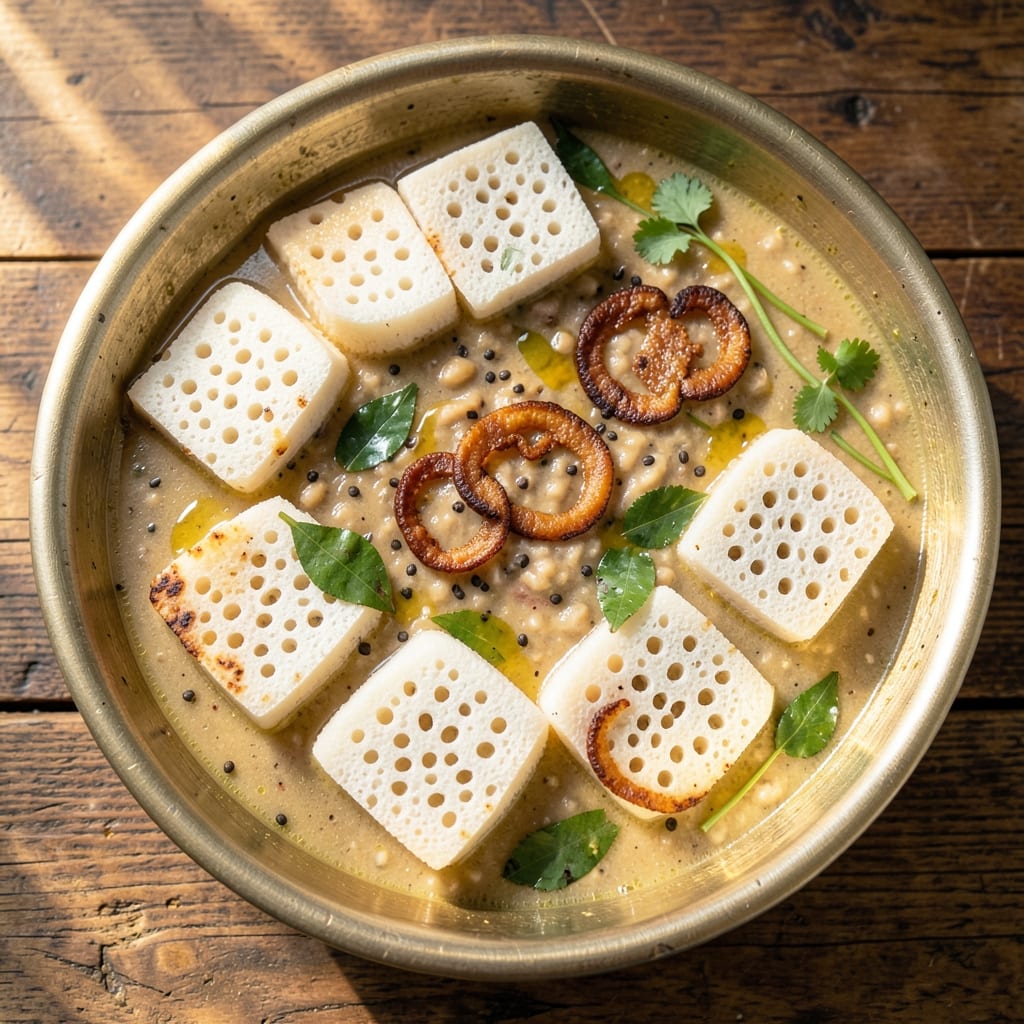
Attukal soup recipe in Tamil language is a beloved Tamil comfort dish that brings warmth to every spoonful through its simple yet deeply flavorful blend of lentils, rice, and aromatic spices. This one-pot recipe captures the essence of Tamil cuisine—where humble ingredients transform into a nourishing meal that's both hearty and easy to prepare. The dish's name reflects its origins in the Attukal region, where it became a staple for its ability to satisfy even the hungriest appetites.
What makes this recipe special is its balance of textures and flavors: tender rice and lentils cooked together until perfectly soft, infused with mustard seeds, curry leaves, and a touch of ghee that adds richness without overpowering. The spices are toasted just enough to release their aromatic oils, creating a fragrant base that forms the soul of the soup. Unlike many one-pot dishes, Attukal Pongal requires minimal active cooking—just a few minutes of stirring before letting it simmer to develop its signature depth.
By the end, you'll have a bowl of golden, fragrant soup that's creamy from the lentils and rice, yet light enough to be served with ragi or rice. The dish is traditionally eaten with a side of coconut chutney or sambar, but its versatility makes it perfect for any meal. Whether you're cooking for a family gathering or a quiet weeknight dinner, this recipe delivers the comforting flavors of Tamil tradition in every spoonful.
The beauty of Attukal Pongal lies in its simplicity—no fancy techniques, just a few key ingredients and patience. The result is a dish that's as nourishing as it is delicious, embodying the warmth and hospitality of Tamil homes. Let's bring this comforting classic to your kitchen.
Ingredients for attukal soup recipe in tamil language
Simple ingredients that transform into a fragrant, comforting Tamil classic—just one pot, no fuss.
| Ingredient | Amount | Notes |
|---|---|---|
| Toor Dal (Split Pigeon Peas) 🌾 | 1 cup | Rinsed thoroughly before cooking |
| White Rice 🍚 | ½ cup | Medium grain preferred |
| Mustard Seeds 🌿 | 1 tbsp | Whole seeds, toasted first |
| Curry Leaves 🌿 | ¼ cup | Fresh leaves, packed |
| Ghee 🫒 | 2 tbsp | Clarified butter for richness |
| Cumin Seeds 🌿 | ½ tbsp | Toasted for deeper flavor |
| Dry Red Chili 🌶️ | 1 piece | Whole, for tempering |
| Asafoetida (Hing) 🌿 | ¼ tsp | A pinch enhances flavor |
| Fresh Ginger 🧅 | 1 tbsp | Grated finely for aroma |
| Green Chilis 🌶️ | 2 whole | Slit lengthwise for heat |
| Turmeric Powder 🧂 | ½ tsp | Freshly ground preferred |
| Salt 🧂 | 1 tsp | Adjust to taste |
| Water 💧 | 4 cups | For cooking dal and rice |
For authentic flavor, mustard seeds and curry leaves are non-negotiable—look for them in the Indian aisle at Whole Foods or Patel Brothers. Fresh curry leaves have a distinct aroma; if they smell musty, skip them. Toor dal is key—it stays creamy when cooked with rice. The ghee adds richness, so use Amul or Nira ghee if available, or a good-quality clarified butter. For the chilis, green bird's eye peppers add heat without overpowering the dish.
No mustard seeds? Cumin seeds at double the amount work in a pinch, but the flavor won't be identical. Fresh ginger missing? Ginger powder at half the amount is fine, though it lacks the same zing. The asafoetida (hing) is optional but adds depth—use it sparingly. For a milder version, reduce the green chilis to one or skip them entirely. The turmeric should be vibrant yellow; if it's dull, toast it lightly before adding. Water ratio matters—use 4 cups for 1 cup of combined dal and rice for perfect texture.
This soup tastes even better the next day as flavors meld. Store in an airtight container for 3-4 days in the fridge. For longer storage, freeze portions for up to 3 months. Reheat gently on low heat, adding a splash of water if it thickens too much. Serve with coconut chutney or sambar for a complete Tamil meal experience.
Why You'll Love This Recipe
- No-Chop Needed: I swear by this—just soak the toor dal overnight, pressure cook it with a splash of water, and the rice does the rest. That’s it. No mincing, no dicing, no stress.
- Ghee Magic: Between us, that first spoonful of ghee swirled into the soup? Pure satisfaction. It turns the dal from good to ridiculously good—creamy, rich, with that unmistakable aroma that makes my kitchen smell like home.
- Lunchbox Hero: Honestly, this is my go-to for meal prep. Taste stays fresh for days, and the rice-dal combo keeps everyone full—whether it’s packed for school or reheated for a lazy evening. (Yes, even on a Tuesday night.)
- Pocket-Friendly Luxury: Three ingredients—dal, rice, and ghee—feed four people for under ₹100. That’s a win when grocery bills are tight, and honestly? It feels like a treat without breaking the bank.
Step-by-step instructions for Attukal soup
This traditional Tamil comfort dish combines rice and lentils in one aromatic pot.
🍳 Step 1: Prepare the Base Ingredients
In a heavy-bottomed pot, combine the 1 cup Toor Dal (Split Pigeon Peas) and 0.5 cup White Rice. Rinse both thoroughly first to remove any impurities—this ensures a clean flavor and prevents bitterness. Add 4 cups Water and bring to a rolling boil over medium-high heat. Once boiling, reduce heat to medium-low and let it simmer uncovered for 15 minutes. You'll notice the dal and rice begin to soften and the water reduces slightly.
While this simmers, take 2 tbsp Ghee in a small pan and heat over low heat. Add 1 tbsp Mustard Seeds and let them splutter—this should take about 30 seconds. Immediately add 0.5 tbsp Cumin Seeds and 1 piece Dry Red Chili to the hot ghee. Let them toast for 1 minute until fragrant and lightly golden. This forms your tempering base, which carries the soul of the dish.
🍳 Step 2: Build the Flavor Layers
To the simmering dal-rice mixture, add the toasted ghee with mustard, cumin, and chili. Stir gently to distribute evenly. Add 0.5 tsp Turmeric Powder and 1 tbsp Fresh Ginger (previously grated). Mix well and let the entire pot simmer uncovered for another 10 minutes. The ginger will infuse its aromatic warmth while the turmeric adds that signature golden hue.
Now comes the key aromatic element: 0.25 cup Curry Leaves and 2 whole Green Chilis (slit lengthwise). Add these to the pot and let them cook for 5 minutes on medium heat. You'll see the curry leaves turn vibrant green and the green chilis soften slightly. This is when the soup truly begins to sing with its characteristic flavors.
🥘 Step 3: Season and Finish
Add 0.25 tsp Asafoetida (Hing) and 1 tsp Salt to the pot. Stir gently and let the soup simmer for another 5 minutes on low heat. The hing will release its distinct, umami-rich aroma that's essential to authentic Attukal Soup. Taste and adjust salt if needed—this is your opportunity to balance the flavors before serving.
Once the rice and dal are tender (the rice should be cooked through but still hold its shape), remove the pot from heat. Let it sit covered for 5 minutes to allow the flavors to meld completely. The final soup should have a creamy texture from the lentils and rice, with a rich aroma from all the tempered spices. Serve warm with a dollop of ghee on top for that extra layer of richness.
Pro Tips For Making Attukal Soup Recipe In Tamil Language
- Pressure-Cook Dal First: Skip the long simmer—pressure-cook the toor dal for 2 whistles with 3 cups water, then mash it. This cuts prep time by half while keeping the dal soft and fluffy, just like your grandma’s version. (Yes, even if you’re impatient like me.)
- Temper Ghee Right: Heat the ghee until it just smokes—about 110°C—then add mustard seeds and curry leaves. If you let it get too hot, the mustard burns before popping, and the flavor turns bitter. A quick test: hold your hand 6 inches above the pan—if it’s too hot to linger, lower the heat.
- Rice Should Be Dry: Use uncooked white rice (not leftover) and toast it lightly in ghee after the dal. This prevents the soup from turning gluey—your attukal needs texture, not mush. A splash of water later? Sure, but only after toasting.
- Salt at the End: Hold off on salt until the very last minute. Adding it early makes the dal absorb too much water, diluting the final taste. A pinch of salt at the end balances the flavors perfectly—trust me, your taste buds will notice.
Best sauces and condiments for this attukal soup recipe in tamil language
Tempering Essentials
The soul of Attukal Soup lies in its tempering (tadka)—where whole mustard seeds and cumin seeds are toasted in ghee until they pop and release their aromatic oils. I always use Amul ghee for its rich, nutty flavor, but any high-quality clarified butter works. Toast the seeds on low heat for 30-45 seconds—if you rush it, they’ll burn and turn bitter. Add the dry red chili here to infuse its smoky depth without overpowering. 🌿
Spice Blend Secrets
Fresh curry leaves are non-negotiable—they add a citrusy aroma that’s impossible to replicate with dried versions. Pack ¼ cup tightly into the pot and let them cook until vibrant green. For extra heat, slit 2 green chilis lengthwise before adding. If you prefer a milder version, reduce to 1 chili or skip them entirely. The asafoetida (hing) is the secret umami booster—use just ¼ tsp or omit if unavailable, but don’t overdo it. 🌶️
Ginger-Turmeric Boost
Freshly grated ginger (1 tbsp) adds a zesty kick that powdered ginger can’t match. Pair it with ½ tsp turmeric for that golden hue and earthy warmth. Toast the turmeric lightly in a dry pan for 30 seconds before adding to deepen its flavor. This duo is what gives Attukal Soup its signature aromatic punch. For a milder taste, reduce turmeric to ¼ tsp, but don’t skip it—it’s the flavor anchor. ✨
Finishing Touches
A final drizzle of ghee (1 tbsp) before serving elevates the dish to restaurant-quality richness. For extra depth, add a pinch of black pepper or a squeeze of lemon juice at the table. If the soup thickens too much while reheating, stir in 1-2 tbsp water to restore its creamy texture. Trust me, these finishing touches make all the difference! 💛
Store-Bought Shortcuts
Short on time? Use pre-toasted cumin powder (½ tsp) instead of whole seeds, but toast it in ghee first to mimic the aroma. For curry leaves, frozen curry leaf paste (½ tsp) works in a pinch—just add it with the ginger. If you can’t find asafoetida, a pinch of garlic powder adds a similar savory note. These swaps keep the dish authentic while saving you prep time. 💡
Nutrition facts
Frequently asked questions
What's the difference between Attukal Soup and regular Pongal?
Attukal Soup is essentially a softer, creamier version of sweet Pongal made with both rice and toor dal in equal parts. The key difference lies in the cooking method—this soup simmers longer until the dal and rice become tender and creamy, while traditional Pongal is often firmer with distinct grains. The tempering (tadka) is also lighter in Attukal Soup, focusing on aromatic spices rather than sweet jaggery.
Can I make Attukal Soup without ghee?
Yes, but the flavor will be less rich. Replace the 2 tbsp ghee with 2 tbsp coconut oil or butter (though butter can make it slightly richer). For an authentic touch, use clarified butter (nei) instead. The tempering will still work, but the final dish may lack that signature depth.
Why does my Attukal Soup turn out too thick?
This usually happens if the water ratio is off or the soup simmers too long. For 4 servings, start with 4 cups water for 1 cup combined rice and dal. If it thickens later, stir in 1-2 tbsp warm water while reheating. The soup should have a creamy but spoonable consistency—not gluey.
How do I adjust the spice level for kids?
Reduce the green chilis to 1 whole (or skip them entirely) and use ½ tsp mild red chili powder instead of whole dry chili. For extra safety, serve the tempering (spiced ghee) on the side so kids can add it to their portion. The natural flavors of ginger, turmeric, and curry leaves will still shine without the heat.
Can I add vegetables to Attukal Soup?
For a heartier version, stir in ½ cup chopped carrots, peas, or beans during the final 5 minutes of cooking. Avoid leafy greens as they can make the soup watery. The vegetables should soften but retain some texture. This works especially well with pumpkin or sweet potato for a sweeter twist.