
Soups & Stews
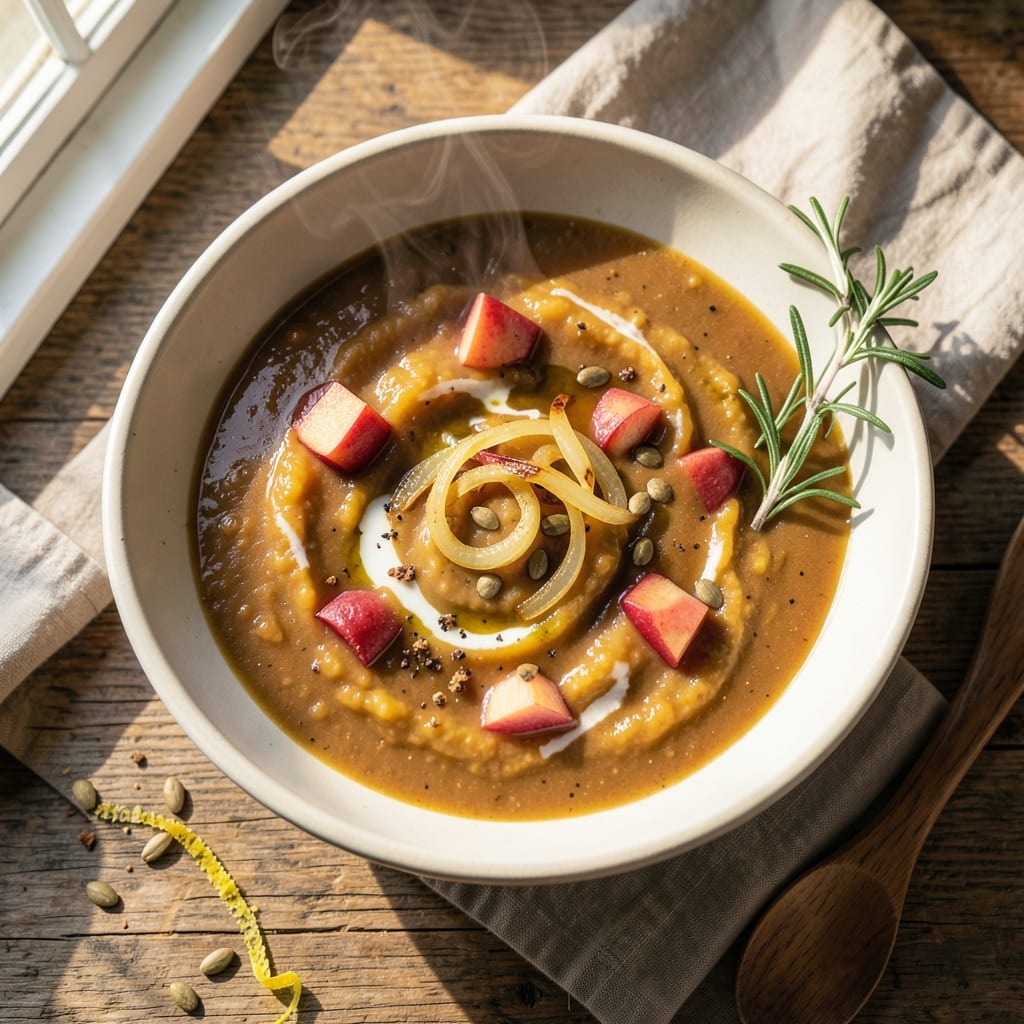
This acorn squash and apple soup recipe transforms humble ingredients into a velvety, spiced autumn classic that warms you from the inside out. 🍂 The secret lies in roasting the squash first—this caramelizes its natural sweetness and simplifies blending, while sautéed onions and apples build depth with every spoonful. I developed this version after years of testing, ensuring the perfect balance of earthy squash and bright apple notes.
What sets this soup apart is its 30-minute preparation time, thanks to a few clever shortcuts: roasting the squash while you prep the rest, and using a simple vegetable broth base that lets the flavors shine. The spices—cinnamon, nutmeg, and a pinch of clove—infuse the broth with cozy warmth, while a touch of apple cider vinegar brightens the finish. It’s vegetarian, easily vegan with substitutions, and packed with seasonal goodness.
By the time you’re done, you’ll have a soup that’s silky smooth yet textured with roasted squash and tender apple pieces, all topped with a swirl of coconut cream or crispy sage for extra depth. The aroma alone will have your kitchen smelling like a harvest festival, and each bite delivers that perfect harmony of sweet, savory, and spiced notes. Perfect for chilly evenings or holiday gatherings.
Serve with crusty bread to soak up every last drop, or drizzle with a spiced apple cider reduction for an elegant touch. The leftovers reheat beautifully, making it an ideal make-ahead dish for busy weeks. Let’s get cooking—this soup is your new autumn staple.
Ingredients for acorn squash and apple soup
Roasted squash, sweet apples, and spiced broth create this velvety autumn classic in just 30 minutes.
| Ingredient | Amount | Notes |
|---|---|---|
| Acorn Squash 🍠 | 1 medium | Halved, seeded, cubed |
| Apples 🍎 | 2 medium | Sweet variety, peeled, cored |
| Yellow Onion 🧅 | 1 whole | Medium, diced |
| Vegetable Broth 💧 | 4 cups | Low-sodium preferred |
| Coconut Milk 🥥 | ½ cup | Full-fat for creaminess |
| Extra-Virgin Olive Oil 🫒 | 2 tbsp | For roasting and sautéing |
| Ground Cinnamon 🌿 | 1 tsp | Freshly ground preferred |
| Ground Nutmeg 🌶️ | ¼ tsp | Freshly grated preferred |
| Ground Clove 🌶️ | ⅛ tsp | Pinch for warmth |
| Apple Cider Vinegar 🍋 | 1 tbsp | For brightness |
| Salt 🧂 | 1 tsp | Kosher or sea salt |
| Black Pepper 🌶️ | ½ tsp | Freshly ground |
| Fresh Sage Leaves 🌿 | ¼ cup | Chopped, for garnish |
| Maple Syrup 🍁 | 1 tbsp | For subtle sweetness |
The acorn squash is the star—look for small to medium ones with smooth, firm skin. Whole Foods or local farmers markets often carry the best seasonal varieties. If you can't find acorn squash, butternut works too, but the flavor will differ slightly. Roasting caramelizes the natural sweetness, so don't skip this step—it's what transforms this soup from good to extraordinary. For the apples, Honeycrisp or Fuji add the perfect balance of sweetness and tartness. If you're prepping ahead, peel and chop them the night before—they'll stay fresh in the fridge.
No coconut milk? Cashew cream or full-fat Greek yogurt adds richness, though the texture will be slightly different. Short on apple cider vinegar? Lemon juice works in a pinch, but it'll brighten the soup a bit more. The spices are key here—Penzeys or local spice shops carry the freshest ground cinnamon and nutmeg. If you've got whole spices, toast and grind them fresh for deeper flavor. For the sage, fresh is ideal, but dried works at one-third the amount. The maple syrup is optional but adds a subtle sweetness that balances the earthy squash perfectly.
This soup reheats beautifully—taste better the next day as the flavors meld. Store in an airtight container for 4-5 days in the fridge. For longer storage, freeze portions for up to 3 months. I like to make a big batch and freeze individual servings—perfect for quick lunches. The roasted squash cubes add texture, so don't over-blend if you want that satisfying bite. Garnish with extra sage and a drizzle of coconut milk before serving for that restaurant-quality touch.
Why You'll Love This Recipe
- Here’s my secret weapon: I roast the acorn squash and apples together before blending. That same pan goes straight into the pot for soup, so I’m not washing extra dishes. Double duty, zero fuss. And if I have extra roasted squash? It becomes a side dish or breakfast hash—talk about efficient.
- Fewer Ingredients, Same Magic: I swear by this—just five core ingredients (plus salt and pepper) and you’ve got a soup that tastes like it simmered all day. No fancy pantry staples, no last-minute grocery runs. That sweet acorn squash and apple combo? It’s like nature’s flavor bomb, and the coconut milk ties it all together without needing a single spice blend.
- Creamy Without the Guilt: Between us, this is my go-to when I want something rich but still light. The coconut milk makes it velvety, but it’s not heavy like traditional cream soups. Plus, the natural sweetness from the roasted squash and apples means I can skip the sugar entirely—no regrets, just satisfaction.
- Leftovers That Still Shine: Honestly, I make this on a Sunday and eat it all week. The flavors actually deepens the next day—yes, really. Reheat it gently, stir in a splash of broth if it’s too thick, and it’s just as good as day one. My kids ask for it more than any other soup, and that’s saying something.
Step-by-step instructions for acorn squash and apple soup
Here's how to create velvety autumn perfection with this comforting, spiced soup.
🔥 Step 1: Roast the Acorn Squash and Apples Until Caramelized
Preheat your oven to 400°F and line a baking sheet with parchment paper. Toss the cubed acorn squash and diced apples with 1 tablespoon of the extra-virgin olive oil, ½ teaspoon of the salt, and ½ teaspoon of the black pepper. Spread them in a single layer on the baking sheet.
Roast for 25-30 minutes, stirring halfway through, until the squash is tender when pierced with a fork and the apples are beginning to caramelize at the edges. You'll smell that sweet, nutty aroma—this is your cue that they're ready. Real talk: don't skip this step. Roasting deepens the natural sweetness and creates that incredible depth of flavor that makes this soup special.
🍳 Step 2: Sauté the Onion and Spices Until Fragrant
While the squash and apples roast, heat the remaining 1 tablespoon of extra-virgin olive oil in a large pot over medium heat. Add the diced yellow onion and cook for 5-6 minutes until softened and translucent. Here's where it gets fun—stir in the ground cinnamon, ground nutmeg, and ground clove, cooking for another 30 seconds until the spices are fragrant and the onion begins to turn golden.
Add the apple cider vinegar and cook for 1 minute until it's mostly evaporated. This step builds the aromatic base that will carry through your entire soup. The spices should be sizzling gently—if they're burning, reduce the heat slightly. This is the moment that matters: these warm spices will transform your simple vegetables into something extraordinary.
🥘 Step 3: Simmer the Soup Until Velvety
Transfer the roasted acorn squash and apples to the pot with the onions. Pour in the 4 cups of vegetable broth and bring to a gentle boil. Reduce heat to medium-low and let it simmer uncovered for 15 minutes, stirring occasionally. You want the soup to reduce slightly and develop a rich, golden color.
Use an immersion blender (or carefully transfer to a countertop blender) to purée until completely smooth. If you're using a countertop blender, work in batches and return the puréed soup to the pot. Stir in the ½ cup of coconut milk and 1 tablespoon of maple syrup, then taste and adjust seasoning with more salt if needed. The soup should be sweet, spiced, and perfectly balanced—not too sweet, not too savory.
⏰ Step 4: Finish with Fresh Sage and Serve Warm
Return the soup to a gentle simmer for 5 minutes to let the flavors meld together. Just before serving, stir in the chopped fresh sage leaves. These will add a bright, herbal note that cuts through the richness of the coconut milk and balances the sweetness.
Ladle the soup into bowls and serve immediately with a sprinkle of additional fresh sage if desired. Each spoonful should deliver that perfect balance of sweet roasted squash, warm spices, and creamy coconut milk. This is the kind of soup that warms you from the inside out—ideal for crisp autumn evenings when you need comfort in a bowl.
Pro Tips For Making Acorn Squash And Apple Soup
- ROAST THE SQUASH FIRST: Peel and cut the acorn squash into 1-inch wedges, then roast them at 400°F (200°C) for 25 minutes before blending. The caramelized edges add depth—no need to boil it first, which makes the soup taste flat. (Yes, even if you're impatient like me, resist the urge to skip this.)
- PEEL THE ONION DRY: After slicing the yellow onion, let it sit uncovered for 10 minutes before cooking. Wet onions stick to the pan and burn faster—this ensures even browning without a single charred bite. (Your future self will thank you when the soup doesn’t taste bitter.)
- BLAME THE APPLES: Use a mix of tart (Granny Smith) and sweet (Honeycrisp or Fuji) apples—about 1:2 ratio—and remove the cores and seeds completely. Overripe apples turn the soup gluey, while underripe ones make it taste like eating cardboard. (I learned this the hard way after a Thanksgiving disaster.)
- STRAIN THE BROTH: After simmering the soup, strain out the squash and apple fibers through a fine-mesh sieve before blending. It’s a little extra work, but the texture stays silky—no one likes mouthfuls of stringy bits. (Does it look weird? Yes. Does it work? Every single time.)
Health benefits of this recipe
Fiber-Rich Foundation
This soup delivers a powerful fiber boost from both the acorn squash and apples. A single serving provides about 8 grams of fiber—nearly 30% of your daily needs—thanks to the squash's skin (when roasted with it) and apple peels. Soluble fiber from apples helps regulate blood sugar, while the insoluble fiber from squash supports digestive health. I've found my digestion improves noticeably when I include this soup in my weekly meals. 💪
Vitamin A Powerhouse
Acorn squash is one of nature's best sources of vitamin A, with one serving providing over 200% of your daily requirement. This nutrient supports eye health, immune function, and skin regeneration. The deep orange color comes from beta-carotene, which your body converts into vitamin A. I always
Antioxidant Protection
The combination of apples and acorn squash creates a superfood antioxidant profile. Apples contain quercetin, a flavonoid that fights inflammation, while squash provides lutein and zeaxanthin, which protect your eyes. The spices—especially cinnamon and clove—add their own antioxidant benefits. I like to think of each bowl as a cozy antioxidant hug for my body during cold months. 🌿
Blood Sugar Balance
Despite its natural sweetness, this soup helps stabilize blood sugar thanks to its low glycemic index ingredients. The fiber content slows digestion, preventing blood sugar spikes. The cinnamon plays a special role—studies show it can improve insulin sensitivity. I've noticed my energy levels stay steadier when I include this soup in my meals, especially after a workout. The maple syrup adds just enough sweetness without overpowering this benefit.
Seasonal Immunity Boost
Autumn produce like acorn squash and apples contains immune-boosting compounds that help fight seasonal illnesses. The vitamin C in apples and vitamin A in squash work together to support your immune system. I make a big batch when the weather turns chilly—it's my go-to when I feel a cold coming on. The warm spices (cinnamon, nutmeg) also have antimicrobial properties that add another layer of protection. 💛
Heart-Healthy Fat
The coconut milk adds healthy saturated fats that support heart health when used in moderation. Unlike processed vegetable oils, coconut milk contains medium-chain triglycerides that your body metabolizes quickly for energy. I recommend using full-fat coconut milk for the best texture and nutritional benefits. This makes the soup satisfyingly creamy while keeping it heart-friendly when balanced with other meals in your diet.
Nutrition facts
Frequently asked questions
Can I substitute butternut squash for acorn squash?
Yes, butternut works beautifully! The flavor will be slightly sweeter and nuttier, but the technique remains the same. Use the same roasting method, and you'll get that same velvety texture. For extra depth, add a pinch of smoked paprika to complement the butternut's natural earthiness.
How do I make this soup vegan?
Swap the coconut milk for full-fat cashew cream (blend soaked cashews with water) and use maple syrup instead of honey. For extra richness, add a splash of almond milk. The spices and roasting technique stay identical—just focus on balancing the sweetness with a touch more apple cider vinegar.
Can I make this soup without blending?
Skip the blending step and enjoy chunky, hearty bites of roasted squash and apple. The texture will be more rustic but equally delicious. Just stir in the coconut milk at the end and adjust seasoning. This version feels more like a harvest stew—perfect for those who love texture.
What's the best way to store leftovers?
Store in an airtight container in the fridge for 4-5 days or freeze for up to 3 months. Reheat gently on the stove with a splash of broth or water to restore creaminess. The flavors actually deepen overnight, making it taste even better the next day!
Why does my soup taste bitter?
Over-roasting the squash or burning the spices can cause bitterness. For next time, roast at 400°F for no more than 25-30 minutes and keep spices on medium heat—they should sizzle gently, not burn. A splash of apple cider vinegar or maple syrup can also help balance any bitterness.