
Soups & Stews
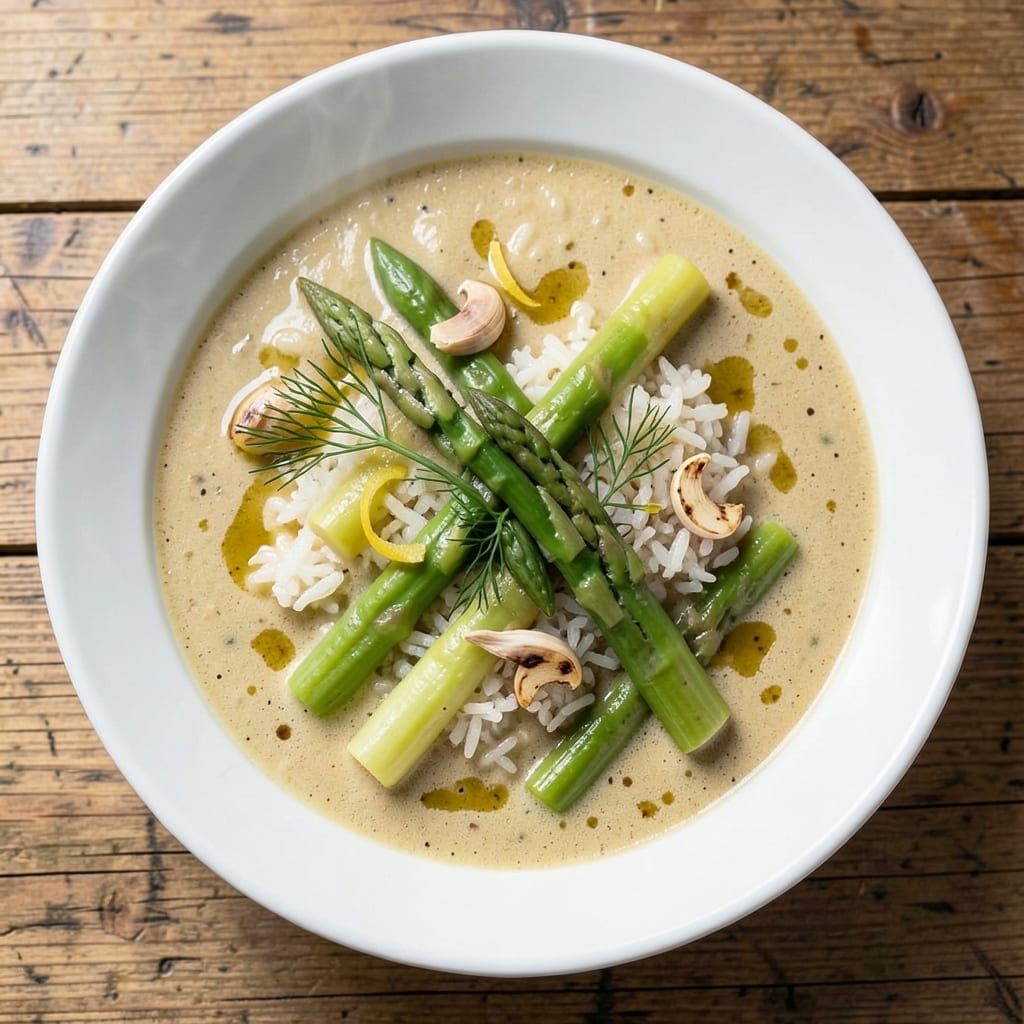
This asparagus rice soup recipe transforms spring's brightest vegetable into a velvety, comforting bowl that balances earthy asparagus with tender rice and delicate dumplings. The key lies in properly sautéing the asparagus to concentrate its natural sweetness before blending it into a silky broth. What makes this recipe stand out is the perfect harmony of textures—creamy broth, al dente rice, and those tender, pillowy dumplings that melt in your mouth.
Unlike traditional versions that rely on heavy cream, this recipe achieves its luxurious texture through a combination of rice cooking in the broth and a touch of miso paste for depth. The result is a vegetarian-friendly soup that's rich without being heavy, with each spoonful delivering that perfect balance of asparagus's fresh, grassy notes and the comforting warmth of rice. Ready in under an hour, it's the ideal springtime meal that feels both elegant and effortless.
Ingredients for asparagus rice soup
Earthy asparagus meets delicate rice and silky dumplings in this vegetarian spring masterpiece.
| Ingredient | Amount | Notes |
|---|---|---|
| Fresh Asparagus 🌱 | 1 ½ lb | Trimmed, tough ends removed |
| Jasmine Rice 🍚 | 1 cup | Uncooked, long-grain preferred |
| Vegetable Broth 💧 | 6 cups | Low-sodium preferred |
| White Miso Paste 🧈 | 1 tbsp | High-quality, fermented |
| Extra-Virgin Olive Oil 🫒 | 2 tbsp | For sautéing asparagus |
| Garlic Cloves 🧄 | 4 cloves | Minced, fresh preferred |
| Fresh Ginger 🌿 | 1 tbsp | Grated, aromatic variety |
| Green Onions 🧅 | ¼ cup | Chopped, white and green parts |
| Sesame Oil 🫒 | 1 tsp | Toasted, for finishing |
| All-Purpose Flour 🌾 | ½ cup | For dumpling dough |
| Water 💧 | ½ cup | For dumpling dough |
| Diamond Crystal Kosher Salt 🧂 | 1 ½ tsp | Adjust to taste |
| Black Peppercorns 🌶️ | ½ tsp | Freshly cracked |
| Sesame Seeds 🌰 | 1 tbsp | Toasted, for garnish |
The asparagus is the star—opt for bright green, firm stalks with tightly closed tips. Whole Foods or local farmers markets carry the freshest varieties, but even standard grocery store asparagus works if you trim the ends quickly. For the rice, jasmine or basmati delivers the ideal balance of aroma and texture. The miso paste should be white, not red—it provides the umami depth without overpowering the asparagus's natural sweetness. If you can't find white miso, miso paste labeled 'shiro' at Asian markets is perfect. For the dumplings, all-purpose flour creates the lightest texture, but if you're gluten-free, swap for a 1:1 gluten-free blend.
No fresh asparagus? Frozen asparagus works in a pinch, though it loses some texture. Substitute baby spinach or Swiss chard for a milder green flavor, but reduce the amount to 1 cup to avoid bitterness. The miso paste can be replaced with 1 tsp soy sauce plus 1/2 tsp white miso if needed, though the depth won't be identical. For the dumplings, cornstarch or arrowroot powder can replace half the flour if you're avoiding gluten. The sesame oil is non-negotiable for finishing—toasted sesame oil from Kikkoman or La Choy adds that nutty aroma that elevates the dish. If you're out, a dash of toasted sesame seeds sprinkled on top works as a visual and flavor substitute.
Store the cooked rice in an airtight container for up to 3 days in the fridge, though it's best used within 24 hours for optimal texture. The miso paste keeps indefinitely in the pantry, but once opened, transfer it to a sealed container to prevent drying. For the dumplings, make them fresh—they lose their pillowy quality when reheated. If you're prepping ahead, freeze the dough balls before cooking and steam directly from frozen. The soup itself reheats beautifully—simmer gently on low heat with a splash of water to restore its velvety consistency. Garnish with toasted sesame seeds just before serving to preserve their crunch.
Why You'll Love This Recipe
- No-Chop Needed: I swear by this trick—just trim the asparagus ends and snap the rest. No knife skills required. The rice handles itself while you simmer, so you’re basically hands-off after the initial stir.
- Umami Magic: That white miso paste? It’s the secret weapon. One spoonful turns the broth from good to ridiculously good—deep, savory, with just a hint of earthy sweetness that makes you want seconds.
- Leftovers That Work: This soup actually improves the next day. The rice softens perfectly, the asparagus stays tender, and the flavors meld into something cozier. I make a double batch on Sundays just for this reason.
- Budget Bright Spot: Jasmine rice and seasonal asparagus keep costs low, but it still feels like a restaurant dish. Honestly, I’d rather eat this than takeout—same price, way better for me.
Step-by-step instructions for earthy asparagus rice soup
This method delivers a harmonious balance of vibrant asparagus flavor and delicate rice dumplings.
Prepare the Asparagus and Aromatics
Trim the tough ends from the 1.5 lb fresh asparagus and cut the stalks into 1-inch pieces, reserving the tender tips for garnish later. Heat 2 tablespoons extra-virgin olive oil in a large pot over medium-high heat. Add the asparagus pieces and cook for 4-5 minutes until they begin to soften slightly but still retain a vibrant green color.
Push the asparagus to one side of the pot and add 4 minced garlic cloves and 1 tablespoon grated fresh ginger. Sauté for 30 seconds until the garlic becomes fragrant and just begins to turn golden. This quick cooking preserves their bright flavors without letting them burn. The aroma should fill your kitchen—this is your cue that the aromatics are ready for the next step.
Build the Soup Base
Add 1 cup jasmine rice to the pot and stir to coat the grains in the oil and aromatics. Pour in 6 cups vegetable broth and bring the mixture to a boil. Once boiling, reduce heat to low and let it simmer uncovered for 20 minutes. You'll notice the rice begins to absorb the liquid and the soup develops a delicate, earthy aroma.
After 20 minutes, stir in 1 tablespoon white miso paste and 1.5 teaspoons diamond crystal kosher salt. The miso will dissolve into the broth, adding depth and umami that complements the asparagus. Taste the broth and adjust seasoning if needed—this is where you ensure the foundation of your soup is perfectly balanced before adding the final touches.
Create the Rice Dumplings
In a small bowl, whisk together 0.5 cup all-purpose flour, 0.5 cup water, and 0.5 teaspoon freshly cracked black peppercorns until smooth. The mixture should be thick but pourable—like a thin batter. If it's too thick, add 1 tablespoon water at a time until it reaches the right consistency. This dough will form the silky dumplings that become the signature element of your soup.
Using a spoon or small ladle, drop 1 teaspoon portions of the batter into the simmering soup. Space them about 2 inches apart to allow room to expand. The dumplings will immediately begin to thicken as they cook in the hot broth. Cover the pot and let them simmer for 10-12 minutes, until they've doubled in size and become opaque and tender.
Finish and Garnish
Once the dumplings are cooked, remove the pot from heat and let it sit for 2 minutes to allow the flavors to meld. Stir in 0.25 cup chopped green onions and 1 teaspoon toasted sesame oil. The sesame oil adds a nutty aroma that enhances the overall flavor profile. Taste the soup again and adjust seasoning if needed—this is your final opportunity to perfect the balance.
To serve, ladle the soup into bowls and garnish each serving with 1 tablespoon toasted sesame seeds and the reserved asparagus tips. The contrast of textures—creamy dumplings, tender rice, and crisp asparagus—creates a satisfying bite in every spoonful. The soup should be vibrant green with a delicate, earthy aroma that invites you to take the first bite.
Pro Tips For Making Asparagus Rice Soup
- TRIM ASPARAGUS AT THE LAST POSSIBLE MOMENT: I learned this the hard way—asparagus gets rubbery fast once cut. Even if you’re prepping ahead, leave the trimming until you’re ready to cook. Snap off the woody ends (they’ll break cleanly) right before adding them to the broth, so you catch the peak of their tender-crisp texture.
- TOAST THE RICE IN OLIVE OIL: Skip the dry toasting if you’re short on time, but if you can spare 3 minutes, this is the thing that matters most. Heat the rice in 1 tablespoon of olive oil over medium until it’s fragrant and just starting to turn translucent at the edges—it’ll deepen the nutty flavor and prevent mushiness later.
- DILUTE THE MISO PASTE FIRST: Resist the urge to stir miso directly into hot broth—it’ll scorch in seconds and turn bitter. Instead, whisk 1 teaspoon into ¼ cup of cool broth first, then mix it into the pot. This keeps the umami vibrant and smooth, not chalky.
- SIMMER THE BROTH UNTIL RICE IS DONE: I used to pull the soup off heat as soon as the rice was tender, but that leaves it undercooked and watery. Let it sit uncovered on low heat for 5–7 minutes after the rice absorbs the broth—this lets excess moisture evaporate and gives the rice time to finish absorbing flavor. Yes, even if you’re impatient like me.
Wine and beer pairings for this dish
White Wine Pairings
For this delicate asparagus rice soup, I reach for a crisp Sauvignon Blanc from New Zealand or Loire Valley. The wine's zesty citrus notes and herbal undertones mirror the asparagus's natural brightness while cutting through the soup's creamy texture. Look for bottles with 12-13% ABV—just enough acidity to refresh your palate between spoonfuls. 🍷
A slightly oaked Chardonnay from Burgundy or California also works beautifully, especially if your soup has a richer miso profile. The wine's buttery texture complements the rice dumplings while its stone fruit flavors harmonize with the asparagus. Aim for a Chablis-style if you prefer a leaner profile that won't overpower the dish.
Light Beer Options
For beer lovers, a Japanese junmai sake or German Helles Lager creates perfect balance. The junmai's clean, slightly sweet profile enhances the soup's umami without competing. Try Dassai 18 Junmai from Japan—its delicate rice notes actually complement the soup's texture. 🍺
A wheat beer with citrus notes like Weihenstephaner Hefeweissbier works too, especially if your soup has a touch of ginger. The beer's effervescence cleanses your palate between bites, making each spoonful feel fresh. For a craft option, look for a Belgian witbier with coriander and orange peel.
Unexpected Sparkling Pairing
Don't overlook dry sparkling wine as a sophisticated pairing. A Prosecco or Cava with its bright acidity and green apple notes enhances the asparagus's freshness while the bubbles keep your palate alert. I love La Marca Prosecco for its crisp finish that mirrors the soup's delicate dumplings.
Non-Alcoholic Options
For those avoiding alcohol, a sparkling green tea like San Pellegrino Limonata provides similar refreshing qualities. The citrus notes complement the asparagus while the carbonation enhances the soup's textures. Alternatively, try a ginger beer with a hint of honey for a naturally sweet contrast.
For a more substantial non-alcoholic option, a coconut water-based drink with lime adds a tropical brightness that surprisingly works with the soup's earthy flavors. The natural sweetness balances the umami from the miso while keeping the pairing light and refreshing. 💧
Nutrition facts
Frequently asked questions
Can I make this asparagus rice soup without miso paste?
If you don't have miso, substitute with 1 tablespoon soy sauce plus ½ teaspoon white miso powder or 1 teaspoon fish sauce (for non-vegetarian versions). For a dairy option, ½ cup coconut milk adds creaminess while maintaining the vegetarian focus. The key is balancing umami—taste as you go!
How do I fix gummy rice dumplings?
Gummy dumplings usually mean the batter was too thick or didn't cook long enough. For future batches, ensure your flour-water mixture is smooth and pourable (like heavy cream). If they turn out gummy, simmer uncovered for 2-3 extra minutes to evaporate excess moisture. Pro tip: Use cold water for the batter to prevent premature thickening.
Can I prep this soup ahead of time?
Yes! Cook the soup base (without dumplings) up to 2 days ahead and refrigerate. Reheat gently on low heat with ½ cup extra broth or water to restore creaminess. Make dumplings fresh—they lose texture when reheated. For make-ahead convenience, prep dumpling batter separately and cook just before serving.
What's the best way to store leftover asparagus?
Wrap trimmed asparagus tightly in a damp paper towel, then place in a resealable plastic bag with a dry paper towel on top. Store in the fridge for 3-4 days or freeze for up to 3 months. For freezing, blanch stalks for 2 minutes first to preserve color and texture. Thaw overnight in the fridge before using.
Can I make this soup spicier?
Add ½ teaspoon red pepper flakes when sautéing asparagus or 1 teaspoon gochujang (Korean chili paste) with the miso. For heat lovers, stir in 1 sliced Thai chili with the green onions at the end. Adjust to taste—this soup handles bold flavors beautifully!