
Soups & Stews
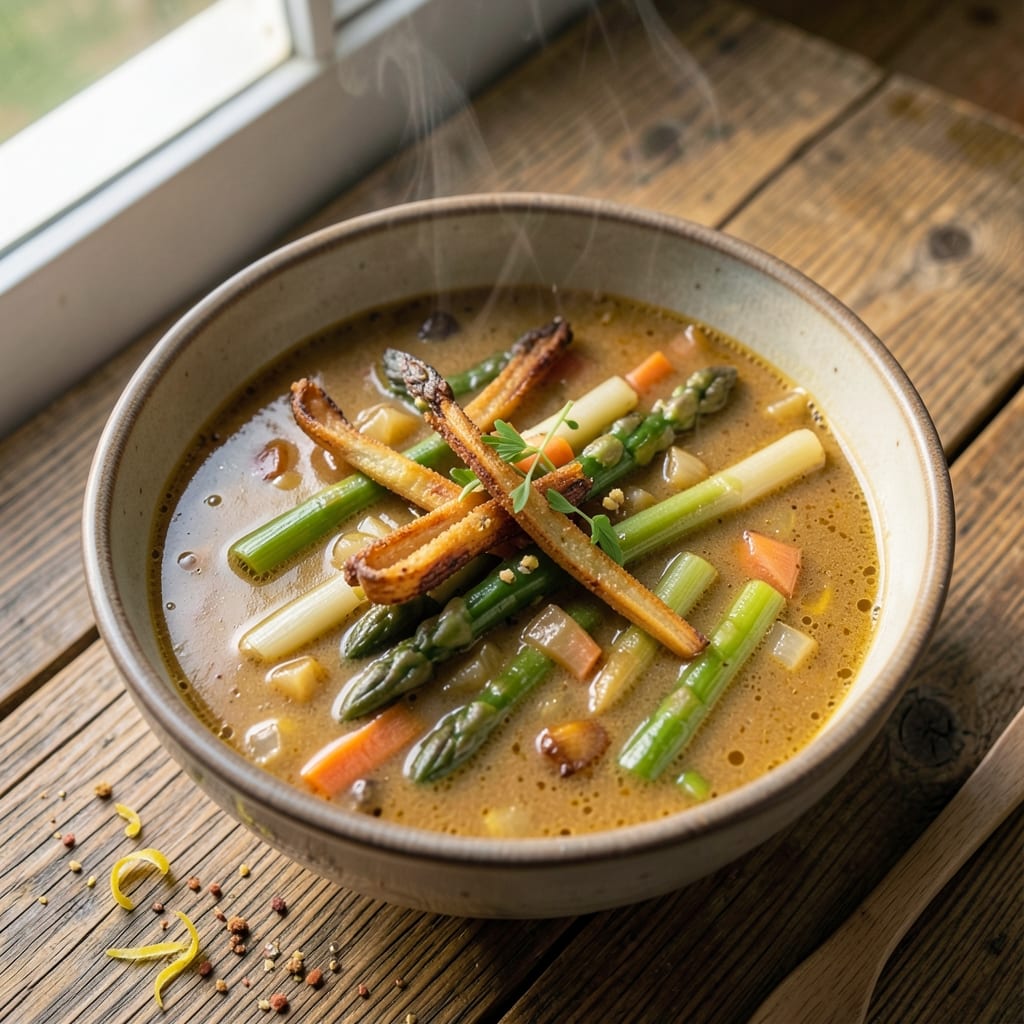
This asparagus ends soup recipe transforms grocery store scraps into a velvety, umami-packed vegetarian masterpiece—no waste, all flavor. The secret lies in slow-cooking the fibrous ends with aromatic vegetables until they dissolve into a rich, golden broth, then finishing with tender asparagus spears for texture. It’s the kind of soup that makes you appreciate every part of the vegetable, from the delicate tips to the often-discarded base.
The process begins with a simple mirepoix of onions, carrots, and celery, sautéed until fragrant before adding the asparagus ends and vegetable stock. Simmering low and slow breaks down the fibers, creating a naturally thickened broth that needs no heavy cream or flour. For depth, a splash of white wine or a sprinkle of nutritional yeast adds complexity, while fresh herbs brighten the finish.
What you’ll end up with is a smooth, restaurant-quality soup with just the right balance of earthy asparagus, savory broth, and a touch of creaminess (if you choose to add it). The texture is velvety yet light, with optional garnishes like toasted breadcrumbs, grated Parmesan, or a swirl of olive oil to elevate each spoonful. It’s the perfect way to turn something discarded into something extraordinary.
This recipe works equally well as a weeknight dinner or a holiday appetizer, and it’s easily adaptable—add chili flakes for heat, coconut milk for creaminess, or keep it vegan with just broth and herbs. Let’s make soup that’s as good for the planet as it is for your palate.
Ingredients for asparagus ends soup
Pantry staples meet garden scraps for this zero-waste vegetarian masterpiece.
| Ingredient | Amount | Notes |
|---|---|---|
| Asparagus Ends 🌱 | 2 cups | Tough lower ends, chopped |
| Yellow Onion 🧅 | 1 whole | Chopped, medium size |
| Carrots 🥕 | 2 medium | Peeled, chopped (about 1 cup) |
| Celery Stalks 🌿 | 2 whole | Chopped, medium size |
| Garlic Cloves 🧄 | 3 cloves | Peeled, minced |
| Vegetable Stock 💧 | 4 cups | Low-sodium preferred |
| White Wine 🍷 | ½ cup | Dry variety, optional |
| Fresh Asparagus Spears 🌿 | 1 bunch | Trimmed, medium size |
| Fresh Thyme 🌿 | ¼ cup | Leaves only, chopped |
| Fresh Parsley 🌿 | ⅛ cup | Chopped, for garnish |
| Extra-Virgin Olive Oil 🫒 | 2 tbsp | For sautéing |
| Salt 🧂 | 1 tsp | Kosher or sea salt |
| Black Pepper 🌶️ | ½ tsp | Freshly ground |
| Nutritional Yeast 🍞 | 2 tbsp | For umami depth |
| Coconut Milk 🥥 | ¼ cup | Full-fat, optional |
The asparagus ends are the star—buy organic if possible to avoid dirt, but any will work. Trader Joe's often has pre-cut asparagus with ends included, or save yours from grocery store bunches. Carrots and celery should be firm, not rubbery—local farmers markets have the freshest. The vegetable stock matters too; Imagine or Pacific Foods brands are consistently flavorful. For the white wine, any dry variety works—Sauvignon Blanc or Pinot Grigio are crowd-pleasers, but whatever's open in your fridge is fine.
No white wine? Extra vegetable stock with a splash of apple cider vinegar mimics the acidity. Fresh herbs can be swapped for dried at one-third the amount, but fresh thyme and parsley give that restaurant-quality brightness. The nutritional yeast adds that cheesy umami—Bob's Red Mill is my go-to brand. Coconut milk is optional but transforms this into a creamy soup; full-fat canned coconut milk works best for richness. Prefer vegan? Skip the coconut milk entirely and let the asparagus ends create natural creaminess through slow cooking.
Asparagus ends keep for 3-4 days in the fridge wrapped in damp paper towels. Fresh herbs stay vibrant for 5 days if stored the same way. The finished soup reheats beautifully—3 minutes on the stove or 2 minutes in the microwave—and tastes even better the next day as flavors meld. Portion into glass jars for easy lunches or leftovers; they freeze for 3 months if you want to prep ahead.
Why You'll Love This Recipe
- I’ll be real: this soup is my go-to when I’m too tired to think. Toss in the chopped veggies, add broth, and let it simmer while I chop salad or set the table. By the time I’m done, the soup’s ready—no last-minute stress, just warm, comforting bowls.
- Here’s what sold me: a single batch stretches for days. The carrots and celery soften just enough to keep it interesting, and the asparagus ends add texture even after reheating. Plus, it’s cheap—no specialty ingredients, just pantry staples that won’t break the bank.
Step-by-step instructions for asparagus ends soup
Transform tough asparagus ends into a velvety, umami-packed soup that celebrates zero-waste cooking.
Sauté the Vegetable Base
Heat the 2 tablespoons extra-virgin olive oil in a large pot over medium heat. Add the chopped 1 whole yellow onion, 2 medium carrots, 2 whole celery stalks, and 2 cups asparagus ends, stirring frequently for 8-10 minutes until the vegetables soften and begin to caramelize. You'll notice the mixture releases moisture and develops a rich, golden hue—this is where the soup's depth of flavor begins.
Once the vegetables are tender, add the 3 minced garlic cloves and cook for an additional 1 minute until fragrant. The garlic should sizzle gently without browning—this ensures it infuses flavor without bitterness. Keep the heat at medium to prevent burning while allowing the aromatics to meld together. This foundational step builds the soup's complexity, so don't rush it.
Deglaze and Build the Broth
Pour in the 0.5 cup white wine (if using) and scrape the bottom of the pot with a wooden spoon to release all the flavorful browned bits. Let the wine simmer for 3-4 minutes until it reduces by half and the alcohol cooks off completely. You'll smell the wine's acidity mellowing into a rich, savory base—this is crucial for balancing the soup's final flavor profile.
Add the 4 cups vegetable stock and bring the mixture to a gentle boil. Reduce heat to low and let it simmer uncovered for 20-25 minutes, stirring occasionally. The broth should reduce slightly, intensifying its flavor. If the soup looks too thin, you can reduce it further by simmering uncovered for an additional 5-10 minutes. This step transforms the simple ingredients into a concentrated, aromatic broth.
Incorporate Herbs and Umami Boosters
Stir in the 0.25 cup chopped fresh thyme, 2 tablespoons nutritional yeast, 1 teaspoon salt, and 0.5 teaspoon black pepper. The nutritional yeast adds a cheesy, umami depth that elevates the soup's savory profile. Let the soup simmer for another 5 minutes to allow the flavors to fully integrate. You'll notice the soup develop a richer, more complex aroma—this is the moment the dish comes together.
If you're using the 0.25 cup coconut milk, gently stir it in now. The coconut milk adds a subtle creaminess without overpowering the vegetable flavors. For a smoother texture, blend the soup with an immersion blender until silky, or leave it rustic with visible vegetable pieces. Taste and adjust seasoning—this is where you fine-tune the balance of salt, acidity, and umami.
Finish with Fresh Asparagus and Garnish
Add the 1 bunch trimmed fresh asparagus spears to the soup and simmer for 3-4 minutes until tender but still vibrant green. The fresh asparagus adds a bright, crisp contrast to the rich broth. Remove the asparagus spears with tongs and set them aside for garnish. The soup should now be velvety, aromatic, and perfectly balanced.
Ladle the soup into bowls and garnish with the reserved asparagus spears, a sprinkle of 0.125 cup chopped fresh parsley, and an extra pinch of black pepper. Serve immediately while the flavors are at their peak. Each spoonful should deliver a harmonious blend of earthy vegetables, herbal notes, and umami richness—proof that even the toughest scraps can become something extraordinary.
Pro Tips For Making Asparagus Ends Soup
- Char the Asparagus Ends: I learned this the hard way—don’t just toss the asparagus ends into the pot raw. Sear them first in a dry pan over medium-high heat for 2-3 minutes until they darken slightly. This deepens the flavor and prevents that bland, watery soup vibe.
- Slice Onions Thinly, Not Chunky: Thick onion slices turn mushy and cloying in soup. Instead, cut them into paper-thin half-moons (about 1/8-inch thick) so they soften evenly without overpowering the broth. Same goes for carrots—julienne them into matchsticks, not dice.
- Salt the Water Aggressively: Asparagus ends release bitterness if underseasoned. Bring the soup to a boil in water that tastes like the ocean—about 1.5 teaspoons of salt per quart—before adding the veggies. You’ll adjust later, but starting strong prevents a sad, flat broth.
- Strain, Then Blend: After simmering the veggies for 20-25 minutes, strain out the solids before blending. This gives you a silky, velvety soup instead of a chunky mess. Save the strained veggies for a quick stir-fry or frittata—zero waste, all flavor.
Perfect pairings for this dish
Bread Pairings
A warm slice of crusty sourdough is my go-to pairing—its tangy bite cuts through the soup's richness while soaking up every last drop of that velvety broth. For extra texture, toast the bread until golden and crisp, then rub it with a garlic clove before serving. If you prefer something lighter, baguette slices work beautifully, especially when lightly buttered. 🥖
For a gluten-free option, rosemary focaccia adds a fragrant herbal note that complements the thyme in the soup. I like to drizzle it with a little extra-virgin olive oil before serving. The focaccia's airy texture contrasts perfectly with the soup's smoothness, creating a satisfying bite.
Dairy Additions
A sprinkle of grated Parmesan cheese (about 2 tablespoons) adds a salty, nutty depth that enhances the umami from the nutritional yeast. For a vegan twist, toasted breadcrumbs tossed with 1 teaspoon dried oregano and a pinch of red pepper flakes create a crispy, flavorful topping. Both options elevate the soup without overpowering its natural flavors.
Herb Garnishes
Fresh parsley isn't just for garnish—its bright, slightly peppery notes balance the soup's earthiness. I like to finely chop 1 tablespoon and sprinkle it over each bowl right before serving. For a more robust flavor, add chopped chives or microgreens—they bring a fresh, vibrant contrast to the warm soup. 🌿
Acidic Contrasts
A squeeze of lemon wedge on the side lets diners add brightness as needed. The acidity cuts through the richness, especially if you've added coconut milk. For a more integrated approach, stir in 1 teaspoon lemon zest while the soup simmers—it infuses subtle citrus notes without overwhelming the dish. Trust me, it makes all the difference.
Spicy Kicks
If you love heat, a dash of red pepper flakes or a drizzle of chili oil adds a fiery contrast. I recommend starting with ¼ teaspoon and adjusting to taste—this soup already has depth, so a little goes a long way. For a smoky twist, top with crumbled chorizo (if serving to non-vegans) or smoked paprika for a vegan option. 🌶️
Nutrition facts
Frequently asked questions
Can I use frozen asparagus ends for this soup?
Fresh asparagus ends work best for maximum flavor, but you can use frozen in a pinch. Just thaw them first and drain well to avoid excess moisture in your broth. For the best results, try to find organic asparagus ends at grocery stores—they're often sold separately or included in pre-cut asparagus bundles.
How do I make this soup vegan?
Skip the coconut milk and nutritional yeast if avoiding all animal products. Instead, use 1 tablespoon miso paste for umami and ½ cup cashew cream (blended soaked cashews with water) for richness. The asparagus ends alone create enough body when simmered long enough—no dairy substitutes needed!
Why does my soup taste bitter?
Bitterness often comes from overcooking the asparagus ends or using old stock. Reduce simmering time to 15 minutes and add a splash of lemon juice or apple cider vinegar to balance. Fresh herbs like parsley also help brighten the flavor—add them at the end to preserve their freshness.
Can I make this soup ahead of time?
Yes! This soup tastes even better the next day as flavors meld. Store in an airtight container in the fridge for 3-4 days or freeze for 3 months. Reheat gently on the stove—never microwave directly from frozen. The texture stays velvety when reheated slowly.
What if I don't have white wine?
No problem! Replace it with ½ cup extra vegetable stock plus 1 teaspoon apple cider vinegar or lemon juice. The acidity helps balance the soup's flavors just as effectively. For a richer taste, a splash of soy sauce (½ teaspoon) adds umami depth too.