
Soups & Stews
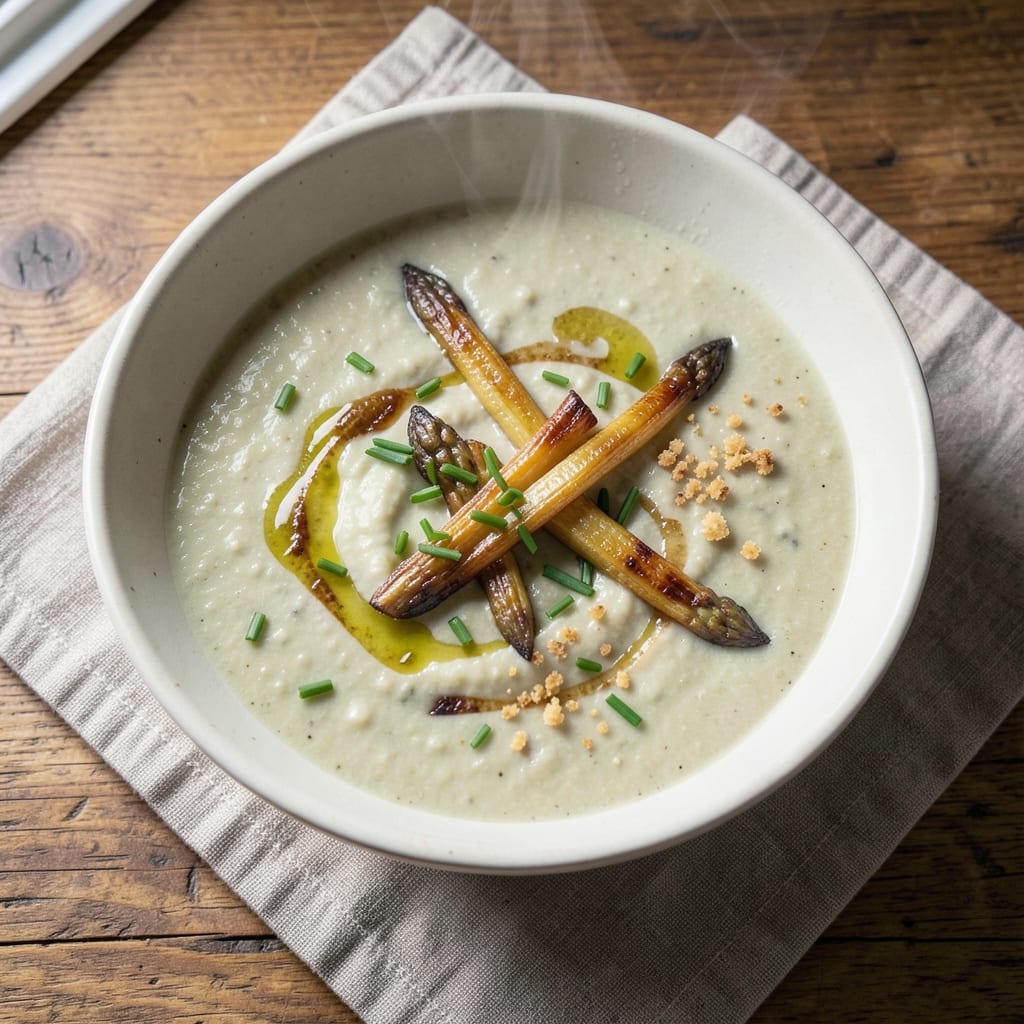
This asparagus bisque soup transforms humble spring asparagus into a velvety green velouté that tastes like a gourmet restaurant secret. The key lies in roasting the asparagus first—this caramelizes natural sugars while concentrating flavor, creating a rich base that needs no heavy cream. What starts as a simple vegetable becomes a luxurious soup with just a few professional techniques and fresh herbs for that final bright finish.
What sets this recipe apart is the balance between traditional French methods and modern shortcuts. A classic roux forms the foundation for a silky texture, while an immersion blender eliminates the need for transferring hot soup to a food processor. The result is a soup that's impossibly smooth yet still vibrant with asparagus's fresh, slightly sweet character. Every spoonful delivers that perfect harmony of earthy vegetable and bright herb notes.
Serve this bisque with warm crusty bread to soak up every last drop, or pair it with a crisp white wine to complement the herbaceous flavors. The soup keeps beautifully in the refrigerator for up to 4 days, making it perfect for meal prep while maintaining its velvety texture. Whether you're entertaining or simply treating yourself to a comforting spring meal, this recipe delivers restaurant-quality results with minimal effort.
For those watching their cream intake, a simple reduction of vegetable stock with a touch of coconut milk achieves the same luxurious creaminess without compromising flavor. The fresh herb finish—parsley, chives, and a squeeze of lemon—elevates each bowl to new heights. This isn't just soup; it's a celebration of spring's first fresh vegetables transformed into something truly special.
Ingredients for asparagus bisque soup
Roasted asparagus and a velvety roux create this restaurant-worthy green bisque with vibrant herb notes.
| Ingredient | Amount | Notes |
|---|---|---|
| Fresh Asparagus Spears 🌱 | 1 ½ lb | Trimmed, tough ends removed |
| Yellow Onion 🧅 | 1 whole | Medium, diced finely |
| Garlic Cloves 🧄 | 4 cloves | Peeled, minced finely |
| Unsalted Butter 🧈 | ½ cup | Cold, cut into pieces |
| All-Purpose Flour 🌾 | ¼ cup | Sifted for smooth roux |
| Vegetable Stock 💧 | 4 cups | Low-sodium preferred |
| Heavy Cream 🥛 | ½ cup | Full-fat for richness |
| Fresh Parsley 🌿 | ¼ cup | Leaves only, chopped fine |
| Fresh Chives 🌿 | 2 tbsp | Chopped finely for garnish |
| Lemon Juice 🍋 | 1 tbsp | Freshly squeezed |
| Salt 🧂 | 1 tsp | Diamond Crystal kosher |
| Ground Black Pepper 🌶️ | ½ tsp | Freshly ground preferred |
| White Wine 🍷 | ¼ cup | Dry, like Sauvignon Blanc |
| Coconut Milk 🥥 | ¼ cup | Full-fat for creaminess (optional) |
The asparagus is non-negotiable—fresh spring spears yield the best flavor. Look for vibrant green stalks with tightly closed tips at Whole Foods or your local farmers market. Trim the tough ends with a sharp knife, leaving the tender tips intact. For the roux, European-style butter like Plugrá adds depth, but any unsalted butter works. The vegetable stock should be low-sodium to control seasoning, and I recommend Pacific Foods or Imagine brands for maximum flavor without excess salt. If you're using coconut milk as a lighter alternative, opt for the canned full-fat version—it emulsifies better than carton varieties.
No fresh herbs? Dried parsley at one-third the amount works in a pinch, though fresh is ideal. The white wine adds brightness—substitute extra vegetable stock if avoiding alcohol. For a cream-free version, increase the coconut milk to 1 cup and reduce the vegetable stock slightly. The roux must be cooked to a blonde color—no browning, or it'll taste bitter. If your asparagus is particularly fibrous, blanch it first for 2 minutes to soften before roasting. The lemon juice is essential for that final bright pop of acidity, so don't skip it even if you're not a fan of citrus in soups.
This soup tastes even better the next day as flavors meld. Store in an airtight container in the fridge for up to 4 days, though I recommend making a fresh batch weekly for peak freshness. For freezing, cool completely first, then portion into ziplock bags with 1-inch headspace. Thaw overnight in the fridge and reheat gently on the stove—never microwave, or the texture will break. The fresh herbs can be added back after reheating to preserve their vibrant color and flavor. Leftovers reheat beautifully with a splash of water or stock to restore creaminess.
Why You'll Love This Recipe
- No Chopping Hassle: I swear by this recipe because the asparagus just snaps—no tedious trimming or peeling. Toss the spears whole into the pot, and the stems soften into velvety richness while the tips stay tender. (Yes, even the kids will eat the stems after I show them how.)
- Umami Bomb: That caramelized onion and garlic base? Chef’s kiss. The flour toasts into a nutty roux before blending into a soup so deep and savory, you’ll forget it’s spring. Honestly, the first time I made this, my partner asked for seconds before I even tasted it.
- Weeknight to Dinner Party: Same recipe, different vibes—serve it with crusty bread for a lazy Sunday or drizzle with cream and garnish with microgreens for a fancified weeknight meal. I’ve even reheated leftovers for lunch, and no one bats an eye. (Between us, the second day is even better.)
- Pantry Staple Magic: Butter, flour, onion—ingredients you already own. The asparagus is the star, but the base costs pennies, and a single bunch stretches into three meals. My freezer’s always stocked with this soup because it’s the ultimate “I forgot to grocery shop” lifesaver.
Step-by-step instructions for asparagus bisque soup
Master this velvety green soup with professional techniques for perfect texture and vibrant flavor.
Prepare the Asparagus Base
Preheat your oven to 400°F. Trim the tough ends from the 1.5 lb fresh asparagus spears, leaving the tender portions intact. Cut the spears into 1-inch pieces and spread them evenly on a baking sheet. Roast for 15-20 minutes until they're tender and slightly caramelized at the edges.
While the asparagus roasts, finely dice the 1 whole yellow onion and mince the 4 cloves garlic. I like to use a microplane for the garlic to maximize surface area and flavor extraction. These aromatics will form the flavor foundation of your soup, so take your time with this prep work.
Develop the Roux and Deglaze
In a large, heavy-bottomed pot, melt the 0.5 cup unsalted butter over medium heat until it foams. Add the 0.25 cup sifted all-purpose flour all at once and whisk vigorously for 2-3 minutes until the mixture turns a rich golden brown. This is your roux—the backbone of your velouté.
Immediately pour in the 0.25 cup dry white wine and scrape the bottom of the pot with a wooden spoon, incorporating all those flavorful browned bits. Let the wine simmer for 1-2 minutes until it reduces by half. This deglazing step captures all the caramelized flavors that would otherwise burn.
Build the Velouté
Add the roasted asparagus, diced onion, and minced garlic to the pot. Stir to combine, then pour in the 4 cups vegetable stock. Bring the mixture to a gentle simmer and cook for 15-20 minutes until the vegetables are completely tender and the flavors have melded together.
Use an immersion blender to purée the soup directly in the pot until completely smooth. If you prefer using a regular blender, carefully transfer the hot liquid to a heatproof container, blend until silky, then return it to the pot. The result should be a vibrant green velouté with no visible texture.
Finish with Cream and Herbs
Reduce the heat to low and stir in the 0.5 cup heavy cream and 0.25 cup full-fat coconut milk. Simmer gently for 5 minutes, stirring occasionally, until the soup reaches your desired consistency. The coconut milk adds subtle creaminess without overpowering the asparagus flavor.
Season with the 1 tsp salt and 0.5 tsp freshly ground black pepper, then stir in the 1 tbsp freshly squeezed lemon juice. This brightens the soup and balances the richness. Taste and adjust seasoning—this is where professional soups shine in their precision.
Garnish and Serve
Ladle the soup into warmed bowls and garnish with the 0.25 cup finely chopped fresh parsley and 2 tbsp finely chopped fresh chives. The herbs should be distributed evenly across the surface for both visual appeal and fresh flavor contrast. Serve immediately while hot.
For an elegant presentation, I like to drizzle a small amount of the reserved coconut milk around the rim of each bowl before adding the soup. This creates a beautiful visual effect while enhancing the soup's creaminess with each spoonful. The result is a restaurant-quality asparagus bisque that's silky, vibrant, and perfectly balanced in flavor.
Pro Tips For Making Asparagus Bisque Soup
- Char the Onion First: I learned this the hard way—sautéing onions low and slow makes them turn to mush in bisque. Instead, crank the heat to medium-high and let them brown for 3-4 minutes until edges darken. That caramelized depth carries the whole soup.
- Trim Asparagus at an Angle: Cutting the tough ends off straight leaves you with awkward stubs that don’t cook evenly. Angle the knife at 45 degrees—you’ll get cleaner cuts, less waste, and spears that stand up better in the pot. (Yes, even if you’re impatient like me.)
- Don’t Rush the Roux: The flour-butter roux is where flavor hides, but I used to walk away too soon. Cook it 5-7 minutes until it’s a deep golden color—no darker, or you’ll taste burnt bits. Stir constantly, or it’ll clump like a disaster.
- Save the Asparagus Water: After blanching or boiling asparagus, don’t pour that bright green water down the drain. Strain it and add it back to the pot later—it’s packed with flavor and thickens the soup naturally. (Your future self will notice the difference.)
Regional styles of this recipe
French Classic Style
In classic French cuisine, asparagus bisque often features a blonde roux made with European-style butter like Plugrá and a touch of white wine reduction for depth. The French version typically omits coconut milk entirely, relying instead on a heavy cream finish for richness. I recommend using Chardonnay wine for deglazing—its buttery notes complement the asparagus beautifully. Garnish with chervil instead of parsley for that quintessential French touch. 🍷
Italian Spring Version
Italian chefs transform this soup into a lighter, herb-forward dish by incorporating fresh basil and lemon zest into the roux. The Italians often use Parmigiano-Reggiano shaved over the top at the table rather than cream. For an authentic Italian touch, add 1 tsp dried oregano to the roux and finish with a drizzle of extra virgin olive oil instead of coconut milk. This version shines with Sangiovese wine pairings. 🌿
Southern U.S. Twist
The Southern approach leans into comfort food by adding smoked paprika and a splash of hot sauce to the roux. Some recipes even incorporate crumbled bacon or andouille sausage for depth, though this makes it non-vegetarian. For a vegan option, use smoked turkey bacon or extra smoked paprika. The Southern version often includes cornbread on the side to soak up the rich bisque. 🔥
Modern Vegan Adaptation
This contemporary take replaces butter with olive oil and heavy cream with cashew cream (blended soaked cashews with water). The roux becomes a white bean purée for thickness, and the soup finishes with nutritional yeast for a cheesy flavor. I recommend 1 cup cashew cream and 2 tbsp nutritional yeast for optimal creaminess. Garnish with avocado slices and pumpkin seeds for added texture. 🥑
German Asparagus Tradition
In Germany, asparagus bisque often incorporates white asparagus (albeit harder to find in the U.S.) and a creamy béchamel sauce instead of a traditional roux. The Germans frequently serve it with potato dumplings or crispy fried onions on top. For a German-inspired version, use 1 cup heavy cream in the roux and finish with 1 tsp caraway seeds for a distinctive flavor. Pair with Riesling wine for the perfect balance. 🥔
Nutrition facts
Frequently asked questions
Why roast the asparagus instead of boiling it?
Roasting caramelizes the asparagus, creating deeper flavor and natural sweetness that transforms this simple vegetable into a rich base for your soup. The concentrated flavor also means you need less cream to achieve that luxurious texture. Plus, roasting removes excess moisture, resulting in a smoother purée.
Can I make this soup without dairy?
Replace the heavy cream with 1 cup full-fat coconut milk or cashew cream (blended soaked cashews with water) for a creamy, dairy-free version. The coconut milk adds subtle sweetness that pairs beautifully with asparagus's natural flavors.
What's the secret to a silky-smooth texture?
The perfect velouté comes from three key steps: cooking the roux to a blonde color (not brown), using an immersion blender for smooth puréeing, and straining the soup through a fine-mesh sieve if needed. For extra silkiness, simmer the soup uncovered for 5 minutes after blending to evaporate any excess moisture.
How do I prevent the soup from breaking or separating?
Never boil the soup vigorously—simmer gently at low heat after adding cream. Stir constantly when combining hot soup with cold cream to prevent curdling. If separation occurs, whisk in 1 tsp cornstarch mixed with 1 tbsp water to restore smoothness.
What's the best way to reheat leftovers?
Reheat gently on the stove over low heat, stirring frequently, until just warm—never microwave, as it can break the emulsion. For extra creaminess, add 1 tbsp coconut milk or cream while reheating. The soup tastes even better the next day as flavors meld!