
Soups & Stews
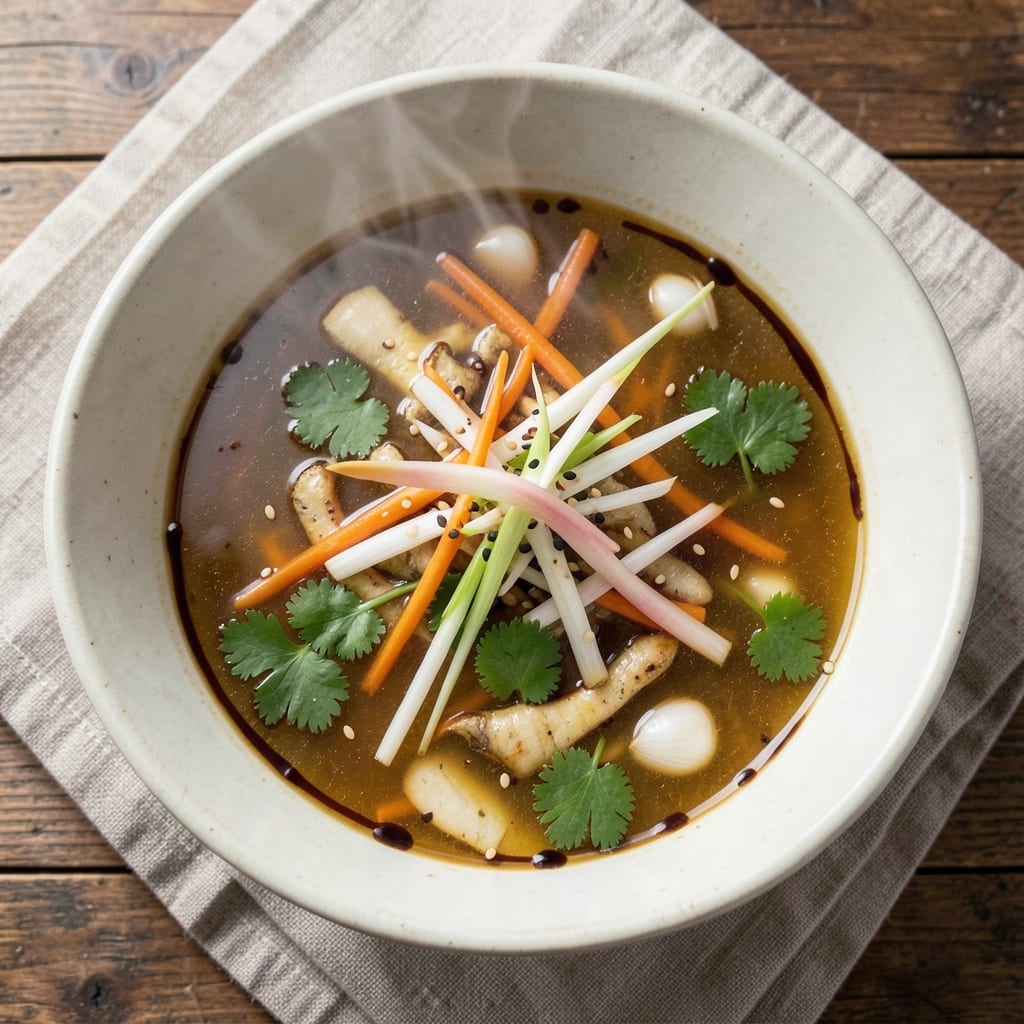
This Asian ginger broth soup recipe delivers a fragrant, immunity-boosting bowl in under 30 minutes—no long simmering required. The secret lies in a zesty ginger base infused with garlic, scallions, and a touch of soy, creating a broth that’s both warming and vibrant. I developed this version after realizing traditional methods could be streamlined without sacrificing depth of flavor, making it perfect for busy weeknights or when you crave comfort without compromise.
The beauty of this recipe is its versatility—use it as a standalone meal or as a base for noodles, tofu, or shredded chicken. Fresh ginger is key, but a little trick (microwaving it first) unlocks maximum flavor without bitterness. The broth builds quickly over 15 minutes, while optional additions like miso paste or coconut milk add modern twists that still honor traditional roots. Every spoonful delivers bright, herbal notes that clear sinuses and soothe the soul.
What you’ll end up with is a golden, aromatic broth with tender vegetables floating in layers of warmth. The ginger’s natural sweetness mellows into a subtle, lingering spice, while the garlic and scallions add sharp brightness. Serve it piping hot with a sprinkle of sesame seeds or a drizzle of chili oil for an extra kick—this is the kind of soup that turns a simple meal into a moment of pure satisfaction.
Best of all, it reheats beautifully, making it ideal for meal prep. Whether you’re fighting a cold or just craving something nourishing, this recipe delivers restaurant-quality results with minimal effort. Let’s get started—your taste buds (and immune system) will thank you.
Ingredients for asian ginger broth soup
Fresh ginger and aromatic vegetables create this vibrant, immunity-boosting broth in under 30 minutes.
| Ingredient | Amount | Notes |
|---|---|---|
| Fresh Ginger Root 🌿 | 3 oz | Unpeeled, microwaved 1 minute |
| Garlic Cloves 🧄 | 4 cloves | Peeled, lightly crushed |
| Yellow Onion 🧅 | 1 whole | Medium size, sliced thin |
| Scallions 🌱 | 4 whole | White and green parts, chopped |
| Low-Sodium Soy Sauce 🥢 | 2 tbsp | For umami depth |
| Carrots 🥕 | 2 medium | Peeled, cut into matchsticks |
| Celery Stalks 🌿 | 2 whole | Trimmed, cut into 1-inch pieces |
| Vegetable Broth 💧 | 4 cups | Low-sodium preferred |
| Green Onions 🌱 | 3 whole | For garnish, chopped |
| Sesame Seeds 🌰 | 1 tbsp | Toasted for garnish |
| Red Chili Oil 🌶️ | 1 tbsp | Optional, for heat |
| Fresh Cilantro 🌿 | ¼ cup | Chopped, for garnish |
| Rice Vinegar 🍶 | 1 tsp | For brightness |
| Honey 🍯 | 1 tsp | Balances heat |
| Salt 🧂 | 1 tsp | Adjust to taste |
The ginger is non-negotiable—fresh, organic ginger from the produce section delivers the best flavor. Look for plump, firm roots with no soft spots. Whole Foods or local Asian markets usually carry the freshest. Microwaving it for a minute before grating unlocks the oils without bitterness. The garlic and scallions should be bright white, not sprouting or yellowed. For the broth, low-sodium vegetable broth keeps the focus on the fresh ingredients. If you can't find it, dilute regular broth with water and add less salt later.
No fresh ginger? Substitute with 1 tbsp ginger powder, but the flavor won't be as complex. Swap soy sauce for coconut aminos if you're avoiding soy. The carrots and celery can be prepped ahead—store them in a sealed container in the fridge for up to 3 days. For extra richness, add 1 tbsp miso paste when you strain the broth. The sesame seeds? Toast them in a dry pan for 30 seconds—they'll smell amazing and add crunch. If you're short on time, skip the optional chili oil but add an extra pinch of red pepper flakes instead.
This broth reheats beautifully—simmer on the stove or microwave until piping hot. Keeps in the fridge for 4 days or freeze for 3 months. I always make a double batch: one for immediate use and one to freeze for sick days. The vegetables stay crisp when reheated gently. For meal prep, store components separately—recombine with fresh herbs and sesame seeds when ready to serve. Garnish with cilantro and chili oil right before eating to preserve freshness.
Why You'll Love This Recipe
- Pantry Magic: I swear by this when my fridge is bare—just ginger, garlic, and onion do the heavy lifting. No fancy ingredients, no last-minute grocery runs. That first sip of broth, thick with ginger’s warmth and garlic’s punch? Pure flavor without the fuss.
- Sneaky Depth: The soy sauce doesn’t just season—it layers. A splash turns the broth from good to ridiculously good, balancing the ginger’s bite with that umami kick. Honestly, I’ve made it with regular soy sauce, but low-sodium keeps it from tasting like a salt lick.
- Leftover Hero: Make a big batch on Sunday, and you’ve got lunch for days. The flavors actually improve after sitting overnight—deeper, richer, like a cozy hug in a bowl. My kids beg for it cold with rice, and I don’t even pretend to judge.
- Cold Weather Cure: Nothing beats this when you’re sniffling. The ginger’s zing clears sinuses, the scallions add freshness, and the heat soothes like a blanket. Between us, I’ve made it twice in one week during flu season—no shame.
Step-by-step instructions for Asian ginger broth soup
Here's how to create a vibrant, immunity-boosting broth in under 30 minutes.
Prepare the Ginger Base
Peel the 3 oz fresh ginger root and microwave it uncovered for 1 minute to soften. I find this makes slicing easier and helps extract more flavor. Cut the ginger into thin slivers—about ⅛-inch thick—so they infuse quickly without becoming bitter.
Place the ginger in a large pot and add the peeled, lightly crushed 4 cloves garlic and thinly sliced 1 whole yellow onion. Add 2 tbsp low-sodium soy sauce and 1 tsp salt. The soy sauce adds umami depth while the salt helps draw out moisture from the vegetables, creating a more concentrated flavor base.
Build the Vegetable Foundation
Add the peeled, matchstick-cut 2 medium carrots and trimmed, 1-inch celery pieces. Stir everything together and bring to a gentle boil over medium-high heat. Once boiling, reduce heat to medium-low and let it simmer uncovered for 10 minutes—this allows the vegetables to soften slightly while preventing the broth from boiling over.
After 10 minutes, taste the broth. You should notice a strong ginger and garlic aroma with a sweet, earthy carrot and celery presence. If it needs more depth, add a splash of 4 cups vegetable broth now. The broth should be aromatic but not overly sweet—this is your flavor foundation.
Simmer and Infuse
Add the remaining 4 cups vegetable broth and bring the mixture to a steady simmer. Let it cook uncovered for 15 minutes—this ensures the ginger and garlic flavors meld completely without turning bitter. Stir occasionally to prevent sticking, especially at the bottom of the pot.
Here's the thing—ginger can easily become overpowering. To balance it, stir in the 1 tsp rice vinegar and 1 tsp honey during the last 5 minutes of simmering. The vinegar brightens the broth, while the honey rounds out any sharpness. The broth should now have a harmonious blend of spicy, sweet, and tangy notes.
Finish and Garnish
Remove the pot from heat and let it sit for 5 minutes to allow the flavors to settle. This resting period is crucial—it lets the broth absorb all the aromatics without losing heat. Meanwhile, prepare your garnishes: chop the 4 whole scallions (white and green parts), 3 whole green onions, and 0.25 cup fresh cilantro. Toast the 1 tbsp sesame seeds in a dry skillet over medium heat for 1-2 minutes until golden and fragrant.
Ladle the hot broth into bowls and garnish with the chopped scallions, green onions, cilantro, toasted sesame seeds, and a drizzle of 1 tbsp red chili oil (if using). The chili oil adds a subtle heat that complements the cooling ginger. Serve immediately while steaming hot—this is when the soup shines brightest.
Pro Tips For Making Asian Ginger Broth Soup
- PEEL GINGER LAST MINUTE: I used to peel ginger days ahead and store it in the fridge—big mistake. Ginger oxidizes fast, turning bitter and losing its bright punch. Peel it right before slicing, then toss the slices into cold water for 10 seconds to dull the sharpness just enough. Works like a charm, especially when you’re adding it to simmering broth.
- SMASH GARLIC WITH SALT: Minced garlic burns faster than you’d think in broth. Instead of chopping, smash 3-4 cloves with the flat side of your knife, sprinkle with ¼ teaspoon salt, then let sit for 2 minutes. The salt softens the garlic and releases its oils—no burning, just deep flavor. Trust me, your soup will taste richer without the char.
- SWEAT ONIONS LOW AND SLOW: I learned this the hard way—rushing the onion step turns your broth cloudy and dull. Cook sliced yellow onion in broth over medium-low heat for 8-10 minutes until translucent but not brown. Patience here means the soup’s base will taste like it simmered for hours, not minutes.
- SAVOR SOY SAUCE LATER: Dumping soy sauce at the start makes the broth taste flat. Add it in the last 5 minutes of simmering—just 1 tablespoon—so the umami has time to bloom without overpowering. If you’re using scallions for garnish, reserve 2 tablespoons of their greens and stir them in with the soy at the end for a bright finish.
Health benefits of this dish
Immune System Booster
This ginger broth is a powerhouse of immune-boosting ingredients. Fresh ginger contains gingerol, a compound with potent anti-inflammatory properties that helps fight infections and reduce inflammation. A 3-ounce serving provides about 10% of your daily vitamin C needs, crucial for immune function. The garlic adds allicin, a sulfur compound that supports white blood cell production. 💪
Digestive Comfort
The combination of ginger and garlic makes this soup excellent for digestion. Ginger stimulates saliva and bile production, helping break down foods more efficiently. Garlic's natural prebiotic fibers feed beneficial gut bacteria, promoting a healthier microbiome. The warm broth also soothes stomach discomfort, making it perfect for cold season or after heavy meals.
Anti-Inflammatory Benefits
Both ginger and turmeric (if you add it) contain powerful anti-inflammatory compounds. Ginger's gingerol and turmeric's curcumin work together to reduce joint pain and swelling. The broth's warmth helps relax muscles while the active compounds provide internal relief. I've found this soup particularly helpful during allergy seasons when inflammation flares up.
Energy and Vitality
The natural sugars in carrots and onions provide quick energy, while the broth's electrolytes help maintain hydration. The ginger's warming properties stimulate circulation, which can help combat fatigue. This makes it an excellent meal for busy days when you need both nourishment and a boost. The honey in the recipe adds a touch of natural sweetness that helps stabilize blood sugar levels.
Respiratory Relief
The steam from hot ginger broth helps clear nasal passages and soothe sore throats. Ginger's natural decongestant properties make it effective for colds and flu symptoms. The scallions add a mild onion flavor that further supports respiratory health. I always keep a batch in the fridge during winter months for quick relief when I feel a cold coming on. 🌿
Stress Reduction
The aromatic compounds in ginger and garlic have been shown to reduce stress hormones. Simply smelling the steam can have a calming effect on the nervous system. The warm broth also helps relax tense muscles, making it a comforting remedy for stress-related tension. I find sipping this soup in the evening helps me unwind after a long day.
Nutrition facts
Frequently asked questions
Can I use powdered ginger instead of fresh?
Fresh ginger is ideal for that bright, zesty flavor, but you can substitute with 1 tablespoon ginger powder if needed. However, the flavor will be less complex—fresh ginger releases more aromatic oils when microwaved. For best results, add the powdered ginger directly to the simmering broth and let it steep for the full 15 minutes.
How do I adjust the spice level for sensitive stomachs?
Skip the red chili oil and reduce the garlic to 2 cloves instead of 4. For extra mildness, omit the ginger's outer skin (which is slightly spicier) and add an extra ½ teaspoon honey to balance any residual heat. The broth will still be aromatic and comforting without being sharp.
Can I make this soup in an Instant Pot or pressure cooker?
Sauté the ginger, garlic, and onion for 2 minutes on "Sauté" mode, then add all remaining ingredients and pressure cook for 8 minutes on high. Quick-release the pressure, then finish with the rice vinegar and honey. The broth will be just as flavorful—pressure cooking intensifies the aromatics in half the time!
What's the best way to store leftovers?
Let the broth cool completely, then transfer to an airtight container. It keeps in the fridge for 4 days or freezes for 3 months for quick meals. To reheat, simmer on the stove over medium-low heat until steaming (never microwave directly from frozen). Garnish with fresh herbs and sesame seeds just before serving.
How can I make this soup vegetarian or vegan?
This recipe is already vegetarian-friendly! For vegan, simply use vegan vegetable broth and coconut aminos instead of soy sauce. Add ½ cup mushrooms or tofu cubes for extra protein. The ginger and garlic flavors shine just as well in plant-based versions—just ensure your broth is fully vegan.