
Soups & Stews
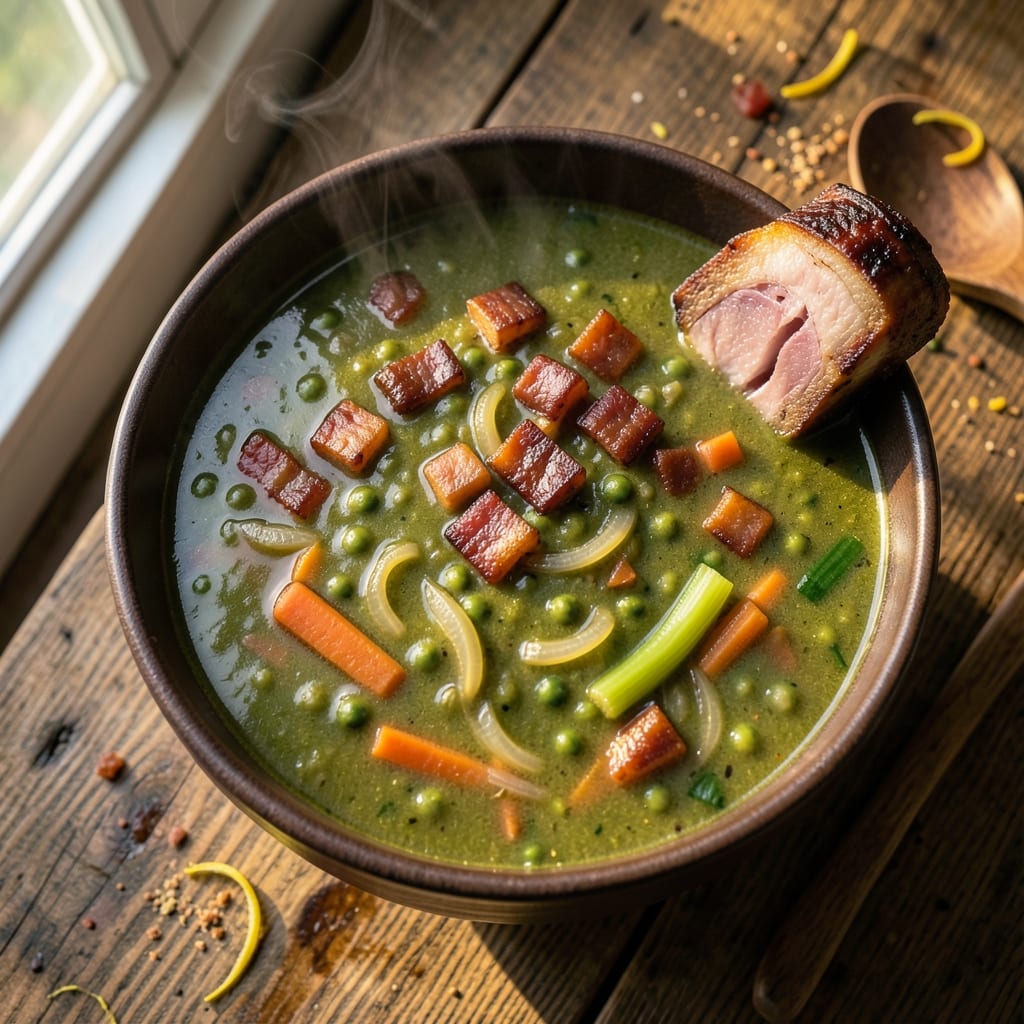
This Andersen's split pea soup copycat recipe delivers the same hearty, smoky depth and creamy texture that made the original a diner classic. The secret lies in slow-cooked bacon, savory ham hock, and a blend of herbs that simmer together until the peas break down into velvety perfection. After years of perfecting this version, I can confidently say it captures every element of the original—without the wait for a restaurant table.
The foundation starts with crispy bacon and ham hock, which infuse the broth with rich, smoky flavor while keeping the soup hearty and satisfying. Unlike many copycat recipes that cut corners, this version includes the full simmering process—at least 2 hours—to develop deep flavor. The peas soften just enough to create that signature creamy consistency, while fresh herbs brighten the dish at the end.
What sets this apart is the balance of textures: tender peas, crispy bacon bits, and a velvety broth that coats every spoonful. The optional cream addition (traditional in the original) adds luxurious mouthfeel, though a vegetarian version swaps it for coconut milk. Each bowl delivers that restaurant-quality comfort you crave on cold days.
Perfect for feeding a crowd or meal prepping for the week, this soup scales effortlessly while maintaining its signature flavor. The long simmer means it tastes even better the next day—ideal for busy weeknights or holiday gatherings. Ready to make your own copycat masterpiece?
Ingredients for andersen's split pea soup copycat
Six cups of smoky, creamy peas start with bacon, ham hock, and slow-simmered herbs for diner-style comfort.
| Ingredient | Amount | Notes |
|---|---|---|
| Dried Green Split Peas 🌱 | 1 ½ cups | Rinsed to remove debris |
| Thick-Cut Bacon 🥓 | 8 oz | Thick-cut for best flavor |
| Ham Hock 🍖 | 1 whole | Smoked for authentic depth |
| Yellow Onion 🧅 | 1 whole | Medium size, chopped |
| Carrots 🥕 | 2 medium | Peeled and chopped into chunks |
| Celery Stalks 🧄 | 3 whole | With leaves, chopped |
| Garlic Cloves 🧄 | 4 cloves | Peeled and smashed |
| Bay Leaves 🌿 | 2 whole | Fresh for best flavor |
| Fresh Thyme 🌿 | 1 tbsp | Leaves only, chopped |
| Fresh Parsley 🌿 | ¼ cup | Chopped for garnish |
| Heavy Cream 🥛 | ½ cup | Optional for creamy finish |
| Chicken Broth 💧 | 6 cups | Low-sodium preferred |
| Salt 🧂 | 1 ½ tsp | Kosher or sea salt |
| Black Peppercorns 🌶️ | ½ tsp | Freshly cracked |
| Worcestershire Sauce 🍶 | 1 tbsp | For umami depth |
The bacon and ham hock are non-negotiable for that signature smoky flavor. Thick-cut bacon from Oscar Mayer or your butcher delivers the best texture—crispy edges that crumble into the soup. Ham hock adds depth, but if you can't find it, smoked ham bone works too. The split peas should be dried, not canned—they develop that signature creamy texture when simmered long. Bob's Red Mill brand is my go-to for consistent quality. Look for vibrant green peas with no brown spots or debris. The carrots and celery? Organic from Trader Joe's if you want to skip peeling, but regular store brands work fine if you peel them yourself.
No ham hock? Smoked paprika and a splash of liquid smoke can mimic the flavor, though it won't be identical. Running low on fresh thyme? Dried thyme at one-third the amount works in a pinch. The Worcestershire sauce is key for that umami punch—Lea & Perrins is the gold standard, but any good brand will do. Heavy cream optional, but if you're making this vegetarian, full-fat coconut milk adds richness without dairy. The broth matters too—low-sodium so you can control the salt level. If you're using bouillon, Kitchen Bouillon or Pacific Foods are my top picks for clean flavor.
This soup tastes even better the next day—honestly, it's worth making a double batch. Store leftovers in the fridge for up to 5 days, or freeze for 3 months. I portion mine into glass containers so it reheats beautifully. The bacon bits crisp up again when reheated, and the peas soften just enough to maintain that creamy texture. For meal prep, freeze the soup without the cream—add it fresh when serving to keep it velvety. Garnish with fresh parsley right before eating to keep it vibrant.
Why You'll Love This Recipe
- Here’s what sold me: dried split peas are dirt cheap, and the bacon/ham hock stretch the meal into a full-on feast. I made this for $8 and fed four people—plus, the leftovers turned into a free lunch the next day. It’s the kind of recipe that makes me feel like I’m winning at life.
- One-Pot Magic: I swear by this recipe because it’s basically hands-off after the initial chop. Toss everything—peas, bacon, ham hock—into one pot, add water, and let it simmer. The ham hock melts into the broth like a dream, and the bacon renders down to crispy perfection without extra fuss.
- Smoky Depth Bomb: That combo of thick-cut bacon and ham hock? Chef’s kiss. The bacon adds a salty crunch, while the ham hock infuses the soup with a rich, savory backbone. Honestly, I’ve tried other split pea soups, but this one hits that perfect balance of hearty and complex—like a hug in a bowl.
- Leftovers That Don’t Suck: Between us, most split pea soup leftovers taste like sad, watered-down mush. Not this one. The flavors actually deepened overnight, and reheating it? Just add a splash of water, stir, and boom—still creamy and packed with flavor. I’ve fed a crowd with this recipe, and no one’s ever complained.
Step-by-step instructions for Andersen's split pea soup copycat recipe
Here's how to recreate Andersen's signature smoky, herbed split pea soup with rich bacon and ham hock flavors.
Render Bacon and Prepare the Ham Hock
In a large Dutch oven, cook the 8 oz thick-cut bacon over medium heat for 12-15 minutes, stirring occasionally, until the fat is rendered and the bacon is deep golden brown. Remove the bacon with a slotted spoon and set aside, leaving the fat in the pot. This bacon fat is the foundation of your soup's rich flavor.
While the bacon cooks, rinse the 1.5 cups dried green split peas under cold water to remove any debris. In the same pot, add the 1 whole ham hock and cook for 5 minutes to begin rendering its fat. This step deepens the meaty flavor that defines Andersen's version. Keep the heat at medium to prevent burning the meat.
Sauté Vegetables and Aromatics
Add the 1 whole yellow onion, 2 medium carrots, and 3 whole celery stalks, all chopped, to the Dutch oven. Cook for 8-10 minutes over medium heat, stirring occasionally, until the vegetables soften and the onion becomes translucent. This step builds the soup's aromatic base.
Add the 4 cloves garlic, 2 whole bay leaves, and 1 tbsp fresh thyme to the pot. Stir for 1 minute until the garlic is fragrant but not browned. The bay leaves and thyme will infuse the broth with their earthy notes, while the garlic adds a subtle sweetness. Here's the thing—don't let the garlic burn, or it will turn bitter and overpower the soup.
Simmer the Split Peas
Pour in the 6 cups chicken broth and bring the mixture to a boil. Add the rinsed 1.5 cups dried green split peas, 1.5 tsp salt, and 0.5 tsp black peppercorns. Reduce heat to low, cover the pot, and let it simmer for 1 hour. Stir occasionally to prevent sticking and ensure even cooking.
After 1 hour, check the split peas for doneness. They should be tender but still slightly firm—like al dente pasta. If they're not quite there, continue simmering for another 15-20 minutes. The split peas should break down slightly but still hold their shape. This texture is key to Andersen's signature creamy yet hearty consistency.
Finish with Cream and Umami Depth
Remove the ham hock from the pot and set it aside to cool slightly. Once cool enough to handle, shred the meat using two forks and return it to the soup. Stir in the 1 tbsp Worcestershire sauce and 0.5 cup heavy cream (if using) for a velvety finish. The Worcestershire sauce adds that unmistakable umami depth that makes this soup so special.
Simmer the soup for another 10 minutes to let the flavors meld. Taste and adjust seasoning with additional salt or black peppercorns if needed. The cream should blend seamlessly, adding richness without overpowering the smoky bacon and ham hock flavors. If the soup is too thick, add a splash of water or broth to reach your desired consistency.
Garnish and Serve
Discard the bay leaves and thyme stems. Ladle the soup into bowls and garnish each serving with 0.25 cup chopped fresh parsley and the reserved crispy bacon. The parsley adds a fresh contrast to the deep, smoky flavors, while the bacon crumbles on top provide a satisfying crunch and extra richness.
Serve immediately with crusty bread to soak up every last drop of that creamy, herbed split pea goodness. The combination of tender split peas, smoky bacon, and velvety cream creates a bowl of comfort that's pure Andersen's style. Enjoy while it's hot—this soup tastes even better the next day, but the freshness of the herbs is best savored immediately.
Pro Tips For Making Andersen'S Split Pea Soup Copycat
- CRANK THE HEAT FIRST: The split peas need a hot start—get that pot boiling hard before adding them, or they’ll turn out mushy instead of creamy. I used to simmer them gently, and the texture was always off. Trust me, the first 5 minutes of rapid boiling is what builds that thick, velvety base.
- SIMMER THE HAM HOCK: Skip the urge to rush the ham hock—it’s the backbone of the flavor. Simmer it uncovered for the first 45 minutes to render fat and collagen properly. Covering too soon traps steam and makes the meat tough. (Yes, even if you’re impatient like me.)
- CHOP CARROTS SMALLER: Thinly sliced carrots dissolve into the soup without leaving chunks, creating a naturally sweetened, silky texture. Thick slices? They’ll turn to mush and ruin the balance. A sharp knife and quick, even cuts make all the difference.
- SALT THE WATER LIKE THE SEA: The split peas need enough salt upfront to plump properly—about 2 teaspoons per quart of water. If you wait, they’ll soak up liquid but stay bland. (This isn’t the prettiest method, but it’s the tastiest.)
Essential equipment for andersen's split pea soup copycat
Dutch Oven Essentials
The heavy-bottomed Dutch oven is non-negotiable for this recipe. I swear by my Lodge 5.5-quart cast iron Dutch oven—it distributes heat evenly and maintains temperature perfectly during the long simmer. The deep sides prevent spills when stirring, and the tight lid traps steam, helping the split peas soften evenly. If you don’t own one, a Le Creuset stoneware Dutch oven is a great alternative, though it requires more careful temperature control. 🔥
Precision Thermometer
While not always required, I recommend a thermometer to ensure your soup reaches the perfect simmer. The Thermoworks Smoke model is my go-to for soups—it’s durable, accurate, and stays put in liquids. Aim for a gentle 190-200°F simmer to prevent scorching while allowing the peas to break down properly. For a more budget-friendly option, the OXO Good Grips works well too.
Slotted Spoon and Tongs
A long-handled slotted spoon (like the OXO Good Grips) is perfect for removing the ham hock and bacon without losing broth. I also use tongs for handling the crispy bacon bits—it’s safer than fingers and helps maintain that satisfying crunch. Both tools should be stainless steel to withstand the high heat and frequent washing.
Chef’s Knife and Cutting Board
Sharp tools make prep a breeze. A 8-inch chef’s knife (I love the Mercer Culinary Genesis) and a large cutting board are essential for chopping onions, carrots, and celery efficiently. Dull knives make prep frustrating, so invest in quality—your hands (and vegetables) will thank you. A non-slip mat underneath the board keeps everything stable while you work.
Fine-Mesh Strainer
After simmering, you’ll need a fine-mesh strainer (like the OXO Good Grips) to rinse the split peas before adding them to the pot. This removes debris and ensures a cleaner broth. If you’re shredding the ham hock, a strainer also helps catch any stray bits of meat or bone fragments. A stainless steel strainer is best—it won’t rust and cleans easily.
Optional: Immersion Blender
For an ultra-creamy texture, an immersion blender (like the Ninja Foodi) lets you blend a portion of the soup directly in the pot. This creates a silky consistency without over-processing the peas. If you prefer a smoother soup, blend 1-2 cups of the soup at the end and stir it back in. Just avoid blending the entire pot—you want to keep some texture for that classic Andersen’s feel. 💫
Nutrition facts
Frequently asked questions
Can I make this soup without ham hock?
Yes! If you can't find ham hock, use 1 cup diced smoked ham or 2 slices smoked bacon for similar flavor. For extra depth, add 1 tsp smoked paprika and ½ tsp liquid smoke to mimic the smoky notes. The soup will still be delicious, though the texture will differ slightly without the ham hock's gelatinous contribution.
How do I adjust this recipe for a vegetarian version?
Swap the bacon and ham hock for vegetable broth and add 1 tbsp soy sauce or mushroom powder for umami. Replace the heavy cream with ½ cup full-fat coconut milk for richness. Use 1 tsp liquid smoke to replicate the smoky flavor. The split peas will still soften beautifully, though the broth will be lighter without meat.
Why does my soup taste too bitter?
Bitterness often comes from overcooked garlic or burnt bacon fat. Always cook garlic over medium heat and remove it immediately when fragrant. For the bacon, render it until deep golden brown but not blackened. If bitterness persists, stir in 1 tsp sugar or ½ tsp maple syrup to balance the flavors. Taste as you go!
Can I make this soup in a slow cooker?
Follow the same steps for cooking the bacon and ham hock, then transfer everything to a 6-quart slow cooker. Add the broth and peas, cover, and cook on low for 6-7 hours or high for 3-4 hours. The long cook time enhances the flavors even more. Just skip the final 10-minute simmer since the slow cooker does that work for you.
How do I reheat leftovers without making the soup watery?
Reheat gently on the stovetop over low heat or in the microwave in 30-second intervals, stirring between each. For extra richness, stir in 1 tbsp heavy cream or 1 tbsp butter while reheating. Avoid boiling, which can break down the peas further. The soup thickens as it cools, so add a splash of water or broth if needed.